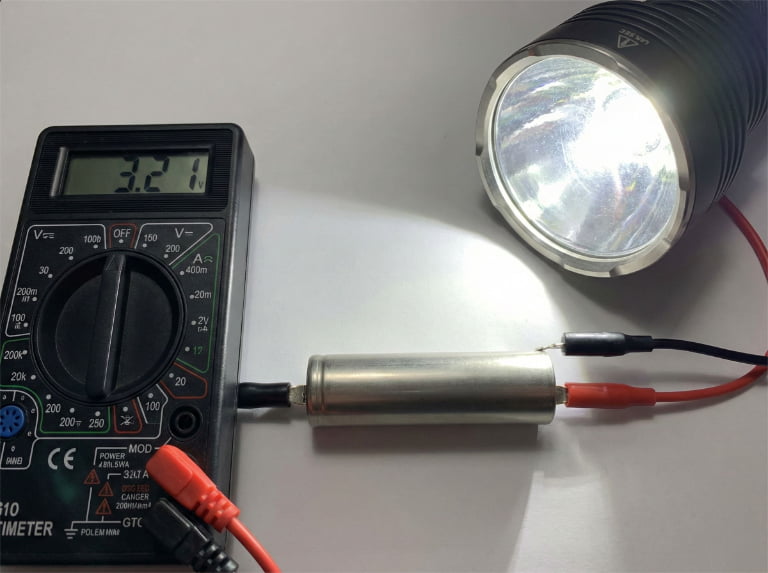
Are you hitting a wall with your device's battery life? This limitation stifles innovation. The key is understanding the science that defines a battery's absolute maximum capacity.
The maximum capacity of a lithium-ion battery1 is determined by the inherent ability of its positive and negative electrode materials to store lithium ions, combined with practical engineering compromises made for safety and lifespan. We rarely use 100% of the theoretical capacity to prevent irreversible damage.
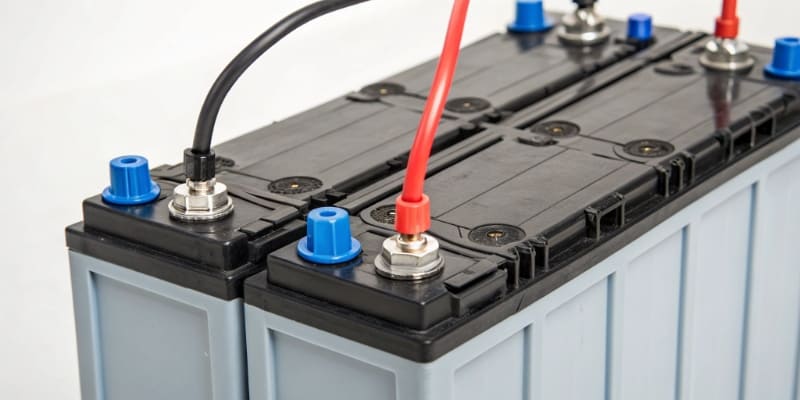
I talk to product developers every day, and a common question is, "Can we just make the battery bigger?" While size matters, the real secret to capacity lies deep within the battery's chemistry and construction. It's a fascinating puzzle of trade-offs between pure scientific potential and real-world reliability. To build better products, you need to understand why these limits exist and how we work around them. Let's dive into the specifics, so you can make more informed decisions for your next project.
Which specific electrode materials determine a battery's maximum energy density?
Choosing the right battery materials feels complex. Making the wrong choice can severely limit your device's performance and potential, leaving you at a disadvantage in the market.
The energy density ceiling is set by the electrode materials. For the positive electrode (cathode), materials like NMC excel in energy, while for the negative electrode (anode), graphite is the standard. Their specific capacity and structure dictate how many lithium ions they can hold, defining the battery's potential.
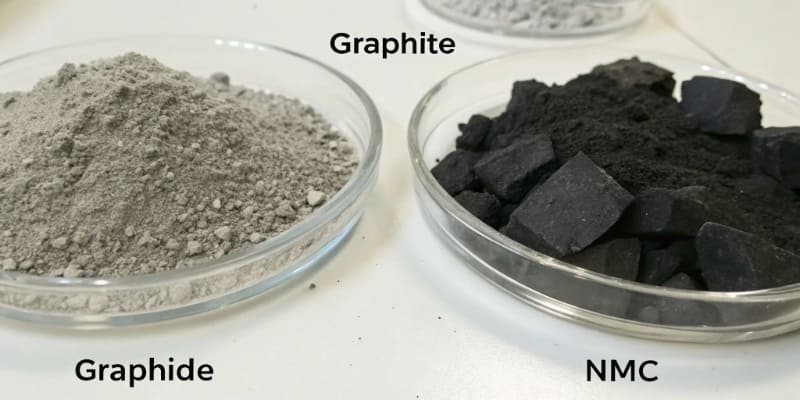
When a client comes to me with a new project, our first discussion is always about the application. The choice of electrode materials flows from there. Think of a battery as a bookshelf for lithium ions. The materials we use for the anode (negative side) and cathode (positive side) determine how big that shelf is and how many "books" it can hold.
The Anode: The Primary Storage Shelf
The anode's job is to store lithium ions when the battery is charged. For years, the industry standard has been graphite.
- Graphite: Its layered structure is like a multi-story parking garage. It can accept one lithium ion for every six carbon atoms, forming a compound called LiC₆. This gives it a theoretical specific capacity of about 372 mAh/g. It's reliable, stable, and cost-effective.
A material getting a lot of attention is silicon.
- Silicon: It's the superstar in waiting. Theoretically, it can hold over ten times more lithium ions than graphite. But it has a major problem: it swells up to 300% when it absorbs ions, which can physically break the battery apart after just a few cycles. We are making progress, but pure silicon anodes are not yet commercially stable for most applications.
The Cathode: The Source of Lithium
The cathode contains the lithium that moves through the battery. The type of cathode material determines not only the capacity but also the battery's voltage, safety, and cost.
- Lithium Cobalt Oxide (LCO): This was the go-to for early consumer electronics. It offers good energy density but has safety concerns and uses expensive cobalt.
- Nickel Manganese Cobalt (NMC): This is a popular choice for everything from power tools to electric vehicles. By adjusting the ratio of nickel, manganese, and cobalt, we can tune the battery for higher energy (more nickel) or better safety.
- Lithium Iron Phosphate (LFP): This is the champion of safety and long life. Its crystal structure is incredibly stable, so it can handle thousands of charge cycles. Its downside is lower energy density.
Here is a simple table to compare them:
| Material Type | Electrode | Key Advantage | Key Disadvantage |
|---|---|---|---|
| Graphite | Anode | Stable, low cost | Limited capacity |
| Silicon | Anode | Very high capacity | Swells, unstable |
| NMC | Cathode | High energy density | Higher cost, less stable than LFP |
| LFP | Cathode | Very safe, long life | Lower energy density |
What are the current technical limits preventing us from reaching theoretical maximum capacity?
You see a battery's theoretical capacity on paper, but your device never reaches it. This is frustrating and feels like a broken promise. The truth is, we make intentional compromises.
We can't reach theoretical limits because a battery contains non-active materials like separators and casings that add weight. More importantly, we only use about 70-80% of the active material's potential to ensure safety and a long cycle life, preventing structural collapse and dangerous short circuits.
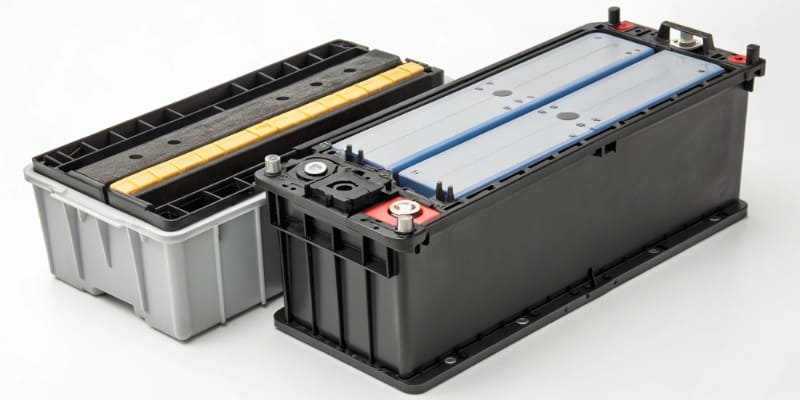
I once had a client, an engineer for a medical device company, who was confused by this. He asked, "If the material can hold more, why don't we use it all?" It's a great question. The answer boils down to two things: dead weight and playing it safe.
The "Inactive" Dead Weight
First, the active cathode and anode materials are not the only things inside a battery. They account for a large part, but not all of it. A significant portion of the battery's weight and volume comes from components that don't store energy. My insights show this can be around 40% of the total battery. These include:
- The Separator: A thin polymer membrane that keeps the positive and negative electrodes from touching and causing a short circuit.
- The Electrolyte: A liquid or gel that allows lithium ions to flow between the electrodes.
- Current Collectors: Thin foils of copper (for the anode) and aluminum (for the cathode) that conduct electricity out of the battery.
- The Casing: The pouch, can, or plastic housing that protects the internal components.
All these parts are essential for the battery to work, but they add weight and volume without adding capacity. This immediately reduces the overall energy density (Wh/kg) of the final product.
The "Play It Safe" Compromise
Second, and more importantly, we intentionally limit how much of the active material's capacity we use. Pushing the materials to their absolute 100% theoretical limit would destroy the battery very quickly.
- Protecting the Cathode: If you try to pull every last lithium ion out of the cathode, its crystal structure can literally collapse. This is irreversible damage and means the battery won't be able to recharge properly.
- Protecting the Anode: If you try to force too many lithium ions into the graphite anode, especially during fast charging, they can start to pile up on the surface instead of fitting neatly inside. This process, called "lithium plating," forms metallic dendrites. These are sharp, needle-like structures that can grow through the separator and cause a dangerous internal short circuit, leading to overheating and fire.
To prevent this, our Battery Management Systems2 (BMS) are programmed to operate within a safe window—often using only 70% to 80% of the theoretical capacity. This is why we have voltage limits. We stop charging before the cathode is empty and stop discharging before the anode is completely full. It's a trade-off that sacrifices some capacity for a much longer, safer, and more reliable operational life.
How will future battery technologies break through current capacity limits?
Today's lithium-ion technology is slowly reaching its peak performance. This reality stalls innovation in demanding fields like medical wearables and advanced robotics, which need more power in smaller spaces.
Future technologies like solid-state and lithium-metal batteries aim to shatter current limits. They achieve this by replacing the graphite anode with pure lithium metal and swapping the flammable liquid electrolyte with a stable solid one, drastically increasing energy density while improving safety.
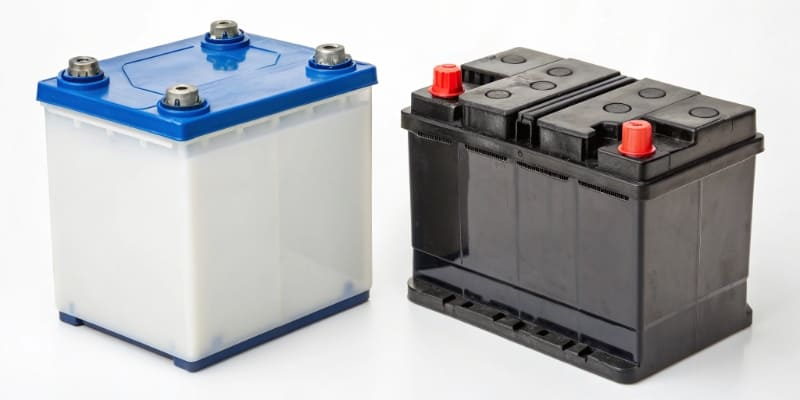
At Litop, our R&D team is always looking ahead. While we focus on perfecting today's technology for our customers, we are also deeply invested in understanding what comes next. The goal is to fundamentally change the battery's internal architecture to unlock a new level of performance. Two technologies lead this charge: lithium-metal and solid-state.
Lithium-Metal Anodes: The Ultimate Capacity
As we discussed, graphite is the standard anode material. Its theoretical capacity is around 372 mAh/g. Pure lithium metal, however, has a theoretical capacity of about 3,860 mAh/g—over ten times higher. Replacing the graphite anode with a thin foil of lithium metal would be a game-changer for energy density. So why haven't we done it? The main obstacle is safety. When you charge a battery with a lithium-metal anode and a liquid electrolyte, those dangerous dendrites I mentioned earlier form very easily. They create a high risk of short circuits, making the battery unsafe for commercial use.
Solid-State Electrolytes: The Key to Safety and Density
This is where solid-state technology comes in. The idea is to replace the flammable liquid electrolyte with a thin, solid material, often a ceramic or a polymer. This solid electrolyte acts as a rigid barrier. It physically blocks the lithium dendrites from growing through to the other side, which could finally make lithium-metal anodes safe to use.
A solid-state battery offers several potential benefits:
- Higher Energy Density: It enables the use of a lithium-metal anode and is also more compact, eliminating the need for bulky liquid and separators.
- Enhanced Safety: It removes the flammable liquid component, making the battery far more resistant to fire.
- Longer Lifespan: By preventing dendrite growth and other side reactions, it could lead to batteries that last much longer.
The challenge right now is that solid electrolytes don't conduct ions as well as liquids do, especially at room temperature. Manufacturing them at scale is also complex and expensive. But as researchers solve these problems, we are moving closer to a new era of battery performance.
How does battery chemistry, like NMC versus LFP, affect maximum capacity and energy density?
Choosing between battery chemistries like NMC and LFP can be confusing. Making the wrong choice can compromise your product's performance, cost, or safety, creating problems down the line.
The chemistry directly sets the performance trade-offs. NMC (Nickel Manganese Cobalt) offers higher energy density, which means a lighter, smaller battery for the same energy. LFP (Lithium Iron Phosphate) provides lower energy density but is superior in safety, lifespan, and cost.
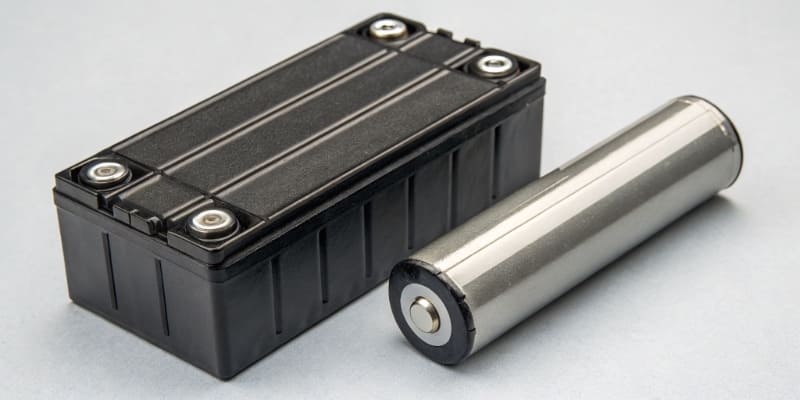
This is a conversation I have with my clients all the time. A wearable device manufacturer might prioritize making their product as light as possible, while a company building stationary medical equipment will care more about longevity and safety. The chemistry we choose for the cathode is what allows us to meet these different needs. The two most dominant chemistries are NMC and LFP.
NMC: The Energy Champion
NMC stands for Lithium Nickel Manganese Cobalt Oxide. Its main strength is its high energy density. This means you can pack more energy into a smaller and lighter package. This is why it's the preferred choice for applications where space and weight are critical, such as:
- Wearable technology
- Smartphones and laptops
- Drones
- High-performance electric vehicles
By changing the ratio of the three metals, we can fine-tune its properties. For example, a high-nickel NMC 811 (8 parts nickel, 1 part manganese, 1 part cobalt) offers very high energy but can be less stable. The downside to NMC is the reliance on cobalt, which is expensive and has supply chain issues.
LFP: The Safety and Longevity King
LFP stands for Lithium Iron Phosphate3. Its defining feature is its incredible stability. It uses an olivine crystal structure that doesn't break down easily, even under stress. This gives LFP batteries several key advantages:
- Exceptional Safety: They are much less prone to thermal runaway and fire.
- Extremely Long Cycle Life: They can often handle 3,000 charge cycles or more, far exceeding most NMC chemistries.
- Lower Cost: They contain no cobalt, making them more affordable and sustainable.
The trade-off is lower energy density. For the same amount of energy, an LFP battery will be heavier and larger than an NMC battery. This makes it ideal for applications where size is less of a concern and long-term reliability is paramount, like in energy storage systems or industrial vehicles.
Here is a clear breakdown:
| Feature | NMC Chemistry | LFP Chemistry |
|---|---|---|
| Energy Density | High | Moderate |
| Safety | Good | Excellent |
| Cycle Life | Good (1,000-2,000 cycles) | Excellent (3,000+ cycles) |
| Cost | Higher (contains cobalt) | Lower (cobalt-free) |
| Best For | Compact, lightweight devices | Safety-critical, long-life applications |
As a custom battery provider, my job isn't to say one is better than the other. It's to understand your specific needs and engineer the right solution, whether it's a high-energy NMC battery for a sleek wearable or a robust LFP pack for a reliable medical cart.
Conclusion
In the end, a battery's maximum capacity is a careful balancing act. It is defined by the incredible potential of its chemical materials but is always constrained by the practical need for safety, longevity, and reliability. The right choice depends entirely on your product's unique demands.
At Litop, we thrive on this complexity. We have the expertise to navigate these trade-offs and deliver custom battery and BMS solutions that give your products a true competitive edge. If you want to find the perfect battery for your next project, feel free to reach out to me at [email protected].