Struggling to pick the right battery for your project? The different numbers can be confusing, making you worry about choosing a cell with too little power for your needs.
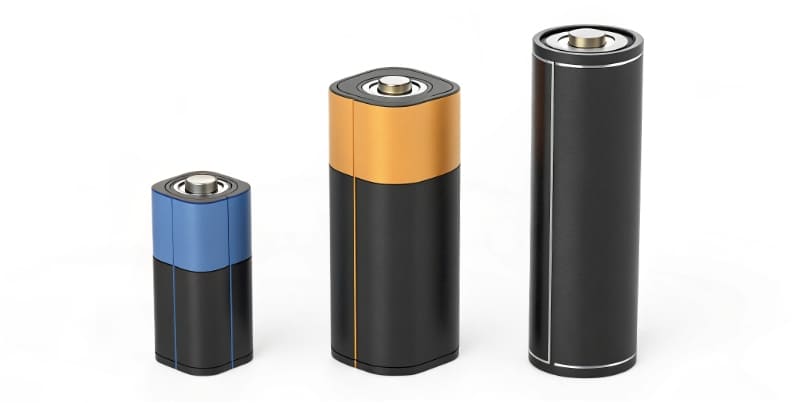
The 26650 battery generally offers the highest capacity, often exceeding 5500mAh. It is followed by the 21700, which can reach over 5000mAh. The 18650 has the lowest capacity of the three, typically maxing out around 3500mAh, due to its smaller physical size.
When I talk with clients, the first question is almost always about capacity. It's the headline number everyone focuses on. But as an engineer and manufacturer, I know capacity is just one part of a much bigger story. The real secret to a successful product isn't just picking the battery with the biggest number; it's about understanding the trade-offs between size, power, and cost. Let's dive deeper into what these numbers really mean for your device and how to make the right choice for your specific needs.
Besides raw capacity, how do these different battery sizes differ in max discharge rate and power output?
Does your device need quick bursts of power but your high-capacity battery can't keep up? This mismatch between capacity and power output is a common and frustrating design problem.
While larger cells like the 26650 can often handle higher discharge currents due to lower internal resistance, the cell's chemistry and build are more important. A high-power 18650 can outperform a high-capacity 26650 in terms of maximum continuous discharge rate (C-rate).
In the world of lithium batteries, not all cells are created equal, even if they have the same size. We broadly categorize them into two types: "capacity-type" and "power-type" (or "high-rate") cells. This distinction is critical.
Understanding Capacity vs. Power Cells
A capacity-type cell is designed to store the maximum amount of energy possible. Its internal chemistry and construction are optimized for energy density (Wh/kg). However, trying to draw a lot of current from it quickly will cause the voltage to sag dramatically and generate excessive heat, which can damage the cell and shorten its life.
A power-type cell, on the other hand, is built for speed. It's engineered to deliver high currents without significant voltage drop or overheating. This is achieved through different electrode materials and a lower internal resistance. The trade-off is that it holds less total energy than a capacity cell of the same size.
I once worked with a client developing a handheld surgical power tool. They initially requested a pack made from the highest-capacity 26650 cells they could find, thinking more capacity was always better. During testing, however, the tool felt sluggish and weak. The motor needed high-current pulses to work effectively, but the capacity-focused 26650 cells couldn't deliver that power fast enough. We switched them to a pack using high-rate 18650 cells. The total runtime was slightly less, but the tool’s performance was exactly what they needed—powerful and responsive.
Here’s a simplified comparison:
| Cell Type | Typical Capacity | Typical Max. Continuous Discharge | Best Use Case |
|---|---|---|---|
| 18650 | 2000-3500mAh | 5A (Capacity) to 30A+ (Power) | Vapes, Power Tools, Drones |
| 21700 | 4000-5100mAh | 10A (Capacity) to 45A+ (Power) | EVs, High-end Flashlights, Cordless Tools |
| 26650 | 5000-5500mAh | 15A (Capacity) to 25A (Power) | Large Flashlights, Energy Storage |
The key takeaway is that you must match the battery’s discharge capability to your device’s power demands. Don't just look at the mAh rating; always check the spec sheet for the maximum continuous discharge current.
Why are many EV manufacturers like Tesla shifting from 18650 to 21700 cells?
Ever wonder why car companies make big changes to fundamental parts like batteries? It's not a random decision. There are major performance and cost benefits driving these choices.
The shift to 21700 cells offers a better balance of energy density, power output, and system cost. A single 21700 cell has significantly more capacity than an 18650, which means fewer cells are needed per vehicle, simplifying manufacturing and reducing overall pack cost.
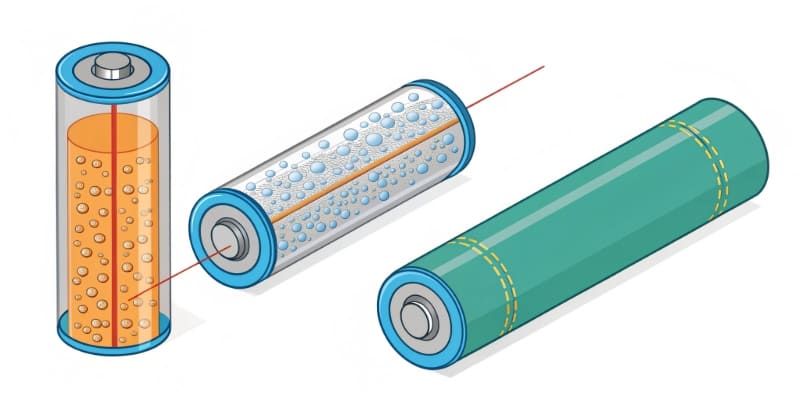
The move from the 18650 cell to the 21700 cell, most famously adopted by Tesla, was a strategic engineering decision. While the 18650 had been the workhorse for years, the 21700 format presented a "sweet spot" that offered compelling advantages for large-scale applications like electric vehicles.
Performance and Cost Synergy
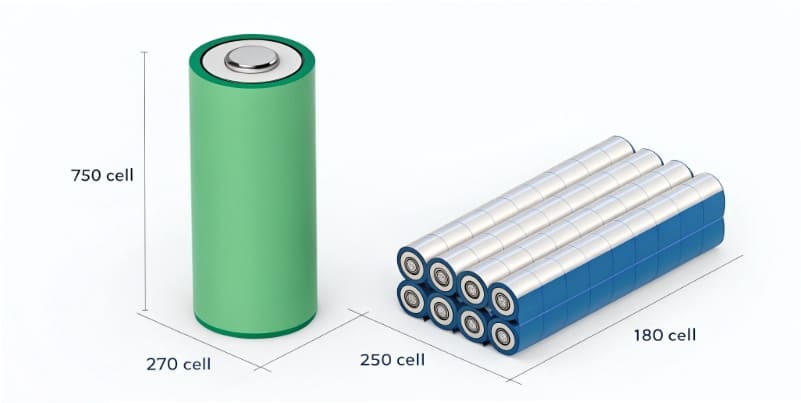
The primary driver is improved volumetric energy density. A 21700 cell is only slightly larger than an 18650 (21mm diameter vs. 18mm, 70mm length vs. 65mm), but that small increase in size yields a big jump in volume—about 47% more. This allows for a significant increase in the amount of active material inside, translating to a capacity boost of 35% or more per cell.
This has a powerful ripple effect on the entire battery pack design:
- Fewer Cells: Because each cell holds more energy, you need fewer of them to achieve the same total pack energy (kWh).
- Reduced Complexity: Fewer cells mean fewer connections, fewer welds, and less support hardware. This directly reduces the number of potential points of failure, increasing the pack's overall reliability.
- Lower Cost: The reduction in cell count and associated components (wires, busbars, BMS connections) leads to lower material costs and simplifies the assembly process. A simpler pack is a cheaper pack to build, which is crucial for making EVs more affordable.
Let's look at a quick example for a hypothetical 1000Wh pack:
| Feature | Using 18650 Cells (3.7V, 3500mAh) | Using 21700 Cells (3.7V, 5000mAh) | Advantage of 21700 |
|---|---|---|---|
| Energy per Cell | ~12.95 Wh | ~18.5 Wh | +42.8% |
| Cells Needed | ~77 cells | ~54 cells | ~30% fewer cells |
| Connections | 77 cell-level connections | 54 cell-level connections | Fewer failure points |
| System Cost | Higher | Lower | Reduced manufacturing cost |
For an automotive company producing millions of vehicles, these small savings per pack add up to hundreds of millions of dollars. The 21700 format hit the perfect balance, providing a substantial performance upgrade without being too large to manage thermally or to package efficiently within the vehicle chassis.
When designing a battery pack for a space-constrained device, how do you balance choosing a larger, higher-capacity cell versus using more smaller cells?
You have a brilliant idea for a compact device, but how do you fit enough battery life inside? This choice between one big cell or many small ones is a classic engineering puzzle.
For devices with unusual shapes or very thin profiles, using multiple smaller cells (like 18650s or custom LiPo cells) offers greater design flexibility. For simpler, rectangular spaces, a single larger cell (like a 21700 or 26650) is often more efficient and cost-effective.
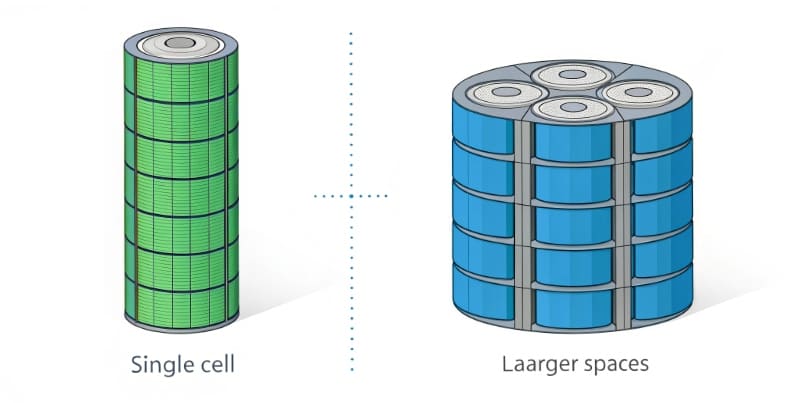
As a custom battery manufacturer, this is a conversation I have almost every day. The answer depends entirely on the product's geometry, performance requirements, and cost targets. There is no one-size-fits-all solution. We have to weigh the pros and cons of each approach.
The Case for Multiple Smaller Cells
Using several smaller cells, often connected in parallel to increase capacity, is all about design freedom.
- Geometric Flexibility: This is the number one reason. If you're designing a wearable device that needs to wrap around a wrist, a medical instrument with a specific handle shape, or an IoT sensor that has to fit into a tight corner, you can't use a single, rigid cylindrical cell. Instead, we can arrange smaller cells—or even our custom-shaped and curved batteries—to fill the available space perfectly. I remember a project for a smart helmet where we built a pack from several small, curved LiPo cells to fit it into the helmet's lining without creating uncomfortable pressure points.
- Weight Distribution: By spreading smaller cells throughout a device, you can achieve better balance and ergonomics, which is critical for handheld or wearable products.
The Case for a Single Larger Cell
Opting for one larger cell, like a 21700 or 26650, is a strategy focused on simplicity and efficiency.
- Volumetric Efficiency: In a simple rectangular cavity, a single large cell takes up less total volume than multiple smaller cylinders, because there is no wasted "dead space" between the cells. You can pack more energy into the same box.
- Lower Complexity and Cost: A single-cell design requires a much simpler Battery Management System (BMS). You have only two terminals to connect, fewer potential points of failure, and a much simpler assembly process. This directly translates to lower manufacturing costs and often higher reliability.
Here is a breakdown of the trade-offs:
| Factor | Multiple Smaller Cells | Single Larger Cell |
|---|---|---|
| Design Freedom | High (can fit complex shapes) | Low (restricted to the cell's shape) |
| Assembly Complexity | High (many connections and welds) | Low (simple connections) |
| BMS Complexity | Higher (needs to monitor more cells/parallels) | Lower (monitors a single cell) |
| Cost | Generally higher due to more components and labor | Generally lower |
| Reliability | More potential points of failure (connections) | Fewer potential points of failure |
Ultimately, the choice comes down to your top priority. If the product's form factor is non-negotiable and irregular, multiple small cells are the way to go. If you have a simple, boxy space and want to maximize capacity while minimizing cost, a single larger cell is the clear winner.
Are there inherent differences in safety, thermal management, and cycle life among these different battery sizes?
You want a battery that lasts long and stays safe, but does the size of the cell itself affect these critical factors? Yes, it plays a bigger role than you might think.
Yes, there are differences. Larger cells like the 26650 generate more internal heat and have a lower surface-area-to-volume ratio, making them harder to cool. This demands more robust thermal management to ensure safety and preserve cycle life, which is heavily impacted by operating temperature.
While the core chemistry (like NMC or LiFePO4) is the primary driver of a battery's fundamental characteristics, the physical size of the cell introduces important engineering challenges related to heat, safety, and longevity.
Thermal Management
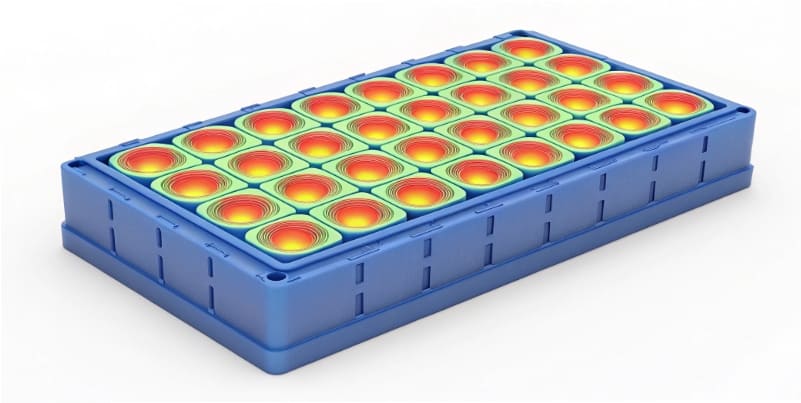
The biggest issue with larger cells is heat dissipation. Think about it this way: a cell's volume determines its capacity to generate heat, while its surface area determines its ability to release that heat. As a cell gets bigger, its volume increases faster than its surface area. This is the surface-area-to-volume ratio problem. A 26650 cell can hold a lot of energy, but it has proportionally less skin to cool itself compared to an 18650. In a tightly packed battery, this can lead to cells in the center running much hotter than those on the outside, which drastically reduces their lifespan and poses a safety risk. This is why effective thermal management—using heat sinks, cooling fins, or even active liquid cooling in EVs—is more critical for packs using larger cells.
Safety Considerations
Safety in lithium-ion batteries is paramount. Every cell we manufacture at Litop goes through rigorous quality control and testing. However, the laws of physics are unavoidable: a larger cell contains more energy. In the unlikely event of a catastrophic failure (like an internal short circuit), a 5000mAh 21700 cell will release significantly more energy than a 3500mAh 18650 cell. This makes the design of safety features, such as the BMS and the cell's internal pressure vents, even more important. The integrity of the manufacturing process and the quality of the raw materials are non-negotiable, especially when dealing with high-capacity cells.
Cycle Life
Cycle life is the number of charge/discharge cycles a battery can endure before its capacity drops to a certain percentage (usually 80%) of its initial rating. This is primarily determined by two things: the cell's chemistry and how it's used. A LiFePO4 cell will naturally have a much longer cycle life than an NMC cell, regardless of size. However, for any given chemistry, the biggest enemy of cycle life is heat. A cell that consistently operates at high temperatures will degrade much faster. Therefore, because a larger cell is harder to keep cool, its cycle life can be compromised if the battery pack's thermal management system isn't up to the task. A well-designed pack with 18650s and good cooling can outlast a poorly designed pack with 21700s that run too hot.
Conclusion
While the 26650 cell has the highest raw capacity, it's clear that capacity is just the start. The best battery—whether it's an 18650, 21700, or 26650—is the one that perfectly balances your product's need for power, space, cost, and safety. There is no single "best" choice for everyone.
At Litop, we specialize in understanding these trade-offs to create custom battery solutions. If you're designing a new product and need help navigating these choices, reach out to me and my team. We can help you build the perfect power source for your innovation. You can contact us at [email protected].