Your devices stop working in the cold. This is a huge problem when you rely on them. Let's find out which battery won't let you down during winter.
Sodium-ion batteries are the clear winner for cold weather. They keep about 90% of their capacity at -20°C. Nickel Manganese Cobalt (NMC) batteries are second best. Surprisingly, Lithium Iron Phosphate (LiFePO4) batteries perform poorly in the cold, losing almost half their capacity.
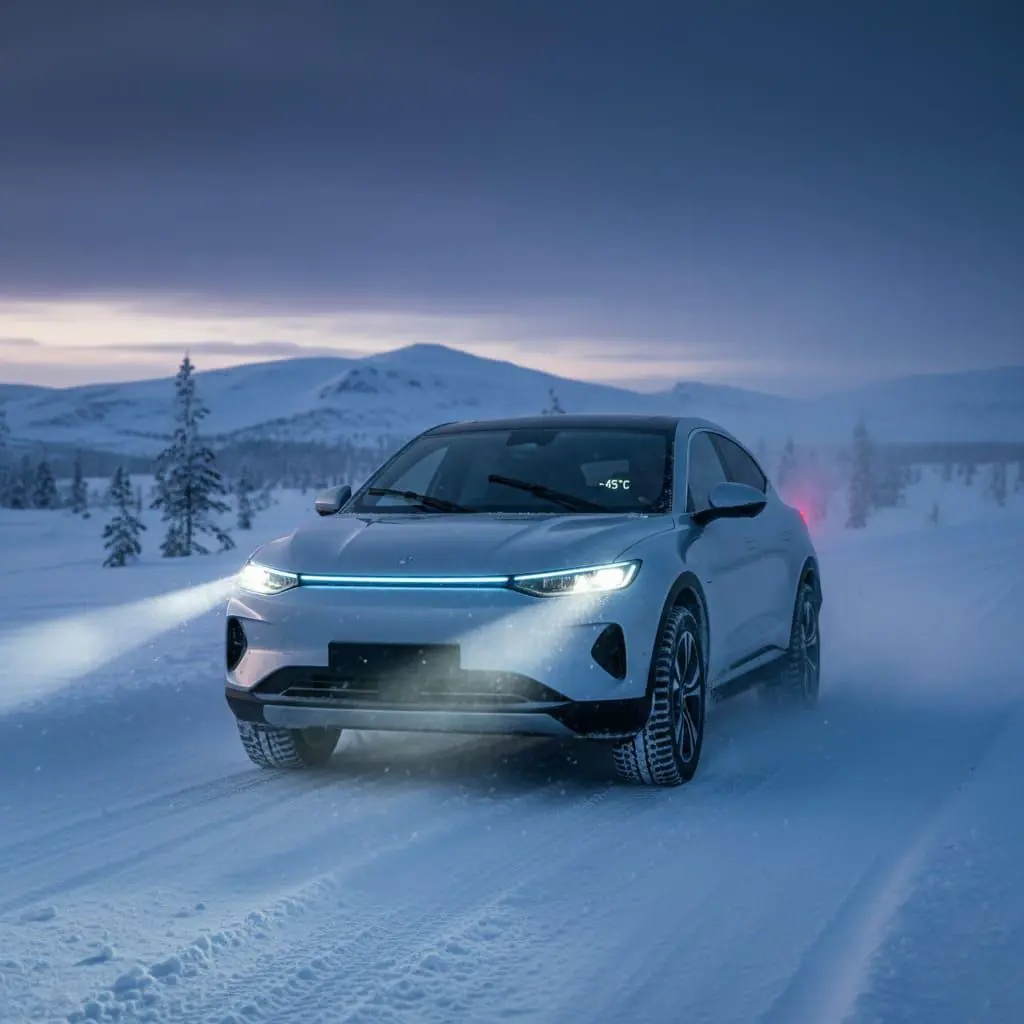
Choosing the right battery for cold environments is a major challenge for many of my clients, especially those developing products for outdoor or automotive use. The wrong choice can lead to product failure and unhappy customers. But understanding the science behind how different batteries react to cold can make this decision much easier. Let's break down some of the most common questions I get about battery performance in freezing temperatures.
Can sodium-ion batteries be safely charged at sub-zero temperatures, and what are their charging limitations?
You know charging a lithium battery below freezing can kill it. This makes you worry about your devices in winter. Sodium-ion batteries offer a much safer solution for cold-weather charging.
Yes, sodium-ion batteries can be charged safely at temperatures as low as -20°C, a huge advantage over lithium-ion types. Their main limitation is a slower charging speed compared to charging at room temperature, but they won't suffer the permanent damage that affects lithium batteries.
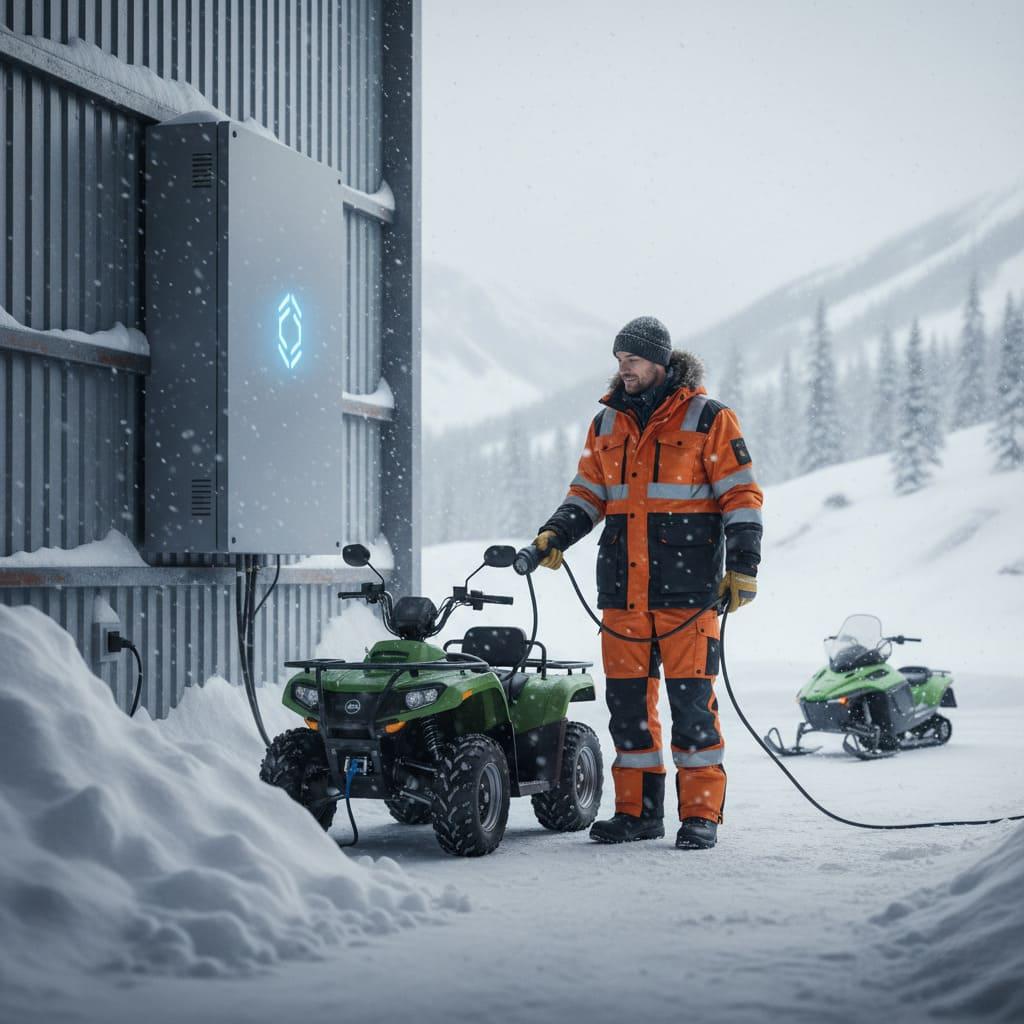
The ability to charge in the cold is a game-changer. For years, we've had to tell clients that their lithium-ion powered devices must be brought into a warm environment before plugging them in. The reason is a dangerous effect called "lithium plating," which I'll explain later. Sodium-ion batteries work differently.
The sodium ions in these batteries are larger than lithium ions, but their chemistry allows them to move effectively even when it's freezing. The electrolyte, which is the liquid that ions travel through, is specially designed to work well in the cold. So, while lithium ions get sluggish and fail to enter the anode material, sodium ions can still complete the journey.
This means you don't risk the same kind of irreversible damage. Of course, there are still trade-offs.
Charging Performance Comparison: Sodium-Ion vs. Lithium-Ion below 0°C
| Feature | Sodium-Ion Battery | Lithium-Ion Battery (NMC/LFP) |
|---|---|---|
| Safe Charging Temperature | Down to -20°C (-4°F) | Generally 0°C (32°F) or above |
| Risk of Damage | Very low. Performance is reduced but no permanent damage. | High. Risk of irreversible lithium plating. |
| BMS Requirement | BMS still manages charging, but protocols are less restrictive. | BMS must prevent charging below freezing to avoid failure. |
| Charging Speed at -10°C | Slower than normal, but functional. | Charging is typically disabled by the BMS. |
| Primary Advantage | Operational flexibility and safety in cold climates. | Not applicable, as charging is unsafe. |
This makes sodium-ion batteries a fantastic choice for applications like outdoor sensors, small electric vehicles in northern regions, or any device that needs to be charged outdoors in the winter. The safety and convenience are simply unmatched by lithium chemistries in this regard.
Why do LiFePO4 batteries lose range so much faster than NMC batteries in winter?
You bought a car with a LiFePO4 battery because you heard it was safe and long-lasting. But in winter, its range drops dramatically, far more than your friend's NMC car.
This happens because the internal structure of LiFePO4 batteries makes it very hard for lithium ions to move when it's cold. NMC batteries have a different structure that allows ions to move more freely, so they hold onto their capacity much better in freezing temperatures.
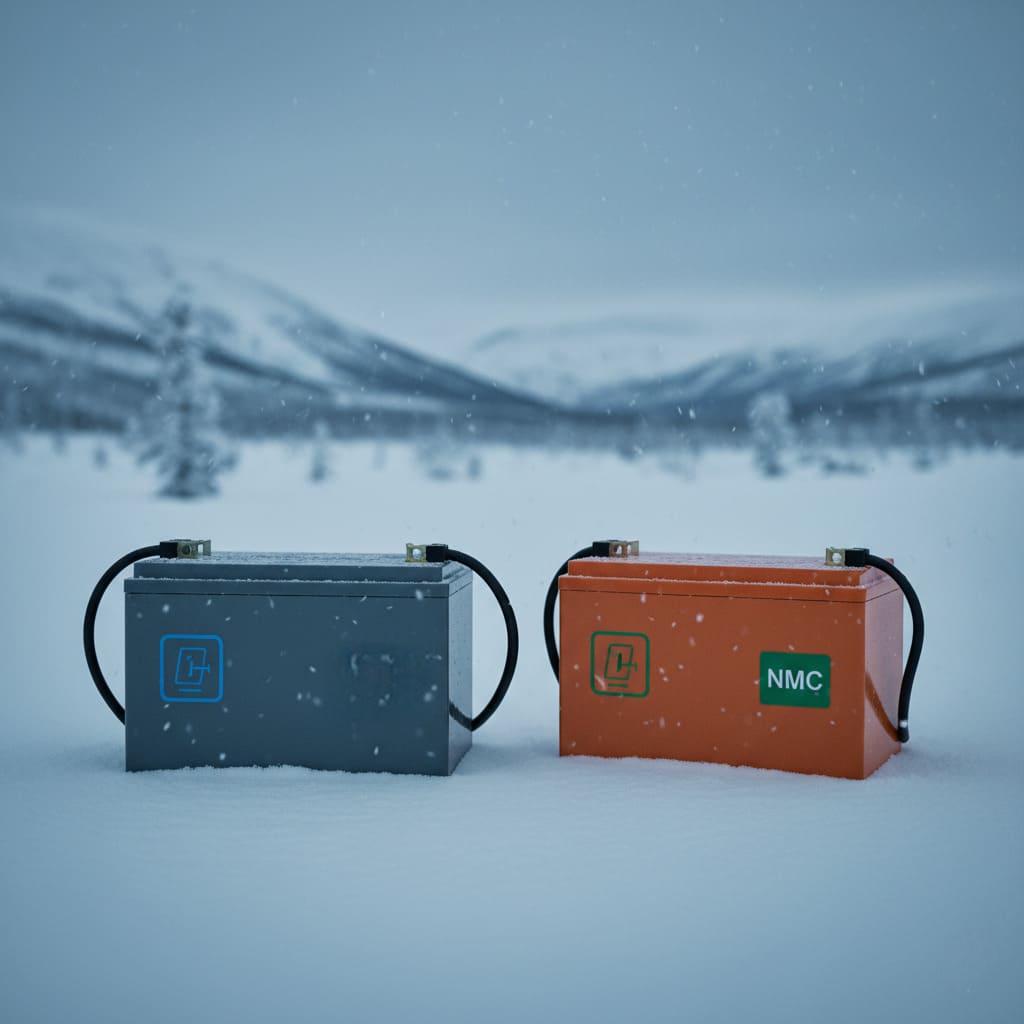
This is one of the most common misunderstandings I see. Many people think LiFePO4 (LFP) is a tough, all-weather battery. While it's incredibly stable and offers a long cycle life at normal temperatures, its performance falls off a cliff in the cold. I remember a client from Canada who was designing an electric utility vehicle. He was set on LFP for its cost and safety. We had to run tests that showed him at -20°C, his vehicle would have only half its advertised range. He ended up switching to NMC with a pre-heating system.
The core of the issue is something called "ion migration energy." Think of it like this: the lithium ions have to push their way through the battery's cathode material. In an LFP battery, the material has a rigid "olivine" structure with narrow tunnels. In the cold, these tunnels effectively shrink, and the ions don't have enough energy to get through. In an NMC battery, the material has a layered structure, like floors in a building. The ions can slide between these layers more easily, even when cold.
This difference is not small. Our lab tests confirm the numbers: at -20°C, a good NMC battery might retain 70-75% of its capacity, while a standard LFP battery will struggle to provide 55%.
Low-Temperature Performance Comparison of Different Battery Chemistries
| Battery Chemistry | Capacity Retention at -20°C (-4°F) | Key Pros | Key Cons | Best Use Case in Cold |
|---|---|---|---|---|
| Sodium-Ion (Na-ion) | ~90% | Excellent cold performance, lower cost, safe charging in cold. | Lower energy density, newer technology. | Small EVs, stationary storage in cold climates. |
| NMC | ~70-75% | High energy density, good overall performance. | Higher cost, thermal runaway risk. | High-performance EVs, premium electronics. |
| Nickel-Metal Hydride (NiMH) | ~60-75% | Wide operating temp, safe. | Heavy, lower energy density, memory effect. | Hybrid vehicles, industrial equipment. |
| Lead-Acid | ~65% | Very low cost, reliable for high-current startups. | Very heavy, poor cycle life, toxic materials. | Car starters (SLI batteries). |
| Nickel-Cadmium (Ni-Cd) | ~70% | Excellent cycle life, good load performance. | Very toxic (cadmium), low energy density. | Older power tools, emergency lighting. |
| LiFePO4 (LFP) | ~50-55% | Very safe, extremely long cycle life, low cost. | Very poor low-temperature performance. | Stationary storage in warm climates, EVs with heaters. |
As you can see, no battery is perfect. The data clearly shows why an LFP car struggles in a harsh winter, and why Sodium-ion is generating so much excitement for cold-weather applications.
For electric vehicles or home energy storage in extremely cold northern regions, should you choose a battery pack with a built-in heater or switch to sodium-ion batteries?
You need reliable power in a place where temperatures drop to -30°C. A standard battery is useless, but a heated one uses energy just to stay warm. You wonder if there's a better way.
The best choice depends on your priority. For long-range EVs where energy density is critical, a heated lithium-ion (NMC or LFP) pack is still the best option. For stationary storage or smaller vehicles, a sodium-ion battery is more efficient and potentially cheaper.
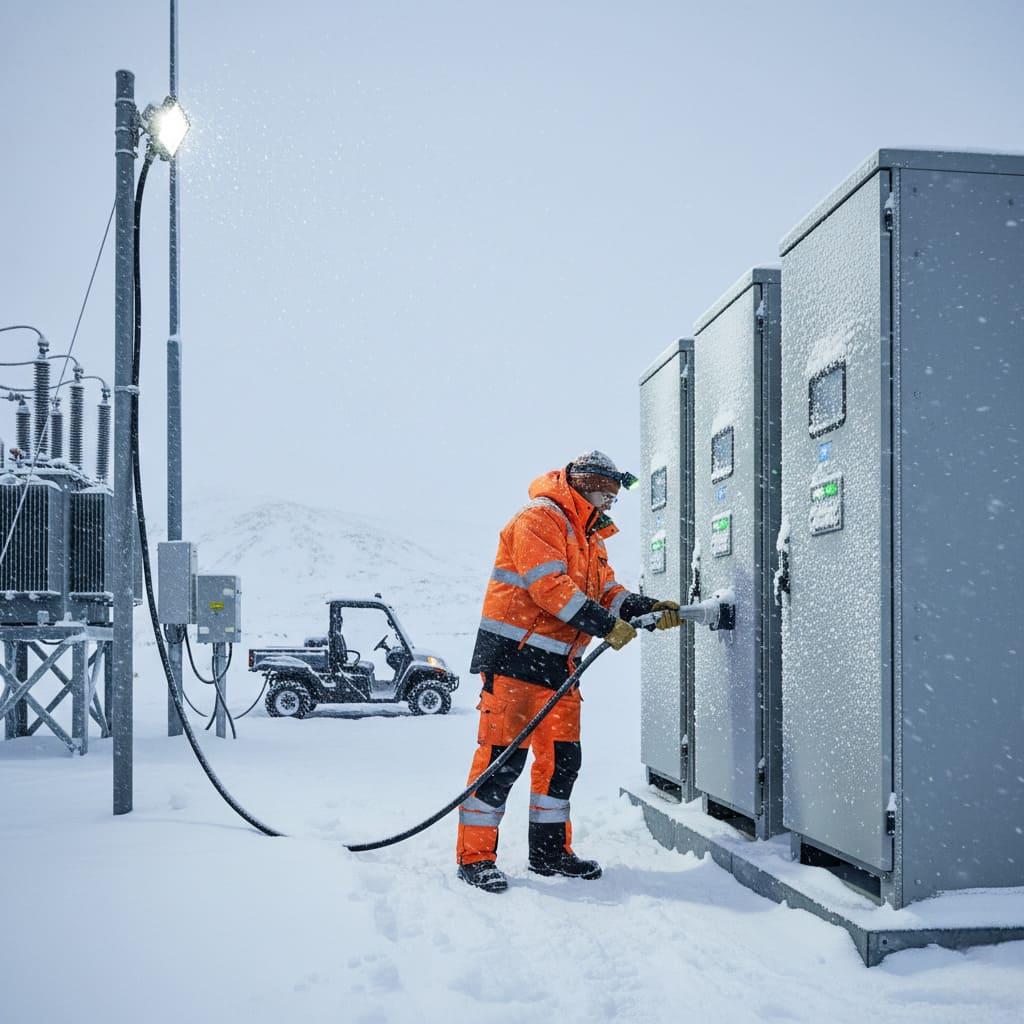
This is a practical engineering trade-off we help our customers with all the time. On one hand, you have mature, high-density lithium-ion technology. On the other, you have the emerging, cold-resistant sodium-ion technology.
A heating system for a lithium-ion battery pack is a proven solution. It uses a small amount of the battery's own energy to keep the cells above freezing. This allows the battery to deliver its full power and accept a charge safely. However, this system adds complexity, weight, and cost. More importantly, it consumes energy that could otherwise be used to power your car or home. In extremely cold weather, this "parasitic drain" can reduce your effective range or storage capacity by 5-10% before you even start using it.
Sodium-ion batteries don't need a heater. Their inherent chemical properties allow them to work well in the cold. This is a huge advantage in terms of system simplicity and efficiency. You don't waste any energy on heating. The main drawback right now is lower energy density. A sodium-ion battery pack is heavier and larger than a lithium-ion pack with the same energy capacity. For a large home storage system this might not matter, but for a sleek passenger EV, it means less range.
Heated Lithium-Ion vs. Sodium-Ion for Cold Climates
| Aspect | Heated Lithium-Ion Pack (NMC/LFP) | Sodium-Ion Pack |
|---|---|---|
| Energy Efficiency | Lower. Energy is consumed by the heater. | Higher. No energy wasted on heating. |
| Energy Density | Higher. Provides longer range for the same weight. | Lower. Results in shorter range or a heavier battery pack. |
| System Complexity | Higher. Requires heater, sensors, and control logic. | Lower. Simpler pack design. |
| Cost | Potentially higher due to the heating system. | Potentially lower due to cheaper raw materials. |
| Technology Maturity | High. Widely used and understood. | Low. Still an emerging technology. |
My advice is this: if you need maximum range and are buying a high-performance EV today, a heated pack is the way to go. If you are designing a new stationary storage system or a smaller city commuter vehicle for a cold region, sodium-ion is a very compelling and future-proof option.
What happens if you force-charge a frozen lithium battery, and is this damage reversible?
Your phone or tool battery is dead and frozen, but you need it now. You plug it in, hoping for the best. This single act could permanently destroy your battery and even cause a fire.
Force-charging a frozen lithium-ion battery causes an effect called "lithium plating." This is where metallic lithium builds up on the anode surface. This damage is permanent and irreversible. It destroys the battery's capacity and can create internal short circuits, leading to overheating or fire.
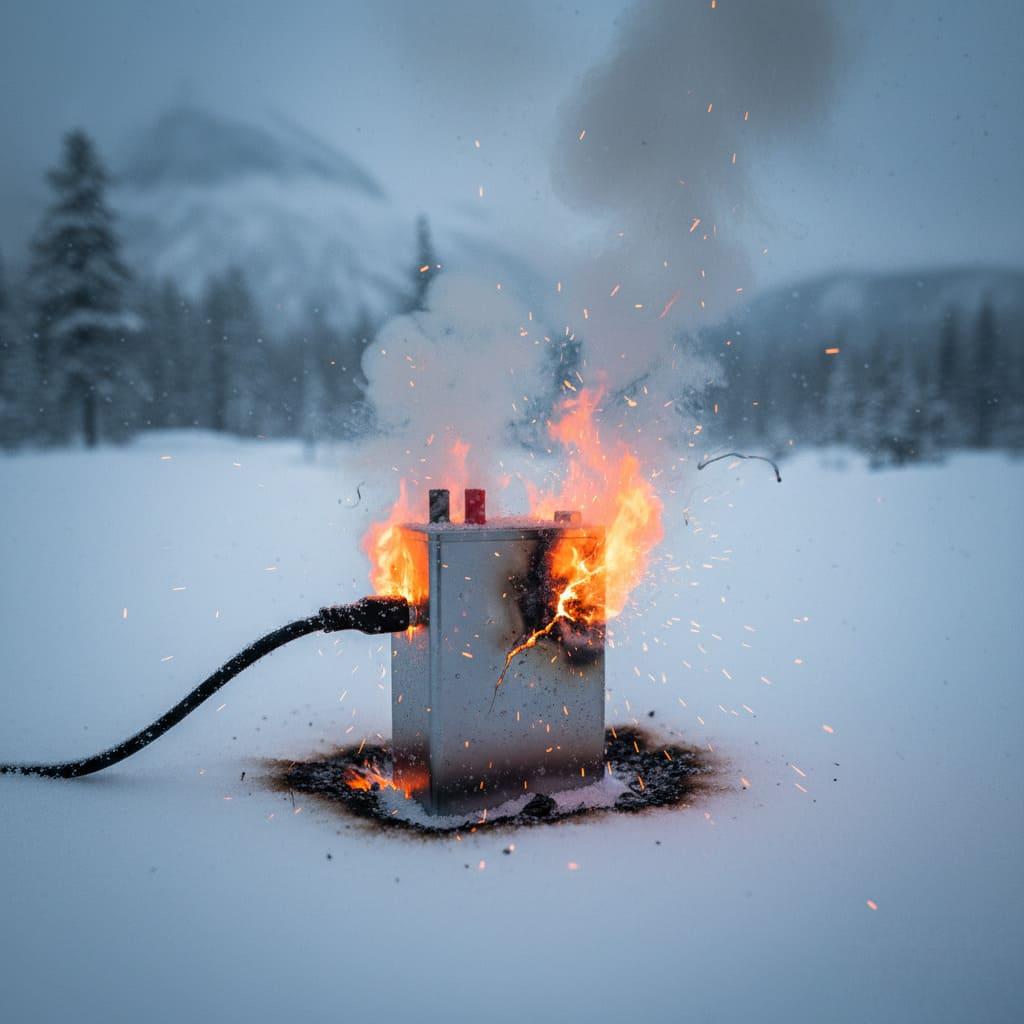
This is the single most important safety rule for lithium-ion batteries: do not charge them below 0°C (32°F). I cannot stress this enough. As a manufacturer, we build safety systems called Battery Management Systems (BMS) into our packs for this very reason. The BMS has a temperature sensor, and if it detects that the cells are too cold, it will prevent the charge from starting.
Here’s a simple way to understand what happens. Imagine the graphite anode is a parking garage, and the lithium ions are cars. At normal temperatures, the cars (ions) can easily drive into the parking spots (intercalate into the graphite). When it's freezing, the entrance to the garage is iced over. The cars can't get in fast enough. Instead of waiting, they just start piling up in the street outside the garage.
This pile-up of "cars" is metallic lithium plating. It's no longer part of the active, energy-storing material. The consequences are severe:
- Permanent Capacity Loss: The lithium that has plated is no longer available to store energy. Your battery's capacity is permanently reduced.
- Internal Short Circuits: Over time, this metallic lithium can form sharp, needle-like structures called dendrites. These dendrites can grow right through the separator that divides the anode and cathode, causing an internal short circuit.
- Safety Hazard: A short circuit can lead to a rapid increase in temperature, known as thermal runaway. This can cause the battery to swell, vent flammable gas, and even catch fire or explode.
This damage is not reversible. Once lithium has plated onto the anode, there is no way to get it back into the system. You have permanently damaged the cell. This is why it's so critical to let a cold battery warm up to room temperature before you attempt to charge it.
Conclusion
Choosing the right battery for the cold means balancing trade-offs. Sodium-ion is the undisputed champion for low-temperature performance and safety. However, NMC offers higher energy density for applications like long-range EVs. Always remember that charging lithium-ion batteries in the cold is dangerous and causes irreversible damage. If you need sodium-ion batteries or want to learn more about sodium-ion battery technology, please feel free to contact us at [email protected].