Chasing the highest capacity 18650 battery? Misleading claims can damage your devices and reputation. Let's find the truth behind the numbers and protect your investment.
As of 2025, the highest verified mass-produced capacity for an 18650 battery is 4000mAh, achieved by Far East Battery. However, the most common and stable capacities you'll find in reliable products typically range from 2200mAh to 2600mAh. Higher claims should be treated with extreme caution.
I see many clients, like Michael from the US, who are frustrated by a market flooded with exaggerated claims. They need reliable power for their medical devices1, not marketing gimmicks. It's crucial to understand what's real and what's not. It's important to look past the marketing and understand the real specifications that matter.
What are the specific models and manufacturers of the highest capacity 18650 batteries on the market right now?
Searching for top-tier 18650 cells? It's hard to know which brands are trustworthy. Choosing the wrong one can lead to poor performance and product failures.
In 2025, the 4000mAh model from Far East Battery holds the top spot for mass-produced capacity. However, major brands like Panasonic, Samsung, LG, and EVE Lithium Energy offer reliable high-capacity cells, typically in the 3400mAh to 3600mAh range, which offer a better balance of performance and stability.
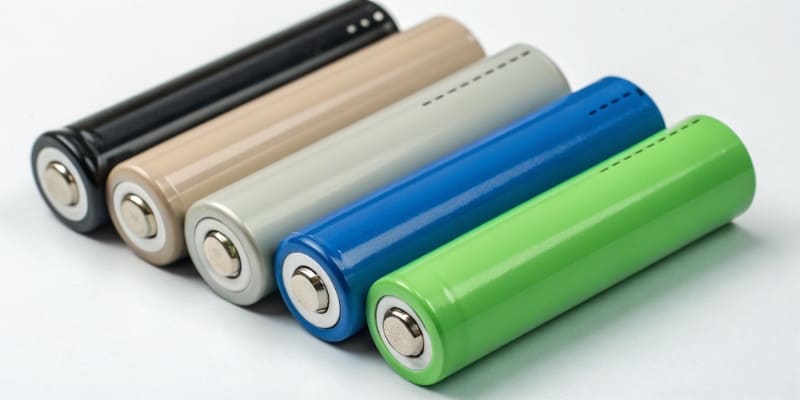
While the 4000mAh cell from Far East Battery represents a new milestone, it's not a battery you'll find in most mainstream products yet. The production of such high-density cells can be complex, and they often come with a higher price tag and questions about long-term stability that haven't been answered by years of market use. For business customers developing products that need to be reliable for years, proven technology is always the safer choice.
The Real Market Leaders
The names that procurement officers and engineers trust are the ones that have been delivering consistent quality for years. Brands like Panasonic (with their NCR18650GA cell), Samsung (INR18650-35E), and LG (INR18650 M36) are industry standards for a reason. These cells are typically rated around 3400-3600mAh and provide an excellent, proven balance of capacity, reliability, and safety. Here in China, manufacturers like EVE Lithium Energy also produce highly reliable cells that are used in premium consumer electronics, such as the CUKTECH 15 Ultra power bank. They might not chase the highest possible number, but they deliver on their promises.
Why Mainstream Products Use Lower Capacities
Most product developers prioritize a blend of features: capacity, discharge rate, cycle life, and safety. For many applications, the 2200-2600mAh range is the sweet spot. These batteries offer excellent stability, a long cycle life, and are very cost-effective. Here is a table to show the difference:
| Feature | Peak Capacity Model (Far East 4000mAh) | Mainstream High-Capacity (Samsung 35E) | Common Workhorse (Samsung 25R) |
|---|---|---|---|
| Nominal Capacity | ~4000 mAh | ~3500 mAh | ~2500 mAh |
| Typical C-Rate | Low (~0.5C) | Low to Medium (~2C) | High (~8C) |
| Primary Use Case | Low-drain devices (e.g., flashlights) | Power banks, laptops | Power tools, vaping |
| Market Availability | Niche, limited | Widely available | Very common |
| Cost & Stability | Higher cost, less proven | Moderate cost, very stable | Lower cost, highly stable |
For B2B applications, especially in medical or IoT fields, stability and a proven track record are far more important than the absolute highest mAh number on a spec sheet.
Are 18650 batteries with nominal capacities much higher than 3800mAh, like 5000mAh or more, real?
See an 18650 battery promising 5000mAh or even 9900mAh? This sounds too good to be true. Buying these can lead to disappointment, device damage, and safety risks.
No, 18650 batteries advertised with capacities of 5000mAh, 6800mAh, or higher are not real. These are fake claims. The current physical and chemical limits of the 18mm by 65mm cell size put the maximum achievable capacity around 4000mAh in 2025.
I have had many conversations with customers who have been burned by these false advertisements. They buy a batch of what they believe are high-capacity cells2 for a new product prototype, only to find the performance is terrible. We test them in our lab, and a cell labeled "3000mAh" might only deliver 1300-1600mAh. This is a common and dangerous problem in the market.
The Science Behind the Limit
The 18650 form factor has a fixed internal volume. There is a finite amount of anode, cathode, and electrolyte material that can be packed inside. Current lithium-ion chemistry has been optimized for decades, and we are now at a point where small gains in energy density are very difficult to achieve. A jump from 4000mAh to 5000mAh in the same 18650 size would require a major breakthrough in battery science, which has not happened yet.
How Fake Capacity Scams Work
There are two main ways that scammers create these fake batteries:
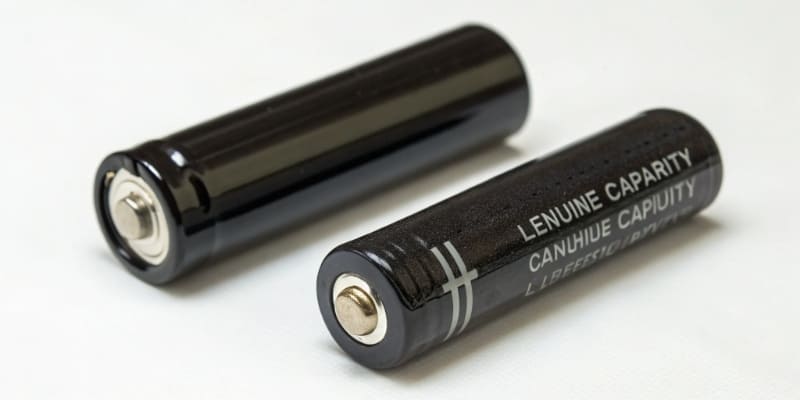
- Rewrapping: They take very cheap, low-quality cells—sometimes even recycled ones—and put a new plastic wrapper on them. This new wrapper has a well-known brand name and an impossibly high capacity printed on it.
- Misleading Units: A more subtle trick is to label the battery in milliwatt-hours (mWh) instead of milliamp-hours (mAh). For example, a battery labeled 2960mWh sounds impressive, but at a standard 3.7V, the actual capacity is only 800mAh (2960mWh / 3.7V = 800mAh).
Red Flags to Watch For
- Unbelievably high capacity: Anything advertised above 4000mAh for an 18650 is a red flag.
- Extremely low price: If the price seems too good to be true, it is.
- Unknown brand names: Be cautious of brands you've never heard of with wild claims.
- Light weight: A genuine high-capacity 18650 cell weighs around 45 to 50 grams. Fakes are often much lighter.
My advice is always to work with a reputable supplier like Litop. We provide full documentation and test reports so you know exactly what you are purchasing.
Does a higher capacity 18650 battery usually mean a lower continuous discharge current (C-rate)?
You need a battery with long runtime, but also high power? It's a common dilemma. Choosing a battery based on capacity alone can result in poor performance for your device.
Yes, there is generally an inverse relationship. Higher capacity (mAh) 18650 batteries are optimized for energy density and typically have a lower continuous discharge rating (C-rate). Batteries designed for high power output, like those for power tools3, have lower capacity.
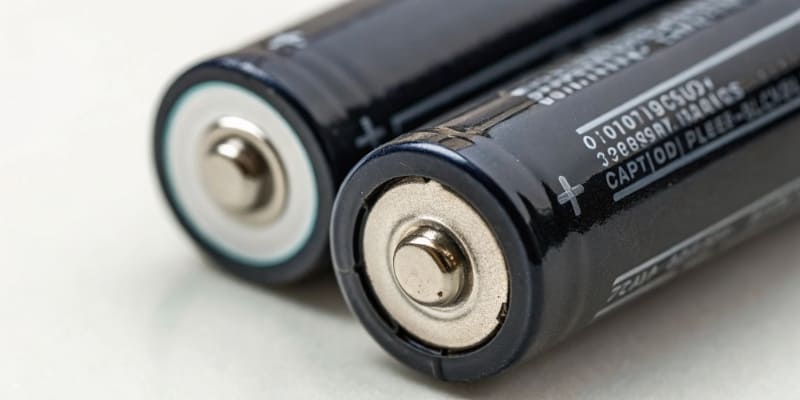
This is one of the most important concepts in battery selection, and it's a fundamental trade-off in battery design. You can think of it like a water bottle. A high-capacity battery is a large bottle with a narrow opening. It holds a lot of water (energy), but you can only pour it out slowly (low power/C-rate). A high-power battery is a smaller bottle with a very wide opening. It holds less water, but you can dump it all out very quickly (high power/C-rate).
The Energy vs. Power Trade-off
The reason for this comes down to the battery's internal construction. To maximize capacity, engineers make the internal components, like the electrodes, as thin as possible to pack more energy-storing material into the cell. This design, however, increases internal resistance and makes it harder for energy to flow out quickly. To create a high-power cell, the electrodes are made thicker and the internal design is changed to lower resistance. This allows for a rapid flow of energy but takes up more space, leaving less room for energy storage material.
Matching the Battery to the Application
At Litop, this is the first thing we discuss when designing a custom battery pack. The application dictates the choice of cell. A flashlight needs to run for hours, so we choose a high-capacity, low-drain cell. A surgical power tool needs a huge burst of power to work correctly, so we must choose a high-C-rate cell, even if it means the capacity is lower.
| Application | Required Feature | Ideal 18650 Type | Example Cell Model |
|---|---|---|---|
| LED Flashlight | Long runtime, low power draw | High Capacity, Low C-rate | Samsung INR18650-35E (3500mAh, 8A) |
| Laptop Battery Pack | Good capacity, moderate power draw | Balanced Capacity & C-rate | LG INR18650-MJ1 (3500mAh, 10A) |
| Cordless Drill | High torque, high power draw | Low Capacity, High C-rate | Molicel P26A (2600mAh, 35A) |
| IoT Sensor | Very long life, tiny power draw | High Capacity, Very Low C-rate | Panasonic NCR18650GA (3450mAh, 10A) |
Choosing the wrong type of cell is not just inefficient; it can be dangerous. Using a high-capacity, low-C-rate cell in a high-power device can cause the battery to overheat, which can lead to failure and damage.
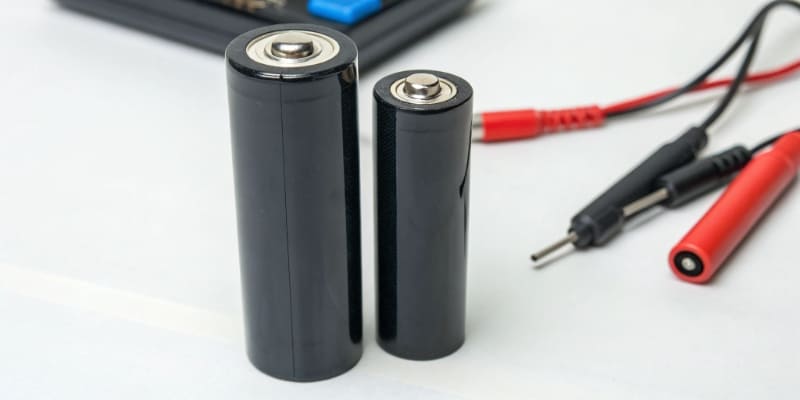
What are the main advantages of 21700 batteries4 compared to 18650 batteries in terms of capacity and performance?
Is the trusted 18650 battery format becoming obsolete? New devices are using 21700 cells instead. Sticking with older tech could put your product at a competitive disadvantage.
The 21700 battery's main advantage is its larger size (21mm diameter, 70mm height). This increased volume allows for significantly higher capacity (up to 5000-6000mAh) and often better C-rates, leading to higher overall energy density and performance compared to the 18650.

The 18650 cell has been an amazing workhorse for the electronics industry for over two decades. However, the physical size of the cell creates a hard limit on performance. As device power demands have grown, the industry needed a new standard. The 21700 cell is the answer to that need, and it's quickly becoming the new default for high-performance applications.
The Numbers Don't Lie
The name of the cell tells you its size: an 18650 is 18mm in diameter and 65mm long. A 21700 is 21mm in diameter and 70mm long. While these numbers seem only slightly different, this results in a volume increase of nearly 50%. More volume directly means more space for active materials, which translates to more energy and power. This is why leading companies in demanding fields, from Tesla in electric vehicles to Anker in their high-end power banks, have switched to the 21700 format.
Key Advantages of the 21700
- Higher Capacity: Top-tier 21700 cells from brands like Samsung (50S) and Molicel (P45B) can offer capacities of 4500mAh to 5000mAh, a major step up from the ~3500mAh practical limit of reliable 18650s.
- Higher Power Output: The larger format and improved internal design lead to lower internal resistance. This means 21700 cells can deliver higher continuous discharge currents. A single 21700 cell can often do the job of two 18650 cells in a high-drain device, which simplifies the design of the battery pack and can even reduce cost.
- Better Energy Density: By packing more capacity into a single cell, the overall energy density (the amount of energy stored per kilogram) is often higher in a 21700. This is critical for making products lighter and more compact without sacrificing runtime.
Is the 18650 Dead?
No, not at all. The 18650 is not going away anytime soon. It has a huge and mature manufacturing base, which makes it very cost-effective. For countless devices where space is extremely tight and power needs are moderate, the 18650 remains the perfect choice. However, for new product designs that require the best possible performance, we are now advising most of our clients to start with the 21700 platform. It offers a clear advantage and helps future-proof their products.
Conclusion
In short, the true max capacity for an 18650 battery in 2025 is 4000mAh, but be wary of fake claims. Always balance capacity with C-rate for your application, and consider the superior 21700 cell for new, high-performance designs. Sourcing from a trusted partner is key.
Find out which batteries are most reliable for critical medical applications. ↩
Learn about high-capacity cells to ensure you choose the right battery. ↩
Selecting the right battery type is crucial for optimal power tool performance. ↩
Explore the benefits of 21700 batteries for high-performance applications. ↩