Struggling to understand the brain behind the drone? A powerful Unmanned Aircraft System (UAS) is useless without its command center. Here's how a GCS makes it all work seamlessly.
A Ground Control Station (GCS) is the central command hub for a UAS. It uses hardware and software to let an operator control the drone, plan missions, receive live data like video, and monitor the drone's health, including its battery status and communication link quality.
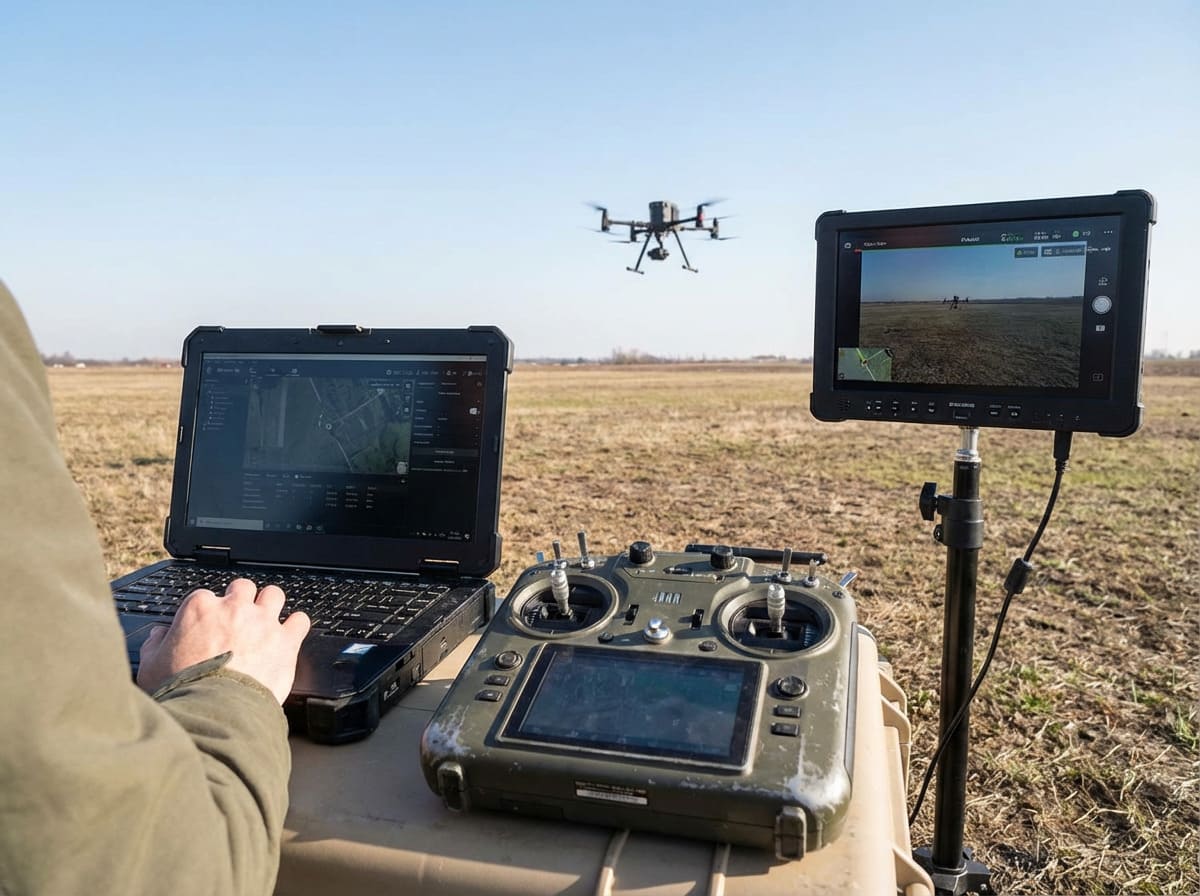
Now that we have a basic idea, it's clear the GCS is more than just a remote control. In my years of experience providing battery solutions for complex electronic systems, I've seen how the GCS acts as the entire ecosystem that ensures a mission's success. It's the critical link between the operator's intent and the drone's action. So, let's explore the specific components that power these complex operations.
What are the mainstream GCS software options, and what are the differences between them?
Confused by the variety of GCS software? Choosing the wrong one can limit your drone's potential and cause major headaches. Let's simplify the main options and their key distinctions for you.
Mainstream GCS software includes Mission Planner (open-source, highly customizable), QGroundControl (cross-platform, user-friendly), and proprietary software like DJI Ground Station Pro (ecosystem-specific). The main differences are in customization level, platform support (Windows, Mac, Linux), and compatibility with specific drone hardware.
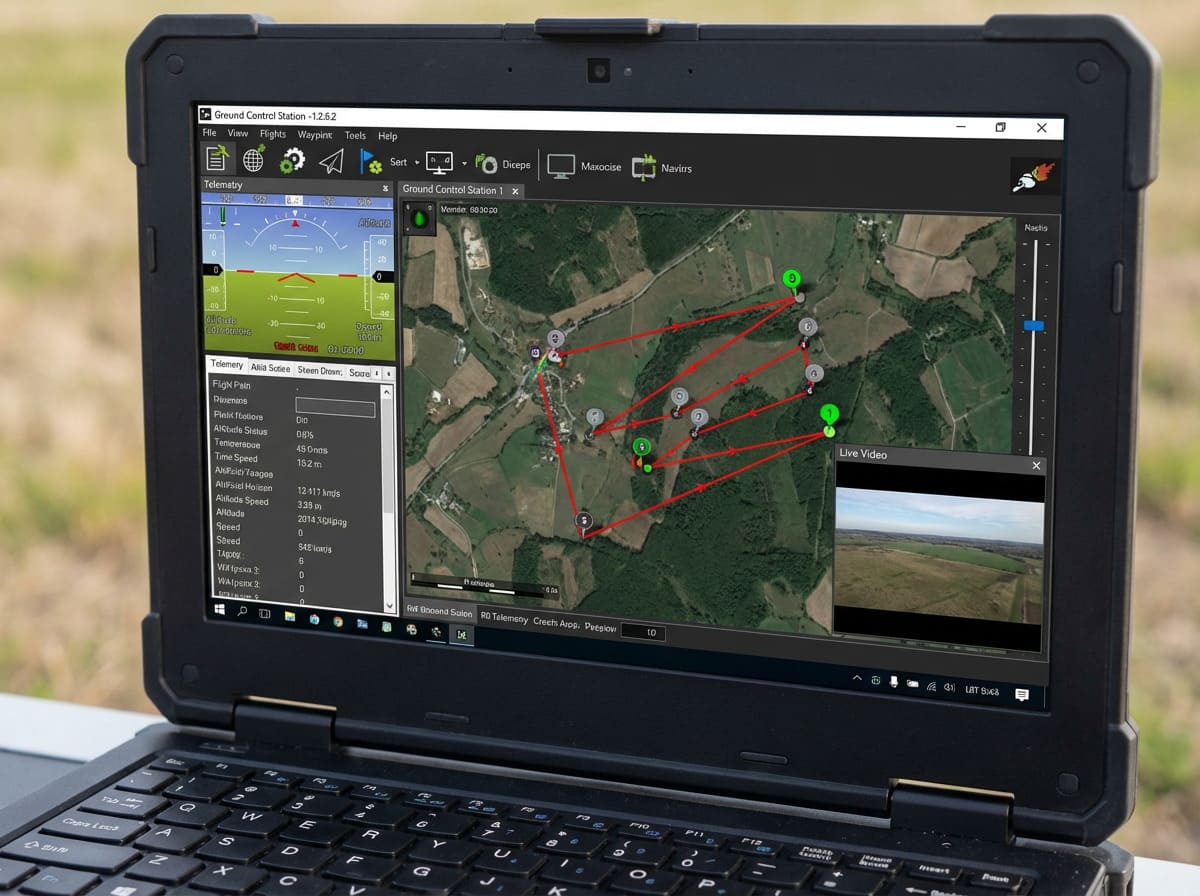
The software is the soul of the GCS. It determines what you can do and how easily you can do it. From my perspective in the battery industry, the software choice even impacts power consumption profiles, as different programs place different demands on the system's processing hardware. The market is generally split between two philosophies: open-source and proprietary.
Open-Source vs. Proprietary Software
Open-source software, like Mission Planner and QGroundControl, is incredibly popular. The main advantage is flexibility. You can modify the code, add new features, and integrate it with a wide range of hardware because it's built on open standards like MAVLink. This is perfect for researchers, developers, or companies building highly customized drones. The downside is that support comes from the community, which can sometimes be a slower process.
Proprietary software, like DJI Ground Station Pro or UgCS, is developed and sold by a single company. The biggest benefit here is seamless integration and professional support. Everything is designed to work perfectly together, right out of the box. However, this often locks you into that company's ecosystem of drones and accessories.
Key Software Comparison
To help you choose, I've put together a simple table comparing some of the most popular options I see my clients using.
| Software | Key Feature | Best For | Platform(s) |
|---|---|---|---|
| Mission Planner | Highly customizable, ArduPilot focus | Hobbyists, Researchers, Custom builds | Windows |
| QGroundControl | Cross-platform, user-friendly UI | Beginners, MAVLink-compatible drones | Windows, Mac, Linux, iOS, Android |
| DJI GS Pro | Seamless DJI integration, automated missions | DJI drone users for professional work | iOS (iPad only) |
| UgCS | Advanced 3D planning, multi-drone support | Professional surveyors, enterprise users | Windows |
The choice really depends on the application. A medical device company developing a delivery drone might prefer a locked-down proprietary system for its proven reliability. In contrast, a university research team studying environmental patterns might need the extreme flexibility of Mission Planner to integrate custom sensors.
How can the communication distance and signal link between the ground station and the drone be optimized?
Losing signal with your drone is a mission-critical failure. This signal loss can be frustrating, dangerous, and costly. Here is how to optimize your communication link for maximum range and reliability.
To optimize the communication link, use high-gain antennas on both the GCS and drone, and always maintain a clear line of sight. Employing a more powerful transmitter, using lower frequency bands, and incorporating a signal repeater or a cellular/satellite link can also significantly extend your range.
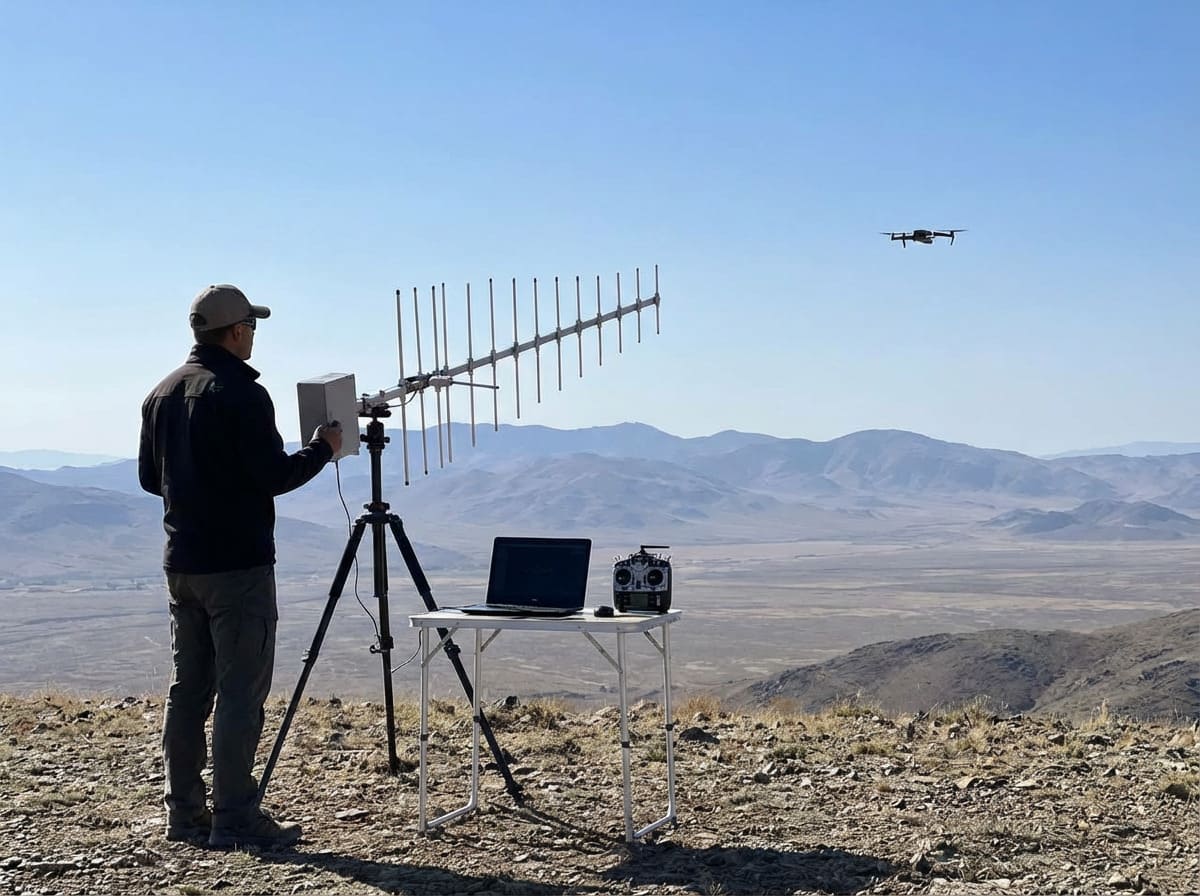
A stable data link is the lifeline of any drone operation. It carries your commands to the drone and brings vital telemetry and sensor data back. When a customer comes to us at Litop for a battery for a long-range application, the first thing we discuss is the power draw of their communication system, because a stronger signal almost always requires more power. Let's break down the optimization methods.
Hardware-Based Optimization
Your hardware choices are the foundation of a strong link.
- Antennas: You have two main types. Omnidirectional antennas broadcast a signal in all directions, which is great for close-range flights where the drone is maneuvering a lot. Directional antennas, like Yagi or patch antennas, focus the signal in a single direction. They offer much greater range but must be pointed directly at the drone. Many professional GCS setups use an antenna tracker to automate this.
- Transmitters: A more powerful transmitter (measured in watts or dBm) will push the signal farther. However, transmitter power is strictly regulated by government agencies, so you must operate within legal limits.
- Frequency: The frequency band you use matters a lot. Lower frequencies, like 900MHz, can travel farther and penetrate obstacles better than higher frequencies like 2.4GHz or 5.8GHz. The trade-off is that lower frequencies often have less bandwidth, meaning they can't carry as much data.
System-Based and Network Solutions
Beyond the hardware, how you operate is just as important.
- Line of Sight (LoS): This is the most critical factor for most radio links. Anything between the GCS and the drone—hills, buildings, even dense trees—can block or weaken the signal. Flying at a higher altitude is the simplest way to improve LoS.
- Beyond Visual Line of Sight (BVLOS): For true long-range missions, you need to go beyond standard radio links. This is where cellular (4G/5G) and satellite communication come in. These technologies allow you to control a drone from anywhere with network coverage. This is how military drones like the MQ-9 Reaper are flown from the other side of the world. However, these systems add complexity and depend on third-party networks. They also require a very stable power source on the drone, which is a key reason clients trust our custom batteries for these critical applications.
How do you ensure the data link between the ground control station and the drone is secure?
Worried about your drone being hacked or its data being stolen? An insecure link is a huge vulnerability for any serious operation. Securing your data link is not optional; it's essential.
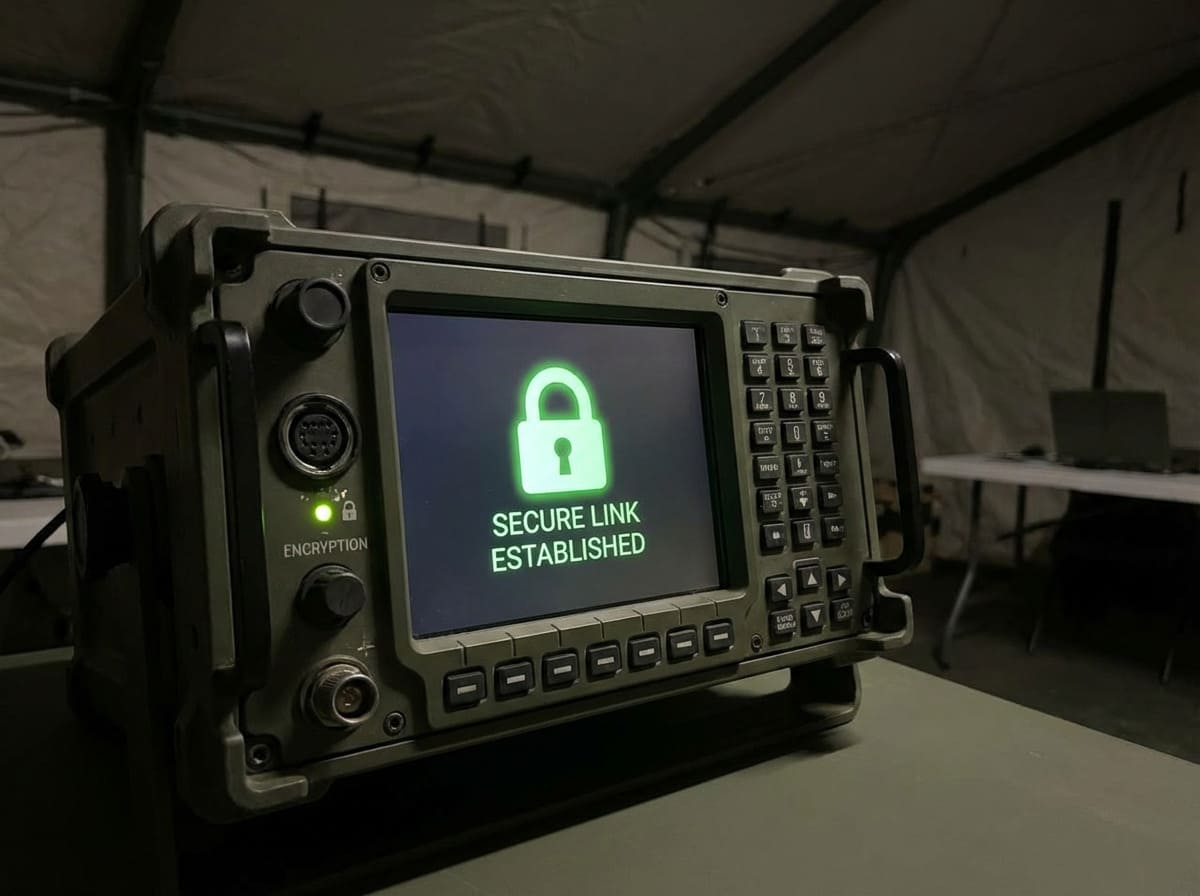
To secure the data link, use strong encryption like AES-256 for both command and telemetry data. Implement frequency hopping spread spectrum (FHSS) technology to resist jamming. Also, use robust authentication protocols to ensure only your authorized ground station can control the drone.
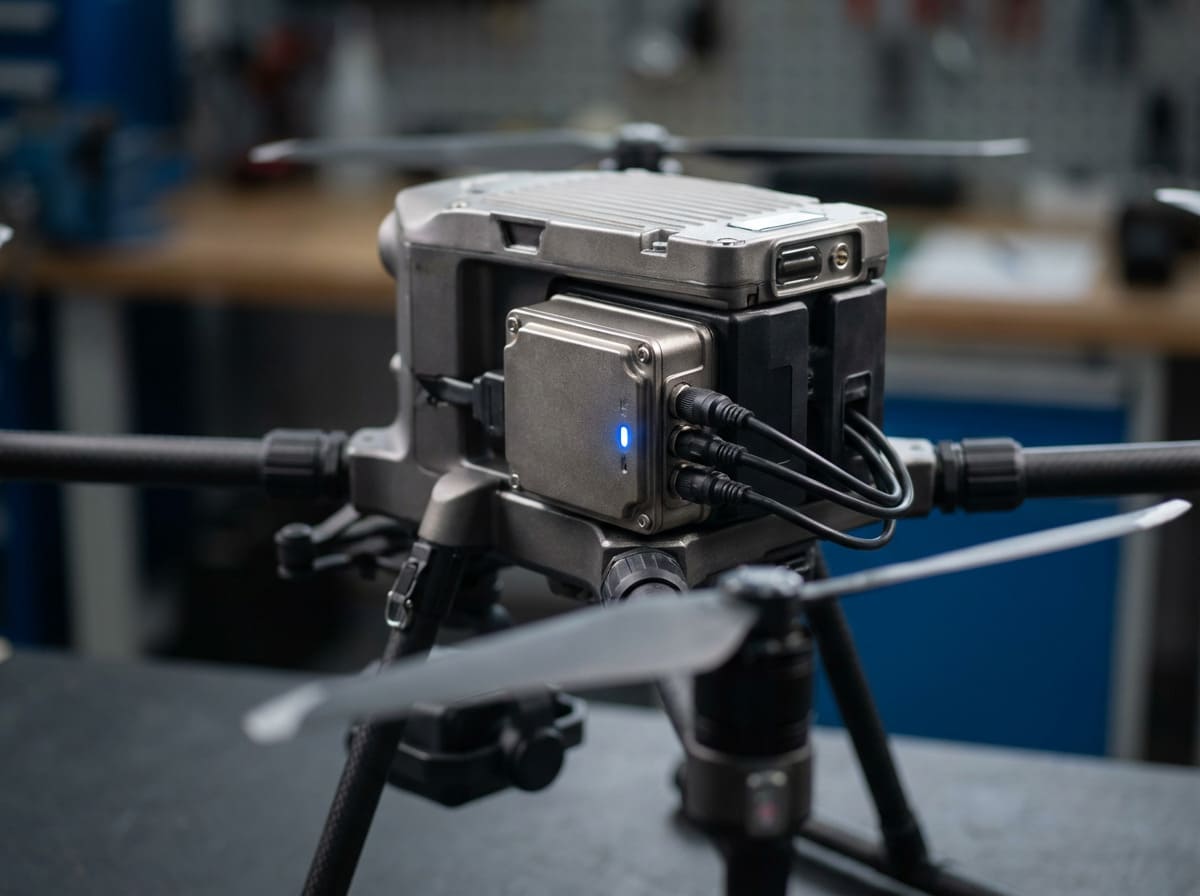
In today's world, data security is paramount. For many of my clients, especially in medical and industrial fields, the data collected by the drone is far more valuable than the drone itself. A security breach could mean a hijacked aircraft, stolen intellectual property, or a complete mission failure. That’s why military-grade security features are now becoming standard in professional UAS. Let's look at the core security layers.
Encryption and Authentication
These two concepts are the bedrock of data link security.
- Encryption: Think of this as putting your data into an unbreakable code. Modern systems use the Advanced Encryption Standard (AES), with AES-256 being a common benchmark for top-level security. This process scrambles the command and control signals, as well as the video and telemetry data coming back. Without the correct "key," the data is just meaningless noise to an eavesdropper.
- Authentication: This is about proving you are who you say you are. Before a GCS can control a drone, they perform a digital "handshake." They exchange secret keys to verify each other's identity. This prevents a rogue GCS from taking over your drone mid-flight. It's like a complex, automated password that protects your asset.
Anti-Jamming and Anti-Spoofing Techniques
Sophisticated attackers may try to disrupt your signal rather than just listen to it.
- Frequency Hopping Spread Spectrum (FHSS): This is a brilliant anti-jamming technique. Instead of staying on one frequency, the GCS and drone rapidly jump between many different frequencies in a predetermined but seemingly random pattern. A jammer might be able to block one or two frequencies, but it can't block them all at once. The communication link remains intact.
- GPS Security: Securing the command link is only half the battle. An attacker could also "spoof" the GPS signal, feeding your drone false location data to make it fly off course. Protecting against this involves using redundant navigation systems, like an Inertial Navigation System (INS), which can detect when GPS data doesn't match the drone's actual movement. A reliable battery is crucial here, as these backup systems must have uninterrupted power to function when needed.
In multi-drone collaboration or swarm operations, how does one ground station control multiple drones simultaneously?
Controlling one drone is a challenge; managing a whole swarm seems impossible. But it's not. Specialized GCS software and advanced communication protocols make multi-drone operations efficient and scalable.
A GCS controls multiple drones by using advanced software that manages them as a single collective entity. It uses high-bandwidth data links and swarm intelligence algorithms to assign group tasks, manage formations, and avoid collisions without needing to micromanage each individual drone.
The idea of a single person controlling dozens or even hundreds of drones at once sounds like science fiction, but it's a reality today in fields from agricultural surveying to entertainment light shows. The secret is that the operator doesn't fly each drone individually. They manage the swarm as a whole. As a battery supplier, this area fascinates me because the power requirements for a swarm are immense and require absolute consistency across every single unit.
The Role of Advanced GCS Software
The GCS software is what makes swarm control possible. Instead of joysticks for each drone, the operator interacts with a high-level interface.
- Abstracted Commands: The operator gives commands to the entire swarm, not individual drones. For example, they might draw a box on a map and command, "Scan this area," or select a moving object and say, "Follow this target."
- Automated Task Management: The GCS software takes this high-level command and breaks it down into specific instructions for each drone. It automatically calculates flight paths, assigns search sectors, and ensures the drones work together efficiently to complete the task. It also handles deconfliction, making sure the drones don't run into each other.
Communication Architecture and Swarm Intelligence
Controlling a swarm requires a different way of thinking about communication and control.
- Communication Network: A simple star network, where every drone talks directly to the GCS, isn't scalable. Instead, swarms often use a mesh network. Drones can relay commands and data to each other. This extends the range of the swarm far beyond the direct range of the GCS and adds redundancy. If one drone loses its direct link to the GCS, it can still receive commands through its neighbors.
- Swarm Intelligence: This is where it gets really interesting. Each drone in the swarm has a degree of autonomy. They are programmed with rules that allow them to coordinate with each other. They can maintain formation, adjust positions, and even re-task themselves if another drone in the swarm fails or its battery dies. The GCS acts as a "swarm manager," setting the overall goals, while the drones figure out the details among themselves. This distributed approach is robust and highly effective.
Conclusion
The Ground Control Station is the undisputed brain of any Unmanned Aircraft System. It has evolved from a simple remote into a sophisticated command center. Understanding your software options, communication links, security needs, and multi-drone capabilities is critical. For reliable power solutions for your GCS or UAS, contact us at Litop.