Struggling to choose between longer runtime and more power for your device? This choice can feel impossible, making you worry about product performance. You need the right balance to succeed.
The main trade-off is that high capacity and high discharge rate are opposing goals. To get more capacity (longer runtime), you must sacrifice discharge rate (power). To get a higher discharge rate, you must accept a lower effective capacity and energy density.
I talk with clients about this balance every single day. It’s one of the most fundamental challenges in battery design. People often want a battery that is small, lasts forever, and delivers incredible power. Unfortunately, the laws of physics and chemistry get in the way. Understanding this core conflict is the first step to designing a successful product. It’s not about finding a battery that does everything perfectly. It’s about finding the battery that does the right things perfectly for your specific application. Let’s dive into what that means for you.
What are the best application scenarios for high-capacity versus high-discharge-rate batteries?
Your product needs a battery, but do you prioritize long life or high power? Choosing the wrong one can lead to customer complaints and device failures. This decision directly impacts user experience.
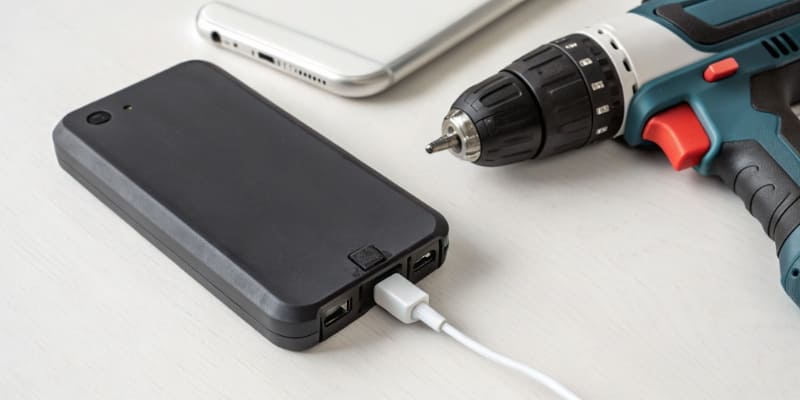
High-capacity batteries are best for low-drain devices needing long runtime, like power banks, IoT sensors, and flashlights. High-discharge-rate batteries are ideal for high-power applications requiring sudden bursts of energy, such as drones, power tools, and medical defibrillators.
At Litop, we customize battery solutions, and this choice is always the starting point of our conversation. A client once came to us for a battery for a portable medical scanner. They initially requested the highest capacity possible. But during our technical review, we discovered the device needed a huge surge of power for a few seconds during the scanning process. A standard high-capacity battery would have failed under that load, potentially causing the device to shut down mid-scan. We switched the focus to a high-rate battery, which slightly reduced the overall runtime but guaranteed the device would perform its core function flawlessly.
This illustrates the "endurance" versus "burst power" dilemma. To make it clearer, think about the internal structure. To increase capacity, we pack as much active material as possible into the electrode, making it very dense. This leaves very little room for ions to move quickly. For a high discharge rate, we need the opposite. We create a more porous electrode structure with better conductive pathways, which allows ions to move freely and quickly. But these pathways take up space that could have been used for more active, energy-storing material.
Here’s a simple table to guide your decision:
| Feature | High-Capacity Battery | High-Discharge-Rate Battery |
|---|---|---|
| Primary Goal | Maximize runtime (Endurance) | Maximize power output (Burst) |
| Internal Design | Dense electrode, more active material | Porous electrode, more conductive paths |
| Typical C-Rate | 0.2C to 1.5C | 2C to 10C+ |
| Best For | Slow, steady energy consumption | Short, intense bursts of power |
| Example Devices | Wearables, GPS trackers, smart home sensors | RC cars, vape devices, surgical tools |
Ultimately, you need to analyze your product’s load profile. Does it draw a small, consistent current for hours, or does it sit idle and then demand a massive amount of power instantly? Answering that question will point you directly to the right type of battery.
What does 'C-rate' mean and how do you calculate it for your application?
You see "C-rate" in battery specs, but what does it actually mean? Misunderstanding this term can lead to selecting an underspecified battery, causing performance issues or even system failure.
The C-rate measures the speed at which a battery is charged or discharged relative to its maximum capacity. A 1C rate means the battery is discharged in one hour. A 2C rate means 30 minutes, and a 0.5C rate means two hours.
I often find that C-rate is a point of confusion for new clients. It's an abstract concept until you connect it to real-world performance. Think of it like a water tank. The capacity (in mAh) is the total amount of water in the tank. The C-rate is how wide you open the tap. A high C-rate is like opening the tap all the way—you get a powerful gush of water, but the tank empties quickly. A low C-rate is just a trickle, which is less powerful but lasts much longer.
The calculation is straightforward. The "C" is simply the battery's capacity in Amp-hours (Ah). Discharge Current (Amps) = C-Rate x Battery Capacity (Ah)
Let's use a practical example. Say you are designing a handheld GPS tracker with a 4000mAh (or 4Ah) battery.
- If the device draws 800mA (0.8A) during normal operation, the C-rate is:
Discharge Rate = Current / Capacity = 0.8A / 4Ah = 0.2CThis is a low-drain application, perfect for a high-capacity battery. - Now, imagine the same device has a feature to send an emergency signal that requires a sudden power draw of 4000mA (4A). The C-rate during this event is:
Discharge Rate = 4A / 4Ah = 1C - If it were a power tool that needed 8A of power from that same battery, the C-rate would be:
Discharge Rate = 8A / 4Ah = 2CThis would require a battery designed for high-rate discharge.
When you're specifying a battery, you need to know two things: the maximum continuous current your device will draw and the peak pulse current it might need. These numbers will tell us what C-rate capability your battery must have. Overlooking the peak current is a common mistake that leads to voltage sag and unexpected shutdowns. Always design for the toughest power demand your product will face.
What sacrifices are made in price, lifespan, or safety for a battery with both high capacity and a high discharge rate?
You want a battery that offers both great capacity and high power. But this "perfect" battery seems more expensive or has a shorter life. You're wondering what the hidden costs and risks are.
Pursuing both high capacity and high discharge rate in one battery forces compromises. These batteries are more expensive due to advanced materials, have a shorter cycle life due to increased stress, and can pose higher safety risks if not managed properly.
Trying to get the best of both worlds is a classic engineering challenge. You can absolutely push a battery to do more, but it always comes at a cost. At Litop, our R&D team works on this constantly, and the trade-offs are very clear. Let's break them down into three key areas.
1. Price
To improve both energy density1 and power density, you need better materials. This might mean using more expensive cathode materials with cobalt, adding special conductive coatings like graphene, or using more advanced electrolytes and separators. The manufacturing process also becomes more complex and requires tighter quality control. For example, creating a thinner separator that is still strong enough to prevent short circuits costs more than a standard one. All these factors add up, making a high-performance hybrid battery significantly more expensive than a standard capacity-focused or power-focused cell. You are paying a premium for pushing the chemistry to its limits.
2. Lifespan (Cycle Life)
High-current discharge is stressful for a battery. It generates more heat and accelerates chemical side reactions that degrade the battery's components over time. Think of it like running a car's engine at its redline all the time. It will perform incredibly, but it won't last as long as an engine that is run at a moderate speed. Each time you rapidly discharge the battery, you cause tiny, irreversible damage to the electrode structure. Over hundreds of cycles, this damage accumulates, leading to a faster drop in capacity. A battery rated for 500 cycles at 0.5C might only last 250-300 cycles if it's consistently discharged at 2C.
3. Safety
This is the most critical trade-off. Pushing a high current through the battery generates significant internal heat. If this heat isn't managed, it can lead to a dangerous condition called thermal runaway, where the battery's temperature rises uncontrollably, potentially leading to fire or explosion. To mitigate this, high-rate batteries require a more sophisticated Battery Management System (BMS) with precise temperature monitoring2 and over-current protection. They also need better physical design for heat dissipation. These safety features are non-negotiable but add to the battery pack's cost and complexity.
Are there new technologies that can improve both battery capacity and discharge performance?
You're constantly looking for a competitive edge for your product. You hear about new battery breakthroughs and wonder if they can finally solve the capacity vs. power trade-off. This could be a game-changer.
Yes, several emerging technologies aim to improve both capacity and discharge performance simultaneously. Key areas of research include silicon anodes, solid-state electrolytes, and advanced nanomaterials. However, most are still in development and not yet widely available for commercial mass production.
As a battery manufacturer, we are always watching the horizon for the next big thing. My engineering team spends a lot of time evaluating new materials and cell designs. While the standard lithium-ion battery is still the king for most applications, there is exciting progress being made to overcome its fundamental limitations. The goal is to create a battery that doesn't force you to choose between endurance and power.
Here are a few of the most promising areas:
-
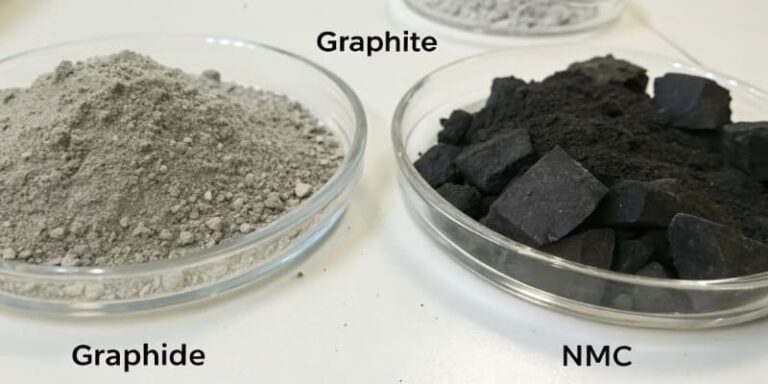
Silicon Anodes: Traditional lithium-ion batteries use graphite for the anode. Silicon can theoretically hold over ten times more lithium ions than graphite, which would lead to a massive boost in energy capacity. The problem has always been that silicon swells and cracks during charging and discharging, destroying the battery quickly. Researchers are now developing silicon-composite or nanostructured silicon anodes that can handle this stress, promising higher capacity without crippling the cycle life or discharge rate.
-
Solid-State Batteries: These batteries replace the flammable liquid electrolyte with a solid material. This solid electrolyte could dramatically improve safety by eliminating the risk of leaks and fire. More importantly for performance, some solid electrolytes have the potential to enable the use of lithium metal anodes, which offer the ultimate energy density. They also promise faster charging and better performance in a wider range of temperatures. This is a very active area of research, but manufacturing them at scale is still a major hurdle.
-
Advanced Nanomaterials: Scientists are using materials like graphene and carbon nanotubes to enhance battery performance. When added to electrodes, these materials can create highly efficient electrical pathways. This dramatically improves conductivity, allowing ions to move much faster. The result is a battery that can be discharged (and charged) at much higher rates without suffering the same efficiency loss. This directly tackles the discharge rate side of the equation while also potentially enabling thicker, more energy-dense electrodes.
These technologies are incredibly exciting, but it's important to be realistic. They often come with their own new sets of challenges, like high manufacturing costs and unproven long-term reliability. For now, the most practical approach is to work with an experienced partner like Litop to optimize today's proven lithium-ion technology for your specific needs.
Conclusion
The tension between battery capacity and discharge rate is a core challenge in product design. High capacity gives you long runtime, while a high discharge rate provides powerful performance. You can't maximize both. The key is to understand your product's needs and choose the right balance for success.