Confused by complex UAV export rules? Worried about accidental violations and heavy fines? These regulations can be a maze, but breaking them down is essential for your business.
ITAR (International Traffic in Arms Regulations) governs military-grade UAVs, requiring strict licenses. EAR (Export Administration Regulations) covers dual-use UAVs. For example, some commercial drones with less than 1-hour flight time may be exported license-free to certain countries under new rules.
Navigating these rules is crucial for anyone in the UAV industry, whether you're developing, manufacturing, or exporting. A mistake can cost you dearly. It's not just about the finished product; it's about the components, the software, and even the know-how. This complexity is why many clients come to me—they need partners who understand not just the hardware, like the custom batteries we make at Litop, but also the regulatory landscape. Getting it wrong means shipments get seized, fines are levied, and market access is denied. Let's dig deeper into how you can stay compliant and keep your business moving forward.
How can I reclassify my UAV from ITAR to EAR control through the Commodity Jurisdiction (CJ) process?
Is your UAV stuck under strict ITAR controls, limiting your market? You might be missing a chance to reclassify it. This process can open up huge commercial opportunities for your product.
To reclassify a UAV from ITAR to EAR, you must submit a Commodity Jurisdiction (CJ) request to the U.S. Department of State. You need to prove your UAV lacks significant military capabilities and is more aligned with commercial use, opening up broader export possibilities.
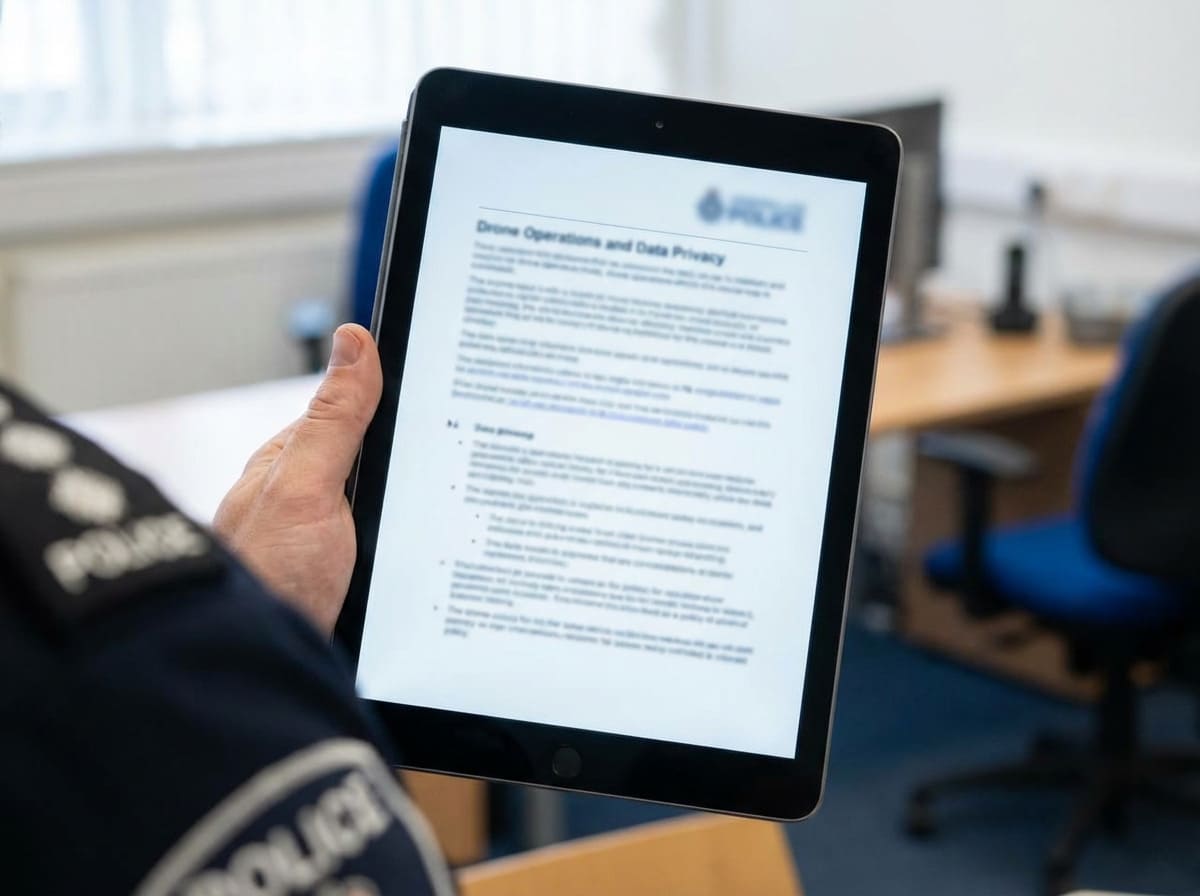
The process of moving a product from ITAR to EAR control can feel intimidating, but it's a path many have successfully navigated. The key is the Commodity Jurisdiction (CJ) request submitted to the State Department's Directorate of Defense Trade Controls (DDTC). This is your formal case to argue that your product does not belong on the U.S. Munitions List (USML) and should instead be regulated by the Department of Commerce under the EAR.
The Steps of a CJ Request
The entire process is managed through official channels. You'll need to fill out the Form DS-4076, providing exhaustive details about your UAV. This isn't a simple form; it requires deep technical specifications, design documents, information on your intended use cases, and even your marketing materials. The goal is to paint a clear picture showing your UAV's primary function is commercial, not military.
Key Arguments for Reclassification
Your argument must be compelling. You need to demonstrate that your UAV was not specifically designed, developed, or modified for a military application. For instance, if your drone is designed for agricultural crop spraying or cinematic photography, you should highlight that. Contrast its features with the specific criteria listed in USML Category VIII(a), which covers military aircraft. A strong case often includes evidence of widespread commercial availability of similar systems or components. I remember working with a client whose mapping drone was initially flagged under ITAR. We helped them prepare a CJ request by highlighting its off-the-shelf sensors and software used by civilian surveyors. Getting it reclassified to EAR was a game-changer for their global sales strategy.
| Feature | ITAR (USML Category VIII) | EAR (ECCNs like 9A012) |
|---|---|---|
| Primary Design | Specifically for military use (reconnaissance, targeting) | Commercial or dual-use |
| Payload | Designed for weapons, military sensors, or jammers | Designed for cameras, agricultural sensors, delivery |
| Performance | Often exceeds MTCR thresholds (300km range) | Typically below MTCR thresholds; e.g., <1 hour endurance |
| Control Agency | Department of State (DDTC) | Department of Commerce (BIS) |
| Licensing | Requires specific export licenses; very restrictive | Often eligible for license exceptions (e.g., STA) or No License Required (NLR) |
What is a 'Deemed Export'? Is it a violation if my US company hires a non-US citizen to develop flight control algorithms?
Hiring international talent in the US? Be careful. You might be illegally "exporting" technology without anything leaving the country. This simple mistake can lead to severe penalties for your company.
A 'deemed export' occurs when controlled technology is released to a foreign national within the U.S. Yes, hiring a non-U.S. citizen to develop controlled flight control algorithms without a proper license is a violation, as it's treated like an export to their home country.
The concept of a "deemed export" is one of the most common traps for tech companies in the United States. It's a rule that says transferring controlled technology or technical data to a foreign person inside the U.S. is "deemed" to be an export to that person's country of citizenship. This rule catches many managers and founders by surprise. They think that as long as no physical product ships overseas, they are in the clear. That is incorrect.
Understanding "Technology" and "Release"
The regulations are very broad in what they consider "technology" and a "release." Technology isn't just the finished source code. It includes blueprints, process specifications, technical data, and even conversations about a controlled design. A "release" is just as broad; it can happen through a visual inspection of equipment, an oral exchange of information in a meeting, or simply by giving an employee access to a specific folder on a company server. The bar is very low, which makes compliance so critical.
How to Hire Foreign Nationals Compliantly
You can absolutely hire foreign talent, but you must follow the correct procedure. I once consulted for a startup in California. They were excited about a brilliant engineer from India. I had to advise them to pause the onboarding process until we could secure a deemed export license for the specific navigation software he would be working on. The process involves a few key steps:
- Classify the Technology: First, determine if the flight control algorithm or related data is controlled under the EAR and find its Export Control Classification Number (ECCN).
- Check Country and Status: Identify the nationality of the employee. The rule applies to anyone who is not a U.S. citizen, a permanent resident (Green Card holder), or a protected person.
- Determine License Requirement: Using the ECCN and the employee's country of citizenship, check the Commerce Country Chart to see if an export license is required.
- Apply if Necessary: If a license is required, you must apply for it from the Bureau of Industry and Security (BIS) and receive approval before the employee can access the technology.
| Step | Question to Ask | Action if "Yes" |
|---|---|---|
| 1. Classify the Technology | Is the flight control algorithm subject to the EAR? (e.g., ECCN 9D001) | Proceed to Step 2. If not EAR, check ITAR. |
| 2. Identify Foreign National's Status | Is the employee a non-U.S. person? | Proceed to Step 3. |
| 3. Check Country of Origin | Is a license required for the employee's country of citizenship? | Apply for a deemed export license from BIS before access is granted. |
| 4. Screen for Prohibited Parties | Is the individual on any U.S. restricted lists? | Do not hire or grant access. Contact legal counsel. |
What are the latest restrictions from the 2026 Entity List for China, Russia, etc., on purchasing UAV components?
Sourcing UAV parts from China or Russia? New rules are making it tougher. The 2026 Entity List updates could disrupt your supply chain, leaving you scrambling for alternatives and reliable partners.
The Entity List, maintained by the U.S. Department of Commerce, names foreign entities subject to specific license requirements. For UAVs, sourcing any component from a listed Chinese or Russian company requires a U.S. export license, with a presumption of denial, severely restricting procurement.
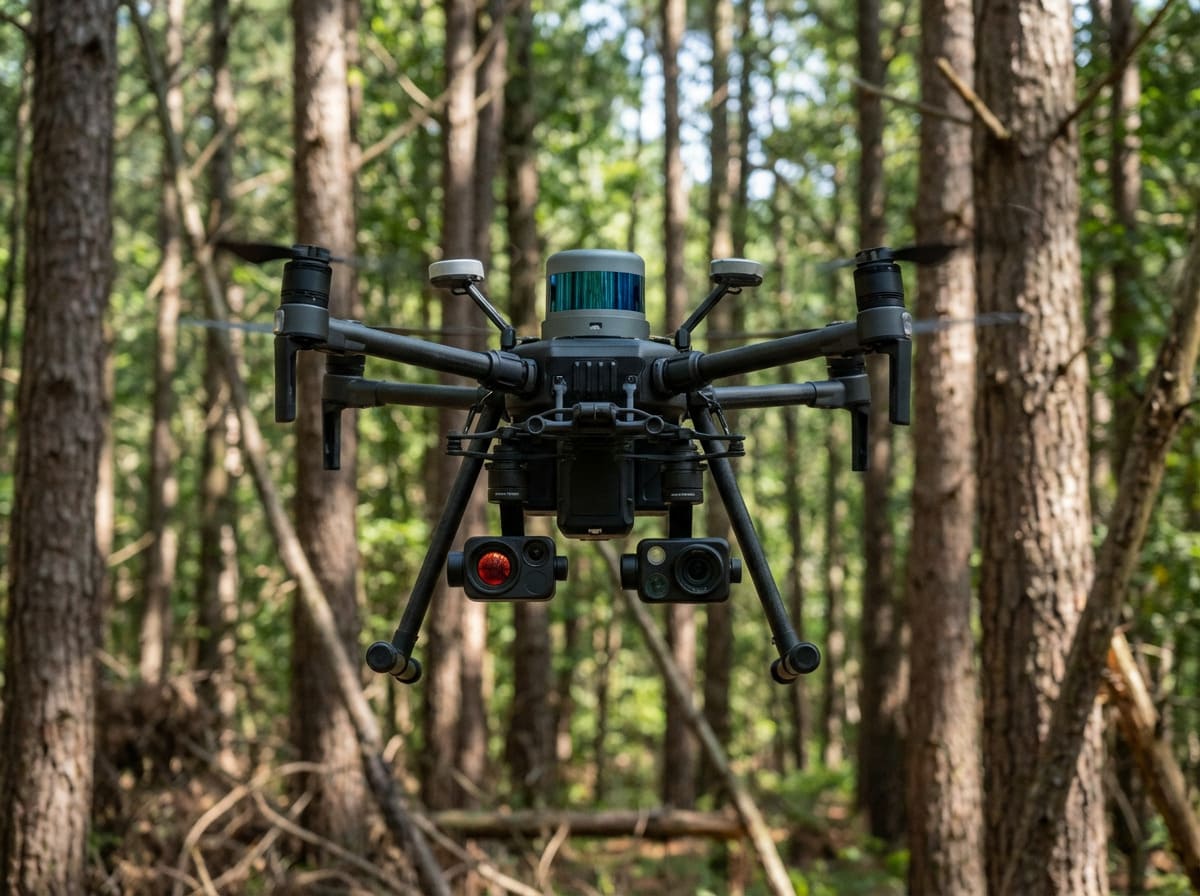
The Entity List is a major factor in modern supply chain management, especially in the tech world. It's a list of foreign companies, organizations, and individuals that the U.S. government believes are acting against its national security or foreign policy interests. If a company is on this list, there are severe restrictions on its ability to receive specific items from the U.S. This directly impacts how you build your UAVs, no matter where you are located.
Impact on the UAV Supply Chain
This is not just about finished drones. The restrictions apply to individual components that are subject to U.S. export regulations. This includes critical parts like microprocessors, navigation systems (GNSS), high-end sensors, actuators, and even specialized power sources like the high-performance lithium batteries we manufacture at Litop. If a key component in your supply chain comes from a company on the Entity List, it creates a massive compliance headache. It can render your final product ineligible for export to certain countries or even subject it to U.S. regulations under the De Minimis Rule.
Navigating the 2026 Restrictions
The trend is clear: controls are tightening, especially for technology with potential military applications. For anyone in the UAV industry, this requires a proactive stance.
- Due Diligence is Essential: You absolutely must screen all of your suppliers against the Entity List and other U.S. restricted party lists. This is a fundamental step in modern procurement.
- Design for Compliance: Many smart companies are now actively "designing out" components from listed entities. They are re-engineering their products to use parts from suppliers in countries that are not on the list.
- Resilient Supply Chains: As a battery supplier, we at Litop are hyper-aware of these regulations. Our clients in the medical and wearables fields rely on us to provide components that are not only high-performance but also compliant. We rigorously vet our own raw material suppliers to ensure our batteries don't become a weak link in our customers' supply chains. It’s about building a robust and trustworthy supply network from the ground up.
| Component | Example Supplier on Entity List | Risk to Your UAV Project | Mitigation Strategy |
|---|---|---|---|
| Flight Controller | "Chinese Tech Corp A" | Your final UAV may be subject to U.S. export restrictions, even if assembled elsewhere. | Source from a non-listed supplier (e.g., from Europe, Japan, South Korea). |
| High-End Camera | "Russian Vision Systems B" | Inability to sell your UAV into the U.S. market. Severe supply chain disruption. | Vet all suppliers. Qualify multiple alternative sources from trusted countries. |
| Data Link Module | "Chinese ConnectX C" | Your product may be deemed a security risk by customers in sensitive markets, hurting sales. | Build a resilient supply chain with vetted partners. |
If my UAV is produced outside the US, how is the 'De Minimis Rule' calculated?
Think your foreign-made UAV is exempt from U.S. export rules? Think again. If it contains certain U.S. parts, you might unknowingly be subject to EAR, risking your entire shipment.
The De Minimis Rule applies if your foreign-made UAV contains a certain percentage of controlled U.S.-origin content by value. For most countries, if over 25% of the UAV's value is from controlled U.S. parts, it becomes subject to U.S. EAR regulations.
The De Minimis Rule is a critical concept for any company manufacturing technology products outside the United States. It determines when a foreign-made item becomes subject to the U.S. Export Administration Regulations (EAR) because it incorporates U.S.-origin content. For UAVs, which often use components from around the world, understanding this rule is not optional. It dictates whether you need to worry about U.S. export licenses when shipping your drone from, say, your factory in China to a customer in Brazil.
How to Calculate the De Minimis Percentage
The calculation is based on the value of the components, not their weight or quantity. The formula is: (Value of Controlled U.S. Content) / (Price of the Foreign-Made Product) * 100. The most important part of this is understanding what counts as "Controlled U.S. Content." It is not the value of all U.S. parts. You only include the U.S.-origin parts that are controlled under a specific Export Control Classification Number (ECCN). Basic, uncontrolled items classified as EAR99 (like standard screws or simple plastics) are not included in the numerator. The "Price" is typically the normal selling price of the final drone at the factory door (ex-works).
Different De Minimis Levels
There isn't a single de minimis percentage for everyone. The threshold depends on the final destination of your product.
- 25% Rule: This is the standard level for exports to most countries around the world.
- 10% Rule: A stricter 10% threshold applies when exporting to countries under U.S. sanctions or those designated as state sponsors of terrorism.
- 0% Rule: For certain highly sensitive items, like specific military electronics or encryption items, there is no de minimis level. Even a single screw's worth of such content would subject the entire foreign product to U.S. EAR.
Let's look at an example of a drone assembled in China with a sale price of $10,000.
| Component Description | Origin | Controlled? (ECCN) | Value ($) | Counted for De Minimis? |
|---|---|---|---|---|
| UAV Airframe | China | N/A | 5,000 | No |
| Motors (4x) | Germany | N/A | 800 | No |
| GPS Module | U.S. | Yes (7A005) | 1,200 | Yes |
| Inertial Measurement Unit | U.S. | Yes (7A003) | 2,000 | Yes |
| Standard Screws | U.S. | No (EAR99) | 100 | No |
| Total UAV Sale Price | 10,000 |
Calculation: ($1,200 + $2,000) / $10,000 = $3,200 / $10,000 = 32%.
Because 32% is over the 25% threshold, this drone, though made in China, is now subject to U.S. EAR for re-export purposes.
Conclusion
Understanding ITAR versus EAR is fundamental for any UAV business. You must use the CJ process to classify correctly, be mindful of deemed exports when hiring, screen suppliers against the Entity List, and carefully calculate de minimis levels. These steps are vital for global success and compliance.