
Your battery packs die too quickly and don't hold enough charge. This hurts your product's reputation. The solution involves balancing cell choice, pack structure, and intelligent battery management.
To design for maximum capacity and longevity, you must carefully select matched cells, optimize the series/parallel configuration, and integrate a smart BMS1. This system should manage temperature and balance cells, extending life significantly and ensuring both high performance and lasting reliability in the final product.
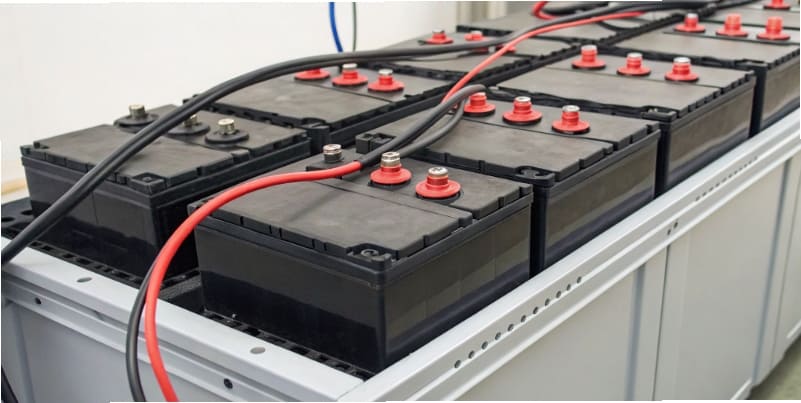
I have been in the battery business for a long time, and I've seen countless projects succeed or fail based on these early design choices. It's not just about cramming in more cells to get a higher number on the spec sheet. It's about making every component work together perfectly over thousands of cycles. A truly great battery pack is a symphony of electrical, chemical, and mechanical engineering. Let's break down the most critical decisions you will face when designing one.
When designing a battery pack, does a series or parallel configuration have a greater impact on overall life and performance?
Deciding between series for voltage and parallel for capacity is tricky. A wrong move creates imbalances and kills your pack early. The key is understanding how each choice stresses the cells.
Both configurations are critical, but parallel connections often have a greater impact on longevity. Imbalances in parallel strings can cause circulating currents and uneven aging, which is harder to manage than voltage differences in series. Proper cell matching is essential here to prevent premature failure.
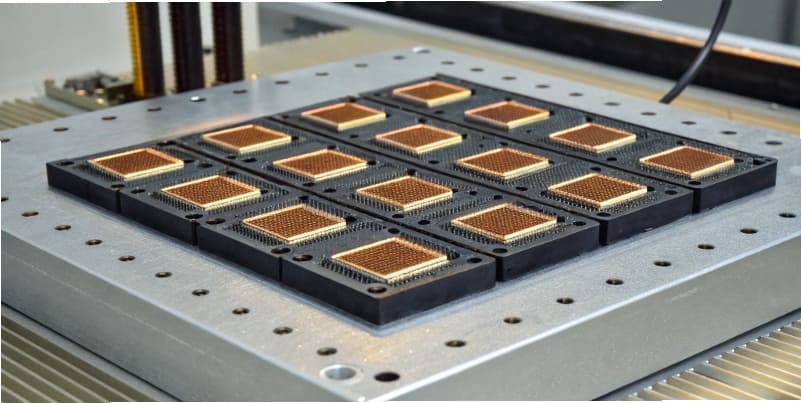
When you build a battery pack, you combine individual cells to get the voltage and capacity you need. Connecting cells in series adds their voltages together. Connecting them in parallel adds their capacities. While both are necessary, they present different challenges for the pack's long-term health. The parallel configuration is often the silent killer of longevity if not handled correctly.
The Importance of Cell Matching
The biggest risk in a parallel setup is imbalance. If one cell is slightly weaker than the others, it creates a problem that gets worse over time. The stronger cells will force too much current into the weaker one during charging, and the weaker one will be drained too much during discharging. This leads to accelerated aging of that single cell, which then brings down the performance of the whole parallel group.
To prevent this, we are extremely strict about cell matching before we even begin assembly. We use what I call an "energy method" for matching. This means we only group cells from the exact same manufacturing batch. Then, we test and sort them based on two critical parameters:
- Capacity: The difference between cells in a group must be less than or equal to 20mAh.
- Internal Resistance: The difference must be less than or equal to 5mΩ.
This ensures that all cells in a parallel string behave like a single, uniform cell, sharing the load and aging at the same rate.
| Configuration | Primary Function | Main Challenge for Longevity | Litop's Mitigation Strategy |
|---|---|---|---|
| Series | Increases Voltage | Cell voltage imbalance, risk of over-charging/discharging one cell. | Active balancing with a smart BMS to shuttle energy between cells. |
| Parallel | Increases Capacity | Cell current imbalance, circulating currents, uneven aging. | Rigorous cell matching (capacity ≤20mAh, resistance ≤5mΩ) before assembly. |
By focusing so intensely on cell matching for parallel groups, we solve the biggest source of premature capacity loss right from the start.
How do the key functions of a Battery Management System (BMS) directly affect the long-term health of high-capacity battery packs?
High-capacity packs are a big investment. Without a brain, they degrade fast and become a costly problem. A smart BMS is the key to protecting your pack and maximizing its lifespan.
A BMS directly impacts longevity by preventing over-charge/discharge, balancing cell voltages, and managing temperature. Functions like active balancing and precise State of Charge (SOC) monitoring can prevent the small imbalances that lead to catastrophic failure over time, extending cycle life significantly.
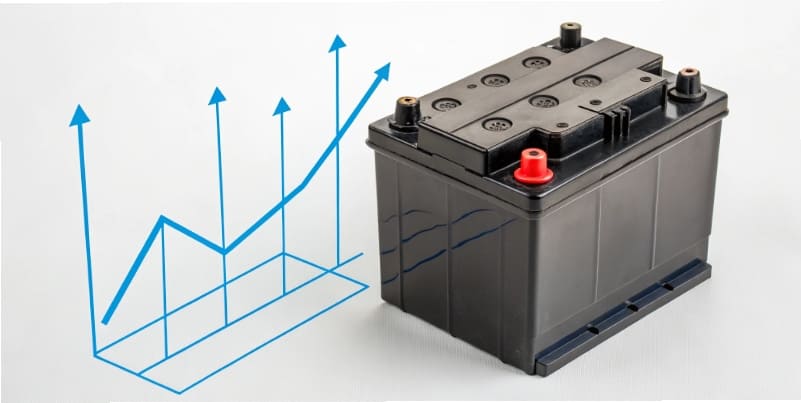
If the battery cells are the muscle of the pack, the Battery Management System (BMS) is the brain. It's the unsung hero that works every second to keep the pack healthy and safe. For high-capacity packs, its role is not just important; it's absolutely critical. A cheap, basic BMS will let your pack die early. A smart BMS can more than triple its life. At Litop, we integrate intelligent BMS systems that focus on several key functions to extend cycle life to 1800 cycles and beyond.
Cell Balancing: Passive vs. Active
Imbalances between cells are inevitable over time. A BMS corrects them through balancing. Passive balancing is simple; it just burns off the excess energy from the highest-charged cells as heat. It's inefficient and can't help under-charged cells. We prefer active balancing. An active balancer acts like a tiny, smart power-shuttle. It takes energy from the cells with the highest voltage and gives it to the cells with the lowest voltage. This keeps the entire pack perfectly in sync, ensuring every cell contributes equally. Our BMS aims to keep the voltage difference between any two cells under 50mV.
State of Charge (SOC) and Voltage Control
Pushing a battery to 100% charge and draining it to 0% puts maximum stress on its chemistry. A smart BMS can extend life dramatically by managing the charge window. For many applications, especially in the medical field where reliability is paramount, we program the BMS to limit the maximum charge to 80% or 90% SOC. This simple change drastically reduces cell degradation. It's like avoiding stretching a rubber band to its absolute limit every single time; it simply lasts longer.
Temperature Monitoring and Control
The BMS is the pack's nervous system. It has temperature sensors placed in critical spots throughout the pack. If it detects one area is getting too hot or too cold, it can take action. This could mean triggering a fan, slowing down the charge/discharge rate, or even shutting the pack down to prevent damage. Our goal is to ensure the temperature difference across all cells in the pack stays within a tight ±5°C window. This prevents "hot spots" where some cells age much faster than others, another source of imbalance.
How do you determine the ideal charge/discharge rate (C-rate) to balance performance needs with maximizing battery cycle life?
Your device needs high power and fast charging. But high C-rates destroy battery life, forcing early replacements. The solution is finding the perfect balance between performance and longevity.
To find the ideal C-rate, you must analyze the device's peak and average power demands. Then, select a cell rated for those peaks but design the system to operate at a lower average C-rate (e.g., below 0.5C) for charging and typical use to maximize cycle life.
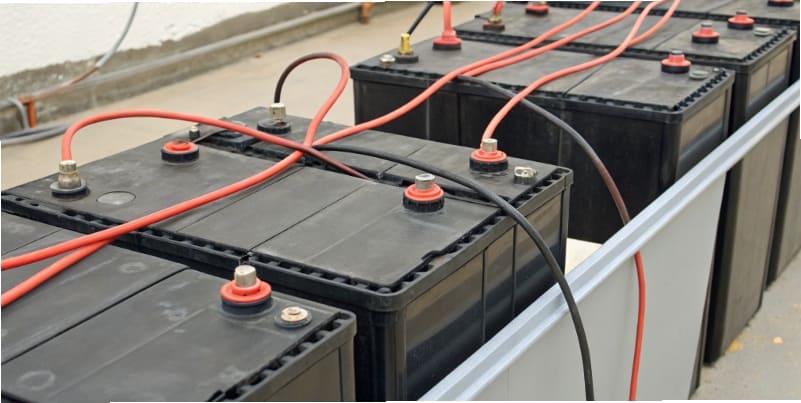
C-rate is a measure of how fast you charge or discharge a battery relative to its capacity. A 1C rate on a 3000mAh battery means drawing 3000mA of current. This would drain the battery in one hour. A 2C rate would drain it in 30 minutes, and a 0.5C rate would take two hours. There is a direct and unavoidable trade-off: higher C-rates give you more power but generate more heat and internal stress, which significantly shortens the battery's cycle life. Finding the right balance is key.
Analyzing Application Demands
The first step is to understand exactly how your device uses power. We work with clients to profile their product's power consumption. We look at both peak current draw and average current draw. For example, a surgical power tool might need a very high peak C-rate for a few seconds, but it sits idle most of the time. The design must accommodate that peak, but we can optimize the system for the much lower average C-rate. We select a battery cell that can handle the peaks without damage, but we encourage designing the system's normal operation around a much gentler rate.
Finding the Longevity Sweet Spot
For most applications where longevity is a priority, lower C-rates are always better. A battery that is consistently charged and discharged at 0.5C will last many more cycles than the same battery run at 2C.
| C-Rate (Charge/Discharge) | Internal Stress & Heat | Expected Cycle Life | Best For... |
|---|---|---|---|
| High (>1C) | High | Low (e.g., 300-500 cycles) | High-power tools, drones |
| Moderate (0.5C - 1C) | Medium | Medium (e.g., 500-1000 cycles) | Consumer electronics, e-bikes |
| Low (<0.5C) | Low | High (e.g., 1800+ cycles) | Energy storage, medical devices |
As a general rule, we advise customers to use the lowest C-rate that their application can tolerate. For charging, we often recommend a 0.5C rate combined with stopping at 80% SOC. This combination is one of the most powerful strategies for maximizing the number of useful cycles you get from your battery pack.
What mechanical design and thermal management practices are essential for preventing capacity decay and ensuring safety?
Batteries naturally swell and get hot. Ignoring this causes rapid degradation, damage, and even fire. Proper mechanical and thermal design is absolutely essential for safety and longevity.
Essential practices include maintaining proper spacing between cells for airflow, using thermal interface materials to dissipate heat, and applying a controlled preload pressure. This structure prevents degradation from swelling and ensures a uniform temperature, which is critical for preventing capacity decay.
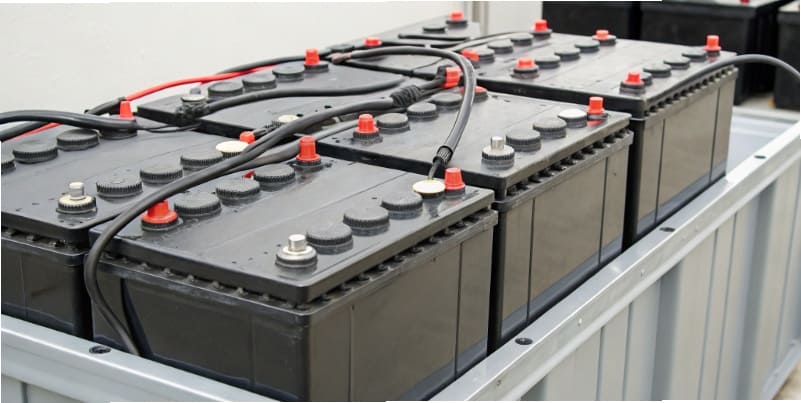
The best cells and the smartest BMS in the world won't save a battery pack that is poorly built. The mechanical structure and thermal management system are what hold everything together and keep the chemistry stable and safe. This is where we focus on controlling the physical forces and heat that are natural byproducts of the battery's operation. When we get this right, we can see capacity retention improve by 15-25% after just 500 cycles.
Preload Pressure and Structural Integrity
Lithium-ion cells physically expand and contract slightly as they charge and discharge. Over hundreds of cycles, this micro-movement can cause internal layers to delaminate, leading to a rapid increase in internal resistance and capacity loss. To combat this, we design our packs with a specific, engineered preload force. We apply a consistent pressure to the cells to keep everything tightly packed. The ideal pressure depends on the cell chemistry:
- NMC Cells: 0.2 - 0.8 MPa
- LFP Cells: 0.2 - 0.6 MPa
We don't just clamp them down. We use buffer materials, like specialized foam with a 20%-30% compression rate, between the cells and the structural components. This foam acts like a spring, absorbing the expansion force and maintaining a constant pressure without crushing the cells.
Effective Thermal Management Strategies
Heat is the enemy of battery longevity. A cell that operates at a high temperature will age much faster than a cool one. Even worse is a temperature gradient, where some cells in the pack are hot and others are cool. This causes the cells to age at different rates, creating a severe imbalance that the BMS will struggle to correct. Our thermal design focuses on one primary goal: temperature uniformity. We aim to keep the temperature difference between the hottest and coldest cell to within ±5°C. We achieve this through a combination of methods:
- Cell Spacing: Leaving small air gaps between cells allows for airflow and prevents heat from building up.
- Thermal Interface Materials (TIMs): We use thermally conductive pads or pastes to draw heat away from the cells and transfer it to a heat sink or the pack's outer casing.
- Active Cooling: For high-power applications, we can integrate channels for forced air or even liquid cooling, which are controlled by the BMS based on temperature readings.
This focus on structural integrity and heat management is not just for performance. It is the most critical element for ensuring the safety of the battery pack.
Conclusion
Designing a durable, high-capacity battery pack requires a holistic approach. It’s about more than just cells. You need smart configuration, a protective BMS, optimized C-rates, and robust mechanical and thermal design. Getting these elements right is how we deliver performance that truly lasts for our clients.
Discover the essential functions of a smart BMS that protect and extend the life of high-capacity battery packs. ↩