Struggling to pick the right battery? Choosing between long life and high power is tough. Make the wrong call, and your device fails when you need it most.
To choose, you must decide between endurance and burst power. High-capacity batteries are for long, steady use like in laptops. High-discharge-rate batteries deliver instant, powerful bursts for devices like power tools1. Your device's primary function dictates the right choice.
I've seen this dilemma play out countless times with clients. A medical device company once nearly chose a battery that would last for days but couldn't power the device's critical startup sequence. It's a classic trade-off between a marathon runner and a sprinter. This decision is fundamental to your product's success, and getting it right starts with understanding your device's core needs. So, how do you figure out which one your device needs to be?
How do I determine if my device needs high capacity or a high discharge rate?
Does your device need to last all day or deliver a powerful punch? Guessing wrong means a failed product. Let's break down how to determine your exact power needs.
First, calculate your device's peak current draw (Power ÷ Voltage). Then, divide this current by the battery's capacity (in Ah) to find the C-rate. A high C-rate (e.g., over 2C) points to a high-discharge-rate battery. A low C-rate means capacity is your priority.

The first question I always ask a new client is, "Describe the moment your device works its hardest." The answer tells me everything. Is it a GPS tracker sending a small packet of data once an hour, or is it a surgical drill cutting through bone? The first scenario needs endurance, while the second needs a burst of raw power. This is the difference between prioritizing energy density (capacity) and power density (discharge rate).
To make this technical, you can use a simple formula. Find your device's maximum power consumption in watts (W) and divide it by the battery's nominal voltage (V). This gives you the peak current in amps (A). Next, take that peak current and divide it by the battery's capacity in amp-hours (Ah). The result is the C-rate. For example, if a drone has a peak power of 200W and uses a 14.8V battery, it needs 13.5A of current. If you plan to use a 5Ah (5000mAh) battery, the required C-rate is 13.5A / 5Ah = 2.7C. This number immediately tells us we need a battery designed for a high discharge rate. If the number was below 1C, capacity would be the main concern.
| Dimension | High Capacity Battery | High Discharge Rate Battery |
|---|---|---|
| Core Metric | Energy Density (Wh/kg) | Power Density (W/kg), C-Rate |
| Design | Thick electrodes, high density | Thin electrodes, conductive additives |
| Chemistry | Lithium Cobalt Oxide (LCO), NMC | Lithium Iron Phosphate2 (LFP), LTO |
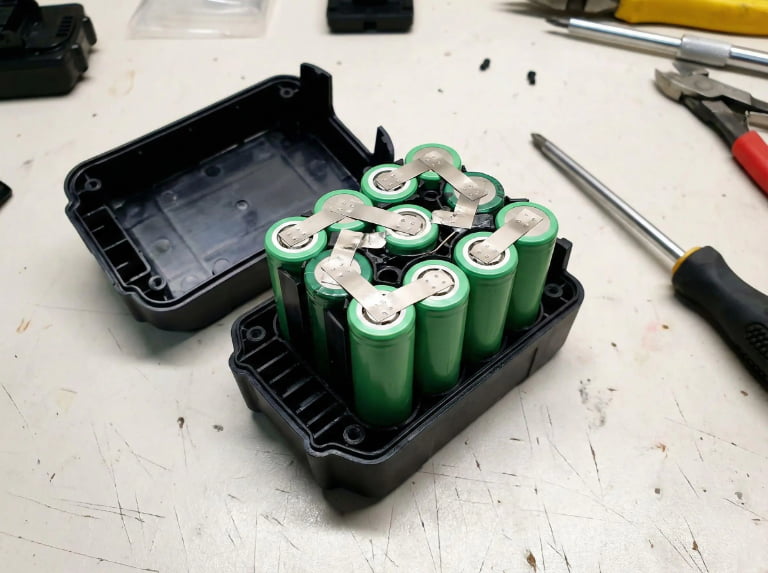
This difference comes from the battery's internal construction. High-capacity cells use thick, dense electrode coatings to pack in as much active material as possible. But this makes it harder for lithium ions to travel, slowing down the energy release. High-rate cells use thinner electrodes and add conductive materials like graphene to create a "superhighway" for ions, allowing for a much faster energy release at the expense of total storage.
What impact does a high discharge rate have on the battery's actual usable capacity and overall lifespan?
Are you burning through your high-power batteries too fast? Pushing them hard can reduce usable capacity and shorten their lifespan significantly. Let's look at why this happens.
A high discharge rate reduces a battery's usable capacity per cycle due to internal resistance and heat. This stress also accelerates chemical degradation, significantly shortening the battery's overall lifespan. Essentially, the faster you drain it, the less total energy you get and the fewer cycles it lasts.
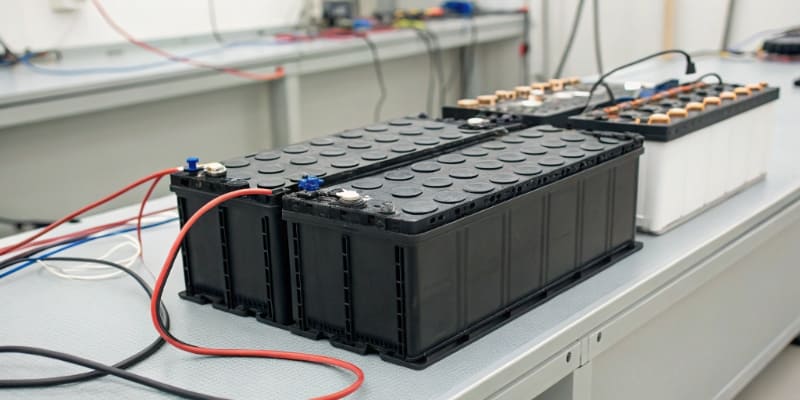
Think of a battery like a sponge full of water. If you squeeze it gently, you can get almost all the water out. If you stomp on it, water flies everywhere, and you get less in the bucket. A high discharge rate is like stomping on the battery. As you pull a large amount of current, the battery’s internal resistance causes its voltage to drop, or "sag." Your device has a minimum voltage it needs to operate, called the cutoff voltage. Under a heavy load, the battery’s voltage can hit this cutoff point much sooner, forcing the device to shut down even when there is still energy left inside. This is why a 5Ah battery might only deliver 4.5Ah of usable capacity when discharged at a very high rate.
This stress also takes a toll on the battery's long-term health. Every charge and discharge cycle causes small, irreversible changes inside the cell. High currents generate more heat and physical stress on the electrode materials. This accelerates the unwanted chemical reactions that degrade the battery over time, permanently reducing its ability to hold a charge. I worked with a startup making electric skateboards. They initially used high-capacity cells for a long advertised range. But aggressive riders found their batteries died in just a few months. We switched them to a high-rate LFP pack. The advertised range was a bit lower, but the real-world performance was far better, and the batteries lasted for years. For high-power applications, using a battery chemistry designed for high rates, like LFP or LTO, is critical for achieving a reasonable service life.
Are there battery technologies that offer both ultra-high capacity and an ultra-high discharge rate simultaneously?
Looking for a battery with both massive capacity and extreme power? The search can be frustrating because physics gets in the way. But there are ways to bridge this gap.
Currently, no single battery chemistry offers both top-tier capacity and discharge rate. The design principles for storing energy (capacity) are fundamentally opposed to those for releasing it quickly (power). The best solutions involve hybrid systems that combine different types of cells.

The "holy grail" battery that perfectly balances these two features doesn't exist yet, because of the core trade-off in its physical design. It's like trying to build a giant water tank (high capacity) that can be emptied through a fire hose (high discharge rate). To hold more water, you need thick, strong walls. But a fire hose needs a huge, open valve for maximum flow. In a battery, thick electrodes hold more energy but slow down the movement of lithium ions. Thin electrodes create an open path for ions to move quickly, but they can't hold as much energy. This is the fundamental conflict.
So, how do we solve this? Through clever engineering. At Litop, we often design hybrid battery packs for complex applications. For one industrial client, we built a pack that combined high-capacity NCM cells for long-term, steady power with a smaller set of high-rate LTO cells. The Battery Management System3 (BMS) is programmed to draw from the NCM cells for normal operation and then call on the LTO cells for powerful bursts when a motor starts up. This gives the client the best of both worlds. A smart BMS is the brain, and a robust thermal management system is the cooling system. Together, they allow us to push the limits of performance without compromising safety or lifespan. While researchers are exploring new materials that promise to close this gap, for today's products, the solution lies in smart system design, not a single magic battery cell.
For applications like power tools, drones4, or EVs, is capacity or discharge capability more critical?
For power tools, drones, or EVs, what matters more: runtime or power? Choosing incorrectly can lead to poor performance or even safety issues. Let's clarify the priority.
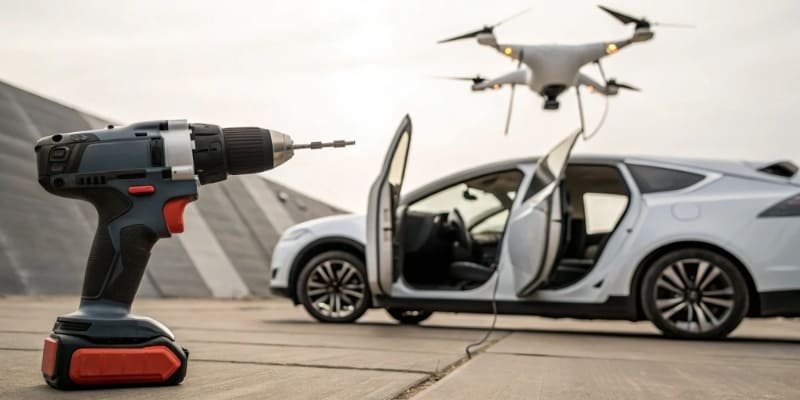
For applications like power tools, drones, and EVs, discharge capability is the most critical factor. They need huge bursts of power to function—to spin a blade, lift off, or accelerate. If the battery can't deliver that power instantly, the device fails, making capacity a secondary concern.
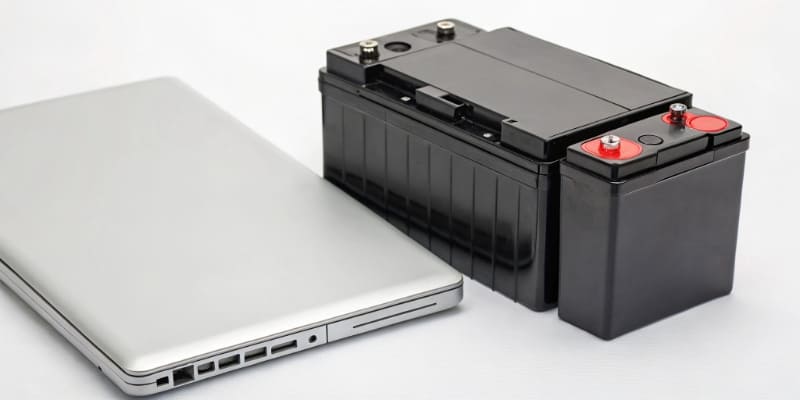
For high-performance applications, I think of it as a hierarchy of needs. The base level, the most fundamental need, is function. The device has to perform its primary job safely and effectively. In these cases, the discharge rate enables that core function.
- Power Tools: Imagine a cordless drill trying to drive a large screw into hardwood. It needs a massive surge of torque. If the battery voltage sags too much under the load, the drill will stall. The user needs that burst of power. A longer runtime is a great feature, but it's useless if the tool can't do its job.
- Drones: A drone must generate enough lift to overcome its own weight, especially during takeoff or when fighting wind. This demands a huge, continuous current from its motors. A high-capacity, low-rate battery would be like putting a car engine in a fighter jet; the drone would be underpowered and might not even get off the ground.
- Electric Vehicles (EVs): While range (capacity) is a huge marketing point, the ability to accelerate safely onto a highway is a non-negotiable functional requirement. This requires the battery pack to deliver hundreds of amps of current instantly.
Once the functional need for power is met, then we can move up the hierarchy and start optimizing for runtime by maximizing capacity. You can't have a long-lasting drone that can't fly. You must solve the power problem first, which is why for these applications, discharge capability is always the more critical factor.
Conclusion
Choosing between high capacity and high discharge rate isn't about finding the "best" battery, but the "right" one for your specific need. By analyzing your device's power demands first, you can confidently select a battery that provides the perfect balance of endurance and burst power for optimal performance.
Find out which batteries are ideal for power tools to ensure optimal performance. ↩
Learn about Lithium Iron Phosphate batteries and their suitability for high-rate applications. ↩
Learn about Battery Management Systems and their role in optimizing battery performance. ↩
Explore the best battery types for drones to enhance their performance and flight time. ↩