Struggling with batteries that don't last as long as promised? This inconsistency can ruin your product's reputation and frustrate your customers. The solution is knowing how to verify capacity yourself.
To verify a battery's true capacity, the most reliable method is a full charge and discharge cycle test. This involves charging the cell completely, then discharging it at a constant, controlled current until it reaches its cut-off voltage. The capacity is calculated by multiplying the discharge current by the time it took to discharge.

This sounds technical, but it's a straightforward process once you understand the steps. As a battery manufacturer, I've seen many clients struggle with underperforming cells from other suppliers. They come to us at Litop looking for reliability. The key to that reliability starts with accurate testing. Let's break down exactly how you can implement these tests to ensure you're getting the quality and performance you pay for. Getting this right is fundamental to building a trustworthy product.
What Specific Equipment Do You Need for Capacity Testing?
Are you ready to test batteries but unsure what tools you need? Using the wrong equipment will give you inaccurate results, wasting both your time and your money. Let's get you set up correctly.
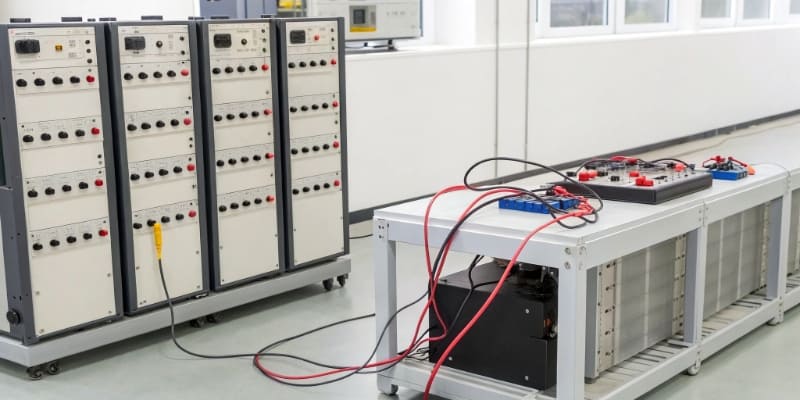
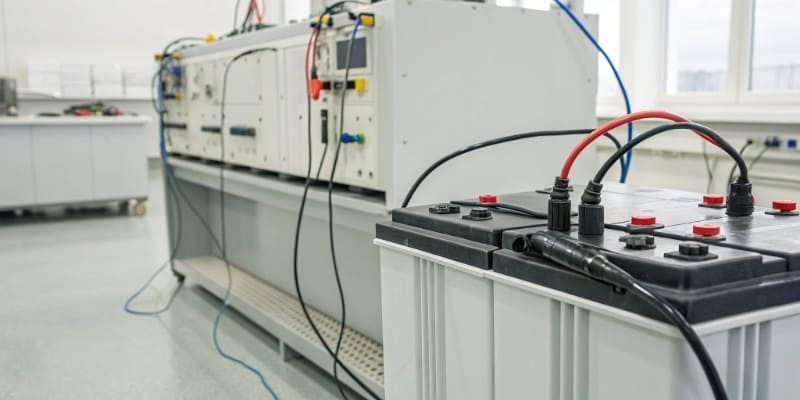
For professional-grade testing, you need a dedicated battery analyzer or a setup including a programmable power supply, a programmable DC electronic load, and a precision multimeter. For consistent results, a temperature-controlled chamber is also highly recommended.

Let's dive deeper into the tools of the trade. Choosing the right equipment depends on your budget and the scale of your testing. In my eight years in the battery industry, I've worked with clients using everything from simple setups to state-of-the-art labs.
The All-in-One vs. The DIY Approach
You essentially have two paths you can take: the integrated solution or the component-based setup.
-
Battery Analyzer: This is the professional, all-in-one machine. It's designed specifically for this job. You connect the cell, input your test parameters (like charge current, discharge current, and voltage limits), and it runs the entire cycle automatically. It logs all the data, like voltage, current, and time, and often plots a discharge curve for you. Models like the Keysight N6781A SMU are what high-end R&D teams use because they offer incredible precision. This is the best option if you're doing a lot of testing and need repeatable, certified results.
-
DIY Setup: If you're on a tighter budget or just starting, you can build your own testing rig. You'll need three main components:
- Programmable Power Supply: To charge the battery cell accurately.
- Programmable DC Electronic Load: To discharge the cell at a precise, constant current.
- Precision Multimeter: To independently verify voltage and current, ensuring your other equipment is accurate.
A critical, and often overlooked, piece of equipment is the temperature-controlled chamber. A battery's performance changes with temperature. To get results that you can compare day-to-day or against a manufacturer's datasheet, you must test at a stable temperature, typically 25°C (77°F).
Here's a simple breakdown:
| Equipment Type | Pros | Cons |
|---|---|---|
| Battery Analyzer | Highly accurate, automated, all-in-one solution, provides detailed reports. | High initial cost. |
| DIY Setup | Lower initial cost, flexible, good for learning the fundamentals. | Requires manual setup, higher chance of error, data logging can be complex. |
For most of my B2B clients, especially those in the medical and wearable device fields, investing in a good battery analyzer pays for itself quickly by preventing costly product failures down the line.
How Does the Full Charge-Discharge Cycle Test Actually Work?
You've heard about cycle testing, but you're worried you'll miss a step. One wrong move can invalidate your test or even damage the battery cell. I'll walk you through the correct procedure.
The process involves a Constant Current-Constant Voltage (CCCV) charge, a rest period, followed by a Constant Current (CC) discharge. Capacity is measured during the discharge phase. Repeating this process reveals the battery's health and true usable energy.

This method is the global standard for a reason. It gives you a clear, undeniable number for the battery's capacity. I've guided many procurement officers, like Michael Johnson from the US, through this process. He was frustrated with inconsistent suppliers and wanted to take control of his quality assurance. Once he understood these steps, he could confidently call out subpar products.
Let’s break it down into simple, actionable steps.
Step-by-Step Guide to a Capacity Test
The entire test is designed to be methodical to ensure accuracy. Think of it as a controlled routine for the battery.
-
The Full Charge (CCCV Method):
- Constant Current (CC): You start by charging the battery at a constant current, typically at a 0.5C rate (we'll cover C-rate next). For a 2000mAh battery, this would be a 1000mA (1A) charge current.
- Constant Voltage (CV): You continue this until the battery's voltage reaches its upper limit, which for most lithium-ion cells is 4.2V. At this point, the charger switches to a constant voltage mode. It holds the voltage at 4.2V, and the charging current will naturally start to decrease.
- Termination: The charge is considered complete when the current drops to a specified low level, often 1/50th of the capacity (e.g., 40mA for a 2000mAh cell). This ensures the battery is truly saturated with charge.
-
The Rest Period:
- After charging, you let the battery sit disconnected for a period, usually 30 to 60 minutes. This allows the battery's internal chemistry to stabilize. If you measure the voltage immediately after charging, it will be slightly inflated. A rest period gives you a more accurate starting voltage for the discharge test.
-
The Full Discharge (CC Method):
- This is where you measure the capacity. You connect the battery to your electronic load and discharge it at a specified constant current (e.g., 0.2C or 0.3C).
- You record the time it takes for the battery's voltage to drop to its lower cut-off voltage, which is typically 3.0V for most lithium-ion cells.
-
The Calculation:
- The formula is simple: Capacity (in Ampere-hours) = Discharge Current (in Amperes) × Discharge Time (in hours).
- For example, if you discharged a battery at 0.4A and it took 4.5 hours to reach the 3.0V cut-off, your measured capacity is 0.4A * 4.5h = 1.8Ah, or 1800mAh.
This cycle, as defined by standards like IEC 619601, is often repeated 3-5 times on new cells. The capacity should stabilize, and the highest reading is generally taken as the cell's actual capacity.
What is C-Rate and Which One Should You Use for Accurate Testing?
You see terms like "0.2C" or "1C" on datasheets and it's confusing. Choosing the wrong discharge rate can give you a capacity reading that is misleading and can't be compared to the manufacturer's claims.
C-rate measures the charge or discharge current relative to the battery's nominal capacity. For a standard, accurate capacity test, a low discharge rate like 0.2C or 0.3C is used. This provides a result that reflects the battery's maximum stored energy under ideal conditions.
Understanding C-rate is crucial because it directly impacts the capacity you can actually use from a battery. Let's make this simple.
C-Rate Explained
The "C" in C-rate stands for Capacity. It's a shorthand to describe how fast you're using the battery.
- 1C: A current equal to the battery's full capacity. For a 2000mAh battery, 1C is 2000mA (or 2A). Discharging at 1C should, in theory, drain the battery in 1 hour.
- 0.5C: A current equal to half the capacity (1000mA or 1A for a 2000mAh battery). This would drain the battery in about 2 hours.
- 0.2C: A current equal to one-fifth of the capacity (400mA or 0.4A for a 2000mAh battery). This would drain the battery in about 5 hours.
Why Does C-Rate Matter for Testing?
A battery is not a perfect bucket of electricity. The faster you drain it (a higher C-rate), the more energy is lost as heat due to internal resistance. This means you get less usable capacity. Conversely, the slower you drain it (a lower C-rate), the closer you get to its "true" chemical capacity.
For Standardized Testing: Manufacturers, including us at Litop, almost always specify battery capacity based on a test at a low C-rate, typically 0.2C. Sometimes you'll see 0.3C, as my insights noted. This is the industry standard. It provides a reliable baseline that allows for fair comparisons between different batteries. When you test a cell, using the 0.2C rate allows you to directly compare your result to the datasheet.
For Real-World Application Testing: However, your device might not use power at a slow, steady 0.2C rate. A medical monitor might draw a low, constant current, but a wireless IoT device might have short bursts of high current when it transmits data. This is where dynamic load testing comes in. This simulates the actual power draw of your product. As the insights mention, a dynamic load test will often show a usable capacity that's 5-10% lower than the standard 0.2C test. This is a critical piece of information for an engineer designing a product to meet a specific runtime target.
| Discharge Rate | Example (2000mAh cell) | Expected Runtime | Measured Capacity (Typical) |
|---|---|---|---|
| 0.2C | 400 mA | ~5 hours | ~100% of Rated |
| 0.5C | 1000 mA | ~2 hours | ~98% of Rated |
| 1C | 2000 mA | ~1 hour | ~95% of Rated |
| 2C | 4000 mA | ~30 minutes | ~90% of Rated |
So, what's the takeaway? Use 0.2C to verify a supplier's claim. Use a dynamic profile that matches your product to predict its actual battery life.
How Do You Interpret Your Test Results?
You've run the tests and have the numbers, but what do they really mean? You might be ready to reject a good batch of batteries or, worse, approve a bad one if you can't tell the difference.
A new, healthy cell should measure very close to its rated capacity, typically within 1-3%. Any cell measuring below 95% of its nominal capacity is a red flag. A rapid drop in capacity after just a few cycles also indicates a problem.
After years of analyzing battery data at Litop, I can tell you that the numbers tell a story. You just need to learn how to read it. Let's look at what's normal and what should make you concerned.
Establishing a Baseline
The first thing to do is compare your test result (at 0.2C) to the manufacturer's datasheet. For a 1000mAh cell, a reading of 990mAh to 1010mAh is perfectly acceptable. This slight variation comes from tiny differences in manufacturing, calibration of test equipment, and ambient temperature.
What are the Red Flags?
Here are the warning signs that indicate a low-quality or faulty battery cell:
-
Low Initial Capacity: This is the most obvious one. If you order 2000mAh cells and they consistently test at 1850mAh (92.5% of rated), you have a problem. It means the supplier is either using inferior materials or has poor quality control. This is a clear basis for rejecting a shipment.
-
Rapid Capacity Fade: All rechargeable batteries lose capacity over their lifespan. This is called capacity fade. However, a good quality cell should degrade slowly. A common industry standard is that a cell should retain at least 80% of its initial capacity after 500 charge-discharge cycles. If you test a cell and find its capacity drops by 10% after only 50 cycles, that's a major red flag. It won't last in your product. International standards like IEC 61960 even specify capacity retention after storage, requiring over 85% to ensure the battery doesn't degrade on the shelf.
-
High Internal Resistance (IR): While not a direct measure of capacity, IR is a key indicator of a cell's health. A high IR means the cell struggles to deliver current, wastes more energy as heat, and will have poor performance under high loads. A cell with unusually high IR often has low capacity as well.
-
A Poor Discharge Curve: A healthy battery has a discharge curve with a long, flat "plateau." This means it holds a steady voltage for most of the discharge cycle. A faulty battery will have a curve that drops off steeply and quickly. This means the voltage sags under load, and the device may shut down long before the battery is truly empty.
When you see these signs, it's time to have a serious conversation with your supplier. Providing them with this clear, objective data from your tests is the most effective way to resolve quality issues.
Conclusion
Verifying a battery's true capacity is not about guesswork; it's about a methodical process. By using a controlled charge-discharge test with the right equipment and a standard 0.2C rate, you get undeniable data. This empowers you to hold suppliers accountable and guarantee the performance of your final product.
If you have questions about setting up your own testing protocol or need custom batteries like ultra-thin or curved cells2 that meet their specifications every time, feel free to reach out. At Litop, we build trust through transparency and quality.