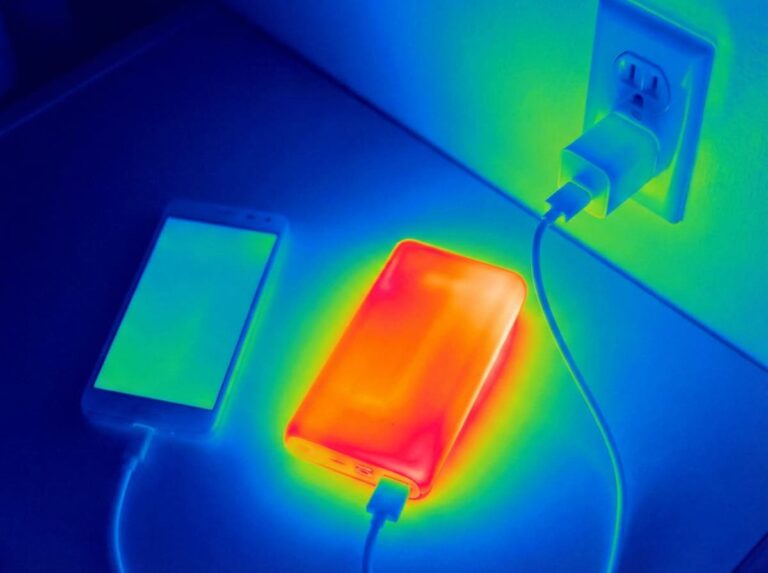
Are you feeling the limitations of current lithium-ion batteries? Your next big product idea might be held back by battery size, weight, or safety concerns. Solid-state is the answer.
Yes, solid-state batteries are set to gradually replace lithium-ion batteries for high-capacity applications. Their superior energy density and safety are game-changers. This transition will happen in stages, with mass commercialization expected around 2030 as costs decrease and manufacturing scales up.

This shift isn't just a simple replacement; it's a fundamental leap in battery technology. Over my years in the battery industry, I've seen many "next big things" come and go. But solid-state is different. The underlying science is sound, and the investment from major industries is massive. It represents a new frontier for devices that need more power in less space, without the safety risks of liquid electrolytes. For anyone in product development, from medical devices to consumer electronics, understanding this transition is no longer optional. It's crucial for future-proofing your designs and staying ahead of the competition. Let's look at the details.
What are the main advantages and disadvantages of solid-state batteries in terms of energy density, safety, or cost compared to traditional lithium-ion batteries?
Choosing the right battery technology for your product is a critical decision. You hear a lot of talk about solid-state, but it's hard to separate hype from reality. Let's break it down.
Solid-state batteries offer much higher energy density (400-500 Wh/kg) and are inherently safer due to their solid electrolyte. Their main disadvantage right now is the high cost, which can be over three times that of lithium-ion, and the complex manufacturing process.
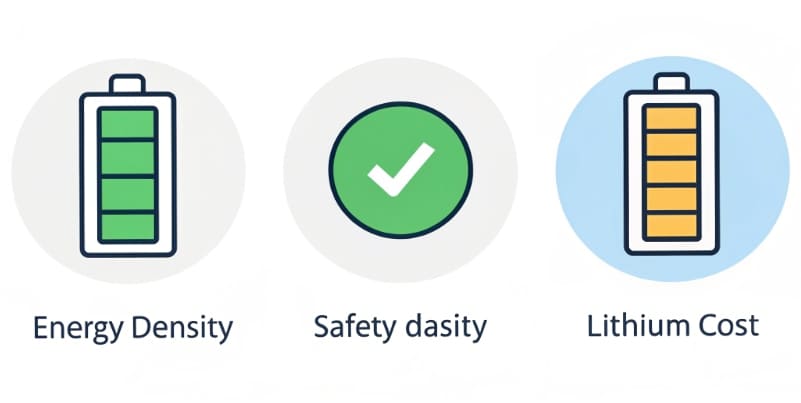
At Litop, my clients, especially those in the medical and wearable tech fields, are always pushing for smaller, lighter, and more powerful devices. This is where solid-state technology really shines. The biggest advantage is the potential for a massive jump in energy density. We're talking about a leap from the current 250-300 Wh/kg of good lithium-ion batteries to a potential of 400-500 Wh/kg. This is largely possible because solid-state designs can use a lithium metal anode, which has a theoretical specific capacity of 3860 mAh/g. For an EV, that could mean a range of over 1500 kilometers. For a portable medical device, it could mean days of operation instead of hours.
The second major win is safety. Traditional lithium-ion batteries use a liquid electrolyte, which is flammable. If the battery is punctured or overheats, it can lead to a fire. Solid-state batteries replace this liquid with a solid, non-flammable material. This practically eliminates the risk of fire, which is a non-negotiable requirement for many applications I work with, like devices worn on the body.
However, the technology isn't without its challenges. The primary obstacle today is cost. The materials are expensive, and the manufacturing processes are still being perfected. Currently, producing a solid-state battery can cost three times more than a comparable lithium-ion battery. The industry's goal is to achieve cost parity by 2030 through economies of scale and process improvements.
Here is a simple comparison:
| Feature | Traditional Lithium-Ion | Solid-State Battery |
|---|---|---|
| Energy Density | Good (250-300 Wh/kg) | Excellent (400-500 Wh/kg) |
| Safety | Requires careful management | Inherently much safer |
| Cost | Established and lower | Currently 3x+ higher |
| Manufacturing | Mature and scalable | Complex and developing |
What are the main technical barriers and challenges currently hindering the commercialization and mass production of solid-state batteries?
You have heard all the amazing promises of solid-state technology. So you are probably asking yourself, why are they not in all our devices yet? Let's look at the real-world technical hurdles.
The main barriers are developing a solid electrolyte with high ionic conductivity that rivals liquids, maintaining a stable interface between the solid components, and creating scalable, cost-effective manufacturing methods. Solving these issues is the key to unlocking mass production and commercial viability.
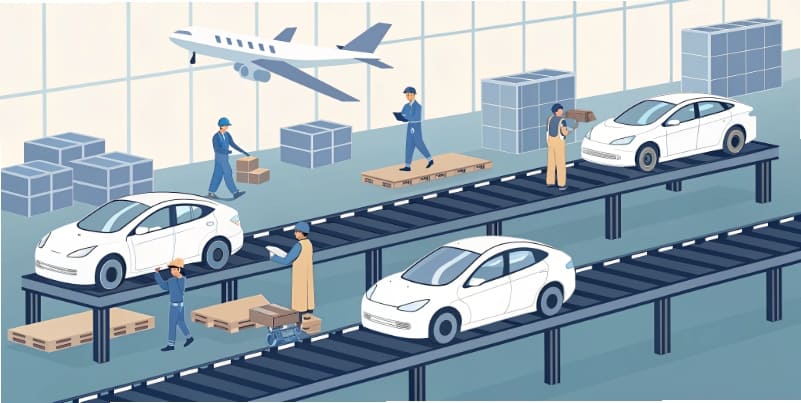
From my position as a manufacturer, I see these challenges up close. It's one thing to make a breakthrough in a lab, but it's another to produce millions of reliable units. The first major hurdle is the solid electrolyte itself. For a battery to work well, ions need to move quickly between the anode and cathode. Liquid electrolytes are great at this. Finding a solid material with similar ionic conductivity has been a huge focus of research. Sulfide-based electrolytes are very promising because they come close to the performance of liquids, but they can be sensitive to moisture, which complicates manufacturing.
The second, and perhaps trickiest, challenge is the interface. In a battery, the electrolyte must stay in perfect contact with the anode and cathode. With all-solid components, this is very difficult. Tiny gaps can form as the battery materials expand and contract during charging and discharging. These gaps increase internal resistance and kill the battery's performance. It's like trying to build a perfect sandwich where the layers can't separate at all. Manufacturers are exploring advanced techniques like isostatic pressing to create a denser, more stable interface.
Finally, there's the manufacturing process. The methods used to build lithium-ion batteries are mature and highly efficient. We can't just use the same equipment for solid-state. We need entirely new processes. For example, some companies are developing "dry-process" electrodes to reduce cost and complexity. Scaling these new techniques from a lab bench to a massive factory that produces millions of cells is a huge engineering and financial undertaking. This is the main reason why the transition will be gradual, not sudden.
When are solid-state batteries expected to become common in the EV and consumer electronics markets?
Planning your product roadmap is a tough job. You need to decide when it makes sense to adopt a new technology like solid-state batteries. Here is a realistic timeline for adoption.
Semi-solid batteries are already entering mass production now for niche uses. Full solid-state batteries are projected to have mature technology by 2027, with commercial mass production starting around 2030. High-end markets like premium EVs and aviation will adopt them first.
Based on industry forecasts and my own conversations with partners, the rollout will happen in distinct phases. It's not like a switch will be flipped overnight.
Phase 1: Now to 2026 (Semi-Solid and Early Commercialization) Right now, we are in the era of semi-solid batteries. These are a hybrid, using a mix of solid and small amounts of liquid or gel electrolyte. They offer a stepping stone, providing some improvements in safety and density without requiring a complete manufacturing overhaul. We're already seeing these appear in certain niche markets. At Litop, we are watching this space closely for our clients who need a competitive edge now.
Phase 2: 2027 to 2029 (Technology Maturation and Premium Adoption) This is when we expect the technology for full solid-state batteries to be finalized and ready for production. Around 2027, small-scale production lines will start up. The first products to use these true solid-state batteries will be high-value items where cost is a secondary concern. Think luxury electric vehicles, eVTOLs (electric vertical take-off and landing aircraft), and critical medical equipment. The performance and safety benefits will justify the high price tag in these sectors.
Phase 3: 2030 and Beyond (Mass Market Commercialization) This is the inflection point. By 2030, manufacturing processes will have improved, and economies of scale will start to kick in, driving the cost down significantly. The goal is to reach price parity with traditional lithium-ion batteries. Once that happens, we'll see widespread adoption. Global demand is expected to explode, potentially exceeding 150 GWh. This is when solid-state batteries will start appearing in mainstream consumer electronics, everyday EVs, and a wide range of industrial applications.
Will the charging speed and cycle life of solid-state batteries be better or worse than current advanced lithium-ion batteries in real-world applications?
A battery's performance is about more than just how long it lasts on a single charge. You worry that this new technology might mean long charging times or a short product lifespan. Let's look at it.
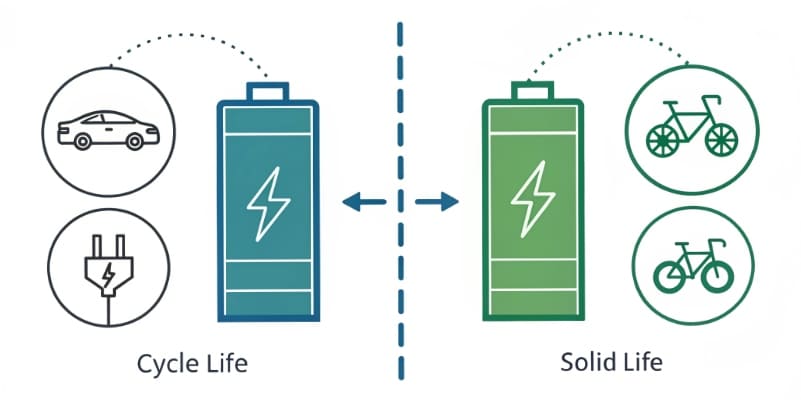
Solid-state batteries are expected to deliver both faster charging speeds and a longer cycle life. Their stable structure handles high currents better for faster charging and prevents the degradation that shortens the life of conventional batteries, potentially exceeding 1000 charge cycles.
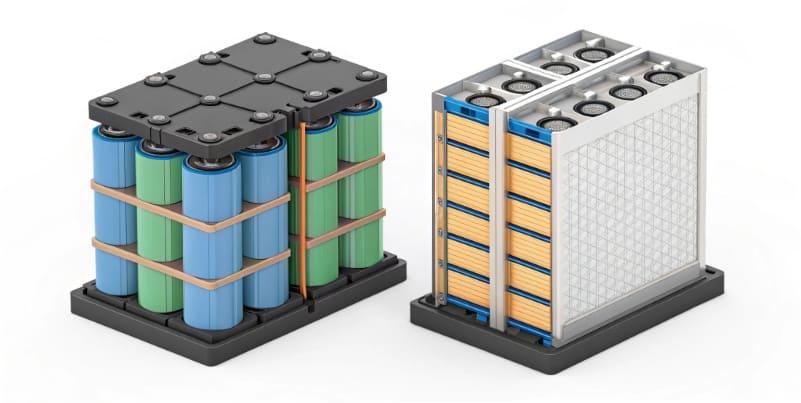
In all my projects, two questions always come up: "How fast can it charge?" and "How long will it last?". Solid-state technology offers very promising answers to both.
Let's start with charging speed. A major limiting factor for charging lithium-ion batteries is heat and degradation. Pushing too much current too quickly can cause side reactions with the liquid electrolyte and damage the battery. Because solid electrolytes are much more thermally stable and chemically inert, they can handle higher charging currents without risk. This means you could potentially charge a device or an EV in a fraction of the time it takes today, maybe in just 10-15 minutes, without harming the battery's health.
Then there is cycle life, which is how many times a battery can be charged and discharged before it loses a significant amount of its capacity. A big killer of cycle life in lithium-ion batteries is the growth of "lithium dendrites." These are tiny, sharp spikes of lithium that can grow on the anode during charging. Over time, they can pierce the separator, cause a short circuit, and kill the battery. A key feature of a well-designed solid electrolyte is that it acts as a strong physical barrier, mechanically suppressing the growth of these dendrites. This single feature dramatically extends the battery's usable life. Achieving over 1000 cycles while retaining high capacity is a realistic goal, making solid-state batteries a perfect fit for high-value products where longevity is key.
Conclusion
Solid-state batteries will indeed replace lithium-ion for high-capacity needs. This shift will be gradual, driven by superior energy density, safety, and lifespan. While high costs are a barrier now, mass adoption is expected around 2030, starting with premium applications and then moving to the mainstream.