Struggling to choose the right battery for your product? You need high capacity, but the options are confusing. This single choice can make or break your product's performance and reputation.
Generally, standard lithium-ion batteries1 like NMC offer higher energy density and more capacity in a single cell. However, LiFePO4 batteries2 can provide more usable capacity over their lifespan and in specific applications, making the answer more complex than it first appears. It really depends on your priorities.
It’s easy to look at a spec sheet and declare a winner. The battery with the higher milliamp-hour (mAh) rating wins, right? In my years of manufacturing custom batteries here at Litop, I’ve learned the answer is rarely that simple. I once worked with a client, let's call him Michael, who was developing a new portable medical device3. He was laser-focused on getting the highest capacity possible in the smallest space. The spec sheets all pointed to a standard lithium-ion NMC battery4. But when we dug deeper into how the device would be used—daily deep cycles, long-term reliability—the picture changed completely. This experience taught me that the real question isn't just "which has more capacity," but "which provides more useful energy for my specific need?" Let's explore why the obvious answer isn't always the right one.
How can LiFePO4 batteries provide longer runtime with lower energy density?
It seems backward, doesn't it? A battery with a lower energy density rating gives you more power. This confusion can easily lead to choosing the wrong battery for your application.
LiFePO4 provides longer runtime through a very flat discharge curve. This means it maintains a higher, more stable voltage for most of its cycle, delivering consistent power to your device. This gives you more usable energy before the device cuts off due to low voltage.
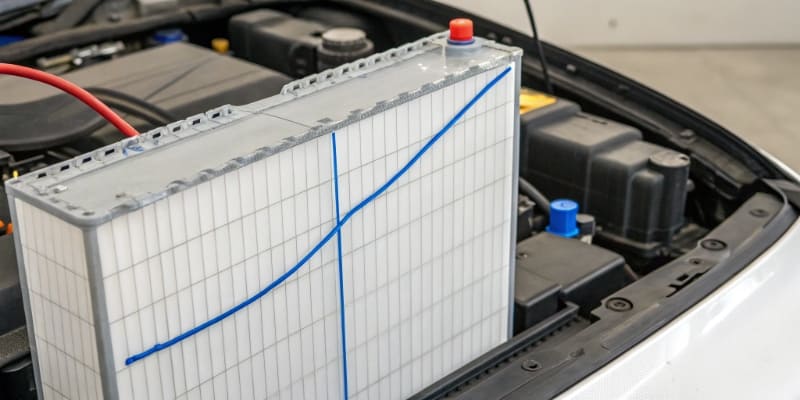
Let's dive deeper into this because it's a critical concept. Think of a battery's voltage like water pressure. A standard lithium-ion (NMC) battery starts at a high pressure (around 4.2V) but the pressure drops steadily as you use it. Many electronic devices have a low-voltage cutoff, say at 3.0V, where they shut down to protect the battery. With NMC, you hit that cutoff point while there's still some energy left in the battery, but the "pressure" is too low to be useful.
Now, consider LiFePO4. It operates at a lower nominal voltage (3.2V), but it holds that voltage almost perfectly steady for nearly the entire discharge cycle before a sudden drop at the very end.
| Feature | Standard Li-ion (NMC) | LiFePO4 |
|---|---|---|
| Voltage Behavior | Starts high (~4.2V), drops steadily | Stays flat (~3.2V), drops sharply at end |
| Usable Capacity | Device may cut off before battery is empty | Nearly 100% of capacity is usable |
| Power Output | Decreases as the battery drains | Consistent power until the very end |
This flat curve means your device gets consistent, predictable power. It doesn't slow down or dim as the battery drains. For something like a medical device or a high-performance tool, this consistency is far more valuable than a slightly higher peak capacity. Furthermore, as mentioned in my insights, LiFePO4 chemistry has a unique trait. After the first 20 to 200 cycles, the electrode materials can become more "activated," and we've seen capacity actually increase to 110% of its initial rating. So while it starts with a lower number on the spec sheet, it delivers more effective and stable power over its long life.
What are the key trade-offs between LiFePO4 and regular lithium-ion batteries besides capacity?
Focusing only on capacity is a huge mistake. A powerful battery that is unsafe or dies after a few hundred cycles is useless. This oversight can lead to product recalls and unhappy customers.
The main trade-offs are safety, lifespan, and cost. LiFePO4 is significantly safer, with a much higher thermal runaway threshold. It also offers a far longer cycle life, often thousands of cycles. Standard Li-ion, however, typically has a lower upfront cost and better performance in extreme cold.
When I talk to clients like Michael, who are building mission-critical products, the conversation quickly moves from capacity to these other factors. The "best" battery is the one that balances all the needs of the application, not just one.
Safety
This is the number one advantage of LiFePO4. The chemistry is incredibly stable. Standard lithium-ion batteries with cobalt can enter "thermal runaway" if punctured, overcharged, or short-circuited, leading to fire. LiFePO4's phosphate-based cathode is structurally stable and won't break down and release oxygen at high temperatures, making it virtually immune to this. For any device used in a home, on a person, or in a medical setting, this safety factor is non-negotiable.
Lifespan (Cycle Life)
This is where the long-term value becomes clear. A typical NMC battery might be rated for 500-1000 charge cycles before its capacity degrades to 80%. A LiFePO4 battery, on the other hand, can easily handle 2,000 to 5,000 cycles or more. If your product is used daily, a LiFePO4 battery could last for over 10 years, while an NMC battery might need replacing in just two or three. This dramatically lowers the total cost of ownership.
Cost and Performance
Initially, LiFePO4 can be slightly more expensive. However, when you factor in its incredible lifespan, the cost per cycle is much lower. The main performance drawback is in cold weather. As my team's data shows, LiFePO4 capacity can drop significantly below -10°C, whereas some NMC formulations can still perform well down to -30°C. At Litop, we've developed special low-temperature LiFePO4 packs to mitigate this, but it's a key consideration for products used in cold climates.
Why is LiFePO4 often chosen for energy storage or RVs, even with lower energy density?
You see LiFePO4 everywhere in RVs and solar storage systems. But NMC batteries are lighter and smaller for the same energy. This contradiction makes choosing for large applications very difficult.
For applications like RVs and home energy storage, safety and a long cycle life are far more important than saving a little space or weight. LiFePO4's stability prevents fire risk, and its ability to be deeply discharged and recharged thousands of times makes it a superior long-term investment.

When you scale up a battery system, the priorities shift dramatically. A few extra kilograms in a 2-ton RV or a stationary home backup system is meaningless. But the consequences of a battery failure are magnified.
In my experience, clients in these sectors have three primary concerns that point directly to LiFePO4:
-
Safety First, Always: An RV is a home on wheels. A home energy system is in your garage or basement. You simply cannot risk a fire. The chemical stability of LiFePO4 provides the peace of mind that is essential in these applications. You set it up and forget about it, knowing it's the safest technology available. No amount of weight savings is worth compromising on this.
-
Investment for the Long Haul: These are not disposable products. A solar energy system or an RV power system is a major investment expected to last for a decade or more. An NMC battery pack would likely need to be replaced two or three times in the lifespan of a single LiFePO4 pack. The total cost of ownership for LiFePO4 is drastically lower because you aren't buying replacement batteries every few years. It's a classic "buy it once, buy it right" scenario.
-
Deep Cycling Capability: These systems are often deeply discharged every single day. A solar battery charges during the day and runs the house all night. An RV battery runs lights and appliances whenever you're off-grid. LiFePO4 batteries handle deep discharges much better than other chemistries without significant degradation. You can regularly use 80-100% of the battery's capacity without harming its long-term health, which isn't advisable for most standard Li-ion types. This means you get more usable power day in and day out, for thousands of days.
What are the optimal charging voltages for LiFePO4 and other lithium batteries?
Charging a battery incorrectly can be dangerous. It can shorten its life or even cause a fire. Not knowing the right voltage for your chemistry can ruin your entire battery pack investment.
Standard lithium-ion (NMC) cells have a nominal voltage of 3.7V and are typically charged to a maximum of 4.2V. In contrast, LiFePO4 cells have a nominal voltage of 3.2V and are charged to a lower maximum voltage, usually around 3.6V to 3.65V. Using the wrong charger is a critical error.
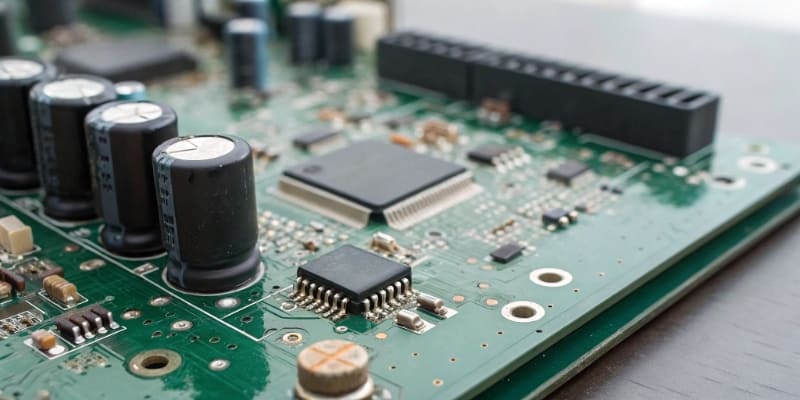
Getting the charging parameters right is absolutely essential. This is the job of the Battery Management System5, or BMS. The BMS is the brain of the battery pack, and it must be programmed specifically for the chemistry of the cells it's protecting. I once had a new client come to us in a panic. Their product was failing in the field after just six months. It turned out their previous supplier used a standard Li-ion BMS with a LiFePO4 battery pack. The charger was constantly trying to push the cells to 4.2V, a massive overvoltage for LiFePO4. This destroyed the cells and created a huge safety risk.
Here’s a simple breakdown of the critical voltage points you need to know.
| Voltage Parameter | Standard Li-ion (NMC) | LiFePO4 |
|---|---|---|
| Nominal Voltage | 3.6V / 3.7V | 3.2V |
| Max Charge Voltage | 4.2V | 3.65V |
| Float Voltage | Not Recommended | 3.45V - 3.5V |
| Discharge Cut-off | 2.5V - 3.0V | 2.5V |
The Max Charge Voltage is the most critical number. Exceeding this, even slightly, puts immense stress on the cell, causing it to degrade quickly and potentially enter thermal runaway. This is why a quality, chemistry-specific BMS is not optional; it is a core safety component. At Litop, we design the BMS in tandem with the battery pack to ensure they work together perfectly. It protects against over-voltage, under-voltage, over-current, and short circuits, guaranteeing both the safety and the longevity of the battery.
Conclusion
Choosing between Li-ion and LiFePO4 isn't just about capacity. It's about matching the battery's unique strengths—be it Li-ion's energy density or LiFePO4's safety and longevity—to your specific needs. At Litop, we help you make the right choice for your product's success.
Explore the benefits of lithium-ion batteries, including energy density and performance, to make informed choices for your applications. ↩
Discover the advantages of LiFePO4 batteries, such as safety and longevity, which are crucial for various applications. ↩
Learn about the specific battery requirements for medical devices to ensure safety and performance. ↩
Explore the characteristics and applications of NMC batteries to understand their role in energy storage. ↩
Learn about the role of a Battery Management System in ensuring battery safety and longevity. ↩