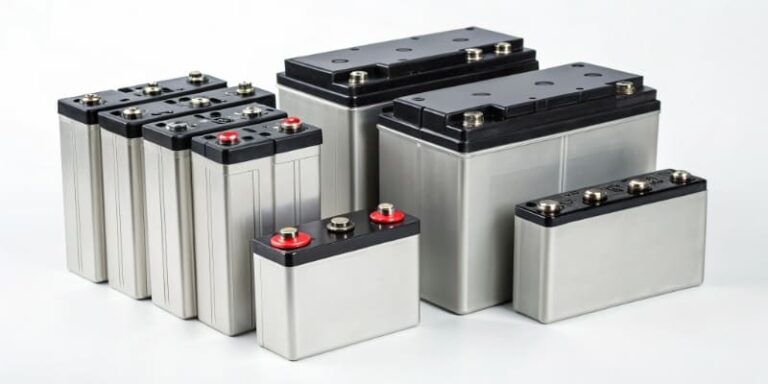
Struggling to decode battery specs for your new product? Choosing the wrong metric can lead to poor performance and angry customers, costing you money and damaging your brand's reputation.
The most important battery life metric depends entirely on your product's use case. For devices used and recharged daily, like a smartwatch, cycle life1 is critical. For backup systems or products with a long time-to-market, shelf life2 and calendar life3 are far more important for ensuring reliability.
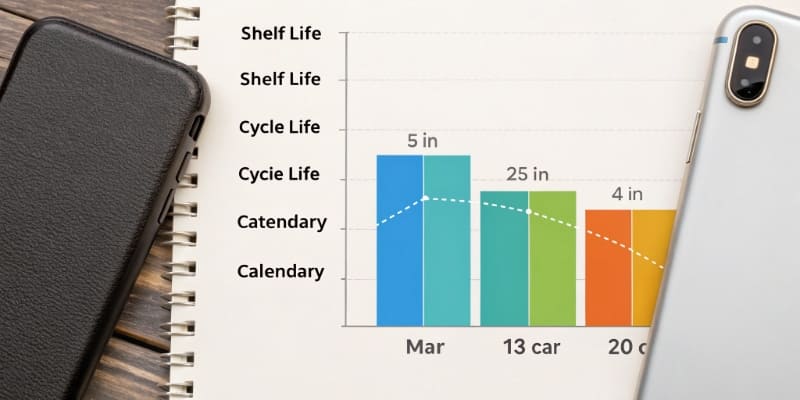
I talk to clients like Michael from the US all the time, and this question comes up a lot. It's easy to get lost in a sea of technical data. You see one battery with 1000 cycles and another with a 10-year shelf life, and it's hard to know which is better. The truth is, "better" depends on what you're building. Let's break down these terms so you can see which metric should be your top priority and make a choice that adds real value to your product.
Is battery cycle count important?
You think a high cycle count is the ultimate guarantee of long battery life. But then your device's battery fails much sooner than you expected, leaving you and your customers frustrated.
Yes, cycle count is very important, especially for products that are charged and discharged frequently, like consumer electronics or medical wearables. It measures how many full charge-discharge cycles a battery can handle before its capacity drops to a certain point, usually 80% of its original rating.
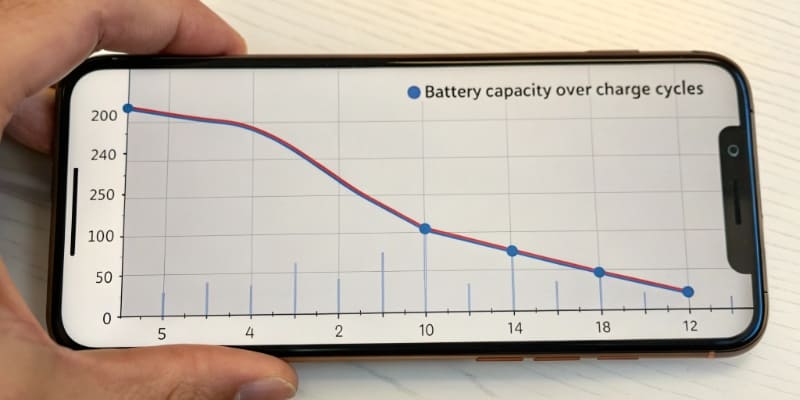
For years, cycle count was the headline number everyone focused on. It’s a straightforward metric: a battery rated for 1000 cycles should, in theory, last longer than one rated for 500. This is crucial for a product that your customer will use and recharge every single day. But here's the catch: cycle life is a laboratory number. It doesn't tell the whole story of real-world performance. Real-world use involves partial charges, varying temperatures, and different rates of discharge, all of which impact the battery's health.
This is something I discuss often with my clients. They are realizing that focusing only on cycle count is a trap. A battery might promise 1000 cycles, but if it degrades significantly just sitting in a warehouse for a year, that cycle count becomes meaningless. This is what we call calendar aging. True value comes from looking at the total picture. A smart customer knows that the total cost of ownership—including maintenance, replacement, and reliability—is what really matters. A high cycle count is just one piece of that puzzle.
When Cycle Life Matters Most
| Scenario | Primary Metric | Why It Matters |
|---|---|---|
| Daily-Use Wearable | Cycle Life | The device is charged every night and used all day. High cycle count ensures it lasts for a reasonable number of years. |
| Emergency Beacon | Calendar/Shelf Life | The device sits unused for months or years. It must work when needed, so retaining charge over time is critical. |
| Power Tool | Cycle Life & Rate | The battery is frequently used and often fast-charged. It needs to withstand many cycles and deliver high power. |
How long do batteries last shelf life?
You've stocked up on batteries for a major product launch next year. But when you finally go to assemble the devices, you find a large portion of the batteries are already dead.
Shelf life is the duration a battery can be stored without losing significant capacity. For a quality lithium-ion battery, this can be several years under optimal conditions. These conditions include a cool, dry environment and storing the battery at a partial charge, typically around 50%.
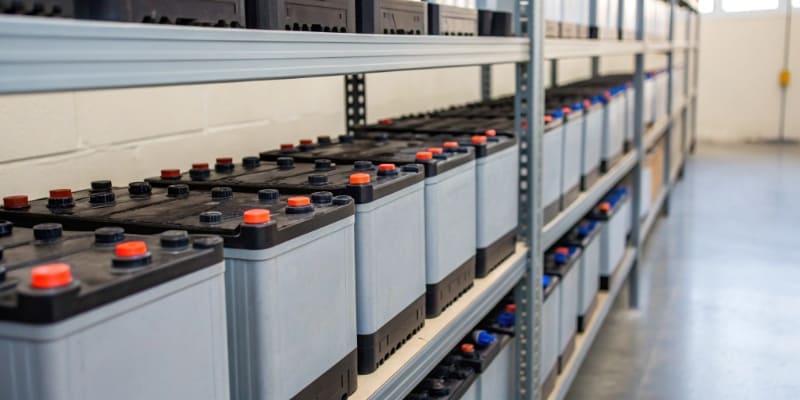
It's important to distinguish between shelf life and calendar life. Shelf life is about self-discharge—the tiny amount of charge a battery loses each day just sitting there. Calendar life is about irreversible chemical degradation that happens over time, regardless of use. Heat is the biggest enemy of calendar life. I once had a client who bought a large batch of batteries for a new medical device. They stored them fully charged in a warm warehouse for a year. When they started production, the battery capacity had dropped by nearly 20%. This was a costly lesson in the importance of proper storage and understanding calendar aging.
This focus on long-term stability is becoming more than just good practice; it's becoming law. The EU, for example, recently introduced new regulations. These rules are pushing the industry to look beyond just cycle count. They emphasize the battery's total lifespan in years (calendar life) and how easily it can be replaced. If your battery supplier isn't designing for this, you could face major problems with customs and lose access to important markets. At Litop, this is now a core part of our design philosophy. We're not just building batteries that cycle well; we're building batteries that last.
What is the 40 80 rule for batteries?
You want to do everything you can to make your device's battery last as long as possible. But you find that common charging habits, like charging to 100% overnight, are actually hurting it.
The 40-80 rule4 is a simple guideline to maximize the lifespan of a lithium-ion battery. It advises keeping the battery's charge level between 40% and 80%. This practice avoids the chemical stress caused by very high and very low voltages, significantly reducing degradation.
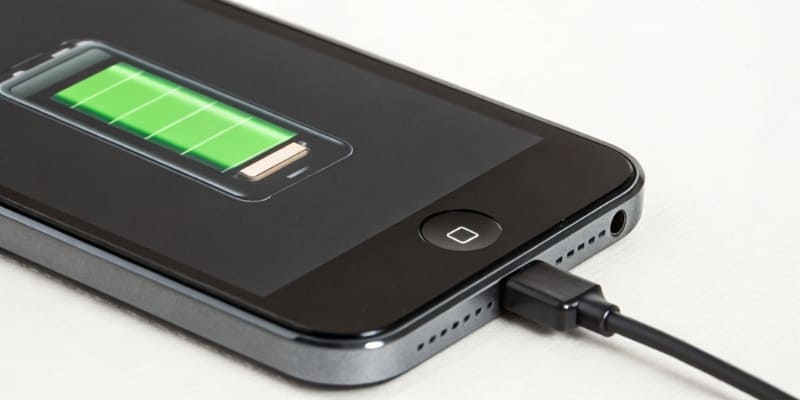
This rule works because it keeps the battery in its happiest state. Charging a lithium-ion battery to 100% puts it under high voltage stress, which accelerates calendar aging. It's like stretching a rubber band to its absolute limit and holding it there; it wears out faster. On the other end, discharging it completely to 0% puts strain on the anode and can cause damage that reduces its ability to hold a charge in the future. By staying in that middle zone, you reduce stress from both ends and can dramatically increase the total number of effective cycles the battery can deliver.
This is where our expertise in Battery Management Systems (BMS) becomes a huge advantage for our clients. A customer doesn't have time to manually check if their device is at 40% or 80%. That's why we design smart BMS solutions that can automate this process. The BMS can be programmed to stop charging at 80% or provide intelligent notifications to the user. This is exactly the kind of smart management my clients are asking for. It provides predictive warnings and turns a simple battery into a reliable, long-lasting power system.
The Impact of Charging Habits
| Charging Habit | Stress Level on Battery | Expected Lifespan |
|---|---|---|
| Always 0% to 100% | High | Standard |
| Staying within 20-80% | Low | Can be 2x longer or more |
What type of battery has high energy density and longer shelf life?
Your new device needs to be compact and lightweight, but it also needs to last a long time on a single charge. You find that most standard batteries are either too bulky or die too quickly.
Lithium-ion (Li-ion) and Lithium Polymer (LiPo) batteries offer the best all-around combination of high energy density and long shelf life, making them ideal for portable devices. For applications where safety and an extremely long calendar life are the top priorities, Lithium Iron Phosphate5 (LiFePO4) is an excellent choice.
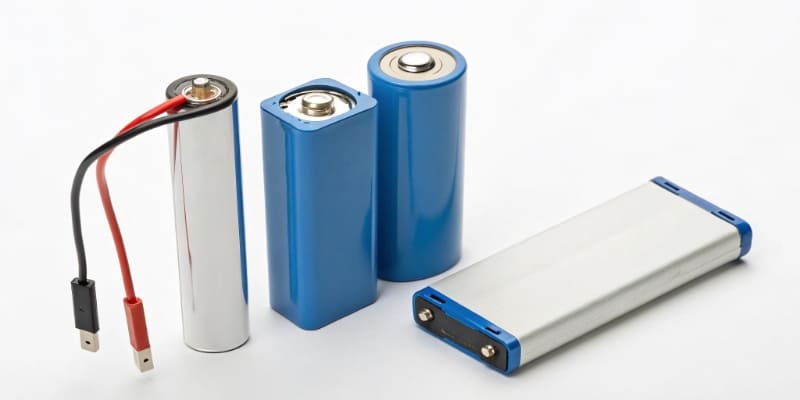
Choosing the right chemistry is fundamental. At Litop, we specialize in helping our customers navigate these choices. For products like wearables or portable medical devices, space is everything. This is where our custom Li-ion and LiPo batteries shine. Their high energy density allows for a lot of power in a small package. More importantly, we can manufacture them in custom shapes—ultra-thin, curved, or other unique forms—to fit perfectly into your product design. When stored correctly, they have a great shelf life, ensuring they are ready for your customers.
For other applications, the priorities shift. If you're building a stationary energy storage system or a medical cart where extreme safety and longevity are more important than being ultra-compact, LiFePO4 is the superior option. It has a slightly lower energy density, but it offers an exceptionally long cycle life and an outstanding calendar life, meaning it will last for many, many years. Our job is to understand your specific needs and guide you to the chemistry that provides the best balance of performance, size, safety, and cost for your application.
Quick Chemistry Comparison
| Battery Type | Energy Density | Cycle Life | Calendar/Shelf Life | Best For... |
|---|---|---|---|---|
| Li-ion / LiPo | High | Good | Good | Wearables, Portable Medical, Consumer Electronics |
| LiFePO4 | Medium | Excellent | Excellent | Energy Storage, Mobility, High-Safety Devices |
| Li-MnO₂ | Medium | Moderate | Very Good | High-Power Pulse Devices, Memory Backup |
Conclusion
Ultimately, choosing the right battery isn't about finding the highest number on a spec sheet. It's about understanding the real-world demands of your product and balancing cycle life, shelf life, and calendar life. Partnering with an expert like Litop ensures you get a complete power solution that delivers lasting value.
Cycle life is essential for devices that are frequently charged, impacting longevity and user experience. ↩
Shelf life determines how long batteries can be stored without losing capacity, crucial for product reliability. ↩
Calendar life affects battery performance over time, regardless of usage, impacting long-term reliability. ↩
Following the 40-80 rule can maximize battery lifespan by reducing stress on the battery. ↩
LiFePO4 batteries are known for safety and longevity, making them suitable for critical applications. ↩