Your power tool is lagging, and you suspect the battery. Choosing between 18650 and 26650 cells is confusing, and a wrong choice means wasted money and poor performance.
For most power tools, 18650 batteries are the better choice. Their mature manufacturing process ensures high consistency and excellent heat dissipation. The smaller size allows for more flexible and efficient pack designs, which is why top brands prefer them for demanding applications.
It seems simple, right? Just pick the 18650. But the story is more complex. You might wonder why a larger battery like the 26650, which often holds more charge, isn't the automatic winner. The answer lies in the specific demands of power tools and how battery packs are designed. I've spent years helping clients like Michael, a demanding but fair procurement officer from the US, understand these details. He always wants the best for his medical devices, and the same logic applies to high-performance power tools. Let's dive deeper into why the big brands make the choices they do.
Why do big brands like DeWalt and Milwaukee use 18650s in their 5.0Ah battery packs instead of a few 26650s?
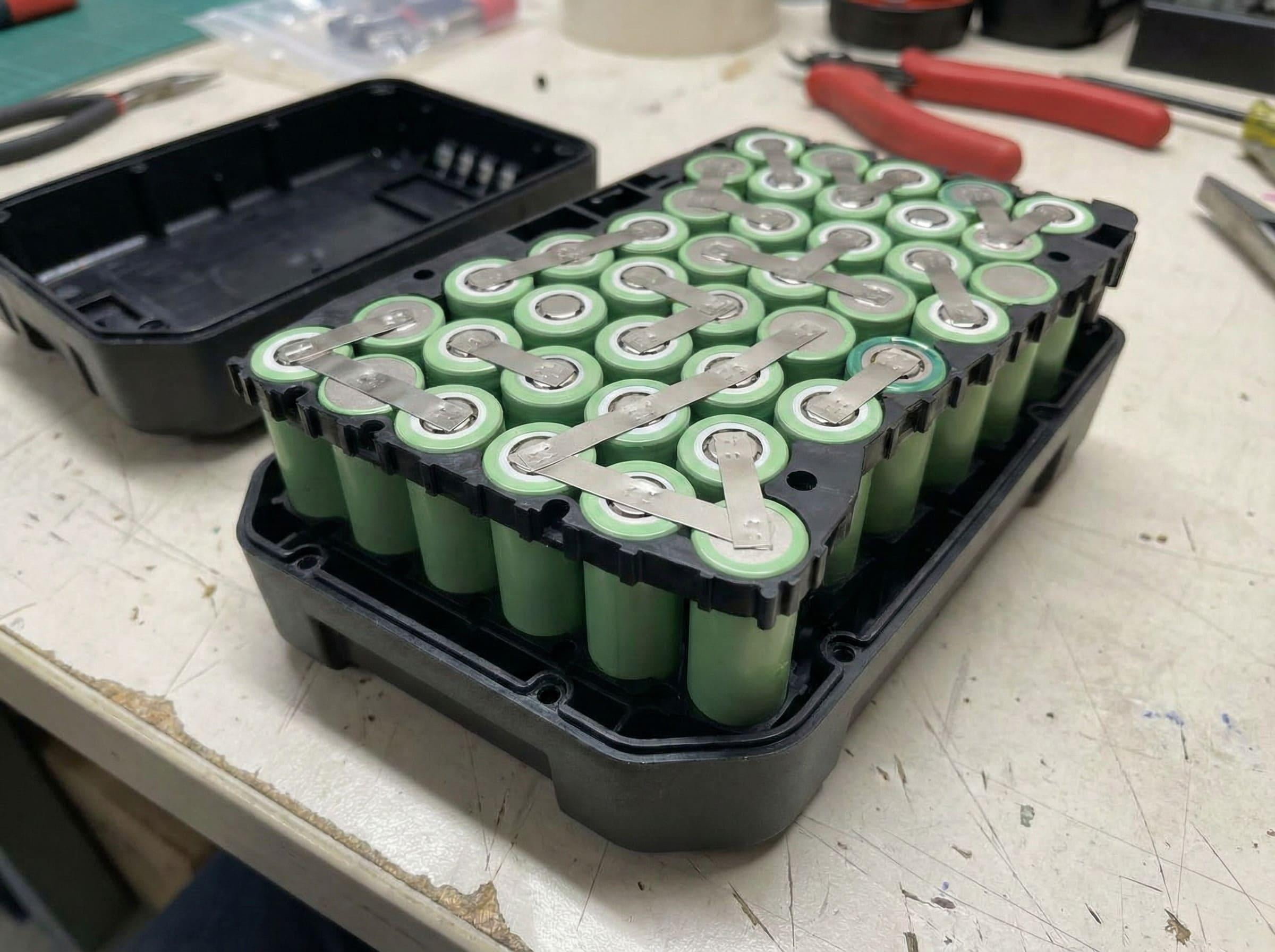
Ever opened a 5.0Ah power tool pack and wondered why it’s full of small 18650 cells? Using fewer, larger 26650s seems simpler, but there's a critical reason they don't.
Big brands use 18650 cells because they offer a superior balance of power delivery, heat management, and spatial efficiency. Multiple 18650s in parallel can discharge a higher total current and dissipate heat more effectively than fewer, larger 26650 cells in the same pack housing.
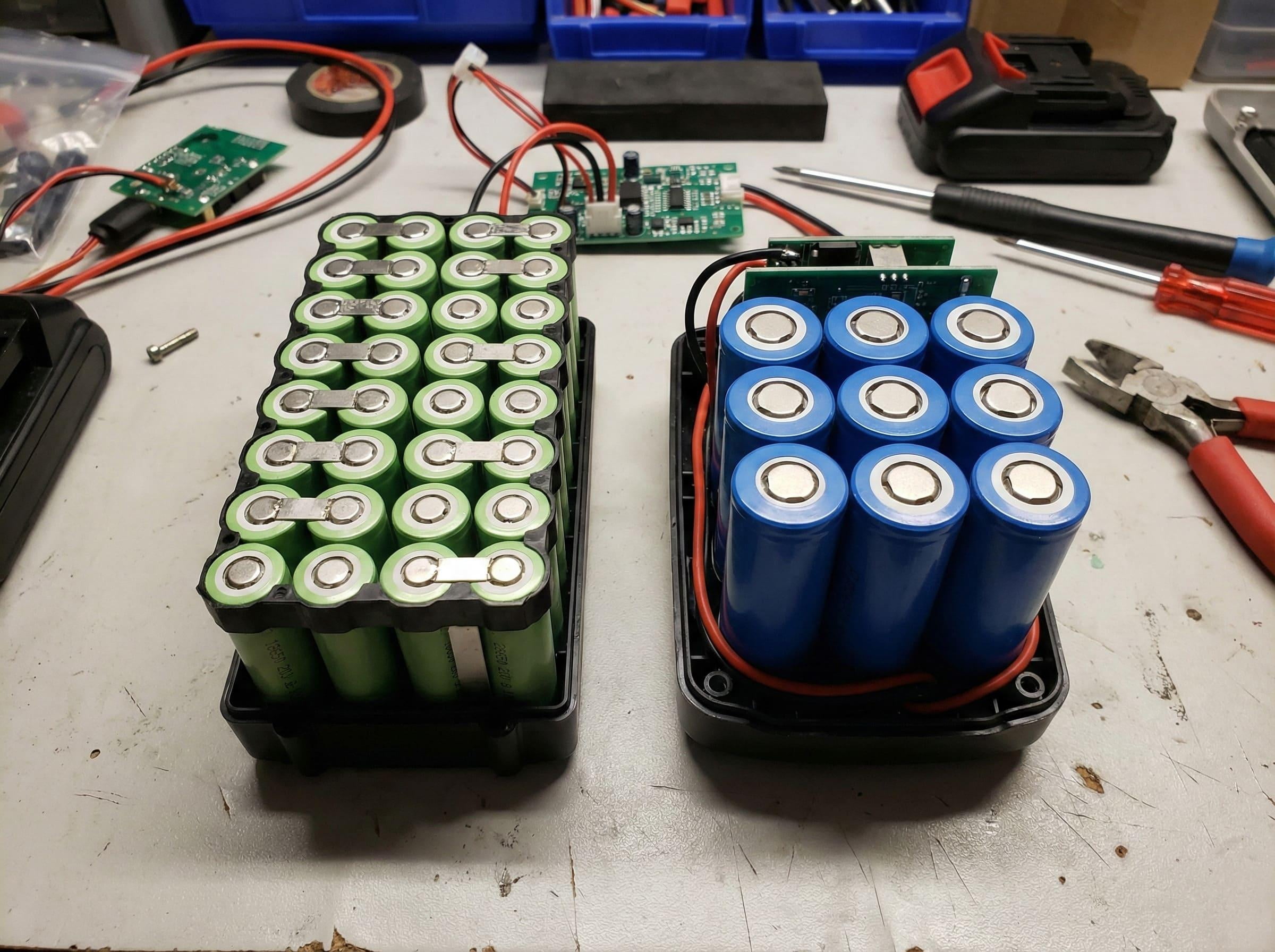
When you design a battery pack, it's not just about total capacity. It's a careful balance of power, heat, and space. For professional power tools, 18650 cells simply offer the best combination of these three critical factors. It’s a puzzle, and the 18650 is the perfect piece.
The Power of the Pack
A power tool needs a massive burst of energy to start a cut or drive a large screw. This power comes from the battery's discharge current, measured in Amps (A). When you connect cells in parallel, their current capabilities add up. A standard 5.0Ah pack might have ten 18650 cells in a 2-series, 5-parallel (2S5P) configuration. If each high-drain cell can provide 25A, the pack can deliver a massive 125A of current (5 cells x 25A). To get similar power from 26650s, you would need cells with an incredibly high discharge rate, which are less common and more expensive. The combined power of multiple 18650s is simply easier and more reliable to achieve.
Winning the War on Heat
Heat is the number one enemy of a battery's health and performance. Every time you use your tool, the cells generate heat. Smaller cells, like the 18650, have a higher surface-area-to-volume ratio. This means they can get rid of heat much faster than a larger 26650 cell. Think of it like a small ice cube melting faster than a large block. In a battery pack, having many small cells with small air gaps between them creates channels for air to flow and carry heat away. This is far more effective than having a few large, hot 26650 cells packed tightly together with nowhere for the heat to go. Better cooling means a longer lifespan and less chance of the tool shutting down from overheating.
The Puzzle of Space
It seems strange, but you can often fit more total energy into a rectangular box using smaller cylinders than larger ones. The smaller 18mm diameter of 18650 cells gives designers more flexibility. They can arrange the cells to minimize wasted space inside the standard rectangular battery housings used by all major tool brands. The larger 26mm diameter of 26650 cells creates larger empty gaps between them, reducing the overall volumetric energy density of the pack. The table below shows a simple comparison.
| Feature | 5x 18650 Cells (Typical 5P Row) | 3x 26650 Cells (Hypothetical) |
|---|---|---|
| Peak Power Output | Very High (e.g., 5 x 25A = 125A) | High (e.g., 3 x 35A = 105A) |
| Heat Dissipation | Excellent (more surface area) | Good (less surface area per cell) |
| Space Efficiency | High (flexible packing) | Lower (more wasted space) |
| Consistency | Very High (mature process) | Good (less mature) |
How do you choose high-drain cells, and why do cells with smaller capacity sometimes feel more powerful?
You bought a high-capacity cell, but your tool feels weak. It’s frustrating when a smaller capacity cell performs better, making you question what the numbers really mean.
Power comes from the cell's continuous discharge rate (CDR), measured in amps (A), not its capacity (mAh). A "high-drain" cell is designed to deliver high current safely. A 2000mAh cell with a 30A CDR will feel much more powerful than a 3500mAh cell with a 10A CDR.
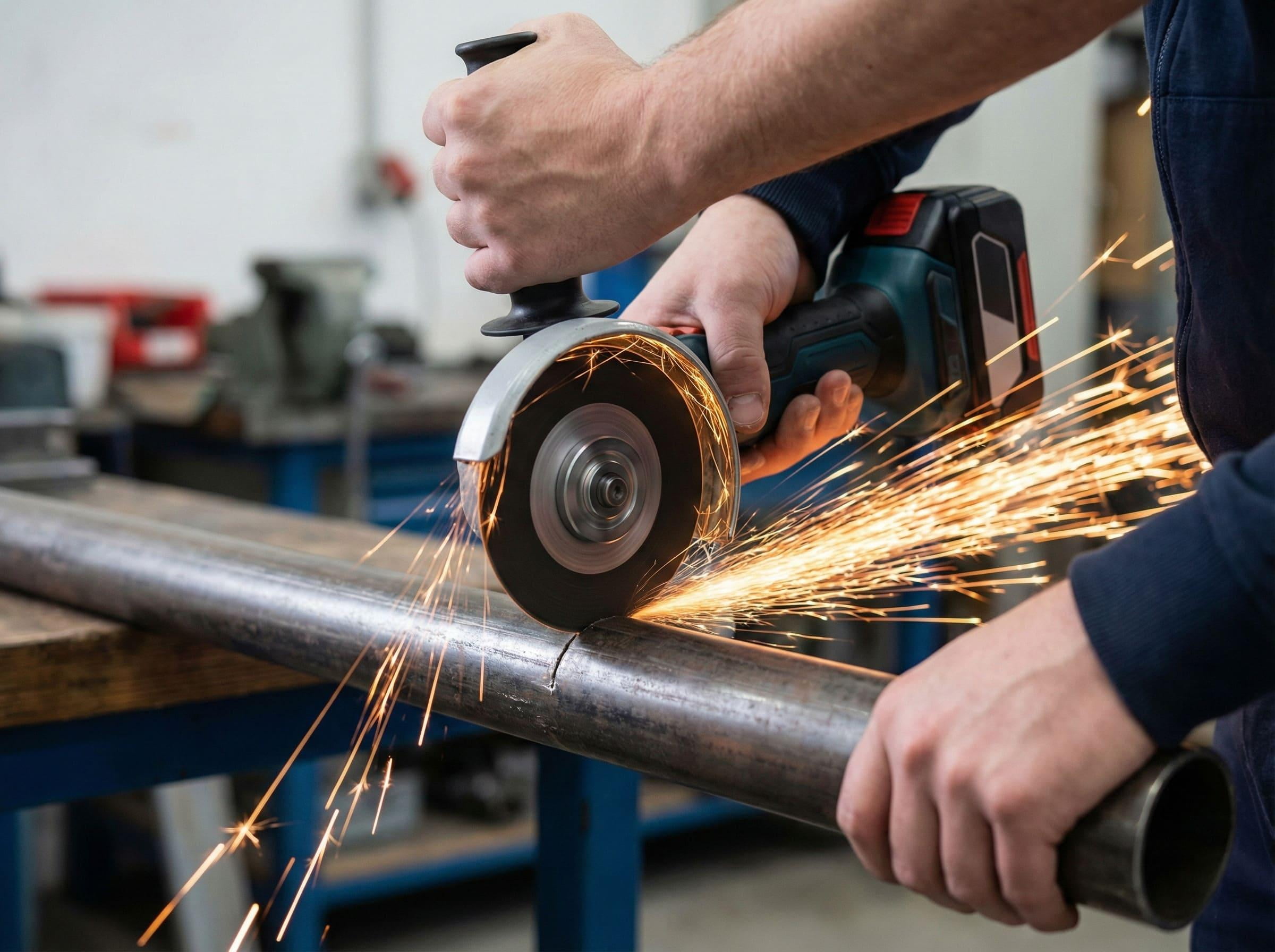
This is one of the most common misunderstandings I see. In the world of high-performance batteries, capacity isn't king—power is. Understanding this difference is key to getting the performance you expect from your tools.
Understanding Capacity (mAh) vs. Power (Amps)
Think of a battery like a car. The capacity, measured in milliamp-hours (mAh), is like the size of the gas tank. It tells you how long the battery can run. The discharge rate, measured in Amps (A), is like the size of the engine. It tells you how much power the battery can deliver at once. A long-haul truck has a huge gas tank (high capacity) but a slow-to-rev engine. A race car has a small gas tank (low capacity) but a massive engine (high discharge rate) for incredible acceleration. Power tools are like race cars. They need that burst of acceleration to handle tough jobs. A high-capacity cell with a low discharge rate is like putting a truck engine in a race car. It will run for a long time, but it will feel sluggish and weak.
What is "Voltage Sag"?
When you put a heavy load on a battery, like drilling into steel, its voltage temporarily drops. This is called "voltage sag." Cells with low discharge rates have high internal resistance, which causes a huge voltage sag under load. Your tool's motor receives less voltage, so it produces less torque and slows down. It might even stall completely. A true high-drain cell has very low internal resistance. It can maintain a much higher voltage even under a heavy load. This delivers consistent, high power to the motor, so the tool feels strong and doesn't bog down. This ability to resist voltage sag is what makes a cell "feel" powerful.
How to Identify a True High-Drain Cell
Always look at the manufacturer's specification sheet. Find the "Continuous Discharge Rate," or CDR. This is the most important number for power tools. Some manufacturers advertise a "pulse" rating, but this can be misleading as it only applies for a few seconds. For power tools, you need cells with a CDR of at least 20A, and preferably 25A or more. At Litop, we provide clear and honest specs for all our cells, so our customers know exactly what they are getting.
| Cell Type | Typical Capacity (mAh) | Typical CDR (Amps) | Best Use Case |
|---|---|---|---|
| High-Drain | 2000 - 2600 | 25A - 35A | Power Tools, Drones |
| High-Capacity | 3000 - 3600 | 10A - 15A | Flashlights, Laptops |
Can 21700 cells be directly placed into older 18650 power tool battery cases?
Your trusty 18650 power tool could use a boost. You see powerful 21700 cells and want to upgrade, but you're afraid they might not fit and could cause damage.
No, 21700 cells cannot be placed directly into a battery case designed for 18650 cells. The name itself describes the size: a 21700 cell is 21mm in diameter and 70mm long, while an 18650 is 18mm in diameter and 65mm long. They are physically incompatible.
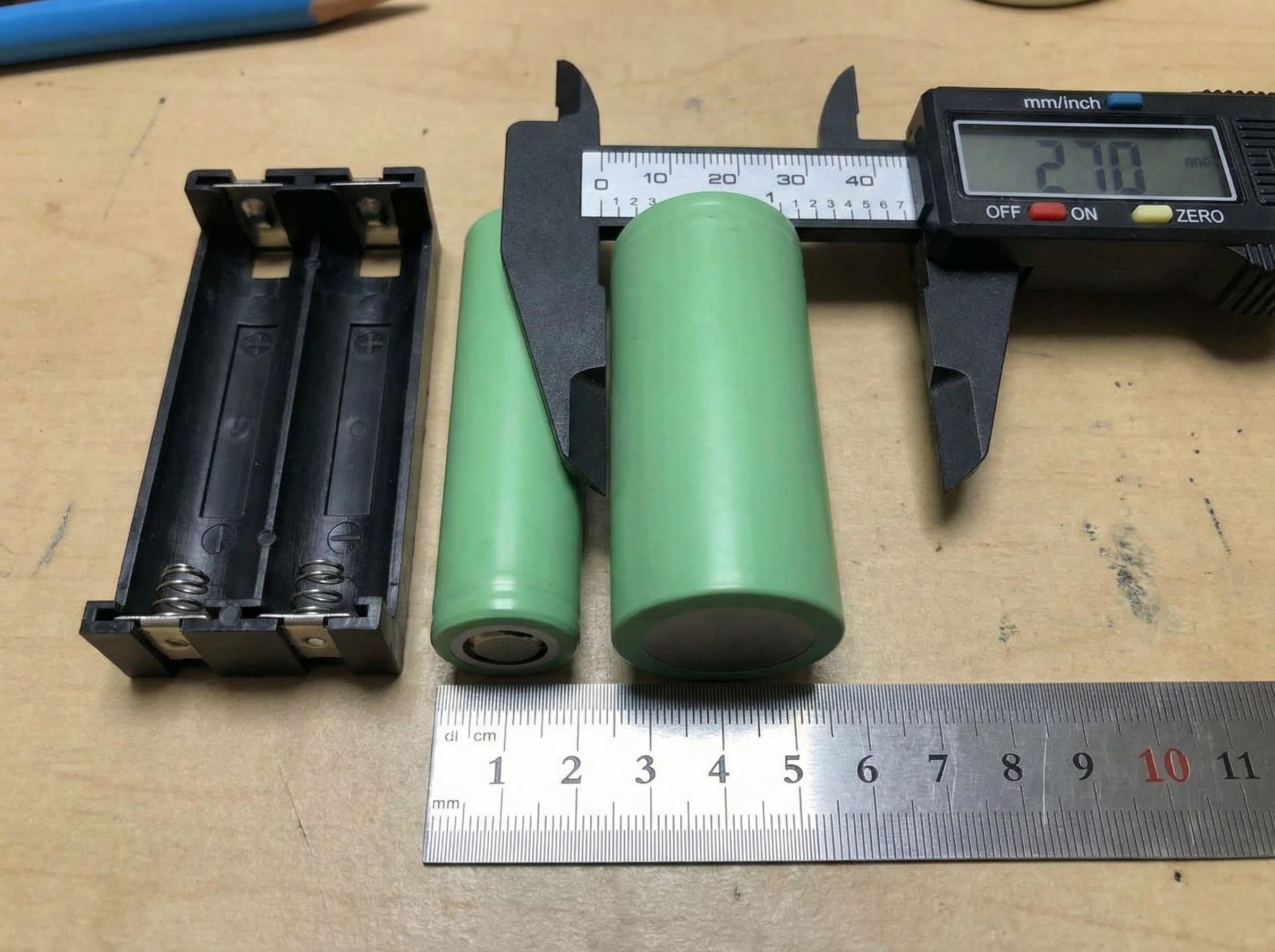
It's a common question, as people are always looking for an easy upgrade. Unfortunately, with lithium-ion cells, size is not just a number; it dictates everything about the pack's design, from the physical fit to the electronic safety systems.
The Numbers Don't Lie: Physical Dimensions
The naming system for cylindrical lithium-ion cells is very straightforward. It tells you the physical size.
- 18650: 18mm in diameter, 65mm in length.
- 21700: 21mm in diameter, 70mm in length.
A 21700 cell is both wider and longer than an 18650. Inside a power tool battery pack, the cells sit in a plastic cradle that is precision-molded to hold them securely. The nickel strips that connect the cells are cut to the exact length needed for 65mm cells. A 70mm long 21700 cell simply will not fit. Attempting to force it in would break the cradle and could create a dangerous short circuit. The 3mm difference in diameter is even more critical, as it makes the cell completely unable to fit into the 18mm slots.
Mismatched Electronics and Connections
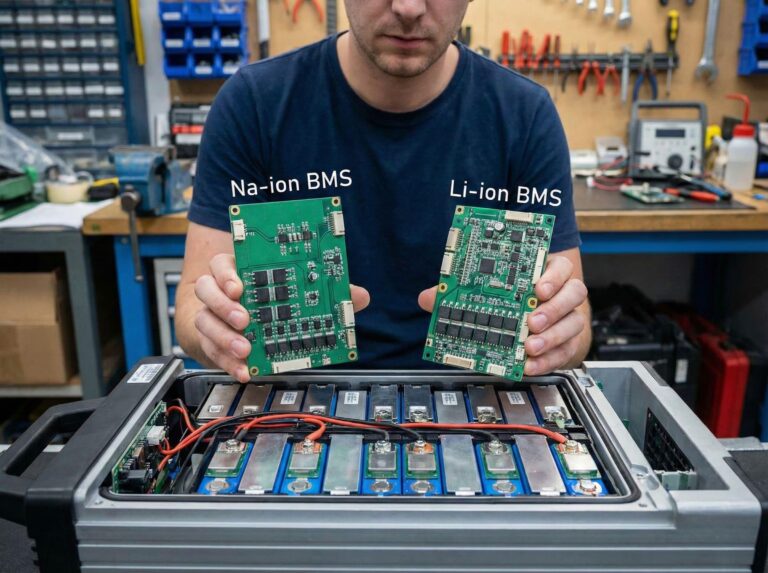
Even if you could magically make the 21700 cells fit, the pack would still fail. Every battery pack has a Battery Management System (BMS). This is the circuit board that acts as the pack's brain. It protects the cells from over-charging, over-discharging, and overheating. The BMS in an 18650 pack is specifically calibrated for the voltage, capacity, and discharge profile of the 18650 cells it was designed for. Connecting it to 21700 cells, which have different characteristics, would confuse the BMS. It would not charge them correctly, might cut off power too early or too late, and would fail to keep the cells balanced. This is not only bad for the battery's health but is also a serious safety hazard.
The Path to Upgrading
The only way to use 21700 cells is to buy a tool and battery pack that were designed for them from the start. Many brands are now releasing new tool platforms that use the larger 21700 format to offer more power and runtime. This is a big part of what we do at Litop. When a client wants to launch a new, more powerful device, we don't just swap the cells. We engineer a completely new battery solution: a new housing, a new custom BMS, and a new cell configuration, all designed to maximize the performance of the new 21700 cells safely and reliably.
During continuous heavy-duty work, like drilling concrete, which battery is less likely to stop due to overheating?
Nothing is more annoying than your drill stopping mid-hole because the battery overheated. This downtime costs you time and momentum, especially on demanding jobs like drilling concrete.
A well-designed pack using high-quality 18650 cells is less likely to stop from overheating. The smaller cells have a better surface-area-to-volume ratio, allowing them to dissipate heat more efficiently than fewer, larger 26650 cells generating the same amount of power under heavy load.
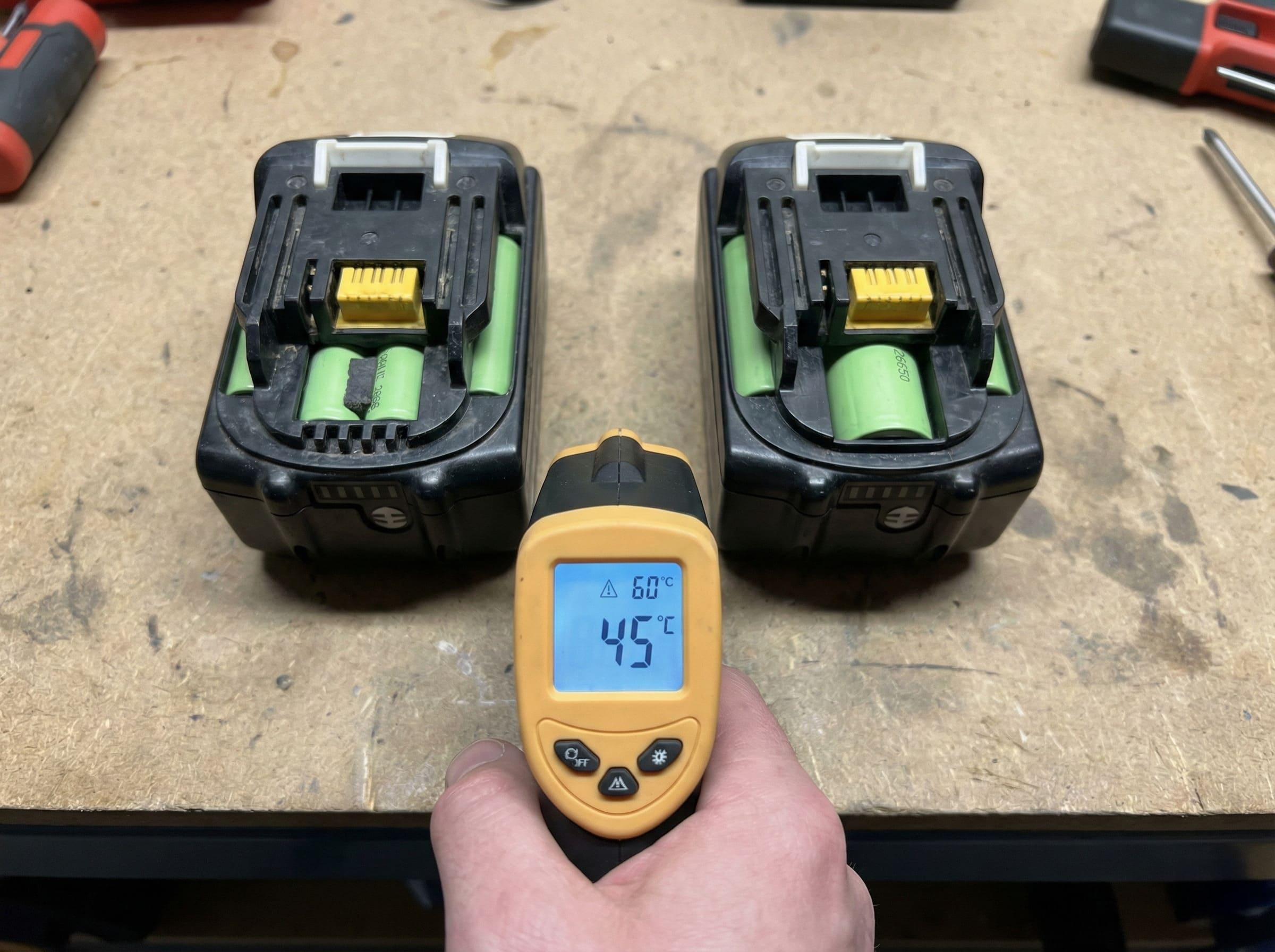
When you push a tool to its limit, you are also pushing the battery to its limit. The battery that can handle the heat best is the one that will let you finish the job without interruption. In almost every case, that's the 18650 pack.
The Science of Heat Dissipation
Think about cooling down a hot potato. A small potato cools much faster than a big one because it has more surface area relative to its internal volume. The exact same principle applies to battery cells. When you are drilling concrete, the tool's motor is drawing a massive, continuous current from the battery. This creates a lot of heat inside the cells due to their internal resistance. In a pack with five 18650 cells working together, the total surface area to release that heat is very large. In a pack with just two or three larger 26650 cells, the total surface area is much smaller. The 18650 pack acts like a better radiator, getting rid of heat faster and keeping the internal temperature of the cells lower.
Pack Design and Airflow
Professional tool battery packs are not just random collections of cells. They are carefully engineered cooling systems. The plastic cradles that hold the 18650s are designed with specific spacing between each cell. This creates air channels throughout the pack. Often, the fan in the tool itself is designed to pull air through vents in the battery pack, actively cooling the cells as you work. This kind of advanced thermal management is much easier to design with many small cells than with a few large ones. A pack with bulky 26650s would have very little space for air to flow, leading to hot spots building up deep inside the pack where the heat cannot escape.
The Role of the BMS
The Battery Management System (BMS) is the safety guard for your pack. It has temperature sensors placed strategically among the cells. If any of these sensors detect a temperature that is too high (usually around 70°C or 158°F), the BMS will immediately cut power to the tool. This is a safety feature to prevent the battery from being permanently damaged or catching fire. Because 18650 packs are so much better at getting rid of heat, their cells are less likely to reach this critical temperature shutdown point during a long, hard job. This means you can work longer and harder without the frustrating experience of your tool stopping unexpectedly.
Conclusion
In the showdown between 18650 and 26650 for power tools, the 18650 is the clear winner. Its superior power delivery, heat management, and design flexibility are why it's the professional's choice. For custom battery solutions that prioritize performance, contact us at Litop.