Your devices die in the cold, and it's frustrating when batteries fail you in winter. Choosing the right battery chemistry is the key to reliable power, especially in freezing temperatures.
Sodium-ion batteries are the best, retaining over 90% capacity at -20°C. NMC is also strong at around 70%. In contrast, LiFePO4, NiMH, Ni-Cd, and Lead-Acid show significant performance drops, making your battery choice crucial for any cold-weather application.
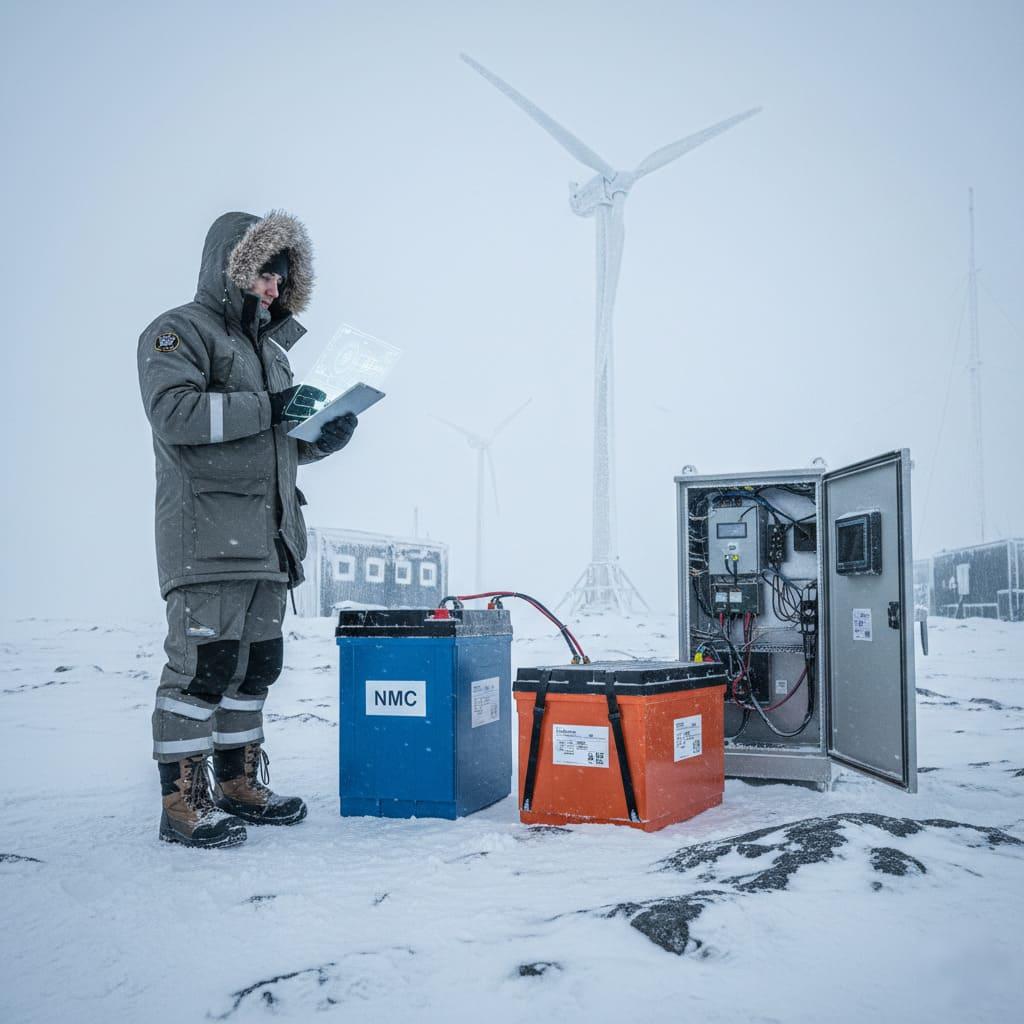
I've spent years in the battery industry, helping clients like Michael from the United States find the perfect power source for his high-tech medical devices. One question comes up again and again: how do we make batteries work reliably in the cold? It's a huge deal for everything from life-saving equipment to everyday electronics. Let’s break down why some batteries handle the cold while others just give up. There is no single magic bullet, but understanding the differences is the first step toward finding the right solution.
Why are Sodium-Ion batteries considered the "ultimate solution" for range anxiety in extreme cold for 2025?
Cold weather kills your EV range, and this anxiety makes winter driving stressful. Sodium-ion batteries offer a breakthrough in reliable, cold-weather performance, bringing peace of mind back to winter travel.
Sodium-ion batteries are the best for extreme cold because they keep over 90% of their capacity at -20°C. Their unique chemistry allows sodium ions to move easily, even when it's freezing. This makes them a potential game-changer for EVs and other devices in cold climates.
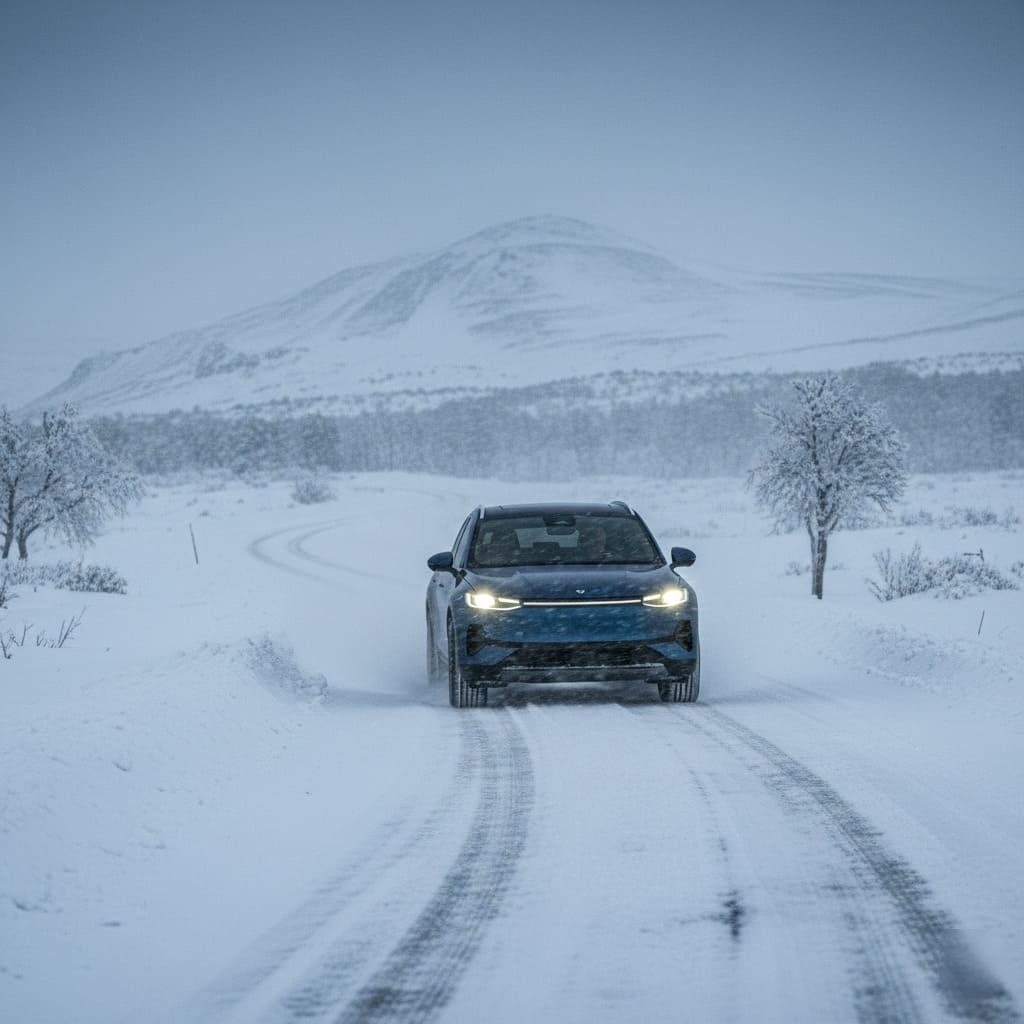
As a battery engineer, I find the performance of sodium-ion (Na-ion) cells in the cold fascinating. For years, we've battled the sluggish performance of lithium-ion batteries as temperatures drop. The electrolyte inside a lithium battery thickens like honey in the cold, making it hard for the lithium ions to move. This slow movement increases internal resistance and cuts the battery's usable capacity.
Sodium-ion batteries work differently. While sodium ions are larger than lithium ions, the electrolytes designed for them have special properties that maintain high ion mobility even at freezing temperatures. This is the core reason for their incredible cold-weather performance.
How Sodium-Ion Beats the Cold
The secret lies in the battery's internal chemistry. In a sodium-ion cell, the energy barrier for ions to move between the cathode and anode is naturally lower than in many lithium-based cells. This means less energy is wasted just trying to get the ions moving when it's cold. Our tests, and industry data, confirm that at -20°C, a sodium-ion battery can deliver over 90% of its rated capacity. For comparison, a standard LiFePO4 battery might only give you 55%. This is a night-and-day difference in the real world.
Performance Comparison at -20°C
To put it in perspective, I've created a table to show how these different chemistries stack up in the cold. This is the kind of data we use at Litop to help customers choose the right technology.
| Battery Type | Capacity Retention @ -20°C | Key Advantage | Best Application |
|---|---|---|---|
| Sodium-Ion (Na-ion) | >90% | Excellent low-temp performance, low cost | Small EVs, grid storage in cold climates |
| Nickel-Cadmium (Ni-Cd) | ~80% | Very robust, good low-temp discharge | Power tools, emergency lighting, aviation |
| NMC Lithium-ion | ~70% | High energy density, good overall balance | High-end EVs, consumer electronics |
| Lead-Acid | ~65% | Very low cost, high cold-cranking amps | Car starter batteries (SLI) |
| Nickel-Metal Hydride (NiMH) | ~60-75% | Safe, no toxic cadmium, wide temp range | Hybrid vehicles, consumer AA/AAA cells |
| LiFePO4 (LFP) | ~55% | Long cycle life, very safe at normal temps | Energy storage, RVs (in moderate climates) |
The Catch and Future Outlook
Despite these advantages, sodium-ion technology is not perfect yet. Its main drawback is lower energy density, currently around 120 Wh/kg. This is less than the 250+ Wh/kg of high-end NMC cells. This means a sodium-ion battery pack would be larger and heavier to provide the same range as an NMC pack. That's why it's seen as a solution for smaller, city-focused EVs and stationary storage first. But with its low cost—potentially 30% cheaper than LFP—and amazing cold performance, it is absolutely the technology to watch. By 2025, I expect we'll see it solving real-world problems in the coldest parts of the world.
What permanent damage occurs if I charge my LiFePO4 battery in sub-zero temperatures without a built-in heating system?
You need to charge your LFP battery in the cold, but doing it wrong could destroy it forever. You must understand the risk of "lithium plating" to avoid causing irreversible damage.
Charging an LFP battery below 0°C (32°F) without a heater causes lithium plating. This is when lithium ions build up on the anode surface instead of inserting into it. The process is irreversible, permanently reducing capacity and safety, and can lead to internal short circuits.

I’ve had many conversations with clients who are new to lithium batteries, and this is one of the most critical points I stress. You can discharge a LiFePO4 battery in the cold, although with reduced performance. But charging it below freezing is a definite no. It’s like trying to pour water onto frozen ground—it won't soak in, it just sits on top and causes problems.
The Science of Lithium Plating
During a normal charge, lithium ions travel from the cathode and neatly insert themselves into the graphite structure of the anode. Think of it as parking cars in a multi-story garage. When the battery is cold, the chemical reaction slows down. The ions arrive at the anode faster than they can be absorbed into the graphite. With nowhere to go, they start to deposit on the surface of the anode as metallic lithium. This build-up is called lithium plating. Once it forms, it doesn't go away.
What are the consequences?
This isn't just a small issue; it causes serious, permanent damage. I always explain these three main consequences to my clients:
- Permanent Capacity Loss: The plated lithium is now "dead." It can no longer participate in the charging and discharging process. Every time you charge in the cold, you are effectively making your battery smaller. The damage adds up, and the capacity loss is irreversible.
- Increased Internal Resistance: The layer of metallic lithium on the anode acts as a barrier, making it harder for other ions to get through. This increases the battery's internal resistance, which means it will run less efficiently, heat up more during use, and deliver less power.
- Critical Safety Risks: This is the most dangerous part. The plated lithium can form sharp, needle-like structures called dendrites. If these dendrites grow long enough, they can puncture the separator that keeps the anode and cathode apart. This causes an internal short circuit, which can lead to thermal runaway—a rapid, uncontrolled heating event that can result in smoke and fire. For a client like Michael, whose products are used in medical settings, this kind of safety risk is completely unacceptable.
That’s why a smart Battery Management System (BMS) is not optional; it's essential. At Litop, our custom BMS designs include low-temperature charging protection that automatically prevents charging when the cell temperature is too low. For applications that require charging in the cold, we integrate heating systems that warm the cells to a safe temperature before charging begins.
At -20°C, how much of an EV's range reduction is due to battery chemistry vs. the heating system?
Your EV's range plummets in winter, and you're left wondering: is it the battery's fault or the heater? Understanding the two main culprits helps you manage winter range anxiety effectively.
At -20°C (-4°F), an electric vehicle's range can drop by 40-60%. Roughly half of this loss is from the battery's reduced efficiency due to cold chemistry. The other half is consumed by the power-hungry cabin heater keeping the occupants warm.

This is a very common question I get from people thinking about electric vehicles. They see headlines about EVs losing half their range in winter and get worried. The truth is, the range loss is real, but it's caused by a combination of two major factors. It's not just the battery struggling on its own.
The Battery's Direct Contribution
First, let's talk about the battery itself. As we've discussed, cold temperatures increase a battery's internal resistance. This means two things happen. First, the battery simply cannot release its energy as easily. From the vehicle's perspective, the "gas tank" seems smaller. Based on the data, a high-performance NMC battery might lose about 30% of its usable capacity at -20°C. A LiFePO4 battery would lose even more, around 45%. Second, the battery can't accept energy as easily either. This means regenerative braking, which recaptures energy when you slow down, is severely limited or disabled completely when the battery is cold. In normal driving, regenerative braking can extend your range by 10-15%, so losing it is a noticeable hit to your overall efficiency.
The Heater: The Unseen Energy Hog
The second, and equally important, factor is the cabin heater. This is the biggest difference between an EV and a gas-powered car in winter. A gasoline engine is very inefficient; about 70% of the energy from the fuel is lost as waste heat. In winter, this "free" waste heat is simply redirected to warm the cabin.
An EV doesn't have a hot engine producing waste heat. It has to create heat from scratch using the energy stored in the battery. A simple resistive heater, like the one in a toaster, can draw 3,000 to 5,000 watts (3-5 kW) of power continuously to keep the cabin warm in freezing weather. More modern EVs use a heat pump, which is more efficient, but even it will draw a significant amount of power at -20°C.
A Practical Breakdown
Let's put some numbers to this.
- Imagine your EV has a 60 kWh battery.
- Chemical Loss: If it's an NMC battery, at -20°C you might only have access to 70% of that, which is 42 kWh of usable energy. You've already lost 30% of your range before you even start driving.
- Heater Loss: Now, you turn on the heater. Let's say it draws an average of 4 kW. If you drive for one hour, the heater alone will consume 4 kWh of energy. That's nearly 10% of your available energy (4 kWh is 9.5% of 42 kWh) just to stay warm.
When you combine the direct capacity loss from the cold chemistry with the massive energy draw from the heater, it’s easy to see how your total range can be cut in half. The effect is especially bad on short trips, where the car spends a lot of energy just warming up the cabin and battery, without traveling many miles.
For off-grid solar or RVs in cold regions, which is better for cost-effectiveness: a heated lithium battery or a more robust Ni-Cd battery?
You need reliable off-grid power in the cold, but making the wrong battery choice can be costly and leave you powerless. The key is to compare the total cost of ownership, not just the sticker price.
For long-term cost-effectiveness, a heated LiFePO4 (LFP) battery is generally better. While Ni-Cd handles cold well, its lower energy density, shorter cycle life, and toxic materials increase long-term costs. A heated LFP offers far more cycles and capacity for its size.
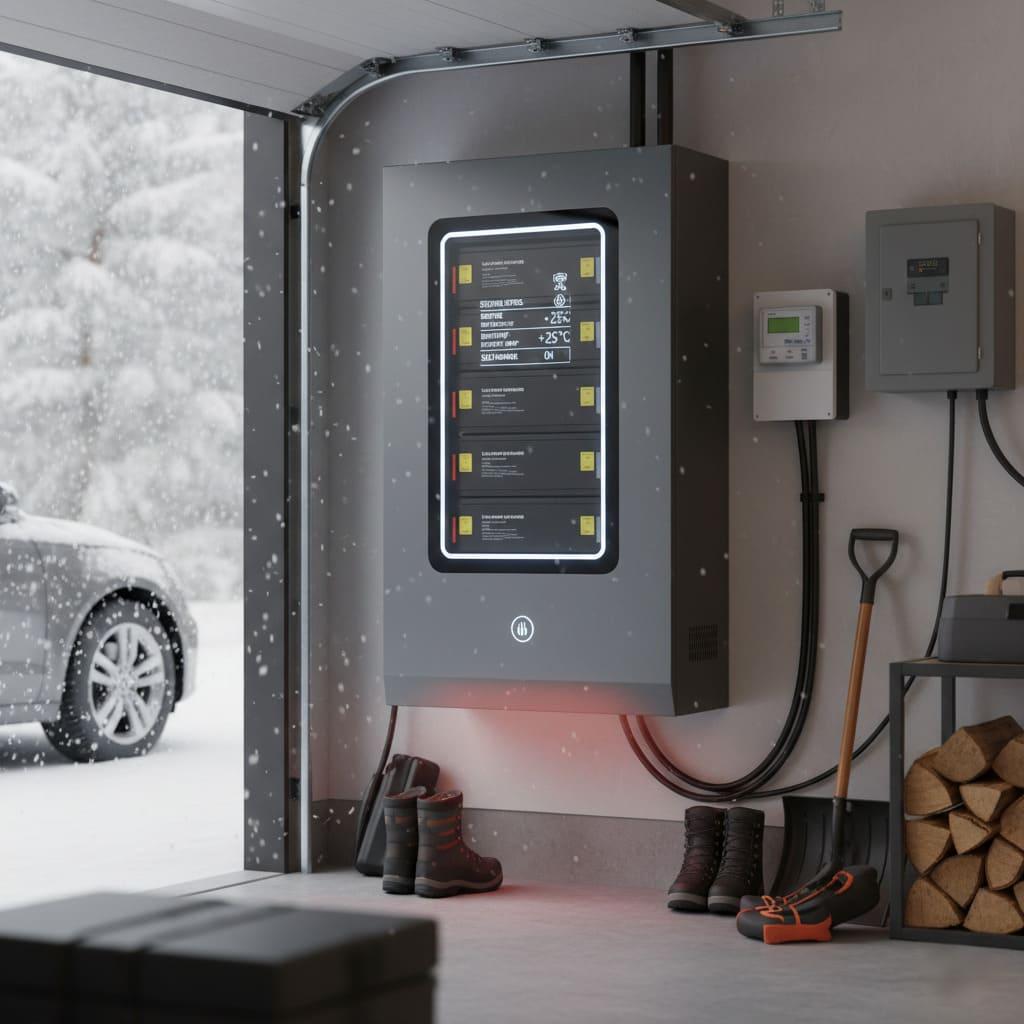
This is a practical decision that many of my clients in the RV and off-grid markets face. It’s a classic battle between an old, tough technology and a new, smart one. On the surface, Ni-Cd seems like a simple solution for the cold, but when we look at the bigger picture, a heated LFP battery almost always comes out on top.
Analyzing the Ni-Cd Option
Nickel-Cadmium (Ni-Cd) batteries are the old workhorses of the battery world. They are known for being incredibly tough.
- Pros: Their biggest advantage is their ability to discharge power in very cold temperatures without a problem. They are also very forgiving of overcharging or deep discharging.
- Cons: However, they have major drawbacks. They have low energy density, meaning they are very heavy and bulky for the amount of power they store. This is a huge issue in an RV where space and weight are at a premium. They also have a much shorter cycle life than LFP batteries, maybe 500-800 cycles. Finally, they contain cadmium, a toxic heavy metal that is an environmental hazard and makes disposal difficult and expensive.
Analyzing the Heated LiFePO4 Option
LiFePO4 is the modern standard for applications like this, and for good reason. By adding a simple heating element, we can overcome its one weakness: charging in the cold.
- Pros: LFP batteries have a very high energy density, so they are much lighter and more compact than Ni-Cd for the same capacity. They also offer an incredible cycle life, often 2,000 to 5,000 cycles, meaning they will last for many years. They are also very safe and don't contain toxic heavy metals. The heating system, managed by the BMS, uses a very small amount of power to keep the cells in their ideal temperature range before and during charging.
- Cons: The main downside is that they have a higher upfront cost than Ni-Cd. They also absolutely require a good BMS to manage the heating and prevent low-temperature charging.
The Cost-Effectiveness Verdict
When I advise clients on this, I always tell them to think about the Total Cost of Ownership (TCO).
- Upfront Cost: Ni-Cd might be cheaper to buy initially.
- Replacement Cost: The LFP battery will last 4-5 times longer than the Ni-Cd battery. You would have to buy and install new Ni-Cd batteries several times over the lifespan of a single LFP bank.
- Usable Energy: An LFP battery has a deeper depth of discharge and higher efficiency. This means you get more usable power out of the battery you paid for.
- Weight & Space: In an RV, every pound matters. The weight savings from LFP can translate to better fuel economy or more capacity for other things.
The initial investment in a quality heated LFP system, like the custom solutions we build at Litop, pays for itself over time through superior longevity, performance, and convenience. It's the smarter, more sustainable choice for any serious off-grid or RV power system in a cold climate.
Conclusion
There is no single "best" battery for all cold weather. Sodium-ion is a very exciting future, but for now, understanding a battery's limits is key. Technologies like heated LiFePO4 and smart BMS make lithium viable even in the cold. Ultimately, the right choice always depends on your specific needs. If you need sodium-ion batteries or want to learn more about sodium-ion battery technology, please feel free to contact us at: [email protected].