
Worried about the high cost of high-capacity batteries? Choosing the wrong one means wasting money or facing constant replacements. I'll show you when the upgrade actually pays off.
Upgrading to high-capacity batteries is financially smart for high-use applications. The higher initial cost is offset by longer life and greater efficiency, reducing long-term expenses for devices used daily. For infrequent use, standard batteries are more cost-effective.

The decision isn't just about the sticker price. It's about the total cost of ownership over the battery's entire life. I've worked with many clients, like Michael from a US medical device company, who need to justify every dollar. They always ask the same core questions when evaluating an upgrade. Let's explore those questions together to find the right answer for your business and see if a high-capacity battery is the smart financial move for you.
How long does the initial higher investment typically take to pay for itself through energy savings and fewer replacements?
Paying more upfront for a battery feels risky. You wonder if you will ever get that investment back. But the payback period is often much shorter than you expect.
The payback period depends on usage. For daily-use electronics, a high-capacity rechargeable battery can pay for itself within a year. In industrial applications, the savings from fewer replacements and less downtime mean you could break even in just 6 to 18 months.

I often talk to clients who are focused only on the initial unit price. I had a client developing a new handheld scanner who was very concerned about the initial cost difference between a standard battery and a high-capacity one. He saw the higher price as a major barrier. I asked him to think about the Total Cost of Ownership (TCO), not just the purchase price.
What is Total Cost of Ownership?
TCO includes the initial purchase price, but it also adds all other costs over the battery's life. This includes the cost of replacement batteries, the labor needed to swap them out, and the cost of downtime when the device isn't working. When you look at the full picture, the more expensive battery is often cheaper in the long run.
Payback Scenarios
The payback time changes a lot depending on how you use the battery.
- Consumer Electronics: Let's look at rechargeable batteries versus disposable ones. A pack of high-quality rechargeable batteries might cost $20, while a pack of disposables costs $5. The disposables are used once. The rechargeables can be used over 500 times. After just a few cycles, you've already saved money. Our data shows the long-term TCO of rechargeable batteries can be just 1/5th of using disposable ones.
- Industrial Drones: For something like an agricultural drone, uptime is money. A standard battery might give 20 minutes of flight. A high-capacity battery could give 30 minutes. That's 50% more work done per flight. My team found that for every 100 extra cycles a high-capacity battery provides, the operational cost per job can drop by over 30%. The initial investment is paid back quickly through pure efficiency gains.
Here is a simple table to show what I mean.
| Feature | Standard Battery | High-Capacity Battery |
|---|---|---|
| Initial Cost | $50 | $90 |
| Lifespan (Cycles) | 300 | 600 |
| Replacements Needed | 1 | 0 |
| Total Cost (over 600 cycles) | $100 ($50 x 2) | $90 |
As you can see, the high-capacity battery is actually cheaper over its life. The payback happens the moment you avoid buying that first replacement.
How do you calculate the ROI and payback period for high-capacity batteries in specific applications like home energy storage or EVs?
You need to prove the upgrade is worth it with real numbers. But calculating Return on Investment (ROI) can feel complex and overwhelming. I'll show you a simple way to do it.
To calculate ROI, subtract the battery cost from your total savings, then divide by the cost. For the payback period, divide the initial battery cost by your annual savings. Key savings include reduced energy bills for home storage or lower fuel costs for EVs.
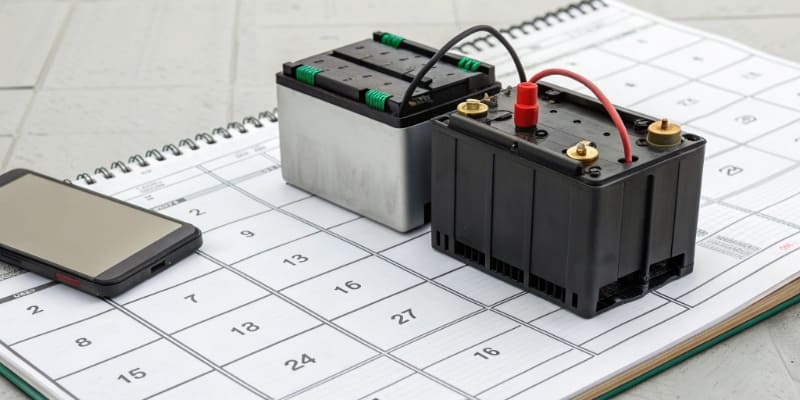
Calculating the ROI doesn't have to be an engineer's job. I always try to simplify it for my clients so they can make a clear business case. It really comes down to identifying where the savings are coming from. Let's break it down for two popular applications.
The Simple Math
You only need two simple formulas:
- *ROI (%) = [ (Total Financial Gain) – (Investment Cost) ] / (Investment Cost) 100**
- Payback Period (Years) = (Investment Cost) / (Annual Savings)
The key is to accurately identify your financial gains and savings for your specific situation.
Calculating for a Home Energy Storage System
Imagine you have solar panels. A high-capacity battery lets you store more of that free energy.
- Savings 1: Lower Electric Bills. You charge the battery with solar during the day. Then you use that stored power at night, instead of buying expensive electricity from the grid. The more capacity you have, the more energy you can store and the less you have to buy.
- Savings 2: Power Outage Protection. If you live where power outages are common, a large battery keeps your lights and business running. The financial gain is the money you didn't lose because you had power. For a home business, this could be thousands of dollars per outage. A high-capacity battery pays for itself much faster in areas with unreliable grids or high peak electricity rates.
Calculating for an Electric Vehicle Fleet
For EVs, we often look at the total cost per year. I was recently looking at data for light electric vehicles. A standard 48V 30Ah lithium battery had a total annual cost of about 680 RMB (around $95). In contrast, a higher-capacity, more advanced digital battery had an annual cost of only 280 RMB (about $39). Why? Because it lasts much longer, you replace it less often. If you have a fleet of 50 delivery scooters, that's a saving of 20,000 RMB ($2,800) every single year. The ROI is massive and the payback period is very short.
How should non-monetary benefits like higher reliability and less downtime be factored into the financial decision?
It is easy to see direct cost savings. But how do you measure the value of reliability or a better customer experience? These benefits are often the most important ones.
Factor in non-monetary benefits by linking them to business goals. For example, higher reliability in a medical device improves patient safety and builds brand trust. This trust leads to stronger customer loyalty and long-term revenue, making it a critical financial consideration.

I spend a lot of time discussing this with clients, especially those in the medical and high-end electronics fields. My client Michael, who runs a medical device company in the U.S., is very focused on this. He knows that some of the most important benefits don't show up on a simple ROI spreadsheet.
Turning Risk into a Number
The easiest way to think about reliability is to think about the cost of failure.
- For a consumer product: A battery failure might lead to a bad online review and a product return. The cost is the lost sale and maybe a small hit to your brand.
- For a medical device: A battery failure is a critical event. Michael once told me, "Caroline, if my patient monitor fails, the cost isn't just a replacement. It's a potential risk to someone's health and a huge blow to my company's reputation." For him, investing in a high-reliability battery isn't a cost; it's insurance against a catastrophic business risk. That's why we build custom LiFePO4 packs for him that are designed for maximum stability and longevity. He isn't buying a battery; he is buying peace of mind.
The Financial Impact of User Experience
Think about the wearables market1. If a smartwatch has a battery that lasts three days instead of one, customers will notice. That convenience is a feature they are willing to pay more for. We specialize in custom-shaped batteries, like curved or ultra-thin ones, that allow designers to fit more capacity into a sleek device. The extra few dollars for a custom battery might allow a brand to increase its retail price by $50, directly boosting its profit margin. Better battery life also translates to better reviews and stronger brand loyalty. This is a real financial benefit because loyal customers lead to repeat sales and positive word-of-mouth, which is the best marketing you can get.
Are there government subsidies, tax credits, or incentives that can significantly shift the financial breakeven point?
The high initial cost of an upgrade can be a barrier. You might be missing out on programs that help pay for it. Government incentives can slash the net cost.
Yes, many governments offer tax credits, rebates, and grants for adopting green technologies like high-capacity batteries2. These incentives, especially for EVs and home energy storage, can reduce your initial investment by 30% or more, making the upgrade profitable much faster.
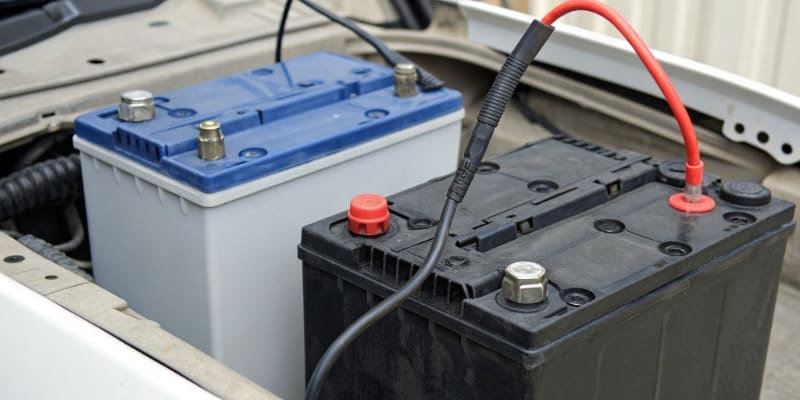
The initial price tag can be intimidating, but you should never evaluate the cost without checking for incentives. These programs are designed by governments to encourage the adoption of new technology, and they can completely change the financial outcome of your decision.
Common Types of Incentives
While we are based in China, we work with clients all over the world, from the United States to Europe and Australia. We see three main types of incentives they use:
- Tax Credits: This is a powerful tool. The U.S. Federal Solar Tax Credit, for example, allows homeowners and businesses to deduct 30% of the cost of a new solar and battery storage system from their taxes. This is a direct reduction of the investment cost.
- Rebates: These are direct cash payments. After you install a home battery system or buy an electric vehicle, you might get a check back from your state government or local utility company.
- Grants: These are typically for businesses. A company upgrading its industrial equipment to be more energy-efficient might apply for a government grant that covers a portion of the project cost.
How Incentives Impact Your ROI
Let’s use our simple payback formula again. Imagine a home battery system costs $15,000 and saves you $1,500 per year on electricity.
- Without Incentives: $15,000 / $1,500 = 10-year payback.
- With a 30% Tax Credit: The credit is $4,500. Your net cost becomes $10,500. The new payback is $10,500 / $1,500 = 7 years. The incentive just made your investment profitable three years sooner.
Because these programs vary so much by location and change frequently, I always tell my clients to check their local government energy agency websites or speak with a local installer. It's a crucial step that can make a major financial difference.
Conclusion
Deciding to upgrade to a high-capacity battery is a financial calculation. It makes sense for high-use applications where long-term savings and reliability are key. Always analyze your specific needs, consider the total cost of ownership, and look for incentives to make the smartest investment.