Choosing the right battery chemistry is crucial. A wrong move means poor performance or even safety risks. I will help you understand the key differences for your project.
The main differences between LFP, NCM, and NCA are in voltage, capacity, safety, and cold performance. LFP (LiFePO4) has a 3.2V nominal voltage, is very safe, and has a long cycle life. NCM and NCA have a higher 3.7V nominal voltage and more energy density.
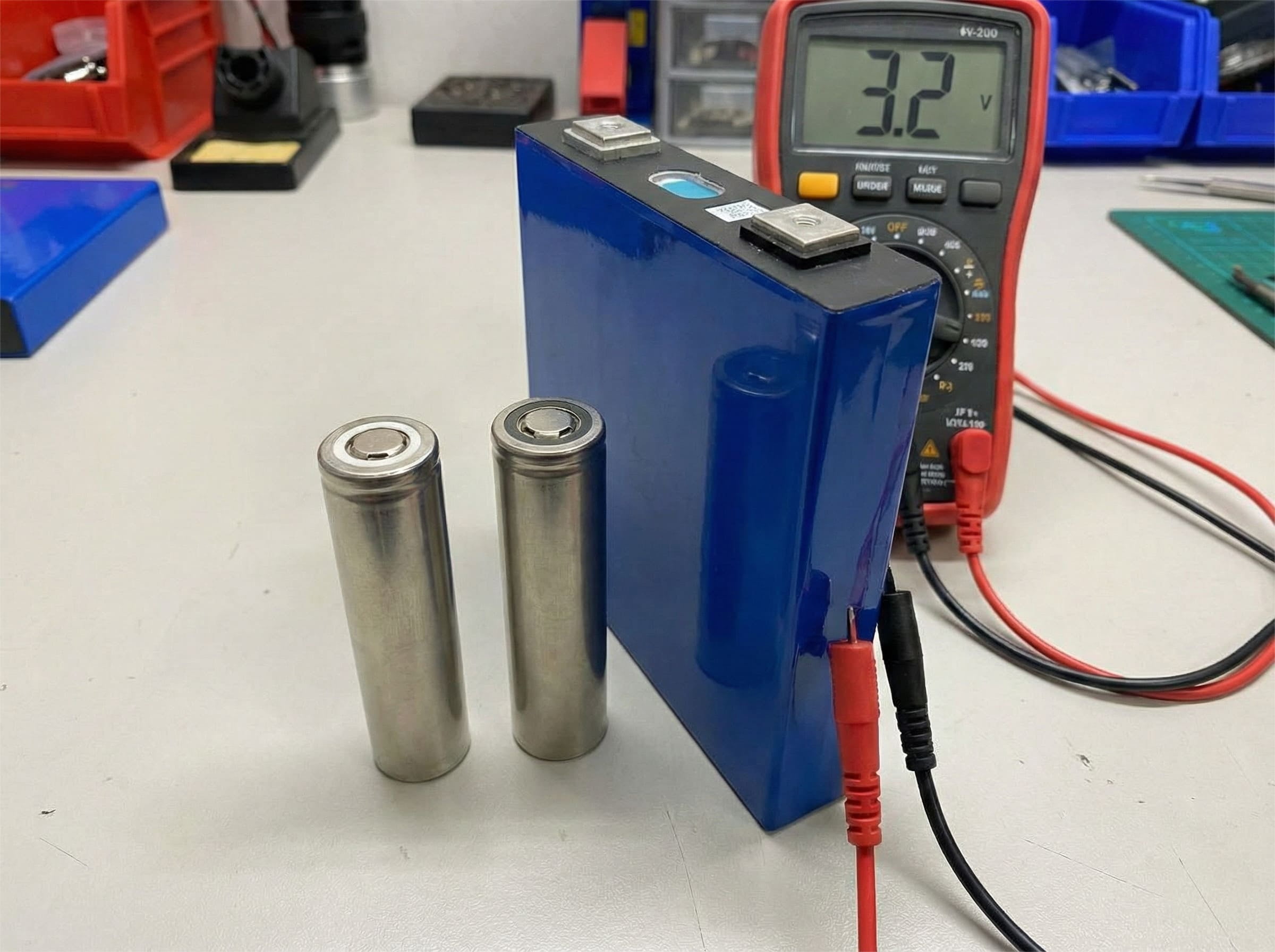
Understanding these trade-offs is the first step. For over eight years, I've helped clients navigate these choices. The size of the cell, like an 18650 or a larger 26650, is just one part of the puzzle. The chemistry inside is what truly defines its performance. Now, let's explore why even the safest option isn't always the best choice for every application.
Why Don't Tesla and High-End Flashlights Just Use Safer LFP 18650 Batteries?
You hear LFP is the safest battery. So why do premium brands like Tesla choose other types? This seems confusing and can make you second-guess your own choices.
It's all about energy density. High-performance products need more power in less space. NCM and NCA batteries deliver this, providing longer range for EVs and brighter light for flashlights, even if they require more complex safety management than LFP.
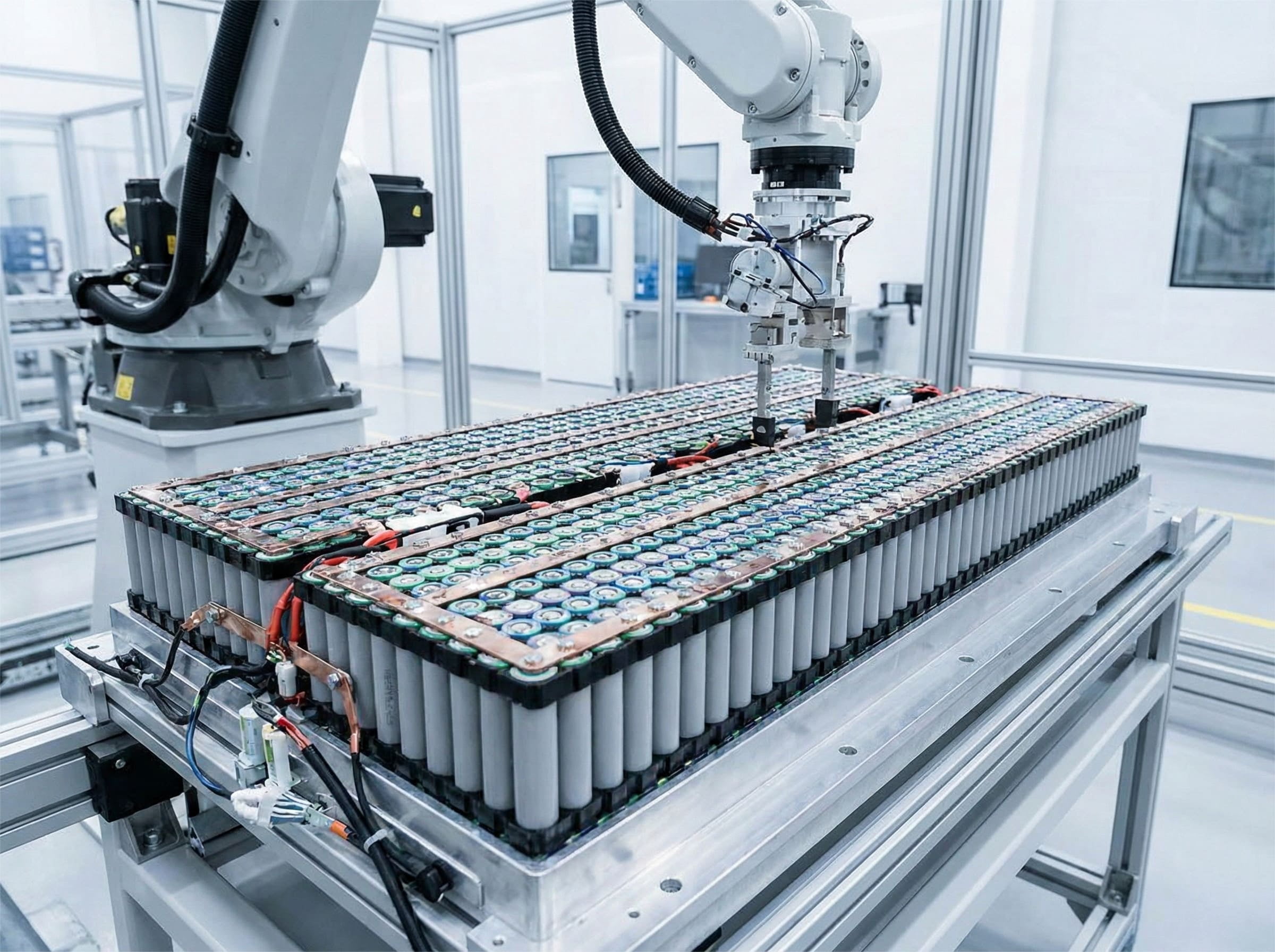
I've been working in the battery industry for a long time, and this is a question I get from clients like Michael, who are very precise about their product needs. The answer always comes down to a trade-off between safety and performance. LFP is fantastic for its stability, but it can't match the power per kilogram of NCM or NCA.
The Need for Power: Energy Density
Energy density is the amount of energy stored in a given space (volumetric density, Wh/L) or weight (gravimetric density, Wh/kg). For a product you carry or drive, this is everything. NCM and NCA batteries lead the pack here. This means for the same size and weight, they hold more energy. A Tesla needs to go as far as possible on a single charge. Using NCM or NCA cells allows them to pack more range into the car without making it excessively heavy. A heavier car is less efficient, so it's a critical balancing act.
Performance in a Small Package
The same logic applies to a high-end flashlight. A brighter beam that lasts longer requires more energy. If the designer used LFP cells, the flashlight would either be dimmer, have a shorter runtime, or need to be much larger and heavier to fit more cells. I remember a client who designed tactical flashlights. He tested an LFP version, and while it was incredibly safe, it just didn't have the "wow" factor in brightness that his customers wanted. He chose NCM cells, and our job at Litop was to design a very robust Battery Management System (BMS) to ensure it operated safely.
| Feature | LFP (LiFePO4) | NCM/NCA | Why it Matters for Tesla/Flashlights |
|---|---|---|---|
| Energy Density | Lower (~120 Wh/kg) | Higher (~250 Wh/kg) | Higher density means longer car range and brighter, longer-lasting flashlights. |
| Safety | Very High | Good (with BMS) | The primary reason to consider LFP. |
| Nominal Voltage | 3.2V | 3.7V | Higher voltage can mean simpler pack design and more power output. |
In the end, brands like Tesla choose NCM/NCA because the market demands performance. They manage the safety risk with advanced cooling systems and a sophisticated BMS.
For a DIY Home or RV Battery, Are 26650 LFP Cells or Large 280Ah Cells More Cost-Effective?
Building your own power system is exciting. But picking the wrong cells can lead to wasted money and a very complicated build. It can be a frustrating problem.
Large 280Ah prismatic LFP cells are almost always more cost-effective and easier to assemble for home storage or RVs. They require far fewer connections, which reduces labor, cost, and potential points of failure compared to using many small 26650 cells.
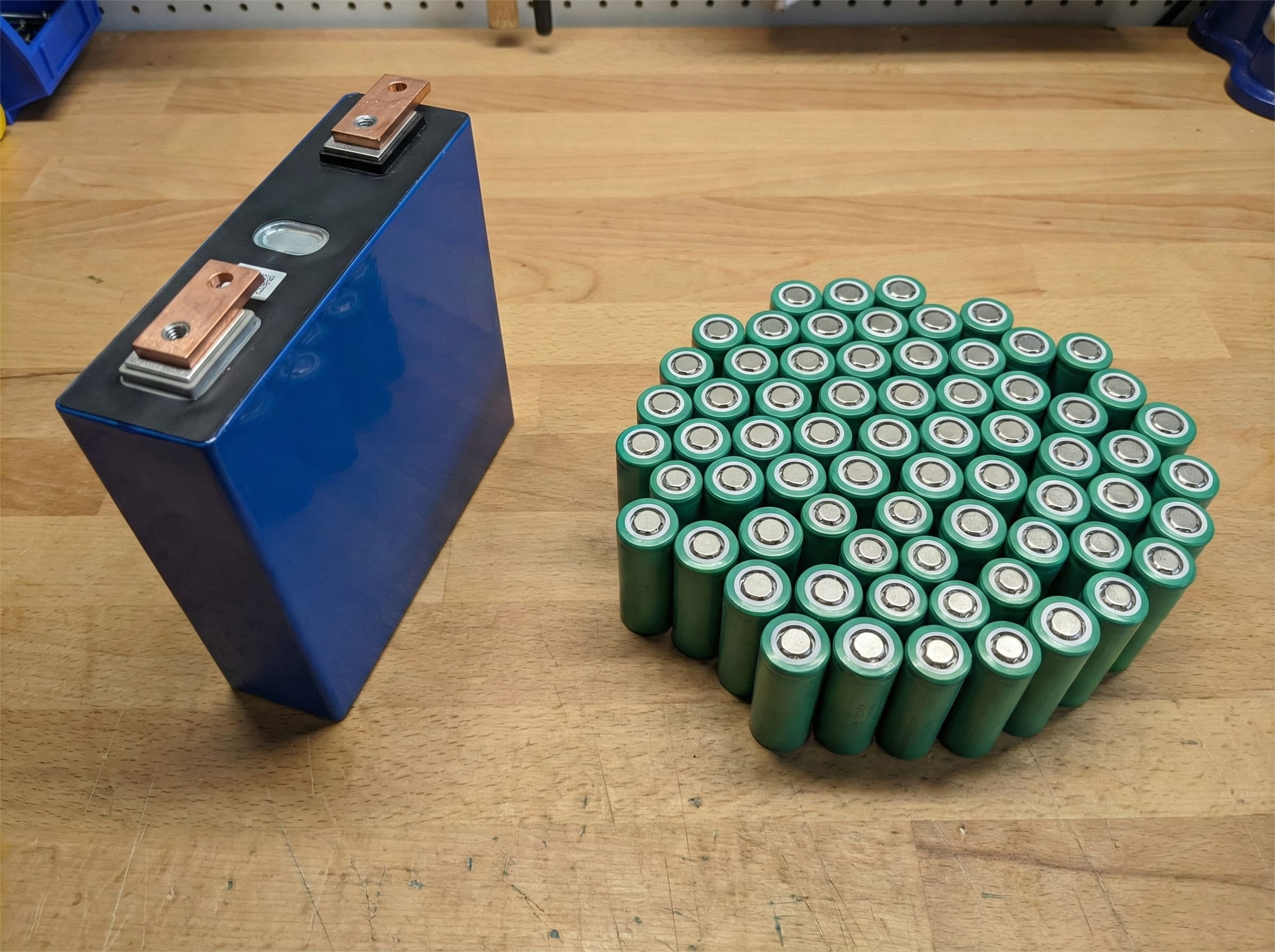
I get this question often from DIY enthusiasts. They see prices for individual 26650 cells and think they can save money by building a large pack themselves. But they often don't account for the hidden costs and complexity.
The Complexity of Connections
Let's think about building a standard 12V, 280Ah RV battery.
- Using Large Prismatic Cells: You need just four 3.2V, 280Ah cells connected in series. That's only 3 busbar connections to make. It's clean, simple, and quick.
- Using 26650 Cells: A good 26650 LFP cell might have 3.5Ah (3500mAh) of capacity. To get 280Ah, you'd need 80 of these cells connected in parallel. To get 12V, you'd need four of these 80-cell groups connected in series. That's a total of 320 individual cells. Imagine the work. You need to test, balance, and connect every single cell, usually with a spot welder. That's hundreds of connections, and each one is a potential point of failure.
Cost per Kilowatt-Hour
While single 26650 cells might look cheap, the math changes at scale. Large prismatic cells are mass-produced for the energy storage and EV markets. This scale brings the cost per kilowatt-hour (kWh) down significantly. When you add the cost of busbars, cell holders, a spot welder, and your own time, the 26650 route often becomes more expensive. I had a customer from Australia who wanted to build a large power bank for his off-grid cabin. He initially asked for a quote on thousands of 26650 cells. We talked about his project, and I showed him this comparison. He switched to the large 280Ah cells and later emailed me to say it saved him weeks of work.
| Factor | 26650 LFP Cells (x320) | 280Ah Prismatic Cells (x4) | Winner for DIY |
|---|---|---|---|
| Assembly Time | Very High (Days) | Low (Hours) | Prismatic |
| Number of Connections | Hundreds | 3 | Prismatic |
| Required Tools | Spot welder, complex holders | Basic wrenches, busbars | Prismatic |
| Cost per kWh | Generally Higher | Generally Lower | Prismatic |
| Failure Points | Many | Few | Prismatic |
For progetti stationary or vehicle-mounted power systems, large prismatic cells are the clear winner for simplicity, reliability, and overall cost.
Can NCM/NCA (3.7V) and LFP (3.2V) Batteries Use the Same Charger or BMS?
You have different batteries and one charger. It's tempting to use it for everything. But a wrong guess could destroy your batteries or even start a fire.
Absolutely not. You must use a charger and a Battery Management System (BMS) that are specifically designed for the battery's chemistry. The voltage profiles are completely different, and mixing them is dangerous and will damage the cells.
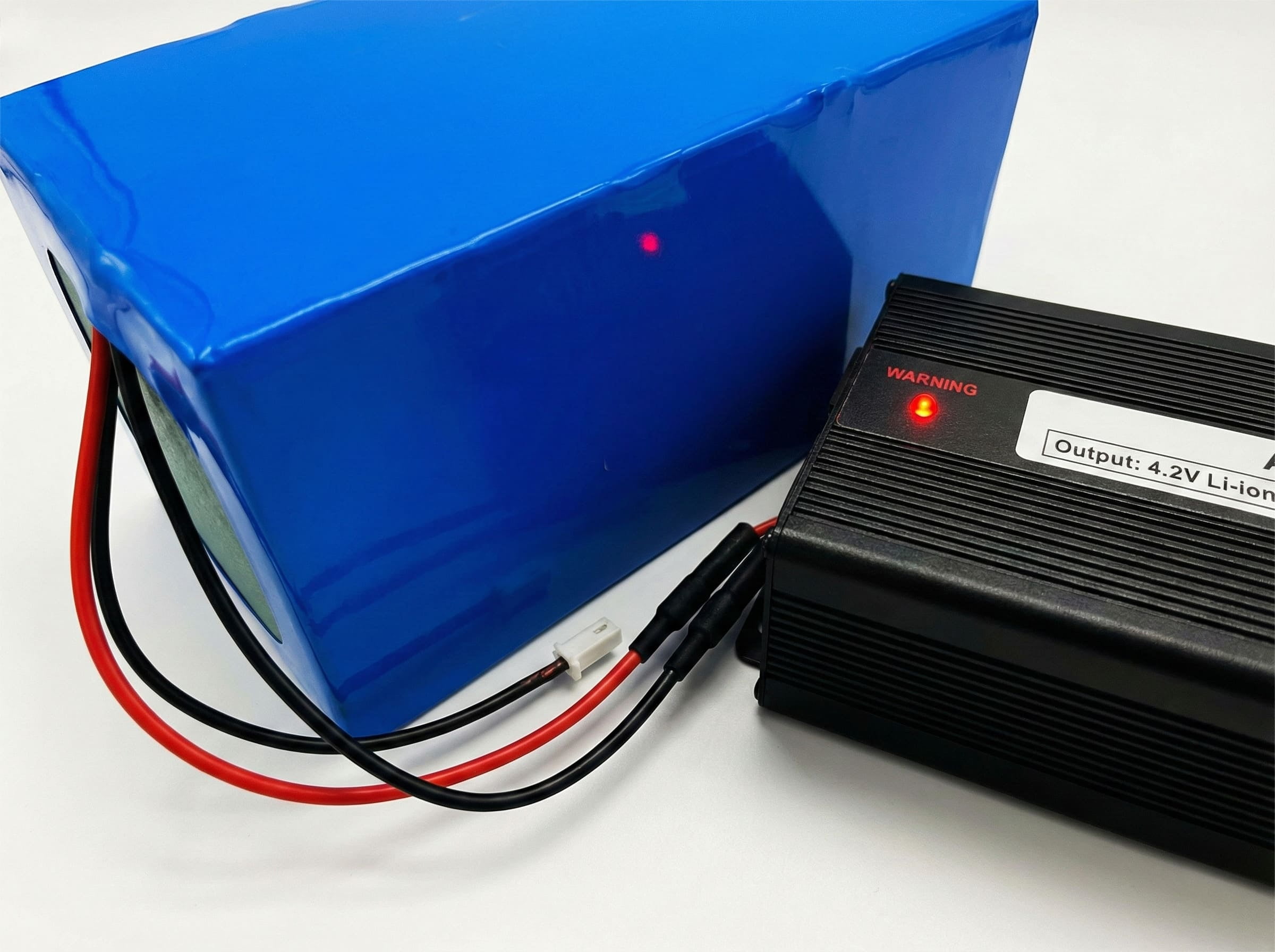
This is one of the most critical safety rules in the world of lithium batteries. As a manufacturer, we see the consequences of this mistake. It's not just about performance; it's about preventing a disaster. The reason is simple: voltage.
Why Voltage Matters in Charging
Every battery chemistry has a specific voltage window where it operates safely.
- LFP (LiFePO4): Nominal voltage is 3.2V. It charges to a maximum of about 3.65V.
- NCM/NCA: Nominal voltage is 3.6V or 3.7V. It charges to a maximum of 4.2V.
A charger is designed to deliver a specific voltage. If you use a 4.2V NCM charger on a 3.65V LFP battery, you are severely overcharging it. The battery will heat up, swell, and can enter thermal runaway, which is a fire that is very difficult to put out. Conversely, if you use a 3.65V LFP charger on a 4.2V NCM battery, you will only partially charge it, and you'll never get its full capacity.
The Role of the BMS
The BMS is the brain of your battery pack. It's programmed with the exact upper and lower voltage limits for the cells. It protects the battery by cutting off the power if the voltage gets too high (during charging) or too low (during discharging). If you put an NCM BMS on an LFP pack, it will allow the charger to push the LFP cells to a dangerously high voltage. I remember a case at our factory where a new technician mixed up the BMS units for two different medical device prototypes. Luckily, our quality control process caught it during testing. An overcharged LFP battery in a medical device could have been catastrophic for the patient.
| Battery Type | Nominal Voltage | Full Charge Voltage | Discharge Cut-off | Charger/BMS Compatibility |
|---|---|---|---|---|
| LFP (LiFePO4) | 3.2V | ~3.65V | ~2.5V | LFP ONLY |
| NCM/NCA | 3.7V | ~4.2V | ~3.0V | NCM/NCA ONLY |
Always match your charger and BMS to your battery chemistry. The labels are there for a reason. Check them twice.
In -20°C Winter Cold, Which Suffers More: NCM 18650 or LFP 26650 Batteries?
Your device suddenly stops working in the cold. It's frustrating, especially when you rely on it. The battery is the problem, but which type handles the cold worse?
LFP batteries suffer from much more severe performance loss in deep cold (-20°C or -4°F) than NCM batteries. The internal resistance of LFP cells skyrockets, drastically reducing their ability to deliver power, even if they are fully charged.
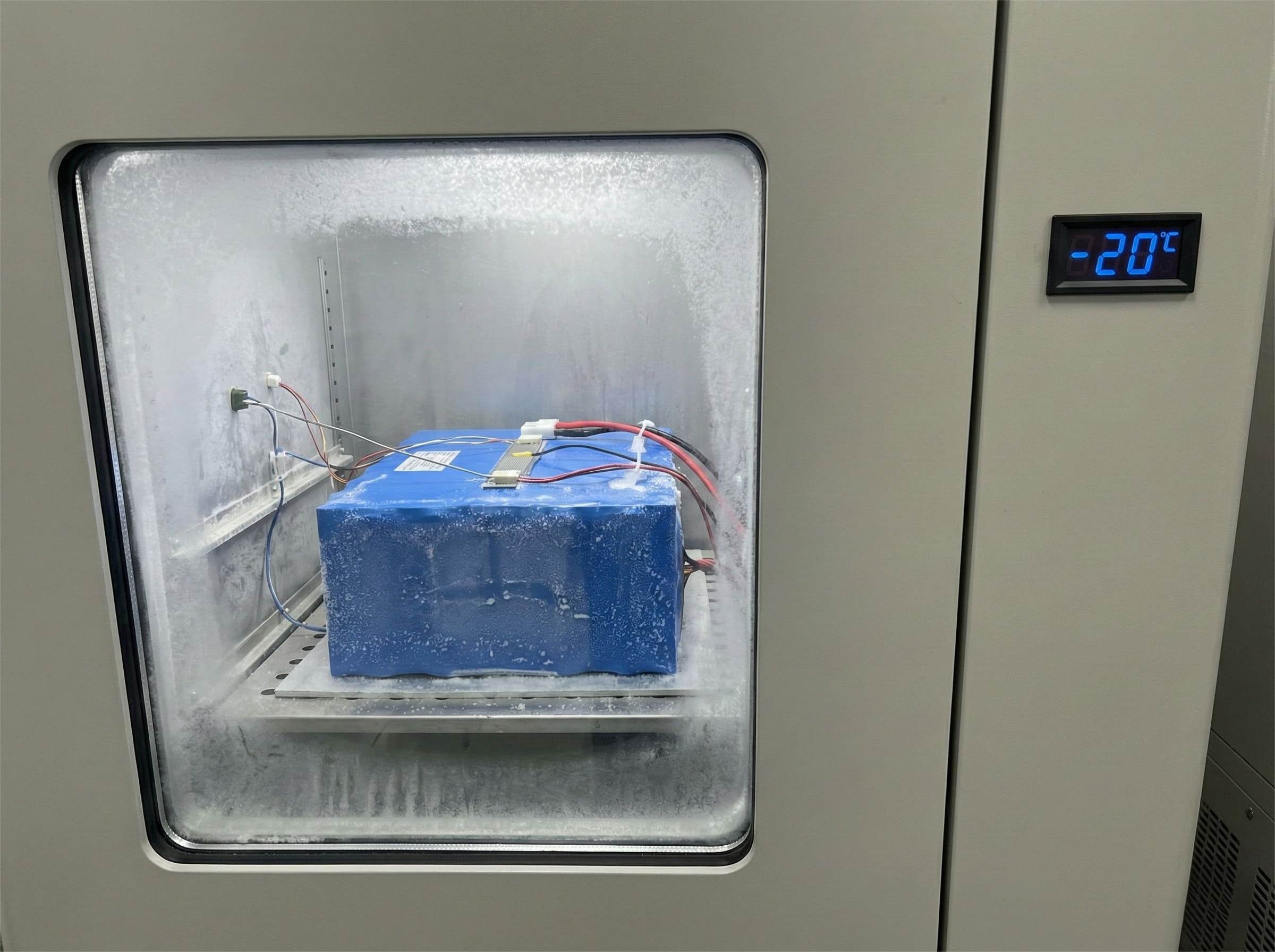
I work with clients from all over the world, including Canada and Northern Europe, so this is a very practical problem we solve regularly. While all lithium-ion batteries struggle in the cold, LFP chemistry is particularly vulnerable. The size of the cell, whether it's an 18650 or 26650, doesn't change this fundamental chemical property.
The Chemistry of Cold
Think of the inside of a battery like a highway for ions. In the cold, the electrolyte (the medium the ions travel through) thickens, like molasses. This slows down the ions. In LFP batteries, this effect инфекция is especially strong. The internal resistance клиниче of the battery increases dramatically. This means the battery has to work much harder to push out a current, and a lot of its energy is lost as heat instead of being delivered to your device. An NCM battery's electrolyte is less affected, so it can still perform reasonably well, though it also loses some of its capacity.
Voltage Sag: The Real Killer
When you try to draw power from a very cold LFP battery, its voltage will drop, or "sag," significantly. Your device has a minimum voltage it needs to operate. The cold LFP battery's voltage might instantly drop below that cutoff level, causing the device to shut down, even if the battery technically has 80% of its charge left. The power is in there, but it can't get out fast enough. We had a project for a GPS tracking device used in the Canadian Rockies. The client initially chose LFP for its long cycle life. But in winter field tests, the devices failed. The batteries weren't dead, but the cold made them unable to provide the necessary power. We had to create a custom, low-temperature battery pack for them, which uses a special electrolyte formula that doesn't thicken as much in the cold. This is a specialty we've developed at Litop.
| Temperature | LFP Performance | NCM Performance | Notes |
|---|---|---|---|
| 25°C (77°F) | Excellent | Excellent | Ideal operating temperature. |
| 0°C (32°F) | Noticeable capacity loss | Minor capacity loss | LFP starts to struggle. |
| -20°C (-4°F) | Severe capacity and power loss | Moderate capacity loss | LFP may not work at all under load. |
If your product must work in sub-zero temperatures, NCM is the better standard choice, or you should look into specialized low-temperature batteries.
Conclusion
Choosing the right battery chemistry is a game of trade-offs. LFP is safe and long-lasting but lacks energy density and fails in the cold. NCM/NCA pack more power but require careful management. The right choice always depends on your specific application, from EVs to DIY power banks.