Struggling to pick the right cylindrical battery for your new product? Choosing incorrectly can lead to poor performance or a bulky design. Let me help you understand the key differences.
The primary difference between 18650 and 26650 batteries is their physical size, which directly impacts their capacity and current handling. The 18650 is 18mm x 65mm, while the 26650 is larger at 26mm x 65mm, allowing it to hold significantly more energy and deliver higher power.
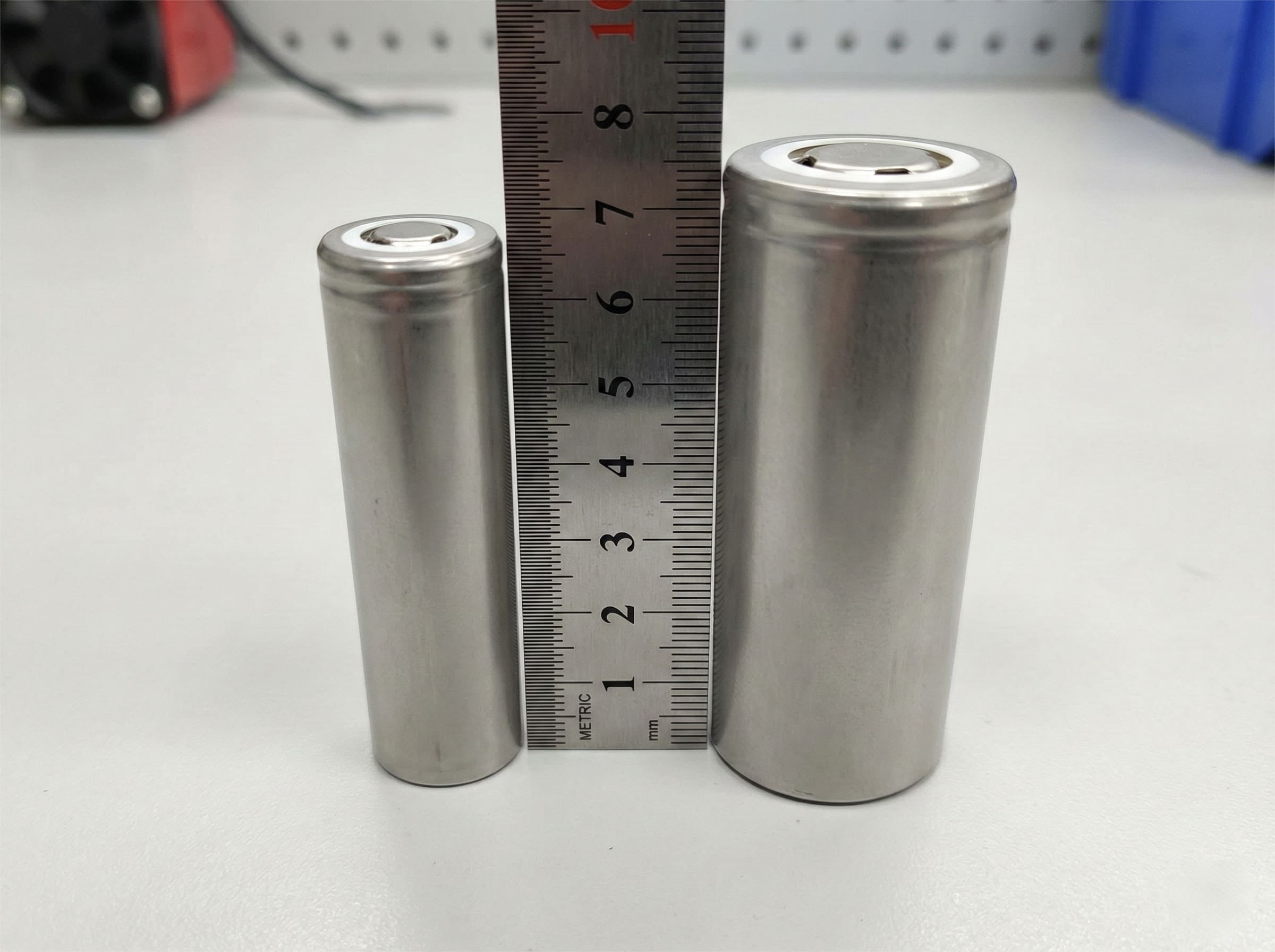
I get asked this question a lot, especially by clients like Michael who are developing new devices and need to make a final decision on the power source. While size and capacity are the starting points, the best choice often comes down to the specific demands of your application. It’s a trade-off between power, runtime, and physical space. Making the right decision early in the design process can save a lot of time and money later. Let's dive deeper into some of the most common questions I hear from customers to help you figure out which battery is the right fit for your project.
If 26650 Batteries Have More Capacity, Why Do EVs and Tesla Use 21700 or 4680 Cells Instead?
It seems odd that electric vehicles, which need huge capacity, aren't using the largest cells available. This move by brands like Tesla away from 26650s can be confusing. I'll explain the critical engineering trade-offs that make 21700 and 4680 cells the better choice for EVs.
EV manufacturers prioritize the battery pack's overall energy density, thermal management, and manufacturing cost, not just the capacity of a single cell. The 21700 and 4680 cells provide a superior balance of these factors, allowing for more efficient, safer, and cost-effective vehicle battery systems.
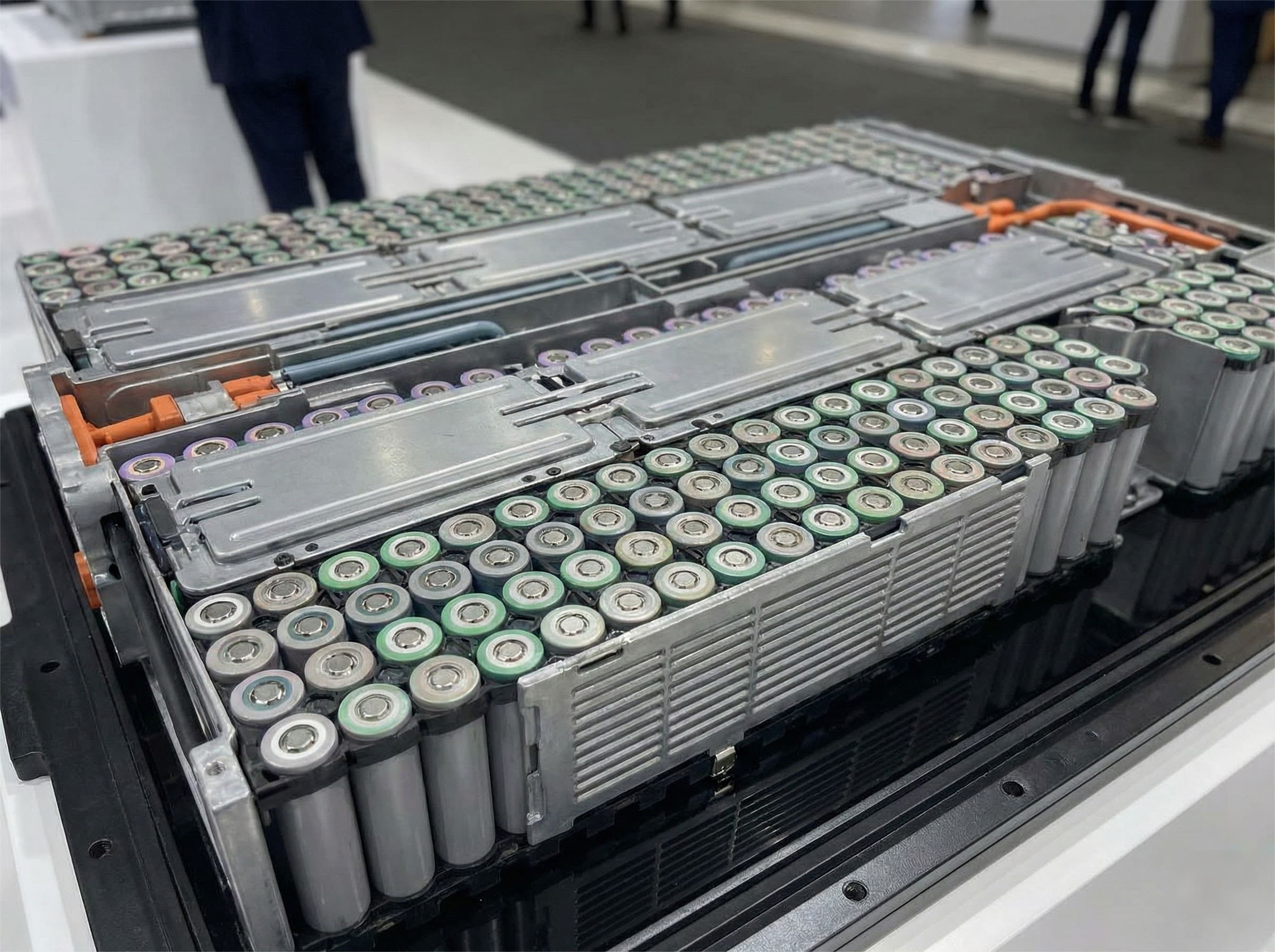
When we design a battery solution at Litop, we don't just look at one cell; we look at the entire system. This is exactly what EV makers do. While a single 26650 cell holds more charge than a single 21700, the story changes when you assemble thousands of them into a pack. There are three main reasons why the 26650 isn't the winner here.
Energy Density of the Pack
The goal is to fit as much energy as possible into the limited space of a car's chassis. Because cylindrical cells are round, they leave small gaps when packed together. The 21700 cell hits a "sweet spot" in size. It offers a significant capacity increase over the 18650 but is not so large that the gaps between cells waste too much volume. This optimization increases the total energy density of the entire pack, meaning more range for the vehicle. The 26650, being wider, creates larger unproductive voids, reducing the pack's overall efficiency.
Thermal Management is Critical
An EV battery pack generates an enormous amount of heat during fast charging and high-speed driving. This heat must be removed quickly to prevent battery degradation and ensure safety. A larger cell like the 26650 has a lower surface-area-to-volume ratio, making it much harder to cool from the outside. The smaller diameter of 21700 and 4680 cells allows for more effective cooling systems to be integrated, keeping the cells at their optimal operating temperature. Tesla's 4680 cell takes this even further with a "tabless" design that allows heat to escape far more efficiently, which is a major engineering breakthrough.
Cost and Manufacturing Scalability
For EVs to be affordable, the cost per kilowatt-hour (kWh) of the battery must be as low as possible. The 21700 cell was designed in partnership with Panasonic and Tesla specifically for high-speed, automated production. This standardization allows for massive economies of scale, driving down costs. The 26650 format never achieved this level of adoption or manufacturing optimization in the automotive industry, making it a more expensive choice at the scale EVs require.
| Factor | 21700/4680 Cells | 26650 Cell |
|---|---|---|
| Pack Energy Density | Higher (better space utilization) | Lower (more wasted space between cells) |
| Thermal Management | Excellent (easier to cool) | Poor (harder to dissipate heat) |
| Manufacturing Cost | Lower (optimized for mass automation) | Higher (less standardized for large scale) |
Can I Use an Adapter to Put a 18650 Battery in a 26650 Flashlight? What Are the Risks?
You have a powerful flashlight designed for a 26650, but you only have a 18650 battery. An adapter seems like a quick fix. But this simple plastic sleeve can introduce performance and safety issues. Let's look at the real risks involved.
Yes, you can physically fit a 18650 battery into a 26650 device using an adapter sleeve. However, this is not recommended for high-power devices. You risk poor electrical contact causing flickering, and more dangerously, you could over-draw the 18650, causing it to overheat and fail.
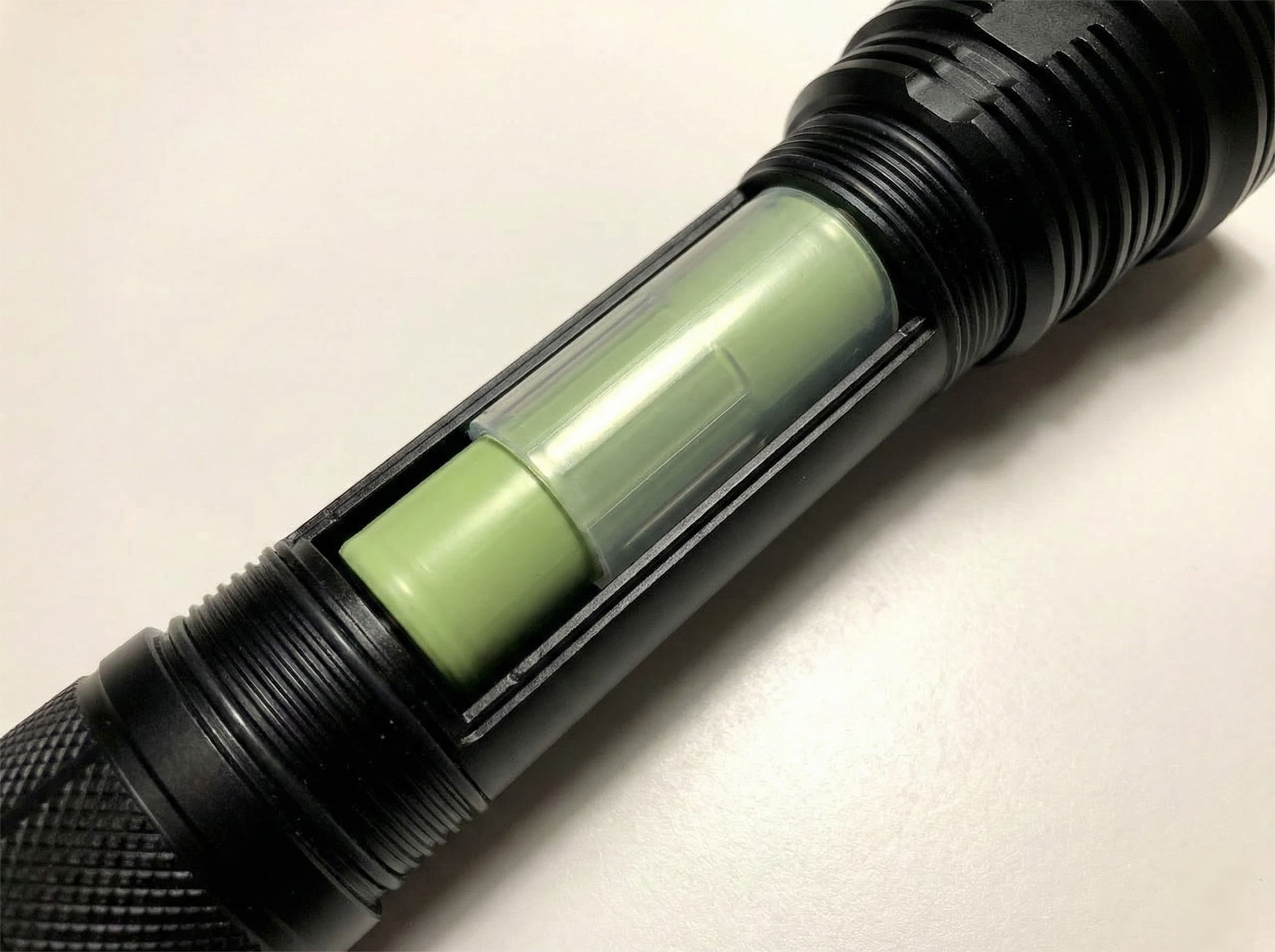
I’ve had customers ask about this for various devices, and my advice is always cautious. While it might work in a pinch, you need to understand what's happening from an electrical standpoint. The adapter is just a plastic spacer; it doesn't change the battery's capabilities. The real issues lie in the connection and the power mismatch.
First, there's the mechanical connection. The adapter's job is to keep the narrower 18650 centered so its positive and negative ends touch the flashlight's contacts. If the fit isn't perfect, or if the flashlight is shaken, the battery can lose contact for a moment. This results in the light flickering or turning off completely. It's an annoying but relatively harmless problem.
The more serious risk is the electrical mismatch. A high-performance flashlight built for a 26650 battery is designed to draw a large amount of current (amps) to produce its bright beam. 26650 cells are typically built to handle these high discharge rates. Many standard 18650 batteries, especially those designed for laptops or power banks, are not.
What Happens When You Over-draw a 18650?
When you force a battery to supply more current than its rating, several bad things can happen:
- Severe Voltage Sag: The battery's voltage will plummet under the heavy load. This means your super-bright flashlight will be noticeably dimmer than it would be with the correct 26650 battery. You aren't getting the performance you paid for.
- Overheating: This is the greatest danger. Drawing too much current generates excessive internal heat. This heat can permanently damage the battery's internal chemistry, leading to a loss of capacity and a shorter lifespan. In a worst-case scenario with an unprotected, low-quality cell, this can trigger thermal runaway—a dangerous chain reaction where the battery vents hot gas and can even catch fire.
- BMS Protection Trip: If you are using a protected 18650 cell, its built-in Battery Management System (BMS) will likely detect the over-current situation and shut the battery off completely. This is a great safety feature that prevents damage, but it means your flashlight will abruptly stop working.
For low-power applications, using an adapter might be okay. But for a high-drain device like a modern LED flashlight, my professional recommendation is to always use the battery size specified by the manufacturer. It's safer and ensures you get the performance you expect.
Are 18650 and 26650 Chargers Interchangeable? How Should I Set the Charging Current?
You have multiple lithium-ion batteries and want to use one charger for everything. This is convenient, but using the wrong settings can degrade your batteries or create a safety hazard. Here’s how you can safely charge both 18650 and 26650 cells.
Most modern intelligent Li-ion chargers can physically fit and charge both 18650 and 26650 cells. The critical factor is setting the correct charging current. A safe rule of thumb for longevity is to charge at 0.5C, or half the battery's capacity rating (e.g., 1A for a 2000mAh battery).
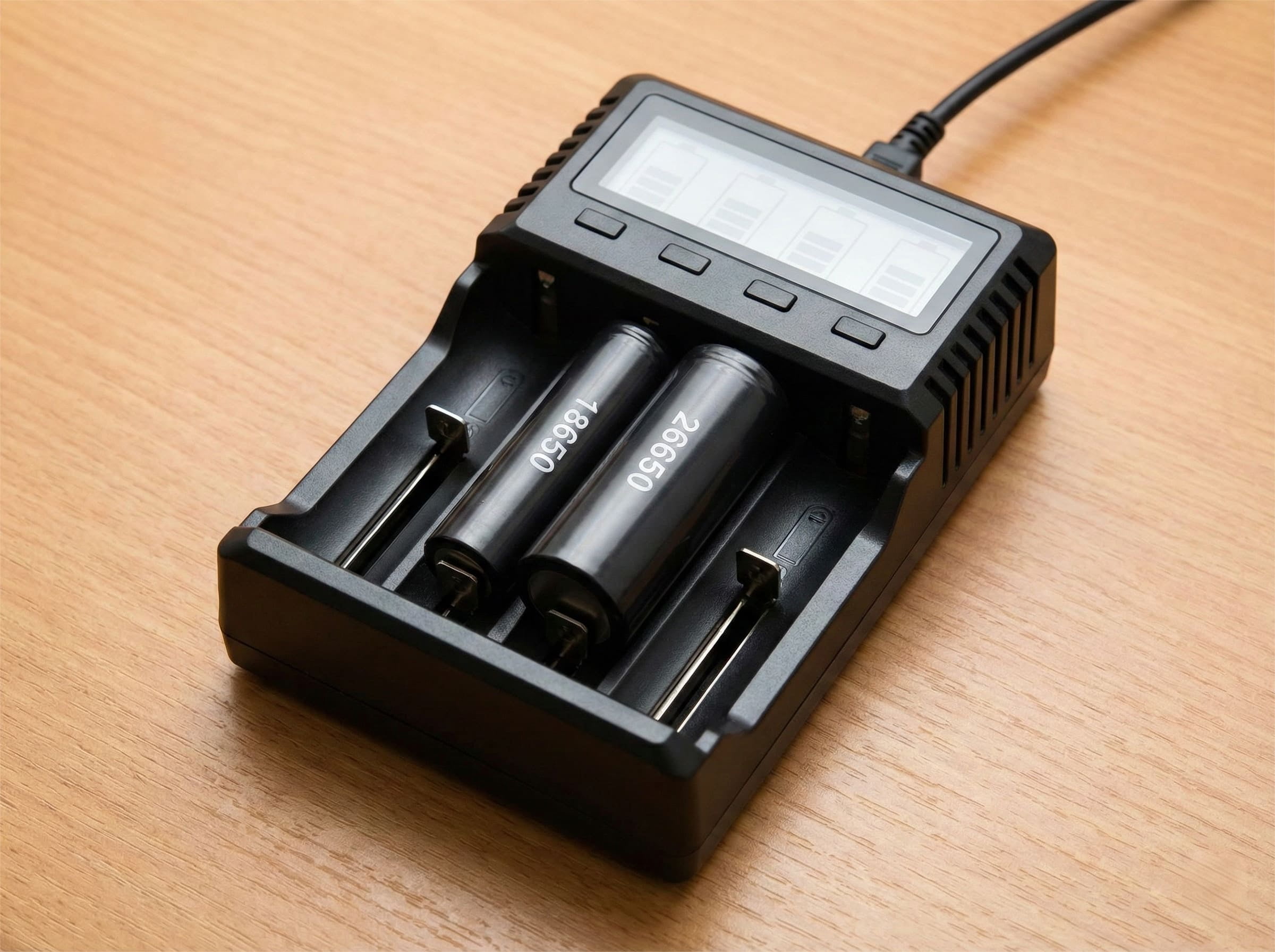
As a battery manufacturer, we emphasize proper charging as the most important factor for ensuring battery longevity and safety. Thankfully, many great chargers on the market today are very flexible. Most high-quality "universal" chargers from brands like Nitecore, XTAR, or LiitoKala have spring-loaded slots that can accommodate cell diameters from 18mm up to 26mm and beyond. These chargers automatically detect the battery's voltage (e.g., 3.7V for standard Li-ion) and stop when it's full.
The one thing you usually have to control manually is the charging current, measured in amps (A) or milliamps (mA). Setting this correctly is key.
Understanding Charging Rate (C-rate)
The C-rate is a simple way to talk about charging speed relative to the battery's capacity.
- 'C' stands for the capacity of the battery. For a 3400mAh battery, C = 3400mA (or 3.4A).
- 1C Rate: Charging a 3400mAh battery at 3.4A is a 1C rate. It would take about one hour.
- 0.5C Rate: Charging that same battery at 1.7A (1700mA) is a 0.5C rate. It would take about two hours.
Charging slower is almost always better for the battery's long-term health. It generates less internal heat and puts less stress on the chemistry. For all our custom battery packs at Litop, we provide a datasheet that specifies the recommended "standard charge" and "maximum charge" rates. If you don't have a datasheet, a 0.5C rate is a very safe bet.
| Battery Type | Typical Capacity | Safe Charge (0.5C) | Standard Charge (1.0C) |
|---|---|---|---|
| 18650 | 2600mAh | 1.0A - 1.5A | ~2.5A (Check datasheet) |
| 18650 | 3500mAh | 1.5A - 2.0A | ~3.0A (Check datasheet) |
| 26650 | 4200mAh | 2.0A | ~4.0A (Check datasheet) |
| 26650 | 5500mAh | 2.5A | ~5.0A (Check datasheet) |
Most multi-bay chargers share their total output. For example, a 4A charger might only deliver 1A per bay if all four slots are used. If you only use two slots, you might be able to charge at 2A per battery. Always read your charger's manual to understand how it allocates current. When in doubt, choose a lower charging current. It might take longer, but your batteries will thank you with a longer service life.
With the Same LiFePO4 Chemistry, Which Has a Longer Cycle Life: 18650 or 26650?
You are choosing between LiFePO4 18650 and 26650 cells for a long-term project like a solar storage system or an electric bike. You might assume that since the chemistry is the same, the lifespan will be too. However, the larger cell format often provides a longer service life.
Assuming equal manufacturing quality, a 26650 LiFePO4 cell will generally offer a longer cycle life than an 18650 LiFePO4 cell. This is because the larger cell operates under less electrical and thermal stress for the same power demand, leading to slower degradation over time.
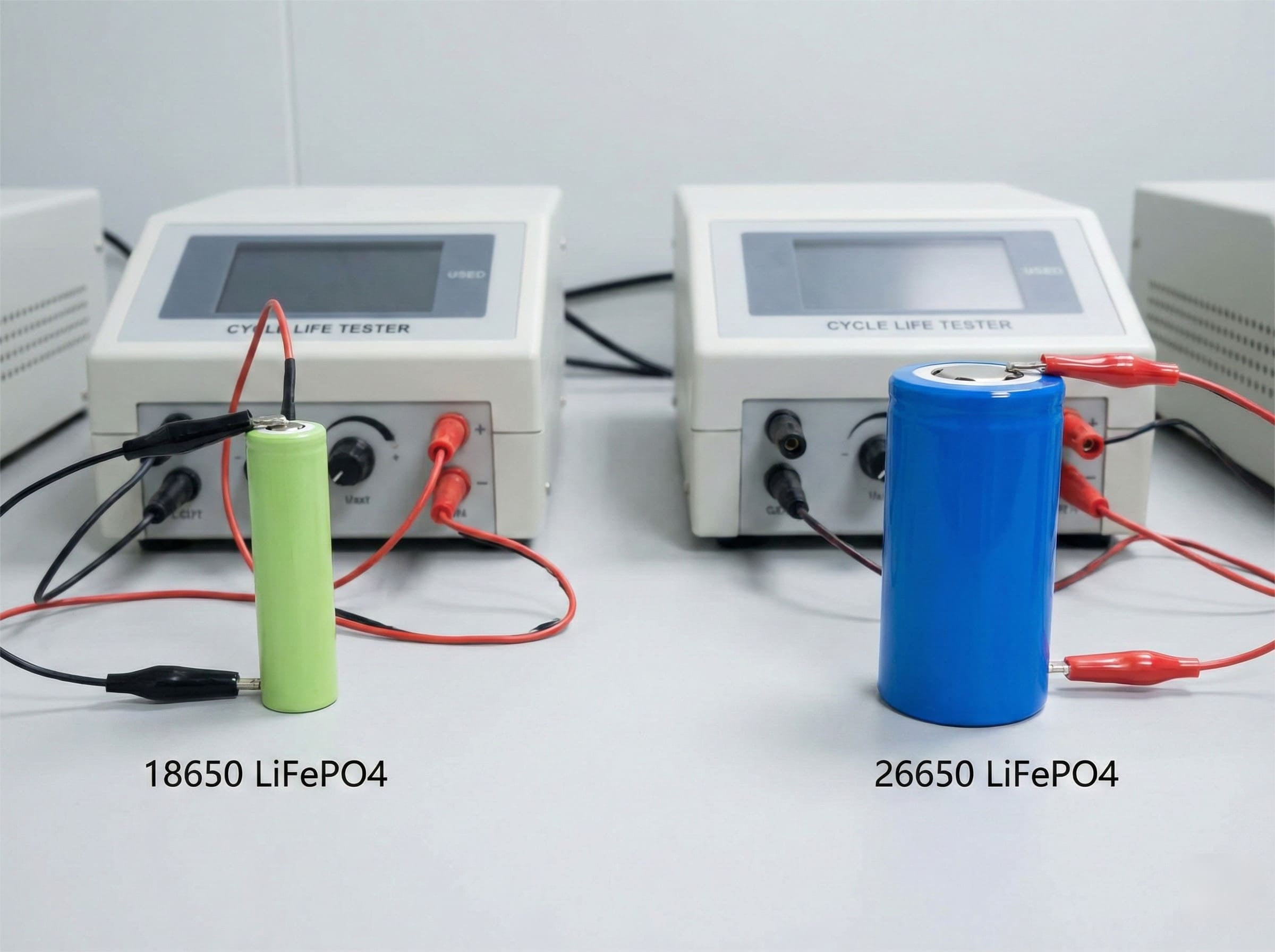
This is a great question that gets into the finer points of battery engineering. LiFePO4 (Lithium Iron Phosphate) chemistry is famous for its safety and long cycle life, often exceeding 2000 cycles. However, even within the same chemistry, physical form factor plays a huge role in real-world longevity. The two main enemies of a battery's life are heat and stress from high charge/discharge rates. The larger 26650 cell has natural advantages in both areas.
The most important factor is the effective C-rate during operation. Let's imagine your device requires a constant 5-amp draw.
- For a 26650 LiFePO4 cell rated at 5000mAh (5Ah), this 5A draw is a 1C discharge rate. This is a very comfortable and efficient rate for the cell.
- For a 18650 LiFePO4 cell rated at 2500mAh (2.5Ah), that same 5A draw is a 2C discharge rate. The cell is working twice as hard relative to its capacity.
Consistently running a battery at a higher C-rate generates more internal heat and accelerates the chemical breakdown processes that cause capacity to fade. Because the 26650 is operating at a lower, less stressful C-rate to deliver the same power, it will degrade much more slowly and achieve more life cycles.
Furthermore, the 26650 cell has a lower internal resistance. Think of internal resistance like friction. The lower it is, the less energy is wasted as heat when current flows through the battery. This inherent efficiency of the larger cell means it runs cooler, further preserving its health. While it's true a single large cell has less surface area to dissipate heat, the fact that it generates less heat in the first place is often a more dominant factor, especially in well-designed systems with adequate airflow. Of course, this all assumes you're comparing high-quality cells. A premium 18650 from a top-tier manufacturer will always outperform a poorly made 26650. That's why at Litop, we maintain strict quality control across all our product lines to ensure these physical advantages translate into reliable performance for our clients.
Conclusion
Choosing between 18650 and 26650 batteries comes down to your application's priorities. The 26650 offers higher capacity and power, perfect for devices where runtime is key and space is available. The 18650 provides a great balance of power and portability for more compact electronics.