Power outages during a storm can leave you feeling helpless. Your phone is dead, and you can't check on family or get updates. A reliable power source is essential.
The best waterproof power stations for emergencies have at least an IP67 rating, meaning they are dust-tight and can be submerged in water. Prioritize models that balance capacity, power output, and portability to meet your specific needs for powering essential devices during an outage.
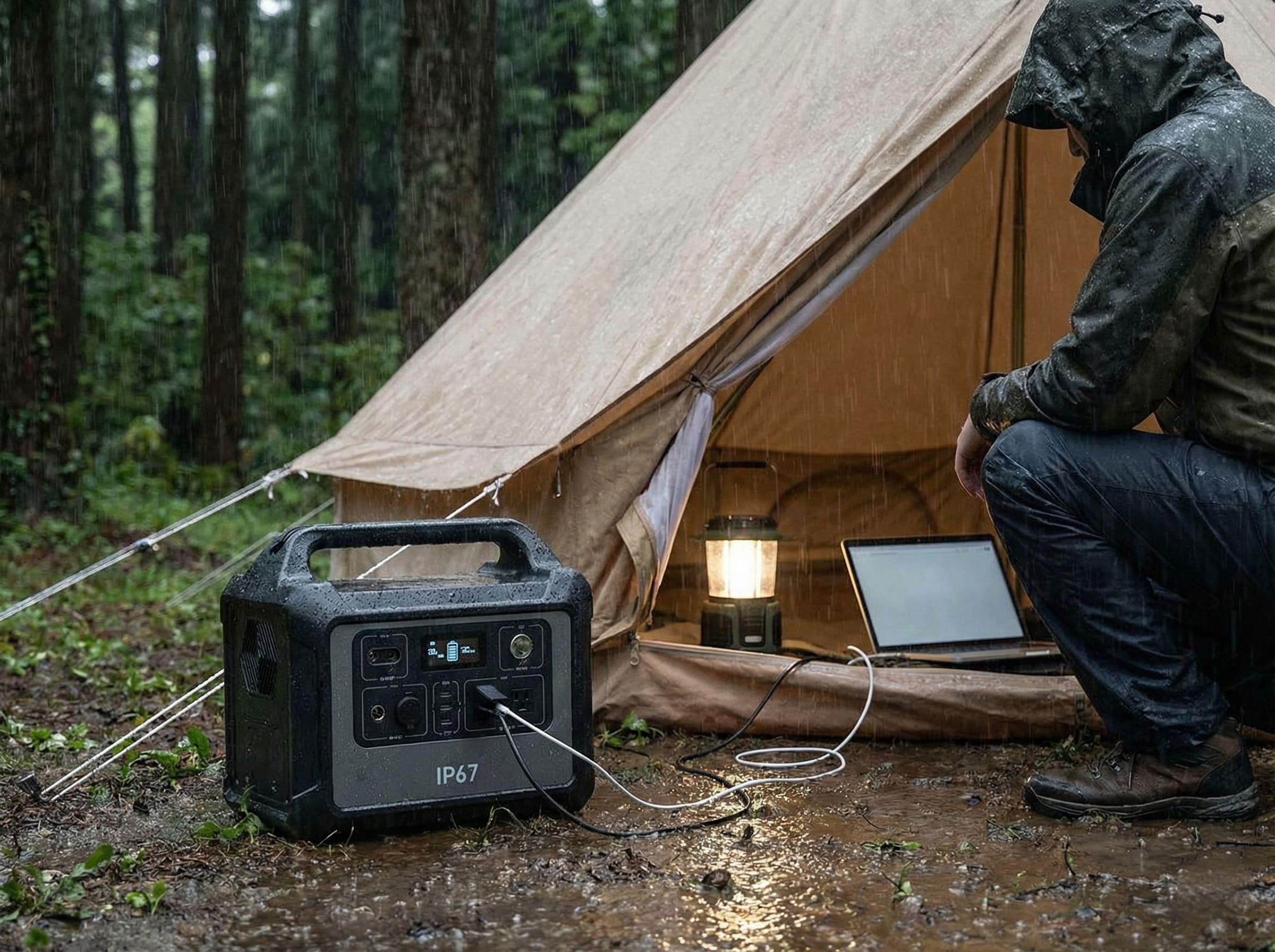
When you're preparing for an emergency like a typhoon or flood, the last thing you want is for your backup power to fail because it got wet. I've spent years in the battery industry, and I've seen how critical rugged, reliable power is. At Litop, we design custom battery solutions for devices that have to work in tough conditions, from medical equipment to outdoor gear. This experience gives me a clear view of what really matters in an emergency power station. It’s not just about the battery capacity; it's about how the entire unit is built to withstand the worst-case scenario. Let's look at what makes a power station truly ready for an emergency.
Can an IP67-rated power station stay waterproof with devices plugged in?
You bought an IP67 power station for peace of mind. But now it’s raining, and you need to charge your phone. Is it still safe to use outside?
No. The IP67 rating is only valid when all protective port covers are securely sealed. Plugging in a device exposes the connection to water, creating a risk of damage and electrical shorts. The waterproof protection does not apply to the ports while they are in use.
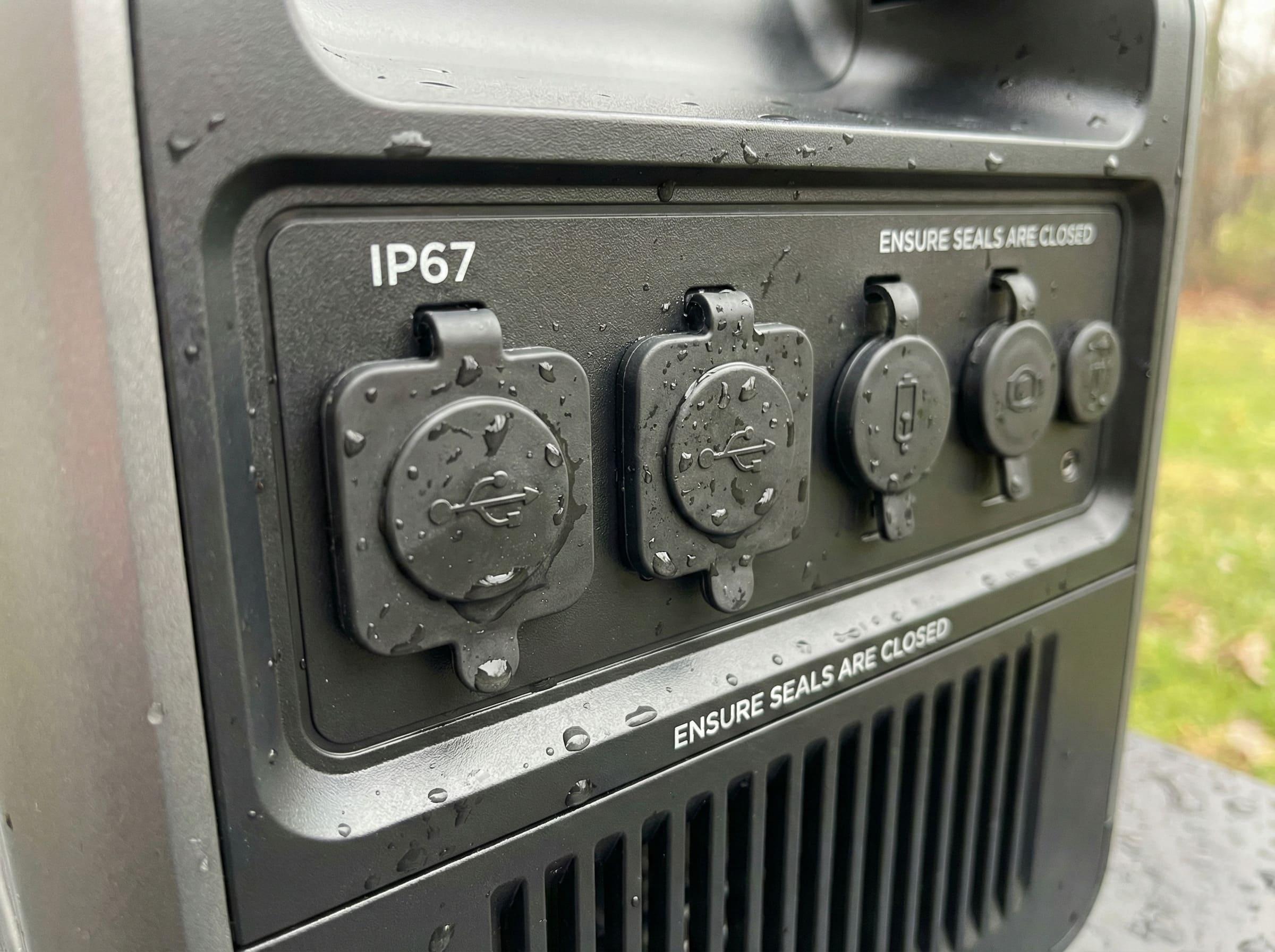
In my line of work, we deal with Ingress Protection (IP) ratings all the time. It’s a standard we use at Litop when designing battery packs for outdoor or medical devices. An IP rating has two numbers. The first tells you how well it’s protected against solids like dust, and the second tells you about its protection against liquids.
Understanding IP Ratings
| IP Rating Digit | Solids Protection (First Digit) | Liquids Protection (Second Digit) |
|---|---|---|
| 0 | No protection | No protection |
| 1 | Objects >50mm | Dripping water |
| ... | ... | ... |
| 6 | Dust-tight (No ingress of dust) | Powerful water jets |
| 7 | (Not applicable) | Immersion up to 1m for 30 min |
| 8 | (Not applicable) | Immersion beyond 1m |
When a power station is tested for an IP67 rating, it is fully sealed. All the silicone or rubber covers on the AC outlets, USB ports, and other sockets are closed tightly. The test involves submerging the entire unit in one meter of water for 30 minutes. If no water gets inside, it passes. However, the moment you open a port cover to plug in a cable, that seal is broken. The connection point between the cable and the port is now completely exposed. If rain or floodwater gets in there, it can cause a short circuit, damage the power station’s internal electronics, and potentially ruin the device you are charging. Always use your power station in a dry, sheltered spot if you need to charge devices during wet weather.
Does long-term storage in a humid environment make a battery lose capacity faster?
You’ve stored your emergency power station in the basement, ready for a crisis. But it’s always a bit damp down there. Will it still hold a full charge when you need it?
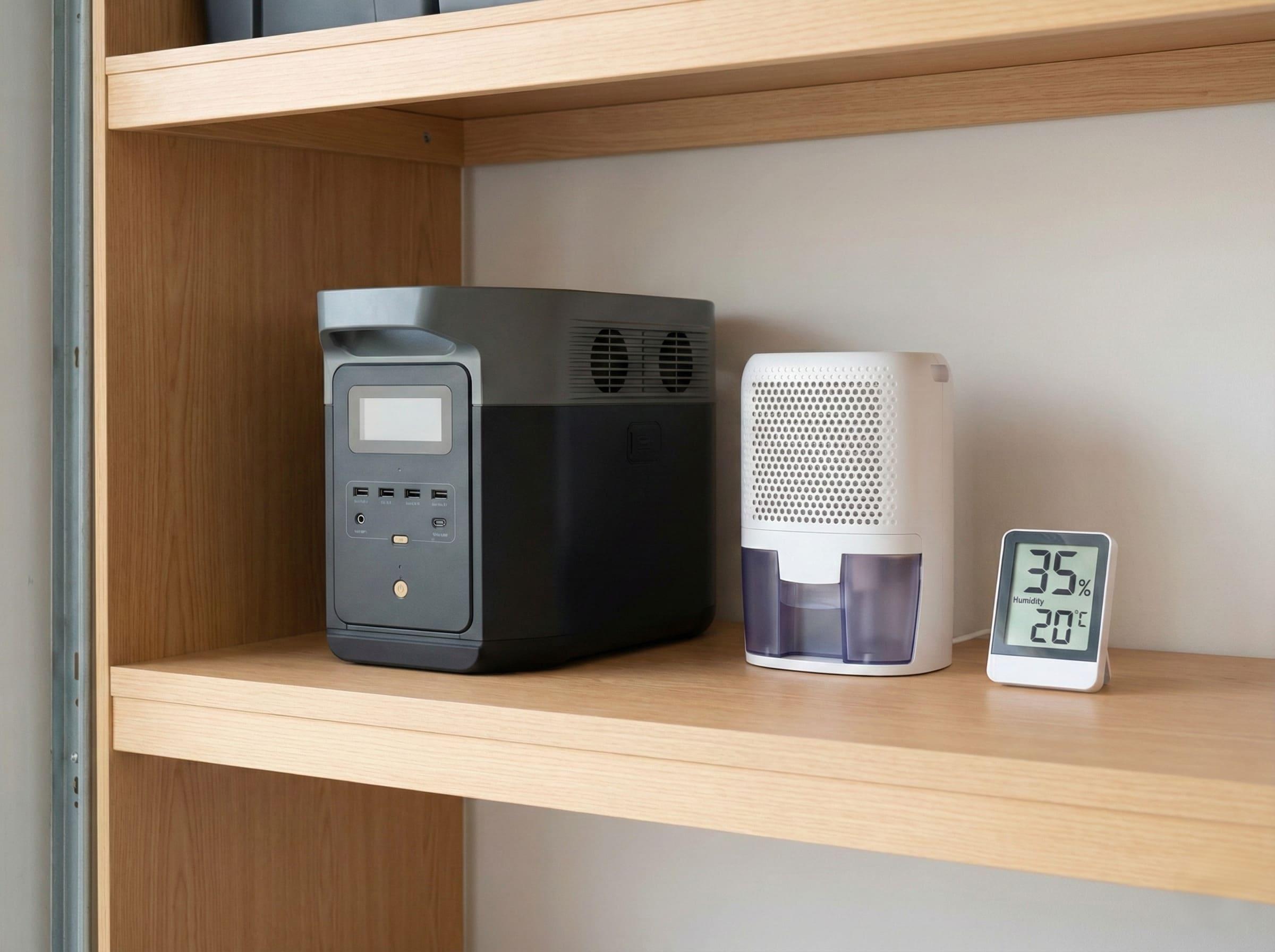
Yes, storing any battery-powered device in a humid environment can significantly accelerate capacity loss. Moisture can cause corrosion on the circuit boards and increase the battery’s natural self-discharge rate, weakening it over time. Always store power stations in a cool, dry place.
High humidity is a silent enemy of electronics. While the lithium cells inside a power station are perfectly sealed, the rest of the device is not. The most vulnerable component is the Battery Management System, or BMS. The BMS is the brain of the power station; it manages charging, discharging, and protects the battery from damage. It’s a complex circuit board, and like any circuit board, it hates moisture.
I remember working with a client, Michael, who was developing a portable medical device for first responders. The device had to be reliable in all weather. During our initial tests, we found that units stored in a high-humidity chamber showed a faster battery drain, even when turned off. The problem wasn't the battery cells themselves, but tiny amounts of condensation on the BMS causing a "parasitic drain"—a small, continuous power leak. To solve this, we applied a conformal coating to the BMS, which is a thin, protective film that shields the electronics from moisture.
While most consumer power stations don't have this level of protection, the principle is the same.
Ideal vs. Poor Storage Conditions
| Condition | Temperature | Humidity | Impact on Battery Health |
|---|---|---|---|
| Ideal | 15-25°C (60-77°F) | 45-65% RH | Preserves capacity, minimizes self-discharge. |
| Poor | >30°C (86°F) | >80% RH | Accelerates aging and self-discharge. |
| Poor | <0°C (32°F) | Any | Can damage battery cells if charged. |
To make sure your emergency power is ready when you need it, store it inside your home, perhaps in a closet, rather than a damp basement or a hot garage. Charge it every 3-6 months to keep the battery healthy.
Besides waterproofing, what key features are vital for an emergency power station during typhoons or floods?
A flood is coming, and you feel prepared with your waterproof power station. But when the power is out for days, is just being waterproof enough to see you through?
Beyond waterproofing, you need versatile charging options like solar and car inputs, multiple output ports (AC/USB), and fast recharging. A durable build, portability, and a built-in LED flashlight are also crucial for navigating a prolonged emergency.
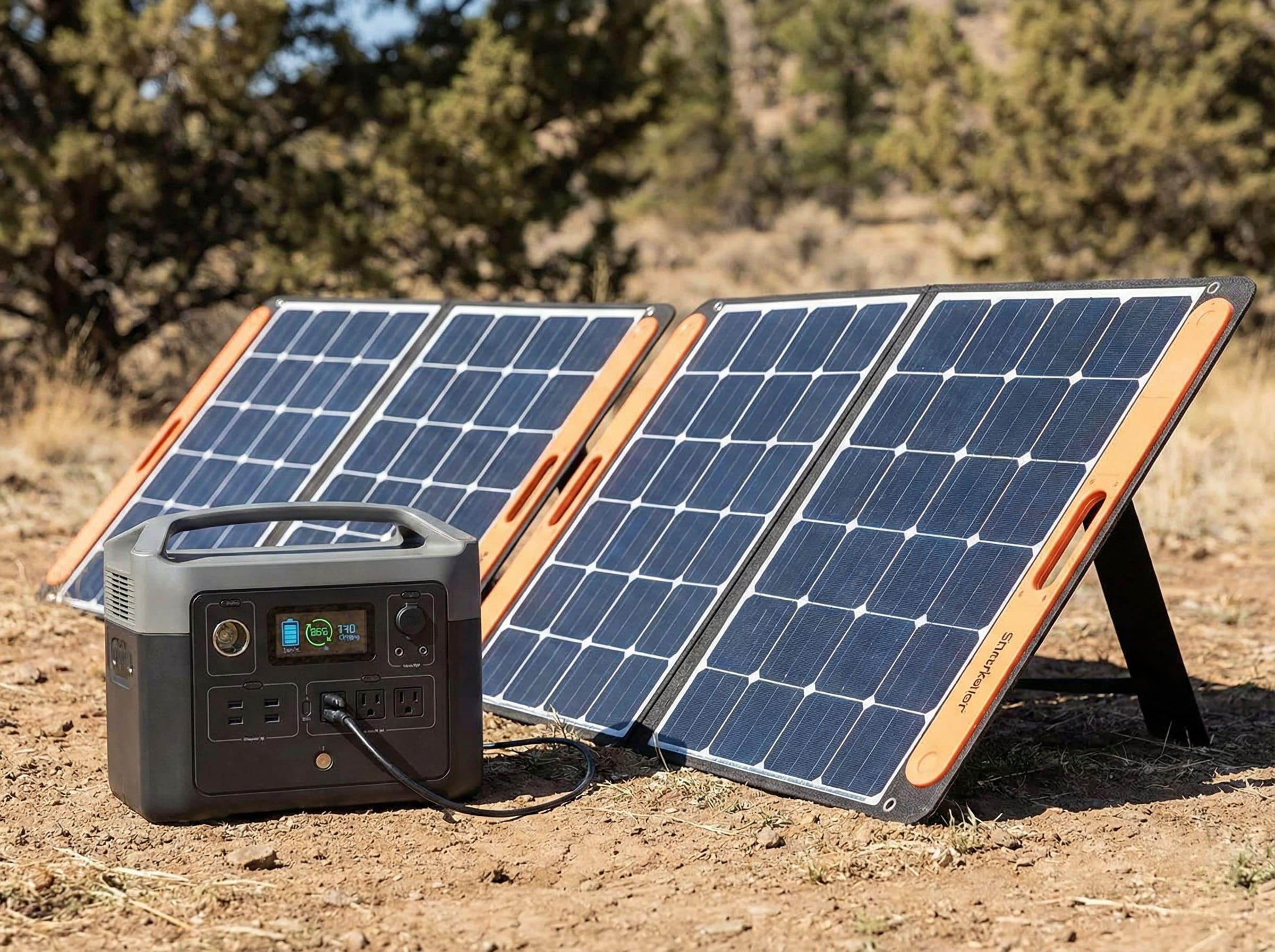
During a widespread disaster like a hurricane, the power grid could be down for a long time. Your power station will be your lifeline, so it needs more than just a tough shell. As a battery manufacturer, we focus on the complete power solution, not just the battery. This means thinking about how the device will be used, charged, and transported.
Here are the key features to look for:
Essential Features for Disaster Preparedness
- Charging Versatility: Your wall outlet will be useless. The ability to recharge the station with solar panels is the most important feature for long-term outages. A car charging option is also a great backup. When we design battery packs for off-grid products, we always consider solar compatibility. It provides true energy independence.
- Sufficient Power and Ports: Think about what you absolutely need to run. A phone to call for help, a radio for news, a small light, and maybe a medical device. Ensure the station has enough ports to charge multiple devices at once and enough output wattage to handle them.
| Device | Typical Power Draw |
|---|---|
| Smartphone | 5-18W |
| LED Lamp | 5-10W |
| Emergency Radio | 5-10W |
| CPAP Machine | 30-60W |
| Laptop | 45-100W |
- Fast Recharging: When you get a chance to recharge, whether from the sun or a generator, you want it to be fast. Some modern power stations can recharge from 0% to 80% in about an hour. This is a huge advantage when charging opportunities are limited.
- Durability and Portability: In an emergency, you might have to move. The power station should have a rugged casing that can handle bumps and scrapes. Sturdy handles are a must. For larger, high-capacity units, look for models with wheels and a telescoping handle, like the BLUETTI T6000S.
- Built-in Light: A simple but incredibly useful feature. An integrated LED flashlight with an SOS mode can help you see in the dark and signal for help without needing a separate tool.
If your waterproof power station falls in water, what safety checks must you do before reuse?
Disaster struck, and your IP67 power station was submerged in floodwater. You pull it out, and it looks fine. But is it actually safe to power on and use?
Do not turn it on immediately. First, thoroughly dry the exterior and inspect the casing for cracks. Open all port covers and check for any signs of moisture. If there's any doubt, let it air dry in a safe place for at least 48 hours before trying to use it.
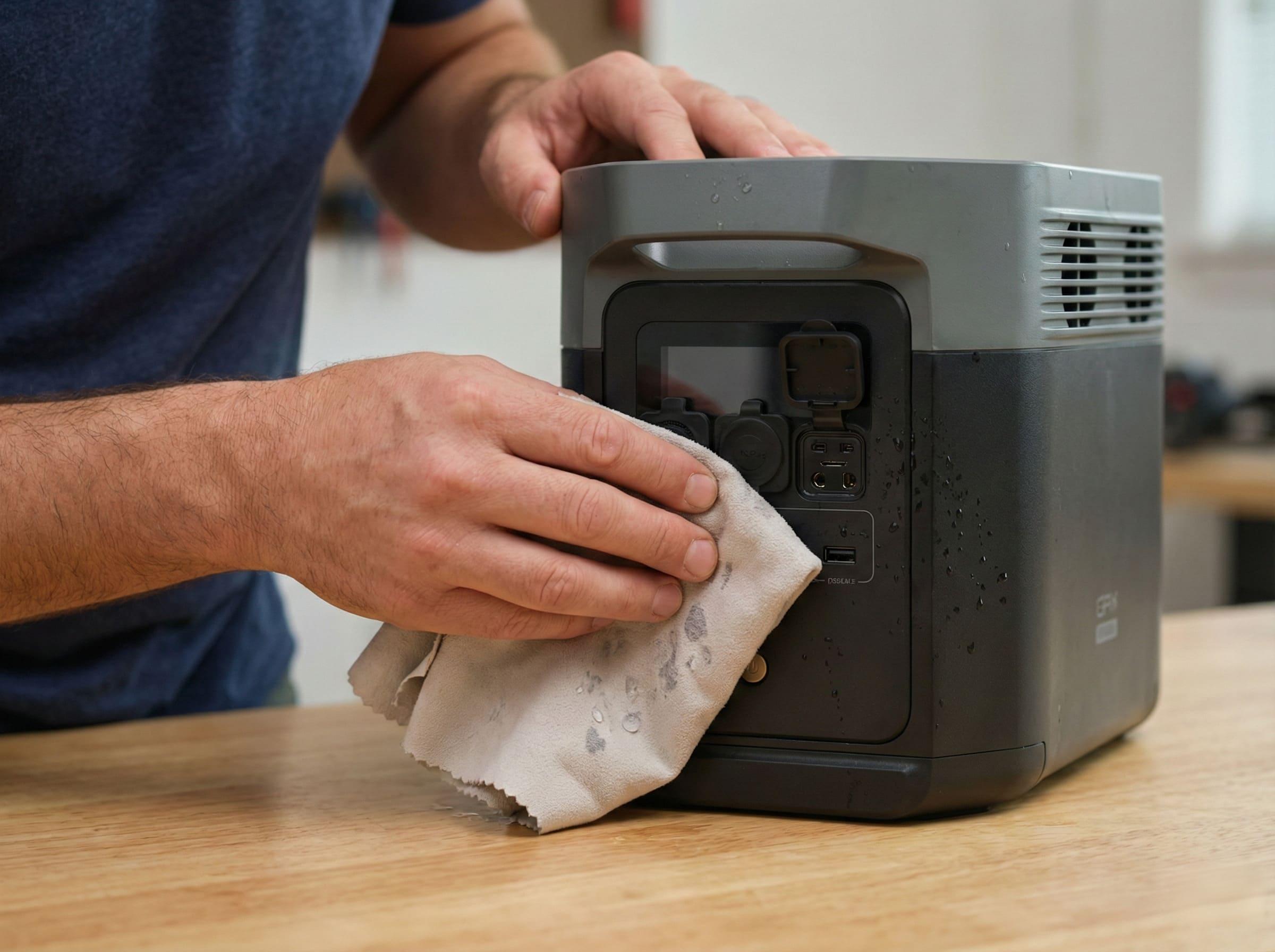
An IP67 rating is a great safety feature, but it’s not foolproof. The rating guarantees protection against submersion for 30 minutes at a one-meter depth. A strong current or deeper water could force moisture past the seals. Also, if the unit has ever been dropped, the casing could have a hairline crack that compromises its water resistance. As someone who oversees quality control for batteries, I can tell you that assuming everything is okay is a dangerous mistake. Water and electricity are a hazardous mix.
If your power station gets submerged, follow these steps carefully to ensure your safety.
Step-by-Step Safety Checklist for a Submerged Power Station
- Retrieve Safely and Do Not Power On: Get the unit out of the water. Whatever you do, do not press the power button or plug anything into it. Powering it on while wet inside could cause a catastrophic short circuit, permanently destroying the unit and creating a fire risk.
- Perform a Visual Inspection: Place the unit on a dry surface. Carefully look over the entire casing. Are there any visible cracks, dents, or gaps where the plastic parts meet? If you see any damage, assume water has gotten inside.
- Dry the Exterior Completely: Use a dry, soft cloth to wipe down every surface of the power station. Pay special attention to the seams, handles, and air vents.
- Inspect All Ports and Seals: This is the most critical step. One by one, open each silicone port cover. Look closely inside with a flashlight. Do you see any water droplets? Is there any dampness on the inside of the rubber cover itself? If you see even a hint of moisture, the seal has failed.
- Wait and Air Dry: Even if you don't see any water, it's best to be cautious. Leave all the port covers open and place the unit in a warm, dry, well-ventilated room for at least 48 hours. Do not use a hairdryer or place it in direct sunlight, as excessive heat can damage the battery.
- Contact the Manufacturer: If you found any moisture inside the ports or have any reason to suspect water got inside, the safest action is to contact the manufacturer's customer support. They can advise you on whether the unit needs to be professionally inspected or replaced. It's not worth risking your safety.
Conclusion
Choosing the right waterproof power station means looking for an IP67 rating, but also understanding its limits. Balance capacity with portability, ensure it has flexible charging options like solar, and always store it in a cool, dry place. Your preparedness depends on a tool that is reliable in every way.