Managing complex drone operations feels like a constant struggle. You want to scale up, but the human effort required is immense, and ensuring safety in tough environments is a persistent worry.
AI is fundamentally reshaping autonomous UAS operations by enhancing perception, automating decisions, and boosting overall efficiency. It works by freeing up human operators from repetitive tasks and enabling drones to navigate and perform missions with high precision in complex scenarios, turning them from simple remote-controlled tools into truly autonomous agents.
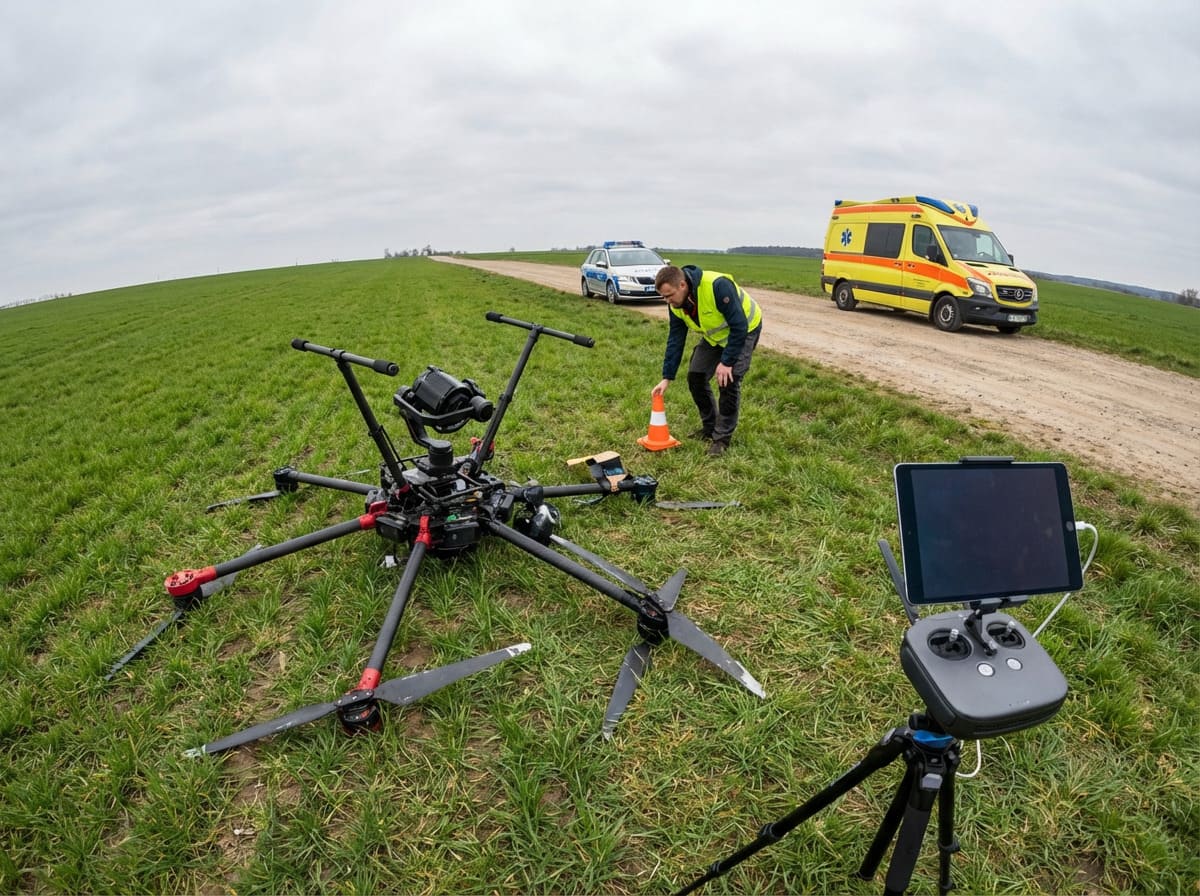
It's exciting to see how AI is pushing the boundaries of what's possible with drones. We're moving from simple aerial photography to complex industrial inspections and even future air taxis. But this technological leap doesn't come without its own set of serious challenges. The very intelligence that makes these drones so powerful also introduces new problems in power management, ethics, and security that we must solve. Let's explore some of the biggest questions facing the industry today.
How can we solve the conflict between the computing power needed for complex AI algorithms on the edge (onboard) and battery life?
Powerful AI on a drone demands a lot of energy. This constant power draw quickly drains the battery, shortening flight times and limiting the mission's scope. You're often forced into an impossible choice between intelligence and endurance.
Solving this conflict requires a combined approach. The solution lies in using dynamic hardware that intelligently allocates power based on real-time needs and optimizing the AI software to be more energy-efficient. This balance ensures drones can make smart decisions without sacrificing critical flight time.
At my company, Litop, we deal with this trade-off every day. Clients come to us for custom batteries for sophisticated devices, and the story is always the same: they need more power in a smaller, lighter package. Drones are no different. Running a complex AI algorithm onboard is like asking a marathon runner to solve a calculus problem while sprinting. The energy demand is huge.
The Core Challenge: Power vs. Performance
The central issue is that powerful AI processing and long flight endurance are conflicting goals. An AI model that can identify tiny defects on a pipeline or navigate a dense urban environment needs a powerful processor. These processors, known as Neural Processing Units (NPUs), consume significant wattage and generate a lot of heat. This places an enormous strain on the battery, which must be both lightweight to allow the drone to fly and powerful enough to meet these energy demands. A standard battery might give you 30 minutes of flight time for simple cruising, but that could drop to 15 minutes or less with the AI processor running at full capacity.
Hardware, Software, and Battery Solutions
The good news is that we are tackling this problem from multiple angles.
First, hardware is getting smarter. New systems use what is called dynamic reconfigurable hardware. Think of it as a smart power manager inside the drone. It sends maximum power to the AI "brain" only when it's needed—for example, when detecting and avoiding an unexpected obstacle. The rest of the time, it runs in a low-power state.
Second, software is becoming more efficient. Developers are using techniques like model pruning and quantization to make AI algorithms "lighter" without losing much accuracy. This means the AI can achieve its goals using less computational power, which directly translates to lower energy consumption.
Finally, battery technology is a crucial piece of the puzzle. This is where we come in. We design high-energy-density lithium batteries and advanced Battery Management Systems (BMS). Our BMS can handle the high peak power draws required by AI processors while maximizing the total energy available. It’s not just about a bigger battery; it’s about a smarter battery system that works in harmony with the drone's AI.
| Feature | Traditional Drone Architecture | AI-Optimized Drone Architecture |
|---|---|---|
| Processor | General-purpose CPU/MCU | Specialized AI Accelerator (NPU) + CPU |
| Power Management | Static, fixed power allocation | Dynamic, task-priority based |
| Battery Requirement | Standard discharge rate | High peak discharge, high energy density |
| Outcome | Short flight time with AI | Longer endurance with real-time AI |
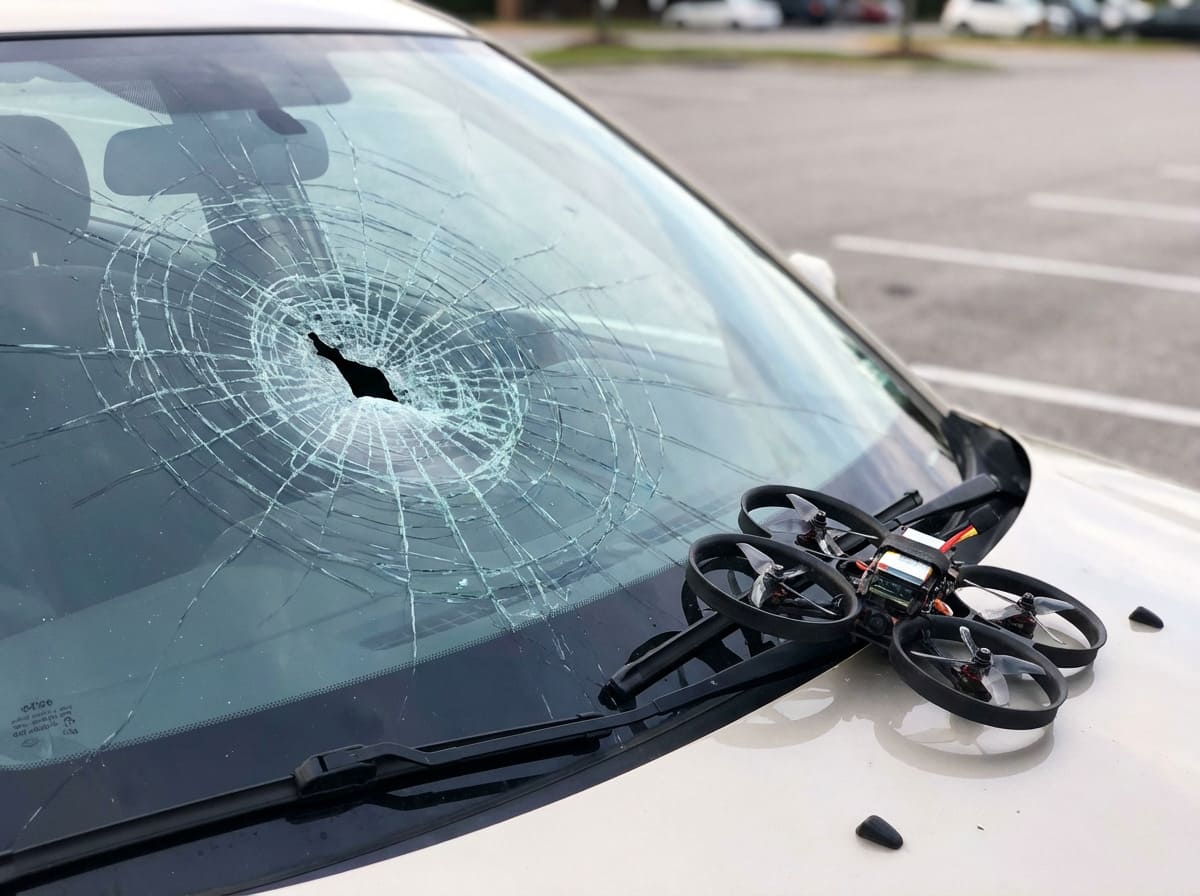
Who is legally and ethically responsible when an AI's autonomous decision causes an accident—the programmer, the operator, or the manufacturer?
Imagine an autonomous delivery drone makes a mistake and causes damage. The owner points to the manufacturer, the manufacturer blames the AI code, and the programmer says the AI learned on its own. It's a legal and ethical nightmare.
Currently, there is no single answer, and liability is often shared among the manufacturer, programmer, and operator. The manufacturer is responsible for the system's design, the programmer for the AI's logic, and the operator for its proper deployment. Clearer regulations and explainable AI are needed to assign responsibility fairly.

This question of responsibility is something I discuss frequently with customers, especially those in the medical device field like Michael Johnson. When a product's failure can have serious consequences, everyone in the supply chain needs to be clear on their role in ensuring safety and reliability. From a manufacturer's standpoint, building trust starts with taking responsibility for your component, but the world of AI adds new layers to this problem.
The Chain of Responsibility
Liability in an AI-caused accident is not a straight line. It’s a chain with several links, and each one carries some of the weight.
- The Manufacturer: As a component manufacturer, I know my responsibility. If a battery pack we produce at Litop fails and causes a crash, that liability starts with us. The same goes for the overall drone manufacturer. They are responsible for the physical integrity of the UAS, ensuring all parts work together safely, and for testing the system under foreseeable conditions.
- The Programmer/AI Developer: This is a newer area. The developer who designed the AI model and chose the data it was trained on holds some responsibility. Did they use biased data? Did they fail to anticipate a critical flaw in the AI's decision-making logic? Their work is central to the drone's autonomous behavior.
- The Operator/Owner: The person or company that deploys the drone also has a duty. They are responsible for using the drone as intended, performing required maintenance, and ensuring the operational environment is safe. If they send a drone into a hurricane it wasn't designed for, they share in the blame.
The Path Forward: Explainability and Regulation
To solve this puzzle, the industry is moving in two key directions. The first is Explainable AI (XAI). We can't treat the AI's mind as a "black box." We need systems that can report why they made a certain decision. This digital trail is crucial for investigators to understand the root cause of an accident. The second is regulation. Aviation authorities worldwide are developing new certification standards for autonomous systems. Soon, an AI flight control system will have to go through the same rigorous testing and validation as a traditional autopilot. As a supplier, we are obsessed with certifications like UL, CE, and UN38.3. This same mindset of proven, verifiable safety must be applied to AI.
How do you train high-precision AI recognition models for specific industrial scenarios, like oil pipeline leaks or power grid defects?
A standard, off-the-shelf AI model can't tell the difference between a shadow and a hairline crack on a power line insulator from 100 feet in the air. You invest in advanced drone inspections, but the AI misses critical defects, forcing you back to slow, expensive manual reviews.
Training these high-precision models requires a data-centric approach. It starts with collecting a large, high-quality dataset of accurately labeled images showing the specific defects. This data is then used with advanced methods like transfer learning and synthetic data generation to teach the AI to recognize unique industrial patterns with extreme accuracy.
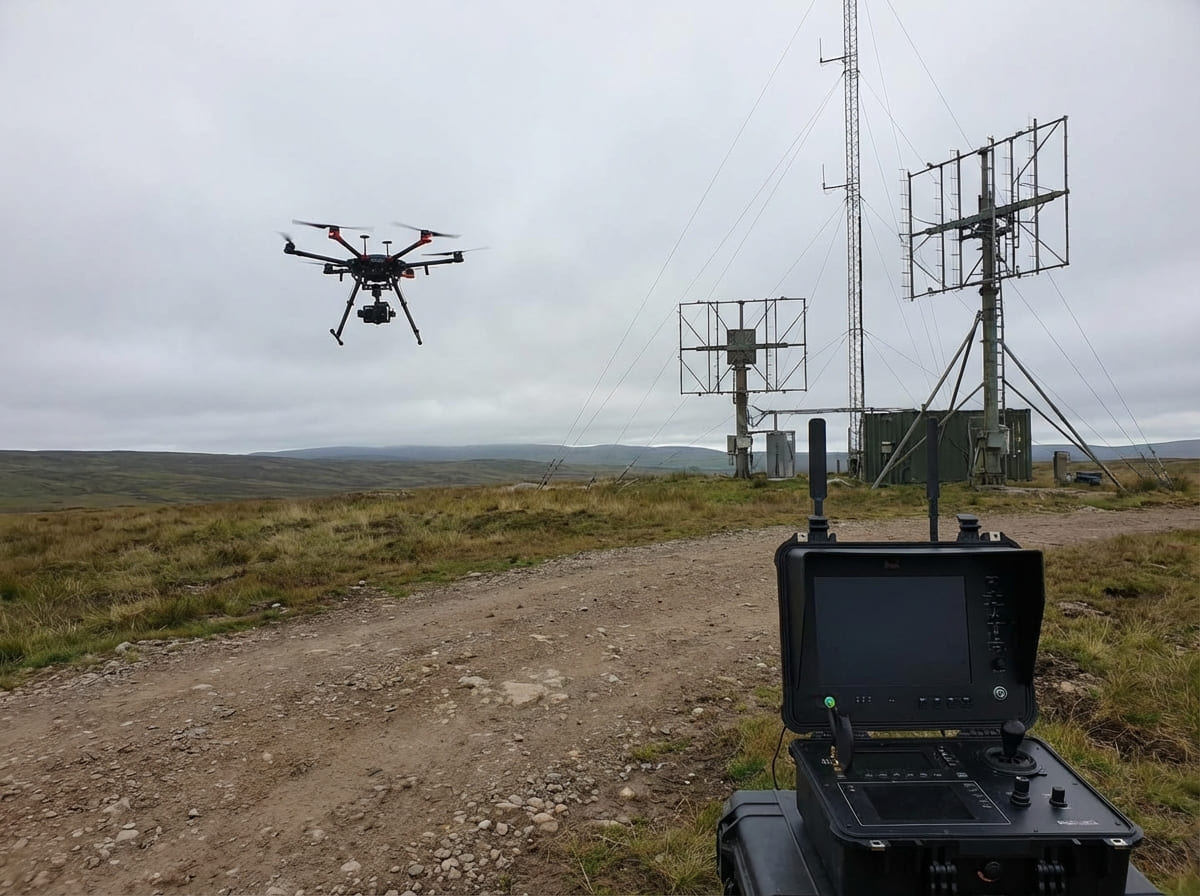
The promise of AI in industrial inspection is incredible efficiency. I've heard from clients that AI can analyze images 50% faster than a human team. The insights mention one AI platform processing 20 million inspection images a year, a task that would take a huge team months to complete. But getting to that point isn't easy. The secret lies entirely in the training process. It reminds me of how we develop our BMS algorithms—it all starts with good data.
The Data Challenge: Quality is Everything
You can't train a specialized model with generic data. To teach an AI to find oil leaks, you need thousands of images of actual oil leaks in various conditions—different lighting, different terrain, different angles. The same goes for power grid defects. The first step is to build a massive library of high-quality images captured by drones in the field. Initially, human experts must meticulously review these images and label every defect. This labeled data becomes the textbook from which the AI learns. It's a slow, expensive process, but there's no shortcut to creating a high-quality foundation.
Smart Training Techniques
Once you have the data, you can use smart techniques to accelerate the learning process.
- Transfer Learning: You don't have to teach the AI from scratch. Developers use a technique called transfer learning, where they take a powerful, general-purpose AI model that already understands shapes, colors, and textures. Then, they fine-tune it using their specialized dataset of industrial defects. It's like taking an experienced detective and giving them a short course on a new type of evidence. They learn much faster.
- Synthetic Data Generation: Sometimes, a critical defect is so rare that you don't have enough real-world examples to train the AI. In these cases, developers can use another AI to generate photorealistic, synthetic images of that defect. This allows the model to learn how to spot the rare problem without ever having seen it in real life.
- The Data Feedback Loop: The training never truly stops. This is the "data closed-loop" concept. Drones collect images, the AI analyzes them, and a human expert verifies the AI's findings. Any mistakes the AI made are corrected, and this new, improved data is fed back into the model to make it even smarter for its next mission. It’s a cycle of continuous improvement.
How can the AI communication protocols for drone swarms prevent malicious interference or hacker takeovers?
A swarm of dozens of drones working together is a powerful tool for everything from agriculture to search and rescue. But this power creates a huge risk. What if a hacker seizes control of the entire swarm? A tool for good could become a weapon in an instant.
Securing drone swarms depends on moving away from centralized control. The solution uses strong encryption, continuous authentication, and decentralized communication protocols. Drones in a swarm talk directly to each other and constantly verify their identities, making it extremely difficult for a hacker to take over the entire network by attacking a single point.

When I think about system security, I think about the BMS we build for our batteries. It has multiple fail-safes to prevent overcharging or other dangerous events. A secure drone swarm needs the same multi-layered approach to safety, but for its communications network. The traditional way of controlling multiple drones is no longer secure enough.
The Vulnerability of Centralized Control
The classic model for controlling multiple drones involves a single pilot or ground station sending commands to each drone. This creates a massive vulnerability. If a hacker can compromise that one ground station, they gain control of the entire swarm. This is a classic single point of failure, and in a world of sophisticated cyber threats, it's a risk that is no longer acceptable for critical operations.
Building a Resilient, Decentralized Swarm
The future of swarm security is decentralized, just like the AI that powers it.
- Decentralized Communication: Instead of all drones listening to one leader, smart swarms use a mesh network where drones communicate directly with each other. There is no central commander. Information and commands spread through the swarm like a wave. If one drone is hacked or disabled, the rest of the swarm can simply ignore it and continue the mission.
- Encryption and Authentication: Every message passed between drones must be encrypted so that outsiders can't read it. More importantly, drones must use cryptographic keys to constantly prove their identities to each other. A new drone attempting to join the swarm is like a person trying to enter a secure facility; it must present the correct credentials or it will be denied access.
- Behavioral Anomaly Detection: The AI itself becomes a security guard. The swarm's collective intelligence understands the normal behavior of its members. If one drone suddenly starts flying erratically or sending strange data, the other drones can collaboratively identify it as compromised, isolate it from the network, and ignore its communications.
| Security Aspect | Centralized Swarm | Decentralized AI Swarm |
|---|---|---|
| Control Point | Single Ground Station | Distributed among all drones |
| Vulnerability | Single point of failure | Resilient to individual node failure |
| Communication | Drone-to-Base | Drone-to-Drone (Mesh) |
| Takeover Risk | High (hack the base) | Low (requires compromising many drones) |
Conclusion
AI is rapidly transforming drones from simple remote-controlled tools into intelligent, autonomous partners. While significant challenges in power consumption, legal liability, specialized training, and cybersecurity remain, innovative solutions are emerging. These advancements are paving the way for a safer, more efficient, and scalable low-altitude economy.