Packing for a flight is confusing enough. Adding batteries to the mix creates real anxiety. You don't want your expensive electronics confiscated by airport security.
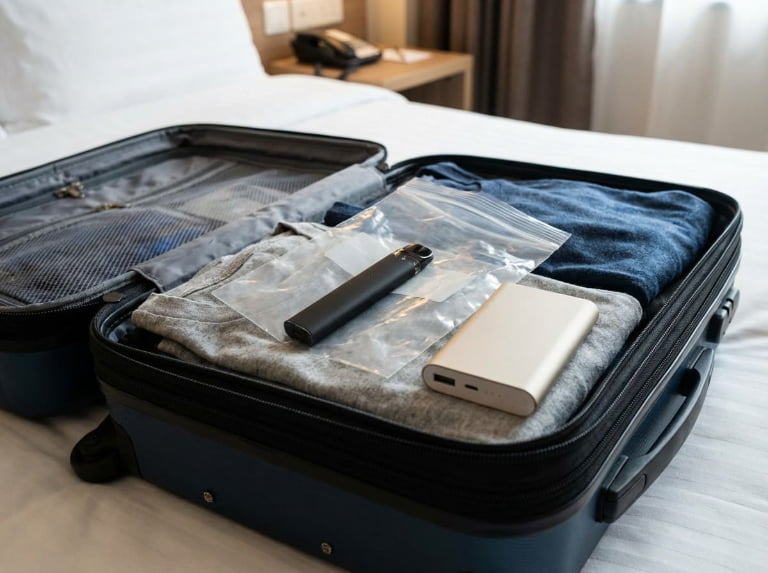
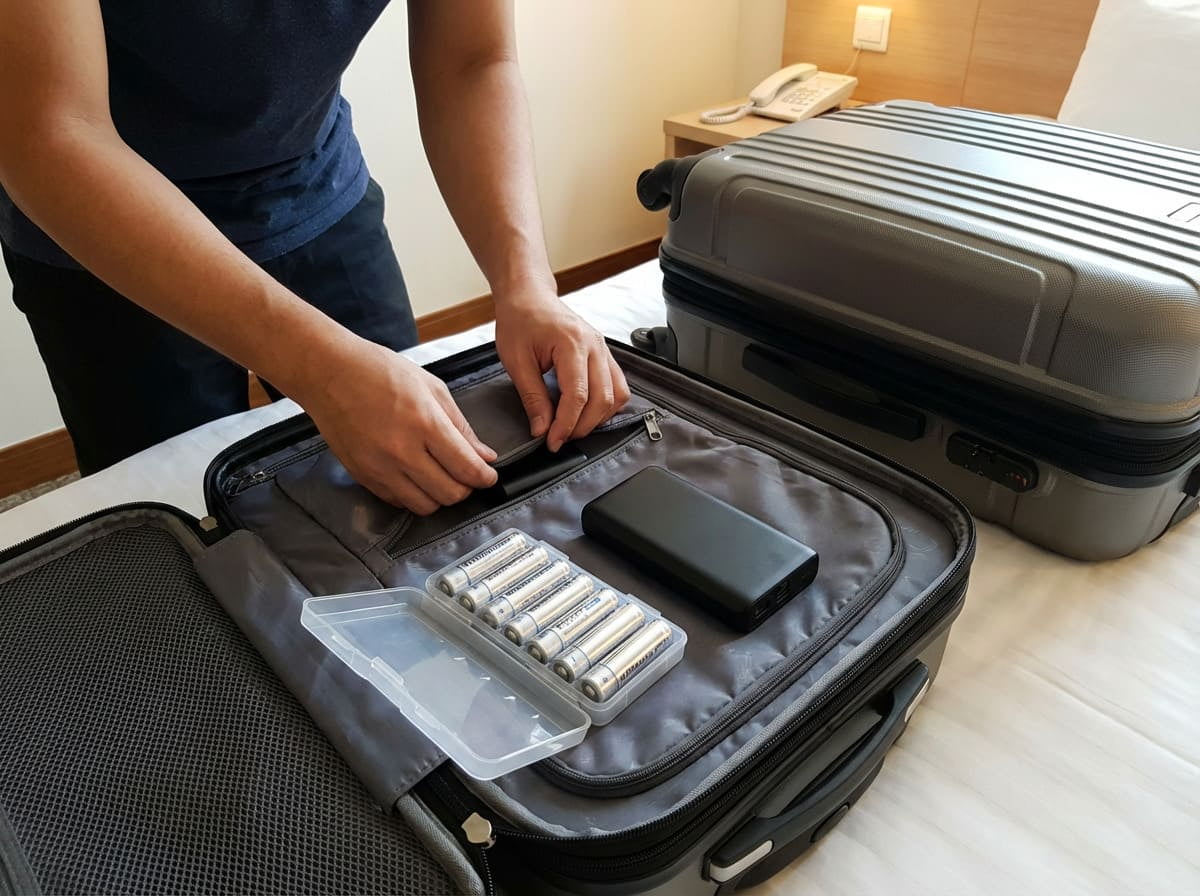
Generally, all spare lithium batteries, including power banks, must be in your carry-on luggage. Devices with batteries installed inside them can often go in checked bags, but it's always safer to carry them on. Never put loose lithium batteries in your checked luggage.
Flying with electronics is a normal part of modern life. I fly all the time for business, meeting clients and visiting factories. And I've learned the battery rules the hard way so you don't have to. The regulations seem complicated, but they all come down to one simple idea: safety. The cabin crew needs to be able to handle any potential battery fire immediately. If a battery is buried in the cargo hold, that's impossible. Let's break down exactly what you need to know so your next trip through security is smooth and stress-free.
Why must power banks be carried on? Will they really explode if checked?
You get to the check-in counter and they ask about batteries. You wonder if this rule about power banks is really that serious. It feels like a hassle.
Yes, the rule is serious. Power banks must be in your carry-on because they contain lithium-ion batteries, which pose a fire risk. In the cabin, a fire can be seen and put out quickly. In the cargo hold, a fire could spread unnoticed and become a disaster.
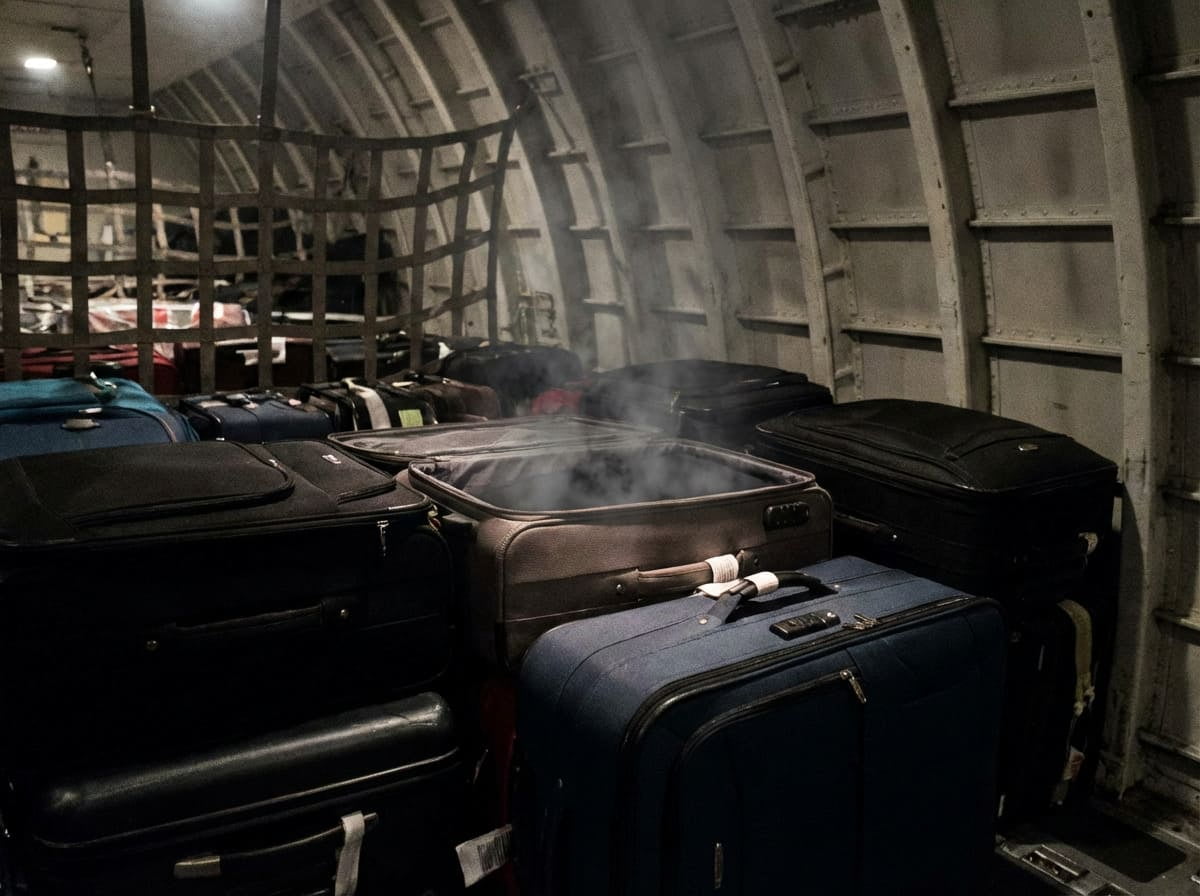
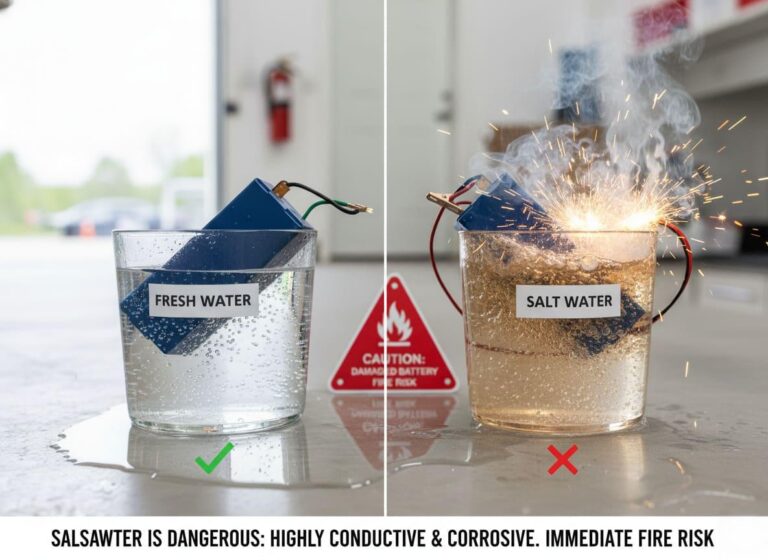
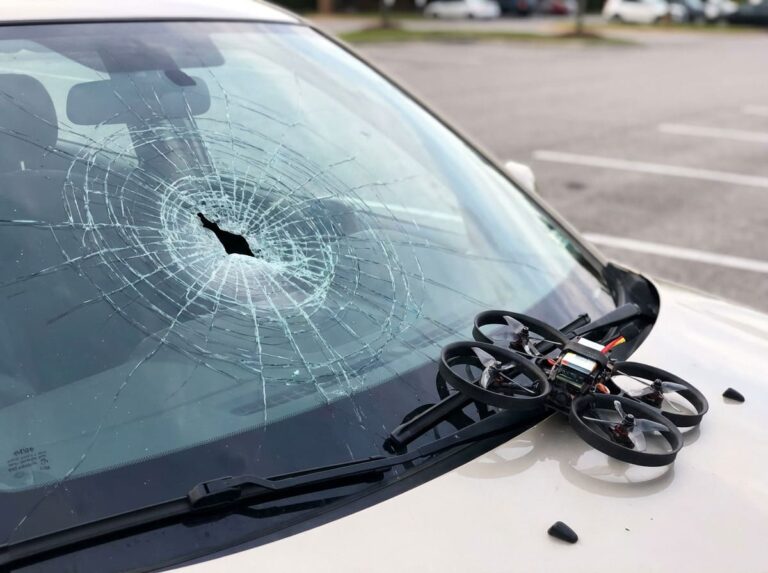
The core issue with lithium-ion batteries, the kind in your power bank and phone, is something called "thermal runaway." This is when a battery gets damaged or short-circuits, causing it to heat up uncontrollably. This heat can lead to smoke, fire, and sometimes even a small explosion. I've been in the battery business for years, and I can tell you this is a real, though rare, risk.
In the passenger cabin, flight attendants are trained for this. They have special fire containment bags to handle a smoking or burning device safely. I once saw a passenger's phone start smoking on a flight. The crew acted fast, and the situation was under control in seconds. Now, imagine that same thing happening in the cargo hold. It's unpressurized, unmonitored, and packed with luggage. A small fire could easily become a major emergency before anyone even knows it started. That's why the rules are so strict.
Here’s a simple breakdown of the risk:
| Location | Monitoring | Fire Response | Risk Level |
|---|---|---|---|
| Cabin | Constant (Crew & Passengers) | Fast, trained response | Low / Controllable |
| Cargo Hold | None | Automated, but may not stop a lithium fire | High / Uncontrollable |
So, keeping your power bank with you isn't just a rule, it's a critical safety measure that protects everyone on board.
Do I have to take out my 'small gadgets' like electric toothbrushes, shavers, and wireless headphones from my checked bag?
You're trying to pack light and want to put your toiletries bag in your checked luggage. But then you remember your electric toothbrush has a battery. It's a pain to repack.
Generally, no. You can leave small personal devices in your checked luggage as long as the battery is installed inside. The main concern is with spare or loose batteries. The device itself provides protection, so items like toothbrushes, shavers, and headphones are usually fine.
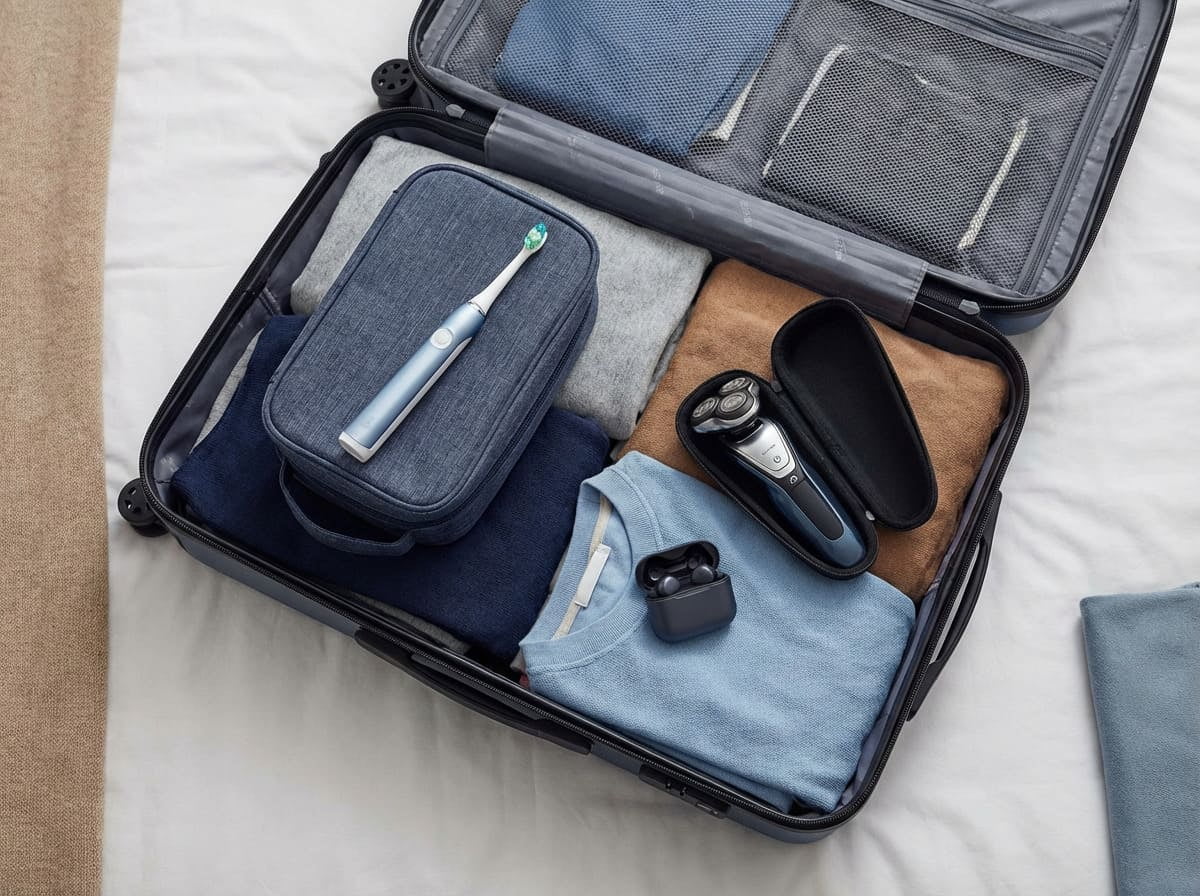
The rules from aviation authorities like the FAA and EASA focus on the danger of unprotected lithium batteries1. When a battery is loose in a bag, its metal terminals can touch keys, coins, or other metal objects, causing a short circuit. This is what can lead to that thermal runaway we talked about.
However, when the battery is installed in your electric toothbrush, the device's casing acts as a protective shell. It prevents the terminals from being exposed and short-circuiting. It’s also important to make sure the device is turned off and can't accidentally switch on in your bag. I sometimes put a piece of tape over the power button of my shaver just to be extra safe.
While it's allowed, I still recommend putting valuable electronics in your carry-on whenever possible. This isn't just about battery safety2; it's also to protect them from being damaged or stolen.
Here is a quick reference guide:
| Item | Allowed in Checked Luggage? | Allowed in Carry-On? | Key Consideration |
|---|---|---|---|
| Electric Toothbrush | Yes | Yes | Must be protected from accidental activation. |
| Wireless Headphones | Yes | Yes | Best to pack in a protective case. |
| Laptop/Tablet | Yes (Not recommended) | Yes (Recommended) | Risk of damage or theft is higher in checked bags. |
| Power Bank | No | Yes | Must be under 100Wh. |
| Spare Camera Battery | No | Yes | Terminals must be protected (e.g., in original packaging or with tape). |
Think of it this way: if the battery is inside the gadget, it's probably okay to check. If it's a spare battery on its own, it must fly with you in the cabin.
What should I do if my carry-on is gate-checked?
You get to the gate, and the flight is full. An airline agent takes your carry-on to check it into the hold. Suddenly you panic, remembering your power bank is inside.
If your bag is gate-checked, you must immediately tell the airline staff you have lithium batteries inside. Open the bag and remove all power banks, spare batteries, and vaping devices. Take these items with you into the cabin. Never allow them to be checked into the cargo hold.
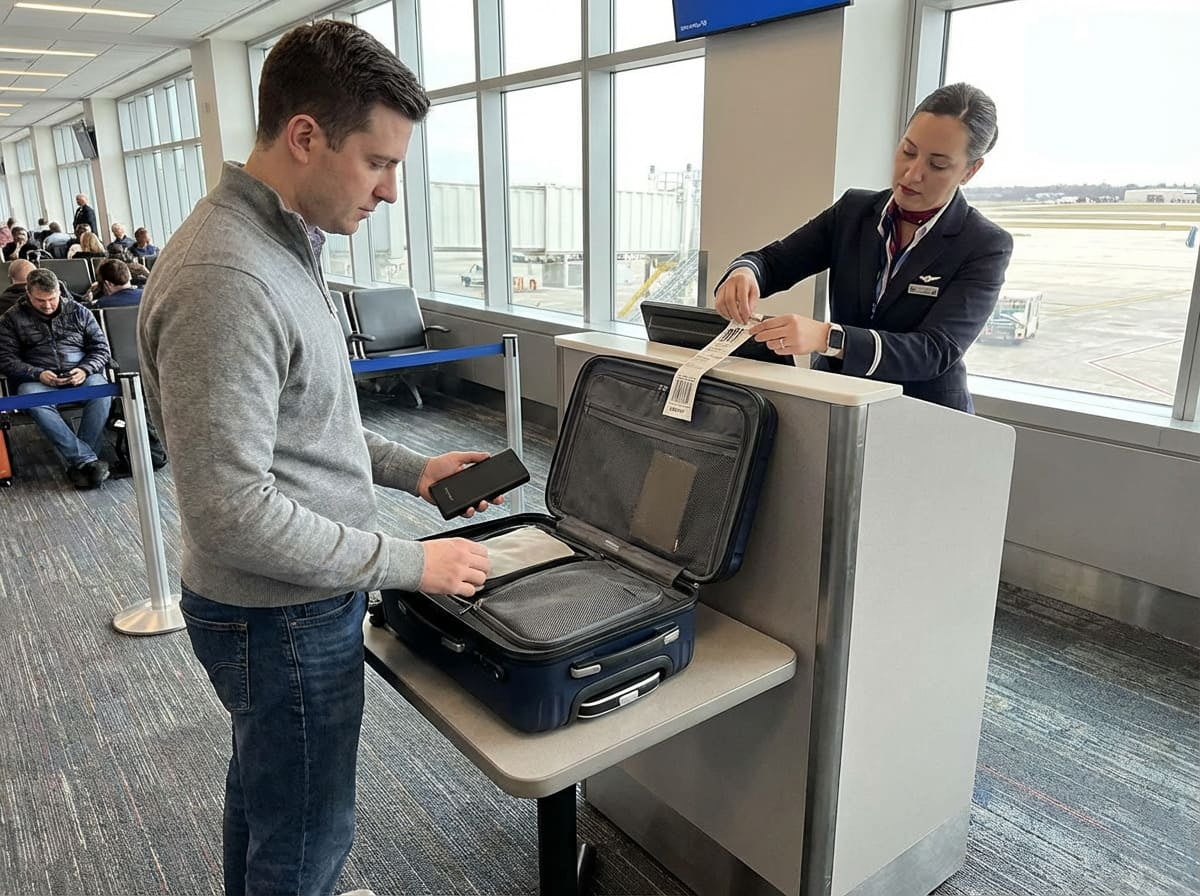
Gate-checking happens all the time, especially on smaller planes or crowded flights. It's a routine procedure, but it creates a critical moment for battery safety. The rules don't change just because you're at the gate. A loose lithium battery is just as dangerous in the cargo hold whether it was checked at the counter or at the gate.
I’ve made this a standard part of my travel routine. I keep all my batteries and my power bank in a small, separate pouch inside my carry-on. If I'm told my bag has to be gate-checked, I can quickly pull out that one pouch without holding up the line. It turns a potentially stressful situation into a simple, two-second action.
Here's your "Gate-Check Battery Drill":
- Stay Alert: When you hear the announcement for gate-checking, have your bag ready.
- Inform the Staff: As they tag your bag, say, "I just need to take my lithium batteries out." They will appreciate your proactiveness.
- Remove All Batteries: Quickly take out your power bank, any spare batteries for your camera or laptop, and e-cigarettes/vapes.
- Secure Them: Put these items into your smaller personal item (like a backpack or purse) that you're taking on board.
- Hand Over the Bag: Let them take your now-safe carry-on.
This is especially important for "smart luggage" with built-in chargers. The battery pack in those bags must be removable. If it is, you remove it and carry it on. If it isn't removable, you can't fly with that bag at all.
Can I check a portable power station for camping?
You're excited about a camping trip and want to bring your large portable power station. You figure you can just put it in your checked luggage since it's too big for a carry-on.
Almost certainly no. Large portable power stations, like those used for camping, are banned from passenger aircraft. Their battery capacity is far above the 160 Watt-hour (Wh) limit set by airlines. You cannot bring them in either carry-on or checked luggage.
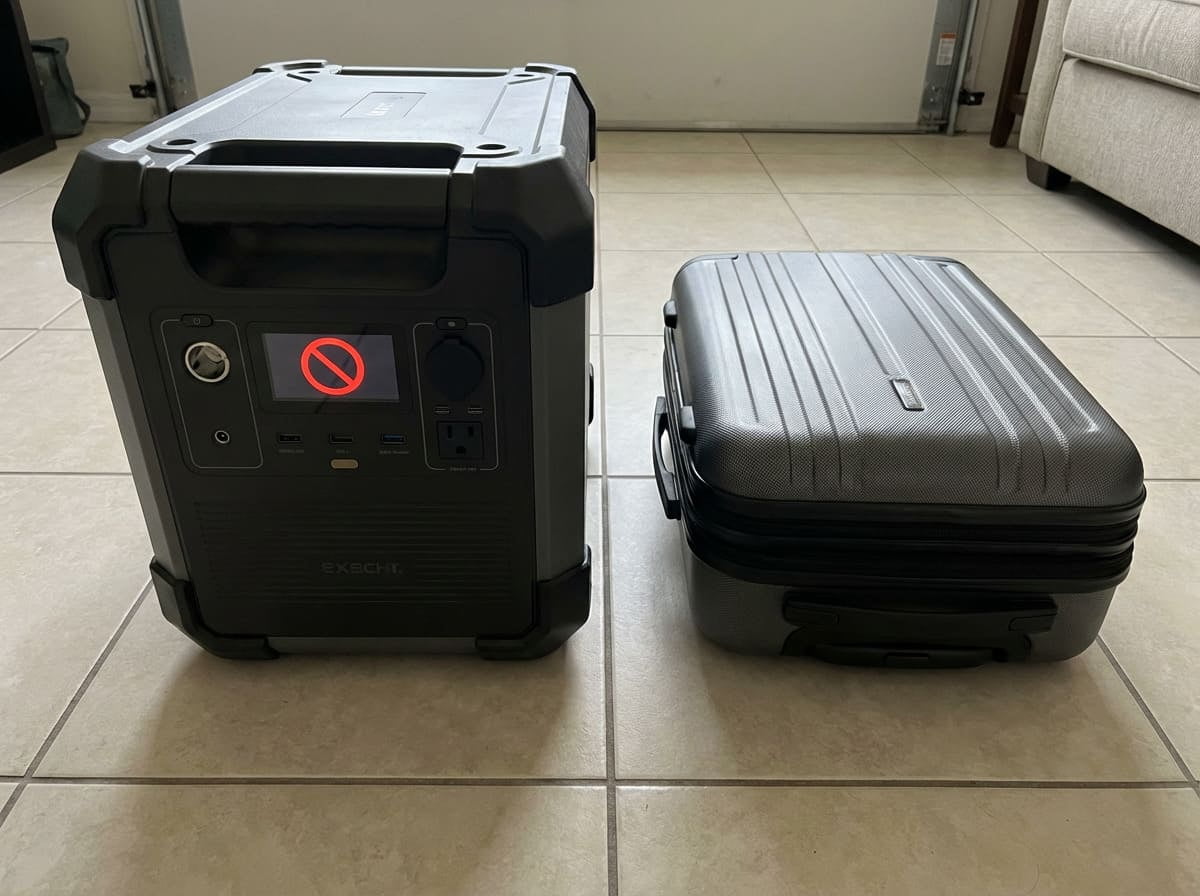
Airline battery regulations are based on capacity, measured in Watt-hours (Wh). The more Watt-hours, the more energy the battery stores, and the greater the potential fire risk. Most camping power stations have capacities of 300Wh, 500Wh, or even more than 1000Wh. These are strictly forbidden.
Here are the universal limits you need to know:
- Up to 100Wh: These are your standard power banks, laptop batteries, and camera batteries. You can carry a reasonable number of these in your carry-on for personal use.
- 100Wh to 160Wh: This is a gray area. These are very powerful batteries, often for professional camera or drone equipment. You must get approval from the airline before you fly, and you are usually limited to carrying just one or two.
- Over 160Wh: These are completely banned for passengers. No exceptions.
To find the Wh of your device, check the label. If it's not listed, you can calculate it yourself: Watt-hours (Wh) = Volts (V) x Amp-hours (Ah) Or, if capacity is in milliamp-hours (mAh): Watt-hours (Wh) = Volts (V) x Milliamp-hours (mAh) / 1000
For example, a 20,000mAh power bank with a standard 3.7V output is 74Wh, which is well under the 100Wh limit. But a small camping generator is in a completely different league. For my own trips that require serious power, I have to either rent a unit at my destination or ship one ahead using a specialized ground freight service that is certified to handle hazardous materials.
| Battery Capacity (Wh) | Carry-On Permitted? | Checked Permitted? | Airline Approval Required? |
|---|---|---|---|
| Up to 100Wh | Yes (spares) | No (spares) | No |
| 100Wh - 160Wh | Yes (spares) | No (spares) | Yes, in advance |
| Over 160Wh | No | No | Forbidden |
Conclusion
Flying with batteries doesn't have to be complicated. Just remember the most important rule: all spare lithium batteries and power banks must go in your carry-on. When in doubt, keep it with you in the cabin. A little preparation makes your journey much safer and smoother.