Stuck in traffic again? Imagine flying over the gridlock. Urban Air Mobility promises just that, but for many, it still feels like something out of a science fiction movie.
Urban Air Mobility (UAM) is a new air traffic system that uses electric vertical take-off and landing (eVTOL) aircraft in low-altitude airspace. In China, it is becoming a reality fast. The first commercial operations are planned for Guangzhou in late 2025, a major step towards widespread use.

It all sounds incredibly exciting, right? But I know what you're thinking because I've had these conversations with clients like Michael Johnson from the US. Flying vehicles zipping around a city bring up a lot of questions about safety, cost, and noise. As someone deep in the world of battery technology that powers these machines, I get asked about this a lot. It’s a huge topic at trade shows. Let's break down the big concerns one by one and see how close we really are.
Are eVTOLs (Flying Cars) Safe to Fly Over Cities, and What Safety Redundancy Mechanisms Do They Have?
The idea of vehicles flying over our heads is naturally unsettling. What if something fails? The thought of an accident is a major barrier to public trust.
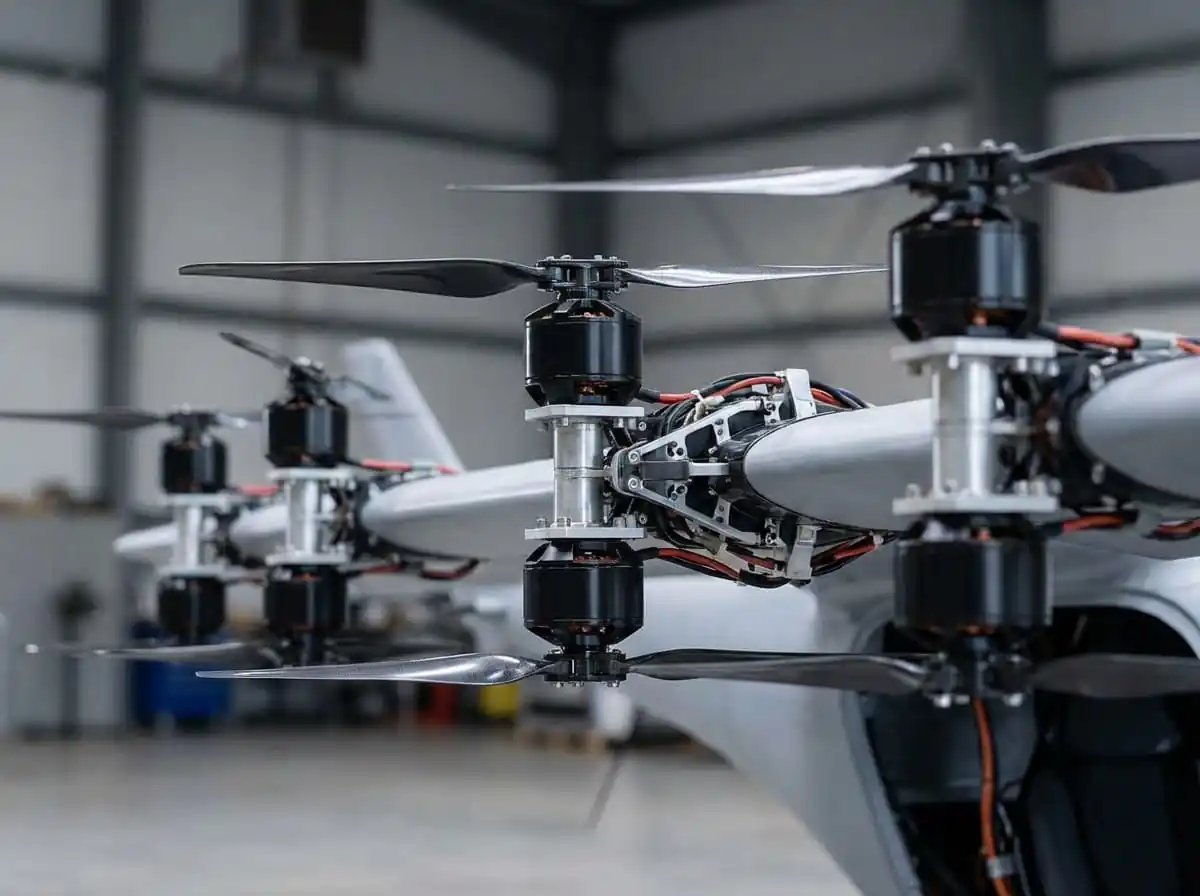
Yes, they are designed to be extremely safe. eVTOLs use multiple redundant systems. This includes distributed electric propulsion with many rotors, so if one fails, others can still land the aircraft safely. They also have advanced flight control systems and backup power sources, which I know well.
When I talk to partners in the medical device field, safety is the number one priority. It's no different for UAM. The designers of these "flying cars" have built safety in from the ground up, and a lot of it comes down to the electric design.
Redundancy is Key
Unlike a helicopter that relies on one or two main rotors, most eVTOLs use something called Distributed Electric Propulsion (DEP). This means they have many smaller, independent rotors. I once visited an R&D lab where they were testing these systems. They simulated multiple motor failures on a drone, and the aircraft just calmly adjusted its remaining rotors and landed safely. It was incredibly impressive. If one or even a few motors fail, the onboard computer instantly recalculates and uses the other motors to maintain stable flight and land. This level of redundancy is a huge leap in aviation safety.
The Power Source: My Area of Expertise
The battery system is the heart of an eVTOL. It's not just one big battery. It's a sophisticated pack with its own brain, the Battery Management System (BMS). At my company, Litop, we specialize in creating custom BMS solutions. For an eVTOL, the BMS is critical. It monitors the health of every single cell, manages heat, and ensures a steady power supply. The system has backups, so if one part of the battery pack has an issue, another section can take over. We design these batteries for high-rate discharge to provide the necessary power for takeoff, which is the most demanding part of the flight.
Here's a quick comparison:
| Safety Feature | Conventional Helicopter | eVTOL Aircraft |
|---|---|---|
| Propulsion System | 1-2 large rotors, complex mechanics | Multiple independent electric motors (DEP) |
| Failure Tolerance | Single point of failure (e.g., tail rotor) is catastrophic | Can sustain multiple motor/rotor failures |
| Power System | Fuel tanks, single engine | Redundant battery packs with advanced BMS |
| Flight Control | Complex manual controls | Highly automated, computer-assisted controls |
This multi-layered approach to safety, from the motors to the batteries, is what will ultimately earn public trust.
Where Will UAM Vertiports Be Built, and How Will Existing Infrastructure Be Adapted?
Flying taxis sound great, but where will they take off and land? Our cities are already crowded. Building new airports everywhere seems impossible and disruptive for everyone.
Vertiports will be built on the rooftops of skyscrapers, shopping malls, and major transport hubs. Existing infrastructure, like helipads and small airports, can also be upgraded and adapted. China's plan, especially in Guangzhou, involves creating a dense network of these landing spots for easy access.
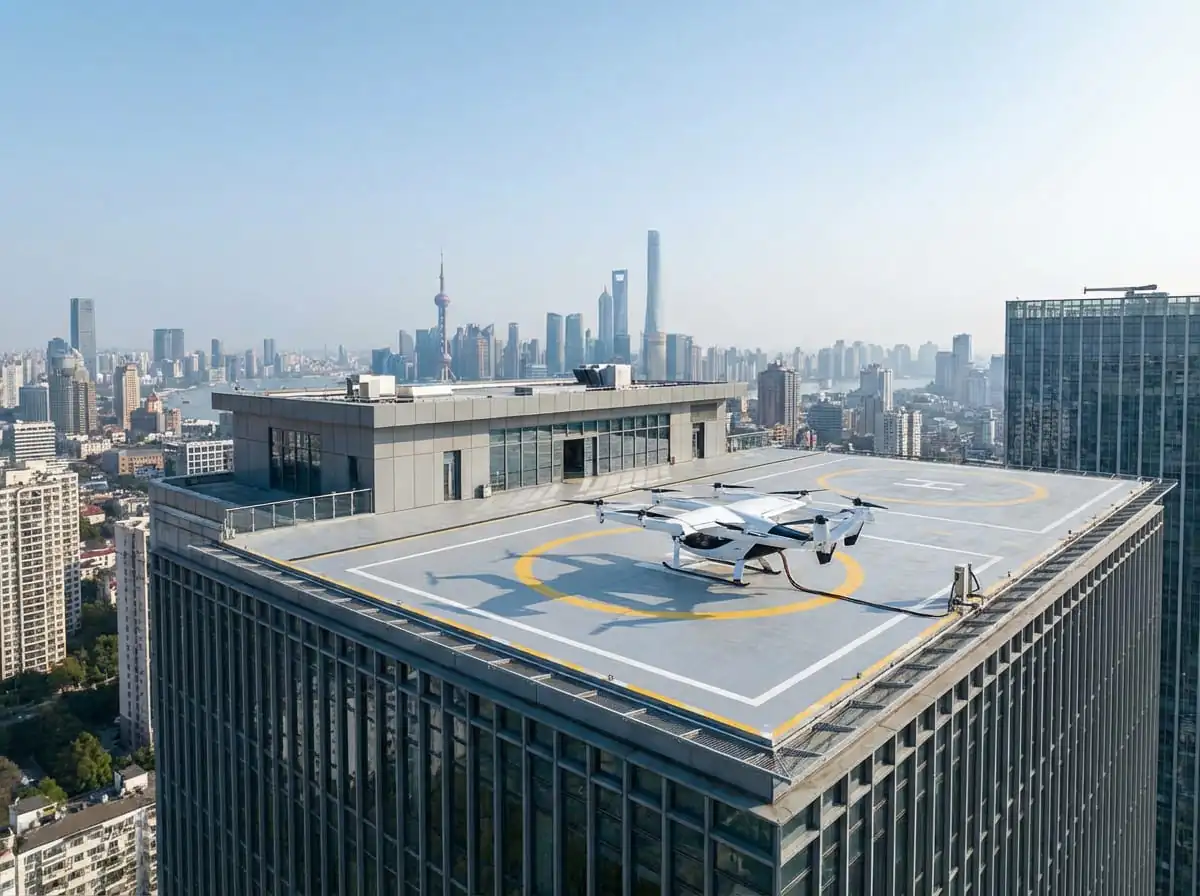
Creating the ground infrastructure is just as important as building the aircraft. You can't have one without the other. I travel a lot for business, and I've seen how efficient infrastructure in cities like Shenzhen can change daily life. Integrating UAM is the next logical step. The plan isn't to build massive, isolated airports. It's about smart integration into the existing city fabric.
A Network of Landing Spots
China is moving aggressively on this. Guangzhou, for example, has announced a "1+5+100" plan to be ready by 2027. This isn't just talk; it's a concrete blueprint for the future.
- 1 Hub Vertiport: A large, central hub likely connected to the main airport or high-speed rail station. This will handle high volumes of traffic, both passengers and cargo.
- 5 Integrated Vertiports: These will be located at major commercial centers, transport interchanges, or business districts. Imagine landing on top of the mall where you have a meeting.
- 100 Community Vertipads: Smaller, simpler landing pads spread throughout the city in residential areas, office parks, and hospitals. These will function like bus stops for the sky.
Upgrading and Building New
While a new, top-of-the-line vertiport can cost millions, many existing structures can be adapted. Here's a look at the types of infrastructure and what they'll require:
| Vertiport Type | Location Example | Key Infrastructure Needs |
|---|---|---|
| Hub Vertiport | International Airport | Multiple landing pads, large passenger terminal, fast charging, air traffic control integration |
| Integrated Vertiport | Downtown Skyscraper, Shopping Mall | A few landing pads, smaller waiting areas, robust charging stations |
| Community Vertipad | Hospital Rooftop, Office Park | Single landing pad, minimal shelter, basic charging point |
One of the biggest technical challenges is charging. For UAM to be efficient, eVTOLs need to be charged very quickly between flights. This requires powerful, high-speed charging infrastructure at every vertiport. It's a challenge we're actively working on in the battery industry—developing batteries that can handle ultra-fast charging without degrading quickly.
How Much Will a Flying Taxi Ticket Cost, and Can an Average Person Afford It?
New technology is almost always expensive at first. You might worry that flying taxis will just be a luxury for the wealthy, not a real solution to traffic problems for most people.
Initially, fares will be at a premium, similar to a high-end car service. However, as operations scale up and technology matures, costs are expected to fall significantly. The long-term goal is to make prices competitive with ground-based taxis for certain time-sensitive routes.
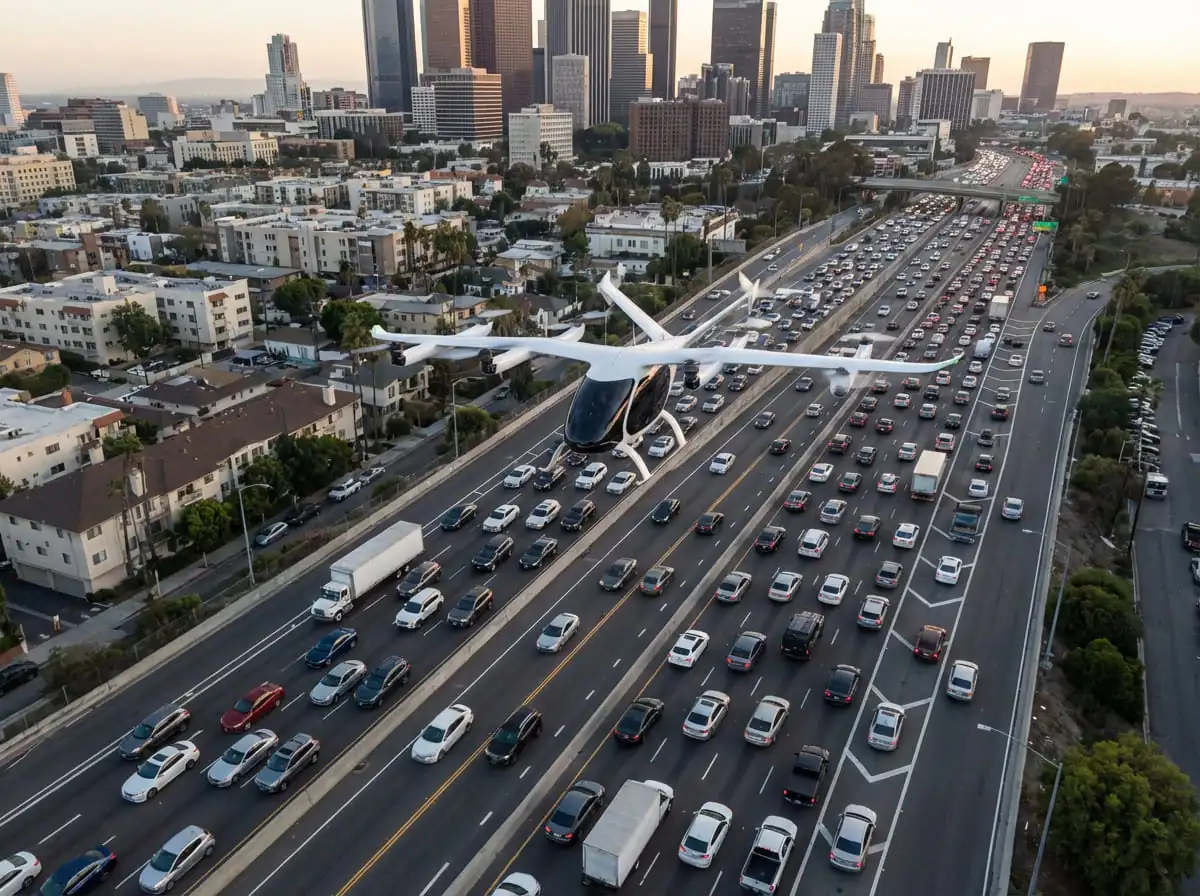
I get this question from almost every potential customer, including cost-conscious procurement officers. They want to know the bottom line. The initial price tag of a single eVTOL is around $2.5 million, so early flights won't be cheap. But the path to affordability is clear.
The Path to Lower Costs
The economics of UAM are designed to improve with scale. Several factors will drive prices down over the next decade.
- Economies of Scale: Right now, eVTOLs are built in small batches. As production ramps up to thousands of units, the cost per aircraft will drop. It's a principle we see every day at Litop. The cost to produce a custom battery pack is much lower when we make 100,000 units versus just 100. Mass production of airframes, motors, and batteries will be the biggest driver of cost reduction.
- Lower Operational Costs: Electric power is much cheaper than jet fuel. Also, electric motors have far fewer moving parts than a combustion engine or a helicopter's transmission. This means less maintenance, fewer repairs, and less downtime, all of which save money.
- Automation: Initially, eVTOLs will have a pilot. However, they are designed for high levels of automation. As regulations allow, we will move towards fully autonomous flights. Removing the cost of a trained pilot from every trip will dramatically lower ticket prices.
Here is a simple cost breakdown comparison:
| Cost Factor | Ground Taxi (Gasoline) | eVTOL (Future, at scale) |
|---|---|---|
| Fuel / Energy | High | Low |
| Driver / Pilot | Medium | None (Autonomous) |
| Maintenance | Medium | Low |
| Time Value Saved | Low | High |
So, while a 20-minute flight might initially cost over $100, the goal is to bring that down to $30-$40. When you consider saving an hour in traffic, that price becomes very attractive to a much wider audience.
Are eVTOLs Noisy, and Will They Seriously Disturb City Residents?
We already live with constant noise from cars, construction, and airplanes. The thought of a new layer of sound from hundreds of flying vehicles buzzing overhead is a nightmare for urban peace.
eVTOLs are designed to be significantly quieter than helicopters. Their multiple, smaller, electric-powered rotors spin at a lower speed, producing a less intrusive, higher-frequency sound that blends into the background city hum, especially during takeoff and landing.
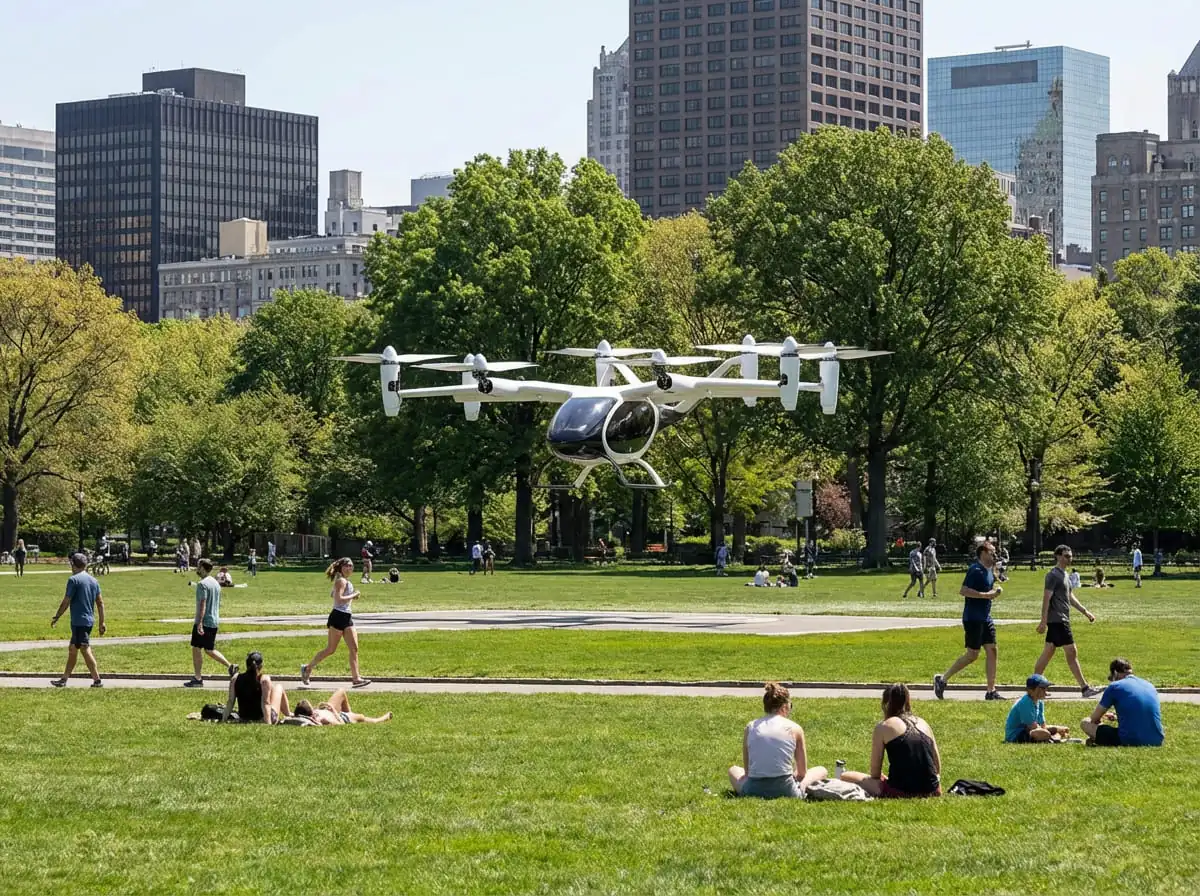
This is a personal one for me. My office is in a busy part of the city, and the constant noise can be draining. If UAM is going to succeed, it cannot add to that problem. Fortunately, acoustics experts and engineers are making this a top design priority. I had the chance to hear a prototype in action from a distance, and it was surprisingly quiet. It wasn't the loud, "thump-thump" sound of a helicopter. It was more like the whir of a large, high-tech fan.
The Science of Quiet Flight
Why are they so much quieter? It comes down to physics and design.
- Helicopters: Use one or two very large rotors spinning at high speeds to generate lift. The tips of these blades move so fast they create a distinctive, loud, low-frequency chopping sound that travels far.
- eVTOLs: Use multiple smaller rotors. Because the lift is distributed among them, each rotor can spin at a much lower speed. This produces a higher-frequency "whirring" or "humming" sound. This type of sound doesn't travel as far and is more easily masked by existing background noise in a city.
Different eVTOL designs will have different noise profiles. The multi-rotor types used for short-range sightseeing are among the quietest. The tilt-rotor models designed for higher speeds might be slightly louder, but still far below helicopter levels.
Smart Operations to Reduce Impact
Beyond just building quieter aircraft, the way they are operated will also minimize noise. Flight paths will be carefully planned to fly over highways, industrial zones, or rivers where possible, avoiding quiet residential neighborhoods. Takeoffs and landings will be designed to be as steep and quick as possible, limiting the time the aircraft spends at low, noisy altitudes.
Here's a rough idea of the noise levels we're talking about:
| Noise Source | Typical Decibels (at 150m) | Sound Character |
|---|---|---|
| Heavy Traffic | 70-80 dB | Constant rumble |
| Helicopter | 85-95 dB | Loud, low-frequency "thump-thump" |
| eVTOL (Target) | 60-70 dB | Higher-frequency "whir" or hum |
| Normal Conversation | 60 dB | - |
The goal is for an eVTOL flying overhead to be no louder than the traffic on the street below. If they can achieve that, most city dwellers will barely notice them.
Conclusion
UAM is no longer a distant dream. With the first commercial flights in China slated for 2025, we are on the verge of a new era in transportation. Key challenges in safety, infrastructure, cost, and noise are being solved with clever engineering and smart planning. It’s an exciting time, especially from my perspective in the battery industry, as we are providing the power to make this future happen. "Flying to work" might become normal much sooner than any of us think.