Choosing batteries on initial price alone often leads to higher long-term costs from frequent replacements. Understanding Total Cost of Ownership (TCO) prevents this budget drain and reveals true value.
The Total Cost of Ownership (TCO) for batteries includes the initial purchase price, maintenance, replacement costs, and energy consumption. High-capacity batteries often have a higher upfront cost but deliver a lower TCO over time through fewer replacements, better efficiency, and reduced downtime, especially in high-use applications.
The sticker price is just the tip of the iceberg. What lies beneath—replacement cycles, maintenance, and even energy efficiency—truly determines the total cost. Let's break down how these factors add up. You might be surprised by how quickly a premium battery pays for itself.
The high upfront cost of a premium battery can make you hesitate. But cheap batteries need constant replacement, eating into your profits and causing headaches you didn't sign up for.
The payback period for a high-capacity battery depends on its cycle life and your application's usage frequency. In high-demand devices, where standard batteries fail quickly, the premium can be recouped in months through fewer replacements, labor savings, and increased device uptime.

The break-even point is where the initial higher cost of a premium battery is fully offset by savings. After this point, the high-capacity battery starts saving you money. I find it helpful to think about this with a simple formula. You calculate the break-even point by comparing the upfront cost difference to the ongoing savings per use or per cycle.
Calculating the Break-Even Point
To find when a high-capacity battery starts paying you back, you need to look at its cycle life. For example, if a standard battery costs $10 and lasts 500 cycles, its cost per cycle is 2 cents. If a high-capacity battery costs $25 but lasts 2,000 cycles, its cost per cycle is just 1.25 cents. The premium battery is almost 40% cheaper every time you use it. You would see a return on your investment long before the battery reaches the end of its life, not even counting savings from reduced replacement labor and downtime.
Real-World Examples
In the consumer world, this is easy to see. An alkaline AA battery is cheap, maybe a dollar. A rechargeable NiMH battery might be four dollars, but you can use it 500 times or more. For a business using these in devices, the long-term TCO of the rechargeable option is just a fraction of using disposable batteries. For our industrial clients, the scale is much larger. An EV fleet manager might see a standard battery costing 2000 RMB with 800 cycles, versus a cheaper lead-acid option at 650 RMB with 500 cycles. While the upfront cost is higher, the lithium battery's longer life and superior performance result in a lower annual cost and far greater reliability.
How do you quantify maintenance costs and downtime losses when calculating TCO?
Hidden costs like maintenance and downtime are easy to ignore at purchase. But when a device fails, operations halt, and the real cost becomes painfully clear, damaging productivity and reputation.
Quantify maintenance by totaling labor hours and costs for battery replacement and testing. Calculate downtime losses by multiplying the revenue lost per hour by the hours the device is out of service. High-capacity, reliable batteries from Litop minimize both, directly lowering your TCO.
Calculating these "soft" costs is critical for an accurate TCO, and it’s simpler than it seems. As a battery manufacturer, I’ve helped countless clients put real numbers to these issues. It often reveals that the battery is one of the most critical components for profitability.
The Formula for Downtime
Downtime cost is the revenue you lose when your product isn't working. If you make a medical monitoring device that a clinic uses to serve patients, every hour it's offline due to a dead battery is an hour of lost billing for your customer. If the device generates $100/hour and is down for 3 hours, that's a $300 loss. If a cheap battery causes this twice a year, that's $600 in losses that a reliable battery could have prevented. Maintenance costs are even more direct: the technician’s hourly rate multiplied by the time spent swapping batteries. These numbers add up fast.
Structuring Your Cost Analysis
I see this impact clearly with clients in the energy storage field. Using our high-capacity cells allows them to build battery packs with fewer components. This means fewer connections that can fail and a smaller physical footprint. One client reported a 20% reduction in land area needed for their installation and a 10% drop in ongoing maintenance costs. Here is a simple table to model this:
| Cost Factor | Standard Battery (Annual Estimate) | High-Capacity Battery (Annual Estimate) |
|---|---|---|
| Labor for Replacement | 4 replacements x 0.5hr x $50/hr = $100 | 1 replacement x 0.5hr x $50/hr = $25 |
| Downtime Loss | 2 failures x 3hrs x $100/hr = $600 | 0 failures = $0 |
| Total Hidden Costs | $700 | $25 |
This makes the financial decision obvious. A quality battery isn't a cost; it's insurance for your device's performance and your reputation.
Besides replacement frequency, does the higher efficiency of high-capacity batteries significantly reduce long-term electricity costs?
We focus on how long a battery lasts, but not how much energy it wastes during charging. This wasted electricity is a hidden cost that adds up on every utility bill.
Yes, absolutely. High-capacity batteries often have higher coulombic efficiency, meaning less energy is lost as heat during charging and discharging. For devices that are frequently recharged, like in energy storage systems or EV fleets, this translates directly into significant long-term electricity savings.
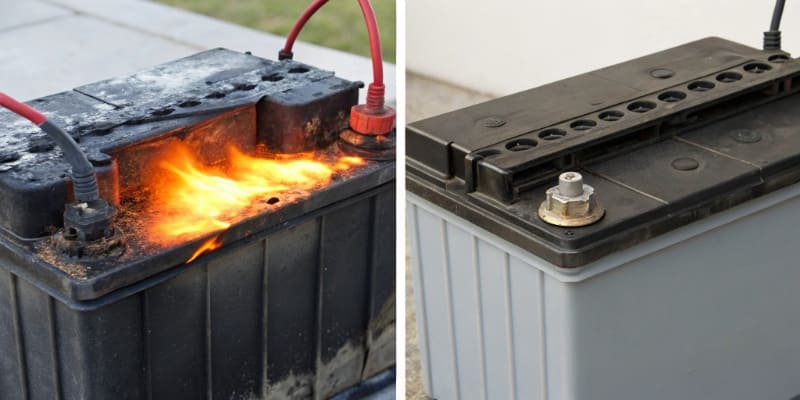
Charging efficiency is a part of TCO that many people overlook. I like to explain it with the "leaky bucket" analogy. You pay to fill the bucket with water (energy), but a leaky one loses some before you can use it.
Understanding Coulombic Efficiency
Coulombic efficiency measures how much of the energy you put into a battery you can get back out. A battery with 99% efficiency is far superior to one with only 90%. That 9% difference represents energy you paid for but was simply lost as heat. This not only wastes money but the extra heat can also degrade the battery and other electronic components faster, leading to even more costs. In my experience, better raw materials and more precise manufacturing processes lead to higher efficiency.
The Financial Impact of Wasted Energy
For large-scale applications, this impact is huge. Imagine a commercial solar energy storage system that cycles daily. If the system stores and discharges 100 kWh each day, a 9% efficiency gap means 9 kWh of electricity are wasted every single day. Over one year, that's over 3,200 kWh of paid-for energy that vanished into thin air. Depending on local electricity rates, this could easily amount to hundreds or thousands of dollars in hidden costs from a single system. This is why we at Litop often recommend chemistries like LiFePO41 for high-cycle applications; its high efficiency provides tangible savings. And with battery pack prices projected to drop to around $105/kWh by 2025, investing in a more efficient solution is becoming an even easier decision.
Are TCO comparisons universally applicable, or do they vary greatly for specific applications?
It's tempting to apply a one-size-fits-all rule for battery costs. But using the wrong battery for a specific job leads to poor performance, unexpected failures, and wasted money.
TCO comparisons vary dramatically by application. A battery that is cost-effective for a low-use TV remote would be a terrible choice for a high-cycle medical device or an RV. The right choice always depends on usage patterns, environmental conditions, and performance requirements.

A TCO analysis is never universal. The right answer is always tied directly to how and where the battery will be used. As a specialist in custom batteries, my job is to help customers analyze their specific needs to find the most cost-effective solution over the product's entire lifespan.
High-Cycle vs. Low-Frequency Use
We can group applications into two broad categories. First, high-cycle applications, where devices are used and recharged constantly. Think of medical monitors in a hospital, GPS trackers for a logistics company, or solar storage systems. For these, cycle life, reliability, and efficiency are everything. Paying more upfront for a premium battery that lasts 3,000 cycles is far cheaper in the long run than a standard battery that only lasts 500 cycles. The savings on replacements and avoidance of downtime are enormous.
Case Study: Medical Devices vs. Power Tools
In contrast, consider low-frequency applications. This could be a home emergency backup system or a consumer gadget used only on weekends. Here, the battery is more likely to degrade from age (shelf life) than from use. In such cases, a standard, lower-cost battery might actually have a better TCO, because the device will never use the full cycle life of a premium battery. For example, we create custom, ultra-reliable LiFePO4 packs for our medical device clients because failure is not an option and performance is paramount. But for a power tool company targeting DIY hobbyists, a standard 18650 lithium-ion pack provides the perfect balance of power and cost. You must match the battery to the job.
Conclusion
Don't be fooled by the sticker price. A true TCO analysis, which includes replacements, downtime, and efficiency, almost always shows that high-capacity, high-quality batteries are the smarter long-term investment. They deliver reliability, reduce costs, and provide peace of mind. Choose wisely for your application.
Discover why LiFePO4 batteries are recommended for high-cycle applications due to their efficiency. ↩