Struggling to choose the right waterproof rating for your device? The wrong choice can lead to costly failures and damage your brand's reputation with your customers.
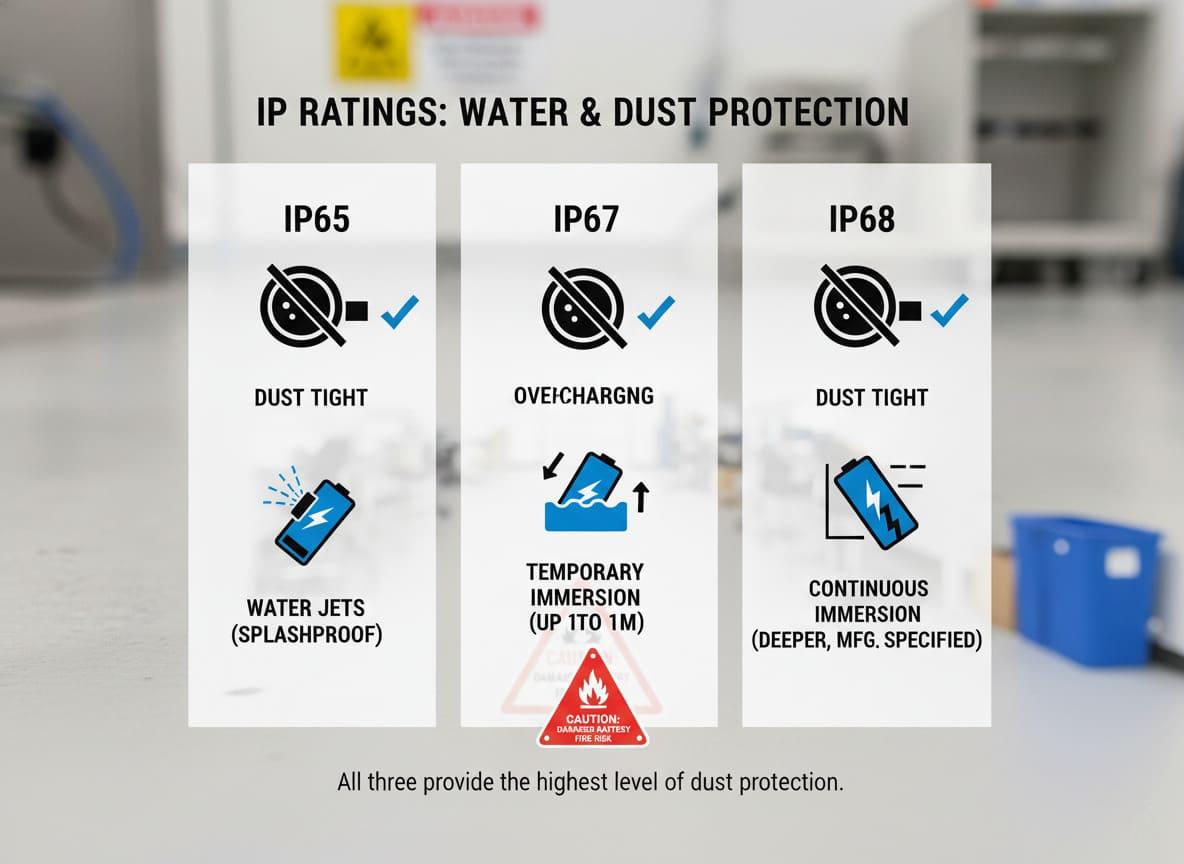
IP65, IP67, and IP68 all offer the highest level of dust protection. The key difference is water resistance: IP65 protects against water jets, IP67 allows temporary immersion up to 1 meter, and IP68 allows for deeper, continuous immersion defined by the manufacturer.
This simple explanation is a good start, but there's much more to it. As a manufacturer of custom batteries for specialized devices, I've seen how misunderstanding these ratings can lead to design flaws. Understanding the details of each rating is crucial for ensuring your product's long-term reliability and performance. Let's break down what these codes really mean for you and your product.
How do you understand the first digit in the IP code, and what does IP6X mean?
Confused by the numbers in an IP rating? Focusing only on waterproofing can leave your device vulnerable to dust, a silent killer of delicate electronics.
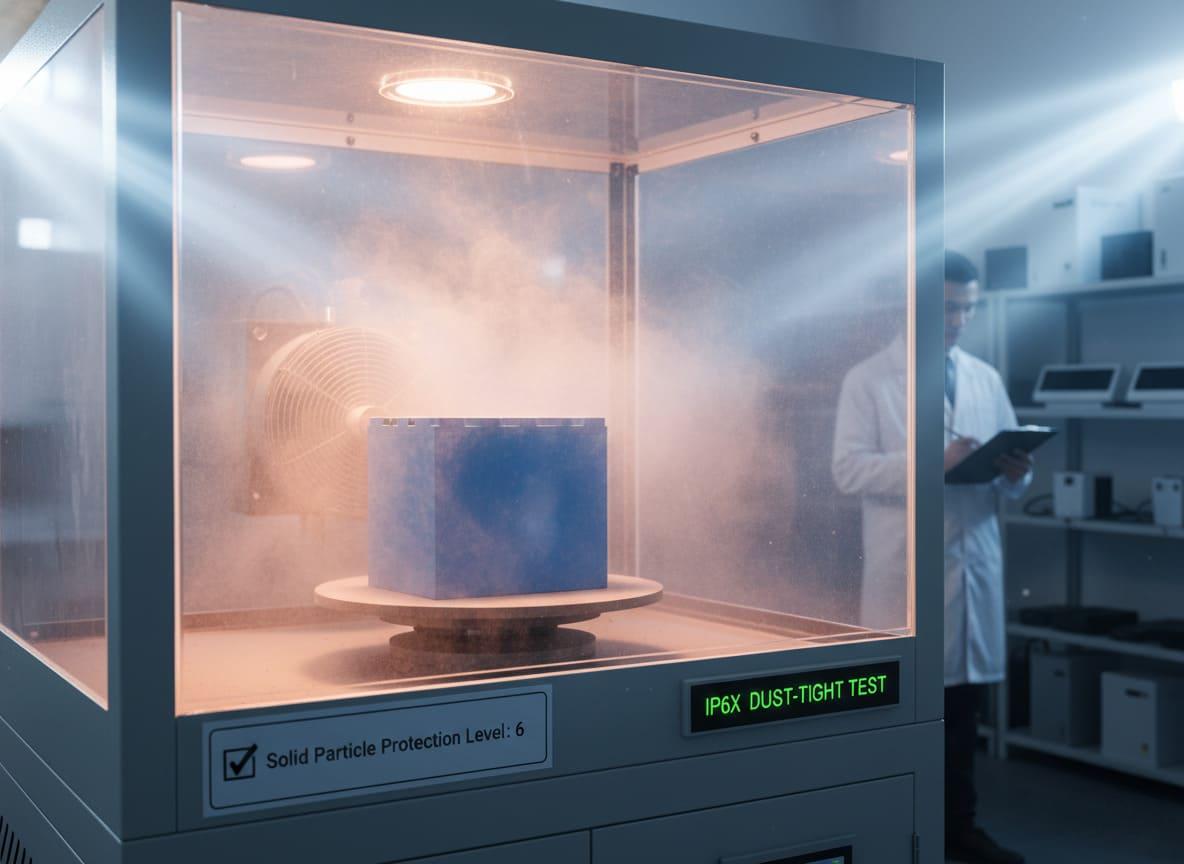
The first digit in an IP code represents protection against solid objects and dust, on a scale from 0 to 6. A rating of IP6X means the product is completely "dust-tight," offering the highest level of protection against particle ingress.
In my line of work, we often focus on making batteries waterproof or fit into unique shapes. But dust protection is just as important. For many of my clients, especially in the medical and high-end consumer electronics fields, dust is not just a nuisance; it's a critical point of failure.
Let's look at the full scale for the first digit.
Understanding Solids Protection Levels (First Digit)
| Level | Protection Against | Details |
|---|---|---|
| IP0X | No protection | No special protection. |
| IP1X | Objects >50mm | Prevents contact from a large surface, like the back of a hand. |
| IP2X | Objects >12.5mm | Protects against fingers or similar objects. |
| IP3X | Objects >2.5mm | Protects against tools, thick wires, etc. |
| IP4X | Objects >1mm | Protects against most wires, screws, and large insects. |
| IP5X | Dust Protected | Ingress of dust is not entirely prevented, but it must not enter in sufficient quantity to interfere with the safe operation of the equipment. |
| IP6X | Dust Tight | No ingress of dust; complete protection against contact. This is verified by a test involving fine talcum powder and a vacuum. |
When a customer comes to me for a battery solution for a portable medical scanner, the IP6X rating is often a non-negotiable requirement. Dust particles inside the device could compromise the sensor's accuracy or, worse, short-circuit the battery's management system. That's why the "6" in IP65, IP671, and IP68 is so important. It guarantees that the enclosure is completely sealed against fine dust, ensuring the internal components, including our battery, remain clean and fully functional.
What are the waterproof standards for IP68, and why do they vary between manufacturers?
You specified IP68 for your product, but are you sure you're getting the protection you expect? The vague definition of IP68 can lead to costly misunderstandings and field failures.
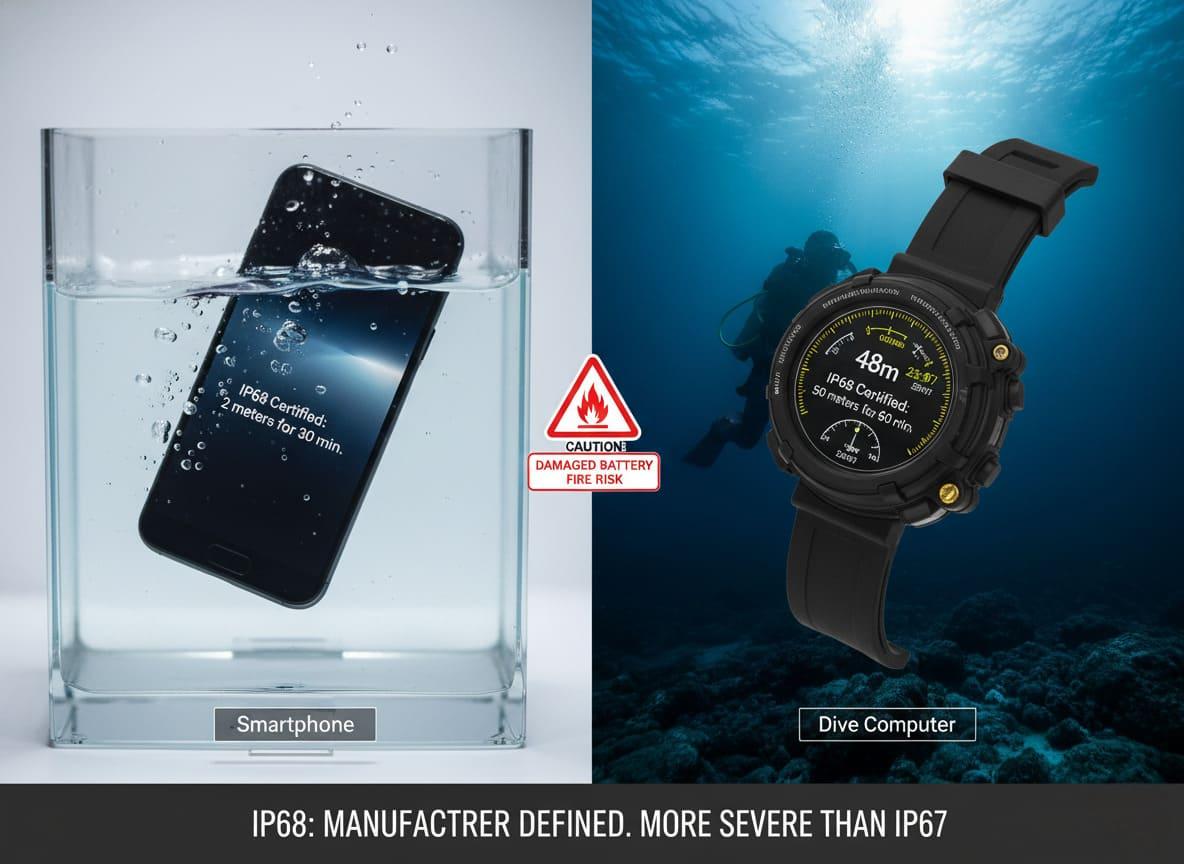
Unlike IP67's fixed standard (1 meter for 30 minutes), IP68 allows the manufacturer to define the specific depth and duration of immersion. The only rule is that the conditions must be more severe than those for IP67.
This flexibility in the IP68 standard is both a blessing and a curse. On one hand, it allows companies to create a rating that truly matches their product's intended use. On the other hand, it creates confusion in the market. I always advise my clients to look past the "IP68" label and ask for the specific test data.
Why the Lack of a Single Standard?
The international standard that defines IP codes, IEC 605292, intentionally leaves IP68 open-ended. The reason is simple: the range of products requiring "continuous immersion" protection is vast.
- A consumer smartphone: It might be rated IP68 for immersion in up to 1.5 meters of water for 30 minutes. This covers accidental drops into a pool or toilet.
- An industrial sensor for a water tank: This might need an IP68 rating for 10 meters of water continuously for several years.
- A battery pack for a deep-sea drone: This would require an even more extreme IP68 rating, perhaps for 100 meters or more for hours at a time.
It would be impossible to create a single "IP68" standard that meaningfully applies to all these scenarios.
What This Means for You
When I work with a client on a custom battery pack that needs to be waterproof, the first question I ask is, "What does IP68 mean for your product?" I once had a project for an aquatic research team. They needed a battery for a sensor array. Their initial request was for an "IP68 battery." If we had designed it to a typical smartphone standard of 1.5 meters, the project would have been a complete failure. Their actual requirement was continuous operation at 5 meters. By defining this upfront, we engineered a housing and sealing solution that met their specific needs, ensuring the success of their research. Always demand the details: depth and duration.
If my device is IP67 rated, does it automatically meet IP65 requirements?
Your device is IP67 rated, so you assume it's safe from water jets, right? This common and logical assumption could lead to unexpected water damage and product failure.
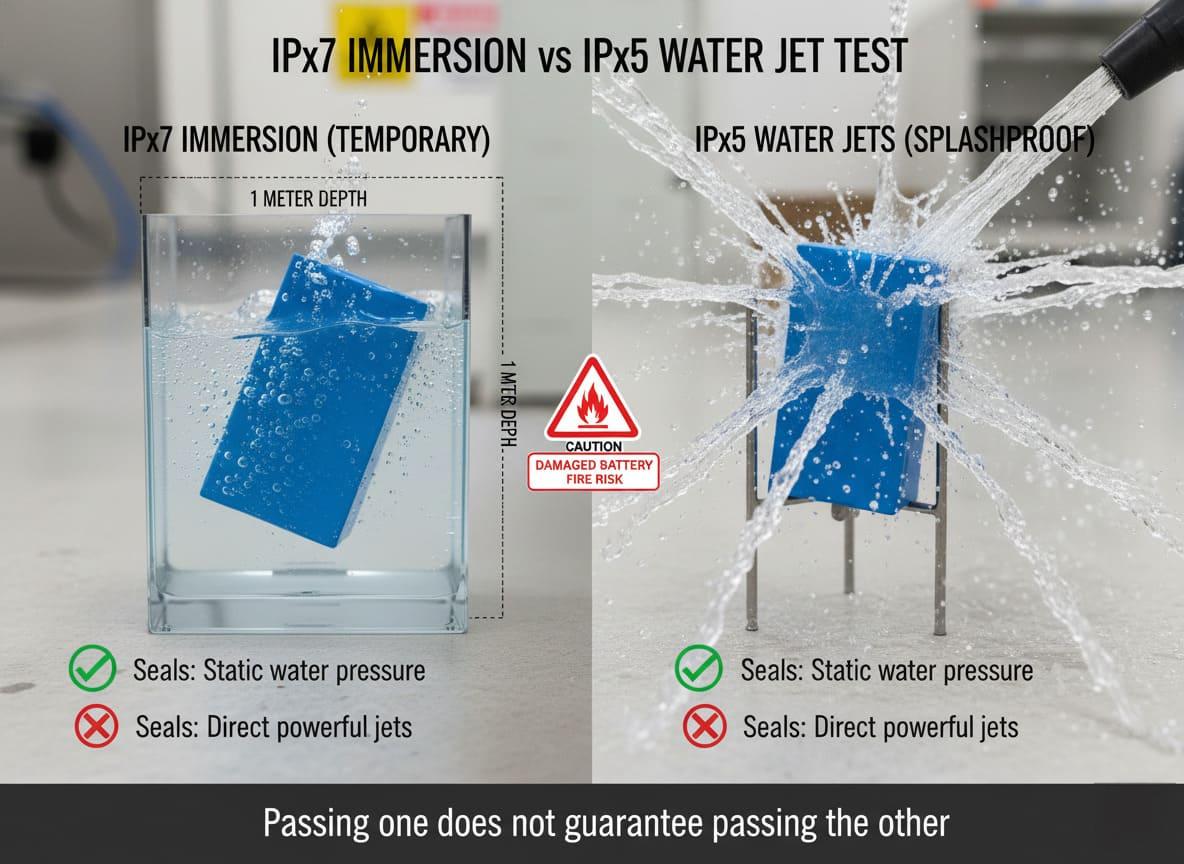
Not necessarily. A product that passes the IP67 immersion test might fail the IP65 water jet test. The tests measure resistance to two different types of water pressure, and the seals may not be designed to handle both.
This is one of the most common points of confusion I encounter. It seems logical that a device that can survive being underwater (IP67) should easily handle being sprayed with water (IP65). However, the physics of the tests are quite different.
Immersion vs. Dynamic Jets
Let's break down the tests to understand why.
-
IPX7 (Immersion): The test for IP67 involves submerging the device in a tank of still water. The product is placed 1 meter deep for 30 minutes. The water pressure is static and evenly distributed across the entire surface of the enclosure. Seals designed for this are great at resisting uniform pressure.
-
IPX5 (Water Jets): The test for IP65 involves spraying the device from all angles with a water jet from a nozzle. The pressure is dynamic and concentrated. It hits the seals and seams with force, trying to push its way through any small gap.
Think of it this way: a submarine is designed to withstand the immense, uniform pressure of the deep sea. But a high-pressure water cutter can slice through its hull. The type of force matters. A device's seals might hold perfectly when submerged but could be compromised or pushed aside by a direct, powerful jet of water. This is especially true for devices that might be cleaned with hoses or used in heavy, driving rain.
For a client developing a rugged tablet for construction sites, this was a critical distinction. The device needed to survive a fall into a puddle (IP67) but also needed to be washed down with a hose at the end of the day (IP66, which is even stronger than IP65). We had to design the battery compartment's sealing mechanism to handle both static immersion and high-pressure jets. Often, the best solution is to look for a dual rating, such as IP65/IP67, which confirms the product has been tested and passed both standards.
Do IP ratings cover salt water, hot water, or other liquids besides fresh water?
You've worked hard to ensure your product has a high IP rating for waterproofing. But you get a field report that a device failed after being used at the beach or cleaned with a disinfectant. What went wrong?
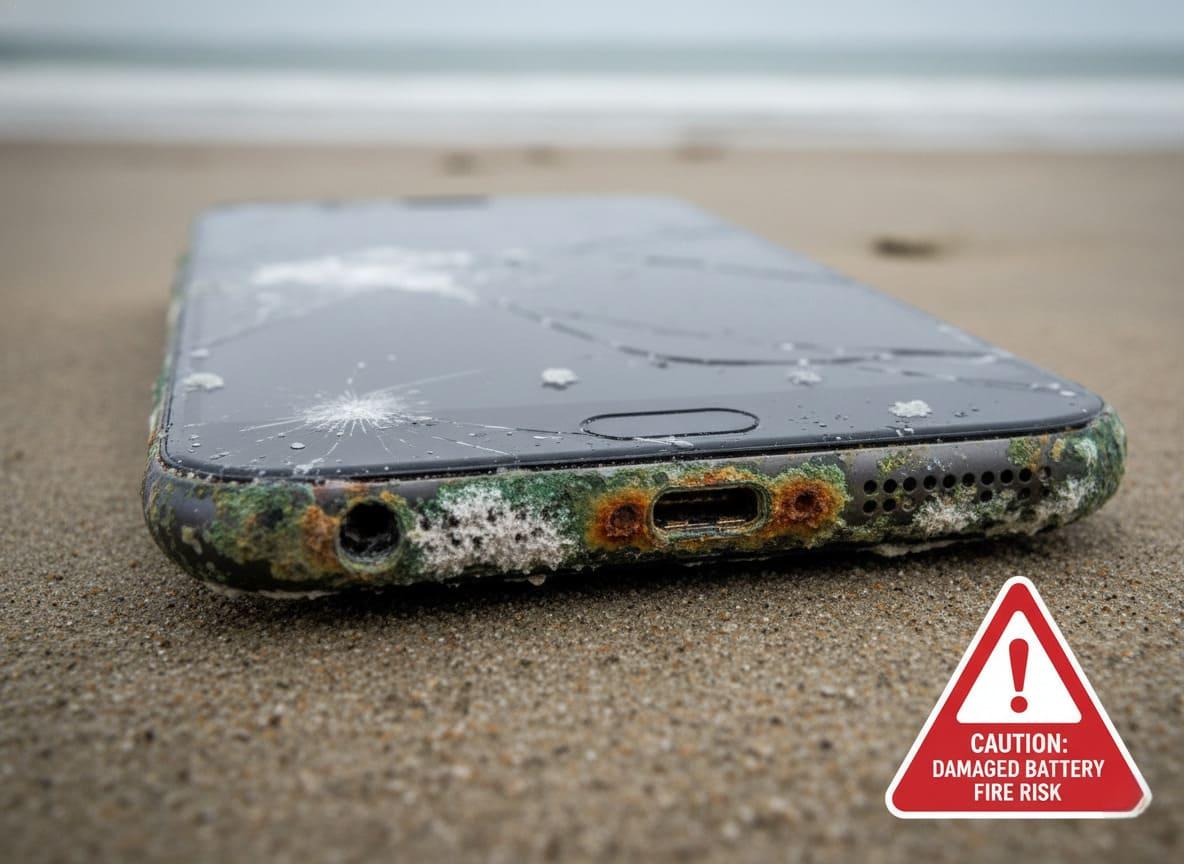
No, IP ratings are strictly tested using only clean, fresh water at room temperature. They do not guarantee any protection against corrosive or chemically active liquids like salt water, hot water, steam, soap, or solvents.
This is a critical limitation of the IP rating system that every product designer must understand. The real world is not a controlled laboratory filled with pure water. Your customers will expose devices to all sorts of things, and the IP rating on the box can create a false sense of security.
Why Other Liquids Are So Damaging
Different liquids attack a product's defenses in different ways. The seals and materials that hold up against fresh water can fail quickly when exposed to other substances.
-
Salt Water: Salt water is highly conductive and extremely corrosive. If it gets inside, it can cause immediate short circuits. Over time, salt residue can crystallize and physically damage seals, creating pathways for future water ingress.
-
Chlorinated Water (Pools): Chlorine is a chemical that can degrade rubber and plastic seals, making them brittle and ineffective over time.
-
Hot Water and Steam: Heat causes materials to expand. This thermal expansion can create temporary gaps in your product's seals, allowing moisture to enter. When it cools, the moisture is trapped inside as condensation, which is just as bad as a direct leak. Steam can easily penetrate seals that would otherwise stop liquid water.
-
Soaps and Solvents: These chemicals are designed to break down oils and other substances. Unfortunately, they can also break down the adhesive and rubber materials used in waterproof seals, leading to total failure.
I remember a client who developed a handheld device for use in marinas. The first prototype passed IP67 testing with flying colors. But after just a few weeks of real-world use, units started failing. Our investigation found that constant exposure to salt spray had degraded the gasket around the battery door. For the next version, we had to work with them to specify a marine-grade, corrosion-resistant polymer for the seal. This is why at Litop, we always discuss the end-use environment. The IP rating is just the starting point of the conversation.
Conclusion
Choosing the right IP rating means looking beyond the numbers. IP65, IP67, and IP68 all provide top-tier dust protection but offer very different levels of water resistance. Always verify the specific test conditions, especially for IP68, and remember that these ratings only apply to fresh water.