High humidity can be a silent killer for your electronics. It creeps in and causes damage, especially to sensitive components like lithium batteries, potentially ruining your entire product inventory.
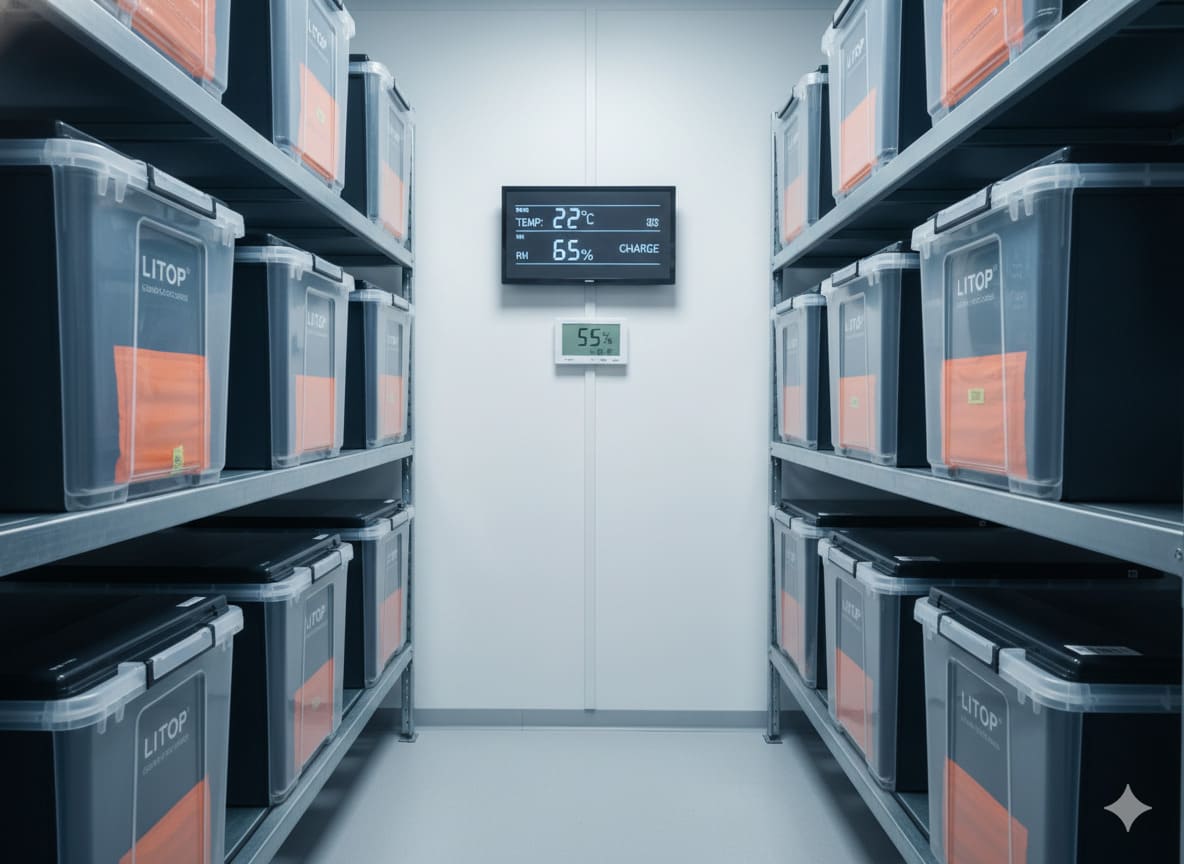
The best way to store lithium batteries in a humid climate is to keep them in a temperature-controlled environment between 18-25℃ with a relative humidity of 65±20%RH. Store them at a 40-60% charge level inside a sealed container with a desiccant pack.
I talk to business owners and procurement managers every day. Many, like my client Michael in the U.S., are experts in their fields, like medical devices, but they have very specific questions about handling the batteries we supply. They want to protect their investment and ensure the final product is reliable. High humidity is a common concern, especially for those with facilities in coastal or tropical regions. Getting storage right is critical for performance and safety. Let's walk through the most common questions I get and provide clear, simple answers.
Should lithium batteries be fully charged or discharged before storage?
You are about to store a large batch of batteries for a project. You know that the wrong charge level could harm them over time, but the right level is unclear.
Never store lithium batteries1 fully charged or completely empty. The ideal state of charge for long-term storage is between 40% and 60%. This minimizes stress on the battery's internal chemistry and preserves its health.

Storing a battery is like putting it to sleep. You want it to be in the most relaxed state possible to wake up healthy. We at Litop always advise our clients to think of the state of charge as a key factor in long-term battery health. A full charge puts the battery under high stress, while a completely empty state risks dropping into a deep discharge from which it can never recover. Hitting that sweet spot of around 50% is the best way to ensure the battery remains stable and ready for use when you need it.
Why Not a Full Charge?
Think of a fully charged battery like a stretched rubber band. It's holding a lot of potential energy, and that tension causes wear over time. For a lithium battery, a 100% charge level accelerates chemical degradation. The electrolyte can break down faster, and permanent capacity loss occurs more quickly, especially if the storage temperature is also high. You are essentially aging the battery faster just by letting it sit on a shelf fully charged.
Why Not a Full Discharge?
Storing a battery at 0% is even more dangerous. All batteries naturally self-discharge, losing a tiny amount of power each month. If a battery starts at zero, this self-discharge can cause its voltage to drop below a critical safety level. Once this happens, the battery's internal safety circuit may trip, permanently preventing it from being recharged. It becomes a paperweight. This is called deep discharge, and it's one of the most common causes of premature battery failure.
Here is a simple table to guide you:
| State of Charge | Risk During Long-Term Storage | Recommended Action |
|---|---|---|
| 100% (Full) | High internal stress, accelerated capacity loss. | Avoid for storage longer than a few weeks. |
| 40% - 60% | Minimal degradation, stable chemistry. | Ideal for all long-term storage. |
| 0% (Empty) | Risk of deep discharge, permanent cell damage. | Never store completely empty. Recharge immediately. |
How often do I need to check or maintain the charge when storing batteries long-term in humid areas?
You've stored your batteries correctly at 50% charge. But time passes, and you worry they might be slowly dying on the shelf, potentially causing project delays when you need them.
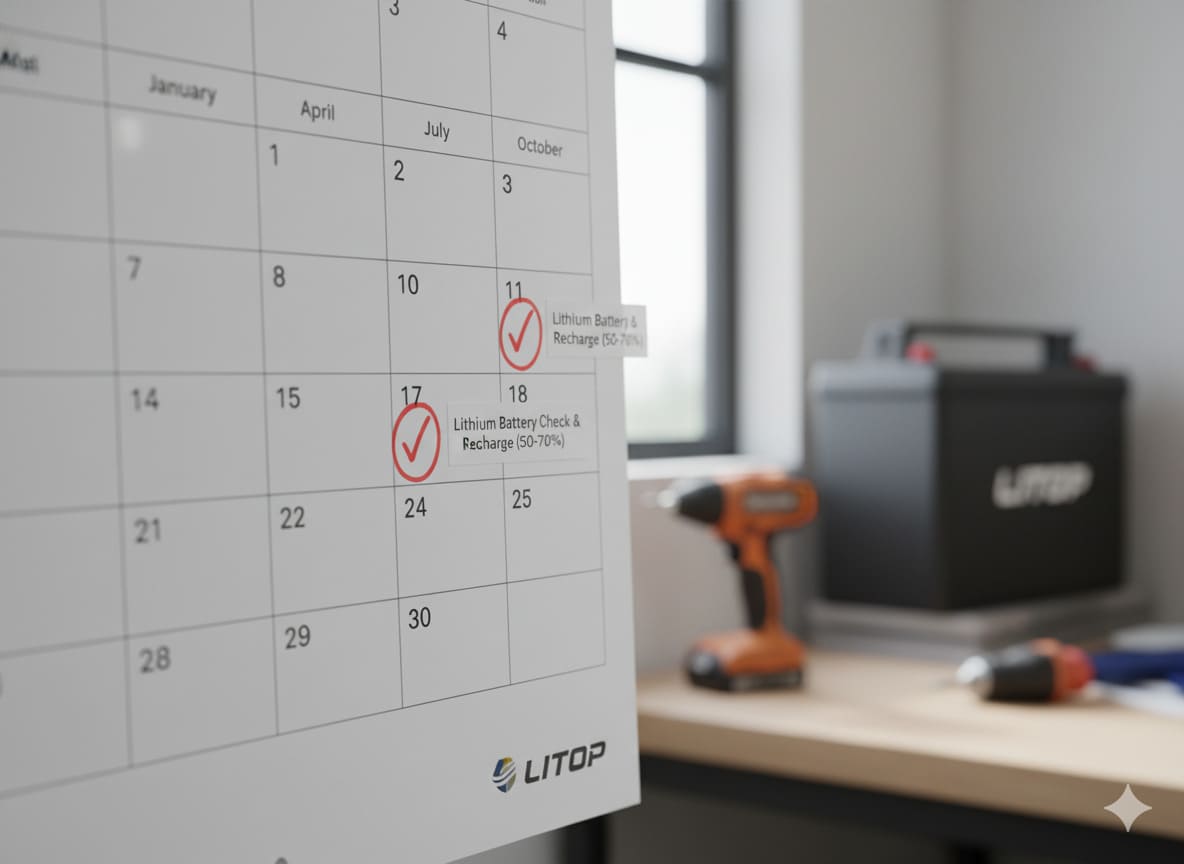
For any storage longer than three months, you should check your lithium batteries every three months. Recharge them back to the 50%-70% range. This simple maintenance cycle prevents the battery from self-discharging to a dangerously low level.
This is a lesson I learned early on. I once had a customer developing a new wearable device who stored a large batch of our custom-shaped LiPo batteries. They followed the initial storage rules perfectly but then forgot about them for over a year. When they were finally ready for production, a large portion of the batteries had self-discharged too far and were unusable. A simple quarterly check would have saved them thousands of dollars and prevented a major production delay.
Understanding Self-Discharge
Self-discharge is a natural phenomenon in all batteries. It's a slow, internal chemical reaction that consumes the stored charge, even when the battery is not connected to anything. The rate of self-discharge depends on the battery's chemistry and, more importantly, the storage temperature. Higher temperatures make the battery self-discharge faster. In a hot and humid climate, this effect is even more noticeable. A lithium-ion battery might lose 1-2% of its charge per month at room temperature, but that rate can double or triple in a hot warehouse. This is why a maintenance schedule is not just a suggestion; it is a necessity.
Creating a Maintenance Schedule
Putting a plan in place is easy. You don't need complex equipment.
- Label and Date: When you place batteries into storage, label the container with the date.
- Set a Reminder: Use a physical calendar or a digital one to set a recurring reminder for three months from that date.
- Perform the Check: On the scheduled day, take a few batteries from the batch as a sample. Use a voltmeter or place one in a device to check the approximate charge level.
- Recharge if Needed: If the charge has dropped significantly (e.g., below 30%), it's time to recharge the entire batch. Bring them all back up to that ideal 50%-70% range.
- Repeat: Reset your reminder for another three months.
This simple process ensures your battery stock is always healthy and ready for assembly.
Can high humidity permanently shorten the life of a lithium battery or make it unsafe?
You operate in a humid region, and you see rust on other metal equipment. You worry if the same invisible damage is happening to your batteries, making them unsafe or useless.
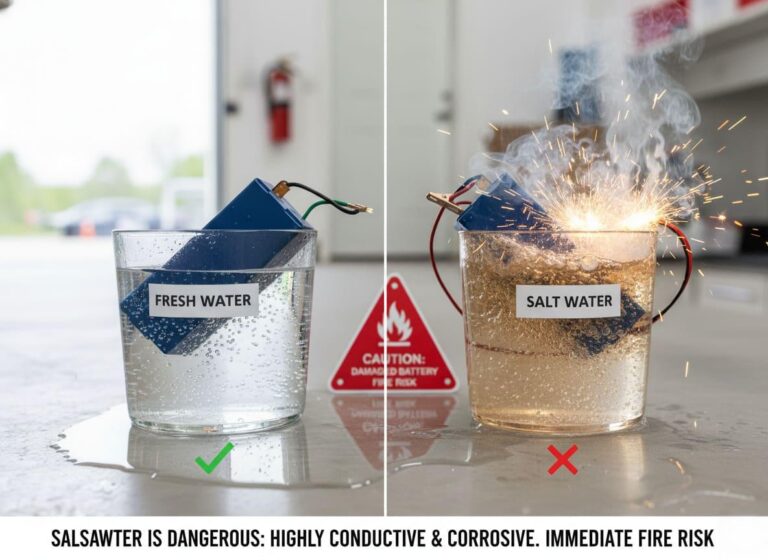
Yes, high humidity can cause permanent damage and create serious safety risks. Moisture corrodes metal contacts and can compromise the battery's protective seal, potentially leading to internal short circuits, swelling, or even fire.
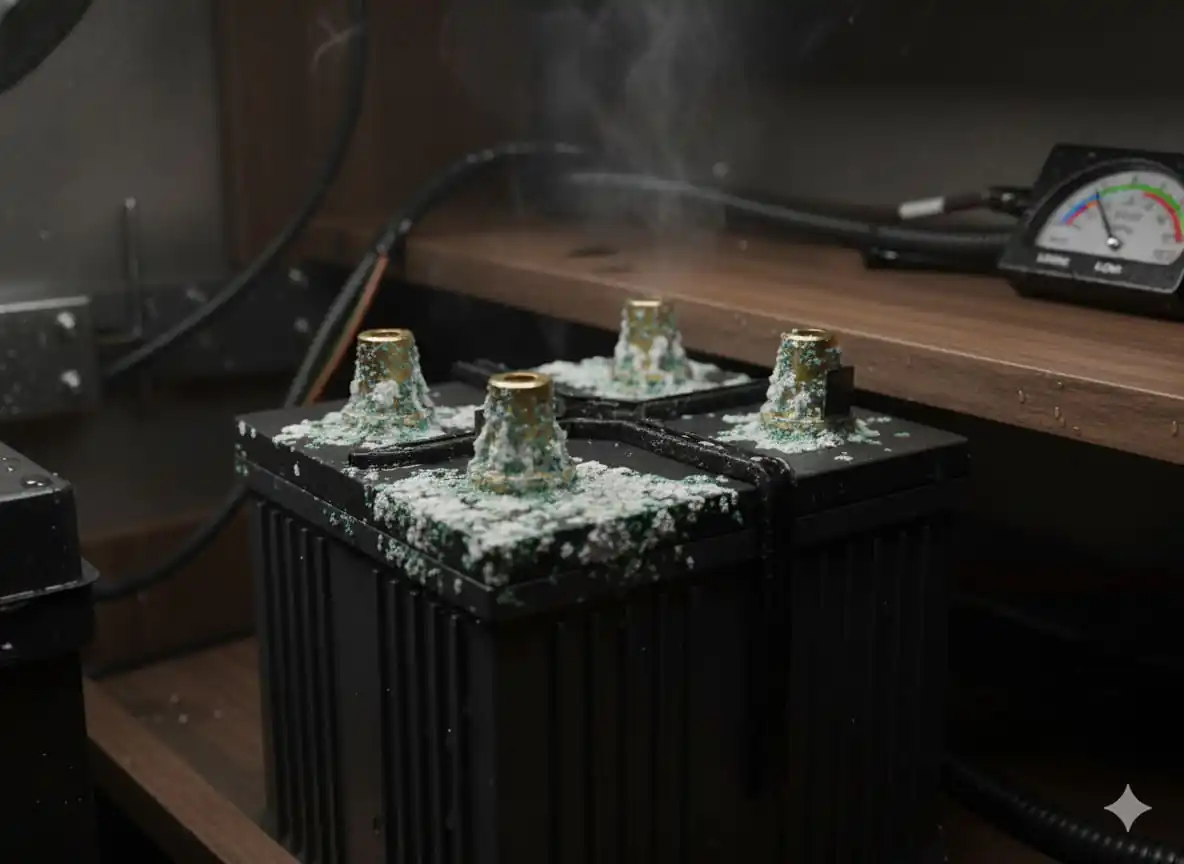
The exterior of a battery is its first line of defense, and humidity is a constant attacker. The metal terminals, or contacts, are the most vulnerable parts. I've seen batches of batteries rejected because the terminals showed signs of rust after being stored in a damp warehouse. This corrosion doesn't just look bad; it creates a layer of resistance that can prevent the battery from delivering power effectively or from charging correctly. At Litop, our quality control process is extremely strict about this, as we know that even minor corrosion can lead to product failure for our clients.
The Danger of Corrosion
When moisture in the air meets the metal contacts of a battery, it creates a perfect environment for an electrochemical reaction: rust. This corrosive layer is a poor conductor of electricity. This means that when you finally put the battery into a device, the connection might be weak or intermittent. The device might not turn on, or it might perform poorly. In a worst-case scenario, the increased resistance can generate heat at the connection point when the device is in use, which is a significant safety hazard, especially for medical or wearable products that are in close contact with a person.
Internal Damage and Safety Risks
The greater danger lies with the battery's seal. High-quality batteries are well-sealed to keep the sensitive internal chemistry isolated from the outside environment. However, persistent, high humidity can test the limits of these seals. If any moisture gets inside the battery, it can react with the lithium and electrolyte. This reaction can produce gas, causing the battery to swell up. A swollen battery is a clear sign of internal failure and is extremely dangerous. It has a high risk of rupturing or catching fire. This is why investing in batteries from a reputable manufacturer with robust quality control, like us, is so important.
Here’s how different humidity levels can affect a battery:
| Humidity Level | Potential Impact on Battery | Safety Concern |
|---|---|---|
| High (>85% RH) | Rapid corrosion of terminals, risk of seal failure, potential for internal short circuits. | High |
| Ideal (45%-85% RH) | Minimal impact on a well-sealed battery. Safe for controlled storage. | Low |
| Low (<40% RH) | Increased risk of static electricity buildup, which can damage a battery's protection circuit. | Medium |
Can I use a regular plastic ziplock bag or sealed box to store batteries, and should I add a desiccant?
You need a practical and affordable way to protect your batteries from moisture. You wonder if a simple household item is good enough or if you need special equipment.
Yes, a regular sealed plastic bag or an airtight plastic container is a very effective way to store batteries. To maximize protection in humid climates, you should always add a desiccant pack inside.
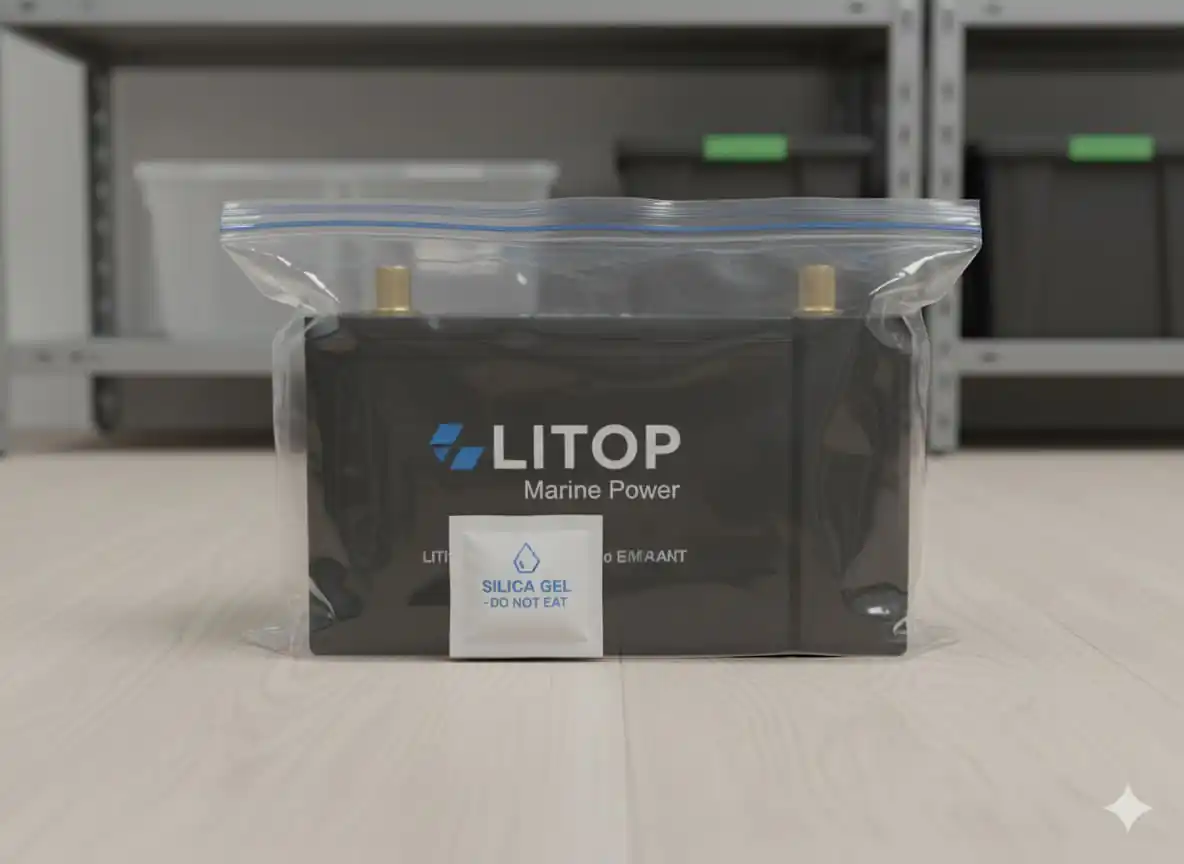
This is one of the simplest and most cost-effective solutions I recommend to my clients. You don't need a fancy, expensive humidity-controlled cabinet for smaller batches of batteries. A good quality, airtight container creates a micro-environment that you can control. When we ship sensitive, custom-designed battery samples for new medical devices, we always seal them in anti-static bags with a small silica gel pack inside. This simple step ensures the battery arrives in the same perfect condition it was in when it left our factory, no matter the weather during transit.
Choosing the Right Container
The goal is to create a barrier between the battery and the humid air. Several common items work very well for this purpose:
- Ziplock Bags: Use heavy-duty freezer bags, as they have a better seal than standard sandwich bags. For extra protection, you can double-bag the batteries.
- Airtight Plastic Containers: Food storage containers with a rubber or silicone gasket on the lid are excellent. They provide a strong seal and are reusable.
- Original Packaging: If the batteries came in sealed, anti-static packaging, it's best to keep them in it until you are ready to use them.
Whatever container you choose, make sure each battery is individually protected to prevent terminals from touching and causing a short circuit. You can use small plastic bags, cardboard dividers, or plastic battery cases.
How to Use Desiccants Effectively
A desiccant is a material that absorbs moisture from the air. The most common type is silica gel, which often comes in small paper packets.
- Add to Container: Place one or two small desiccant packs inside your sealed bag or box along with the batteries. This will absorb any moisture trapped inside when you sealed it and any that might slowly leak in over time.
- Check and Replace: Desiccants have a limited capacity. Some packs have indicator beads that change color (e.g., from blue to pink) when they are saturated with moisture. If they are saturated, they need to be replaced. You can often "recharge" silica gel packs by baking them in an oven at a low temperature to dry them out, but for critical applications, it's always safer to use a new one.
Conclusion
Storing lithium batteries1 in a humid climate is simple if you follow four key rules. Control the humidity and temperature. Store them with a 40-60% charge. Check and maintain them every three months. This protects your inventory and ensures the safety and performance of your final product.
Explore this resource to learn essential tips for safely storing lithium batteries and prolonging their lifespan. ↩