Struggling to power your Industrial IoT devices for the long haul? The constant need for battery replacements drains resources and causes downtime, disrupting your operations and inflating your costs.
High-capacity solutions include advanced lithium-sulfur (Li-S) and solid-state batteries for extreme longevity and energy density. Pairing these with low-power systems and chips like the Nordic nRF54L151 maximizes efficiency for asset tracking, remote sensors, and other demanding IIoT applications, ensuring reliable, long-term operation.
Finding the right battery is not just about capacity; it's about building a reliable foundation for your entire IIoT ecosystem. The wrong choice can lead to frequent maintenance, unexpected failures, and data loss. This can ultimately undermine the value of your investment. But how do you navigate the complex world of battery chemistries, power management strategies, and physical constraints? Let's dive deeper into the specific choices you will face.
For IIoT devices, is it more cost-effective and practical to choose rechargeable, disposable, or hybrid power solutions?
Choosing a power source for your IIoT network is a huge commitment. Disposable batteries seem cheap initially, but replacement costs add up. Rechargeable options require infrastructure and detailed planning.
The best choice depends on accessibility and power needs. Disposable primary batteries (like Li-SOCL2) are great for low-power, remote devices. Rechargeables (like Li-ion) suit accessible devices with higher consumption. Hybrid solutions, combining batteries with energy harvesting, offer the best of both for long-term autonomous operation.
When I talk with clients like Michael, who manage large-scale industrial sensor networks, the first question is always about the total cost of ownership (TCO). A battery that costs one dollar but needs to be replaced by a technician every year in a remote location is far more expensive than a ten-dollar battery that lasts for a decade. The decision between disposable, rechargeable, and hybrid solutions hinges on this balance between upfront cost and long-term operational expense.
Understanding the Trade-offs
Each power strategy has a distinct role in the world of IIoT.
- Primary (Disposable) Batteries: Think of these as "fit-and-forget" solutions. Chemistries like Lithium Thionyl Chloride (Li-SOCl2) offer incredibly high energy density and a shelf life of over 10 years. They are perfect for devices in hard-to-reach places, like environmental monitors or pipeline sensors, that send small data packets infrequently. Their main drawback is that once they're depleted, they must be physically replaced.
- Secondary (Rechargeable) Batteries: These are the workhorses for more accessible or power-hungry devices. Lithium-ion batteries2 can be recharged thousands of times, making their per-cycle cost very low. They are ideal for devices on a factory floor or in a warehouse where charging infrastructure can be easily implemented. The initial investment is higher, but it pays off for devices with high operational uptime.
- Hybrid Power Solutions: This is the most exciting area for truly autonomous IIoT. A hybrid system pairs a small rechargeable battery with an energy harvesting technology like a miniature solar panel, a thermoelectric generator, or a vibration harvester. The battery stores energy for peak loads or when the harvesting source is unavailable. This approach can extend a device's life indefinitely, making it the ultimate solution for long-term, low-maintenance deployments.
A Practical Comparison
To make the decision clearer, let's break it down in a table.
| Feature | Primary (Disposable) | Secondary (Rechargeable) | Hybrid (Energy Harvesting) |
|---|---|---|---|
| Total Cost of Ownership | Low initial cost, high long-term cost | Higher initial cost, low long-term cost | Highest initial cost, lowest long-term cost |
| Maintenance Requirements | High (scheduled replacement) | Moderate (charging management) | Very Low (self-sustaining) |
| Environmental Impact | Higher (disposal of batteries) | Lower (reusability) | Lowest |
| Typical Applications | Remote sensors, emergency beacons | Handheld scanners, powered tools, gateways | Outdoor asset trackers, structural health monitors |
NMC vs. LiFePO43, which is better suited for the ultra-long life and extreme temperature tolerance required in industrial environments?
Industrial environments are brutal on batteries. Extreme temperatures and the need for a decade-long lifespan can cause standard batteries to fail, leading to costly and disruptive system downtime.
LiFePO4 is the superior choice for most industrial environments. It offers exceptional thermal stability (-20°C to 60°C), a very long cycle life (over 2000 cycles), and intrinsic safety. NMC provides higher energy density but is less tolerant of temperature extremes and has a shorter lifespan.
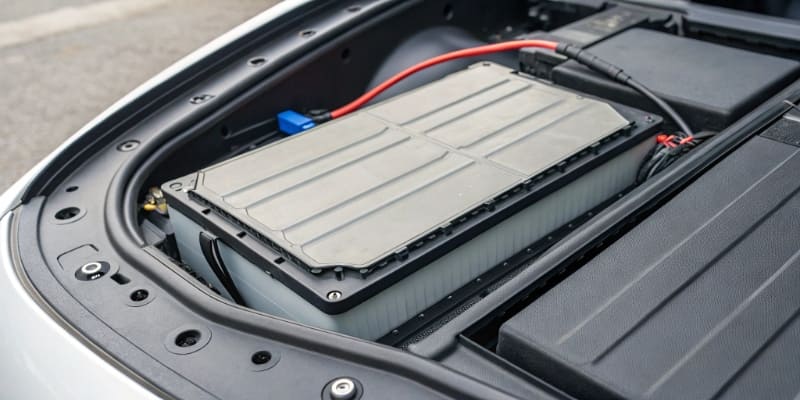
The choice between battery chemistries is one of the most critical technical decisions in IIoT device design. It directly impacts safety, reliability, and operational lifetime. While both NMC (Nickel Manganese Cobalt)4 and LiFePO4 (Lithium Iron Phosphate) are types of lithium-ion batteries, their internal structures give them very different personalities. For an industrial setting, you need a battery that is tough, predictable, and safe above all else.
The Case for LiFePO4 in Harsh Conditions
I almost always recommend LiFePO4 for stationary or critical IIoT applications. The reason is simple: safety and longevity. The phosphate-based chemistry of LiFePO4 is incredibly stable. It is far less prone to thermal runaway than other lithium-ion types, even if punctured or overcharged. This is a non-negotiable feature for equipment operating in a hot factory or near sensitive materials. Furthermore, its ability to perform reliably in freezing cold and scorching heat makes it perfect for outdoor deployments, from oil fields to cell towers. While its energy density is slightly lower than NMC, the peace of mind and decade-long service life it provides are trade-offs most industrial clients are happy to make.
When NMC Might Make Sense
NMC's primary advantage is its higher energy density. This means you can pack more power into a smaller and lighter battery. This becomes a critical factor for IIoT devices that are mobile or wearable. For example, a handheld diagnostic tool used by a technician or a body-worn sensor for employee safety needs to be as lightweight as possible. In these cases, NMC is a viable option, but it comes with caveats. The device must have a robust thermal management system to keep the battery within its narrower optimal temperature range. You also have to plan for a shorter service life, meaning the device will need its battery replaced more frequently than a comparable LiFePO4-powered unit.
Head-to-Head Comparison
Here is a simple table to summarize the key differences:
| Feature | LiFePO4 (Lithium Iron Phosphate) | NMC (Nickel Manganese Cobalt) |
|---|---|---|
| Safety | Excellent | Good |
| Cycle Life | 2000 - 5000+ cycles | 500 - 1500 cycles |
| Temperature Range | Wide (-20°C to 60°C) | Moderate (0°C to 45°C) |
| Energy Density | Lower | Higher |
| Best For | Stationary IIoT, safety-critical, extreme temps | Mobile/Wearable IIoT, space-constrained |
How do you balance the battery's physical size, capacity needs, and the IIoT device's required miniaturized packaging?
Your new IIoT device design is sleek and compact. But now you cannot find a standard battery that fits and provides enough power. This common design constraint threatens your project timeline.
Balancing these requires a multi-faceted approach. Start by minimizing device power consumption with low-power components. Then, explore high-energy-density chemistries like LiPo. Finally, partner with a custom battery manufacturer like us at Litop to design a special-shaped, ultra-thin, or curved battery that perfectly fits your unique enclosure.
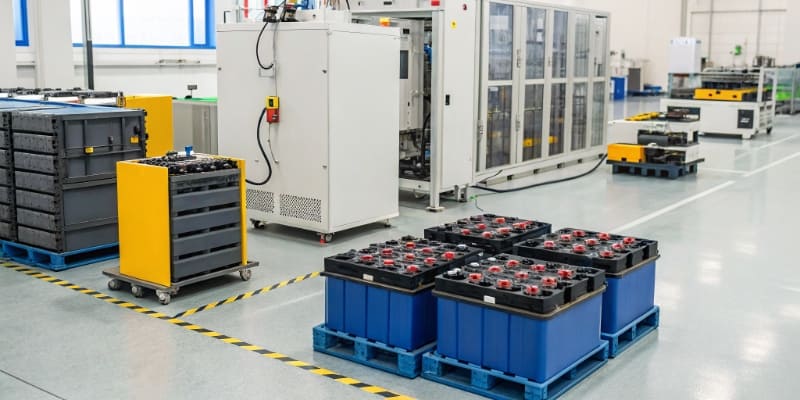
This is a challenge my team and I solve every single day. The push for smaller, more ergonomic, and more powerful IIoT devices means that standard, off-the-shelf batteries often just won't work. The battery can no longer be an afterthought in the design process; it has to be an integral part of the product's core architecture. The solution is to think about power efficiency first and then get creative with the battery's form factor.
The "Power Budget" First Approach
Before you even start looking for a battery, you must rigorously optimize your device's power consumption. This is called creating a "power budget." Every single microamp matters. This involves selecting ultra-low-power microcontrollers, like the Nordic nRF54L15, and using efficient wireless protocols like LoRaWAN or NB-IoT that are designed for low data rate, long-range communication. Your software team plays a huge role here, too. They must program the device to spend most of its time in a deep sleep mode, waking up only for a few milliseconds to take a reading or transmit data. By driving down the total power requirement, you drastically reduce the size of the battery you need.
Moving Beyond Standard Cells
Standard cylindrical cells like the 18650 are powerful and cost-effective, but they are bulky and dictate the shape of your product. For modern IIoT devices, this is often a deal-breaker. This is where the power of custom battery manufacturing comes in. I remember a client, Michael, who was developing a wearable sensor for factory workers to monitor vital signs. A standard rectangular battery would have made the device clunky and uncomfortable. We worked closely with his engineering team to design an ultra-thin, curved Lithium Polymer (LiPo)5 battery that fit perfectly inside the wristband. It was a game-changer for his product's ergonomics and user acceptance. At Litop, we specialize in these solutions—ultra-thin batteries, curved batteries, and other special shapes designed to fit precisely into your unique product enclosure. This allows you to prioritize your product's design without compromising on power.
In harsh or hard-to-maintain industrial environments, how do battery life prediction, remote monitoring, and fail-safe mechanisms work?
A battery dying unexpectedly in a remote oil rig sensor is a disaster. The data is lost, and a costly maintenance trip is needed. This unpredictability undermines your entire IIoT system.
This is managed by a smart Battery Management System (BMS). A BMS monitors cell voltage, temperature, and current to predict remaining life (State of Health). It can transmit this data remotely for proactive maintenance and trigger fail-safe mechanisms, like shutting down non-essential functions to preserve power.
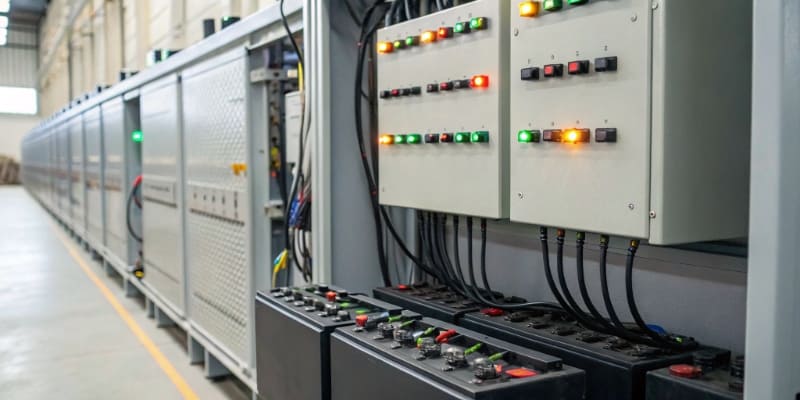
In the consumer world, a battery dying is an inconvenience. In the industrial world, it can be a critical failure. That is why the battery pack for an IIoT device is much more than just a collection of cells; it is an intelligent system. The brain of this system is the Battery Management System, or BMS. A high-quality BMS is what transforms a simple power source into a reliable, predictable, and safe asset for your network.
The Role of the Smart BMS
A basic BMS protects against over-charging, over-discharging, and short circuits. But a smart BMS for IIoT applications does much more. It is a sophisticated monitoring device that provides crucial data for asset management.
- State of Charge (SoC): This is the battery's real-time "fuel gauge," telling you exactly how much percentage of energy is left.
- State of Health (SoH): This is even more important for long-term planning. SoH measures the battery's degradation over time. It gives you an estimate of its remaining useful life, allowing you to proactively schedule maintenance long before a failure occurs.
- Remote Monitoring: A smart BMS is designed to communicate. It integrates with the device's main processor to transmit all this data—SoC, SoH, temperature, cycle count—over the IIoT network. This allows an operator to view the health of thousands of batteries from a single dashboard and identify units that need attention.
Implementing Fail-Safe Strategies
The intelligence of the BMS also enables the device to fail gracefully instead of just dying. This is critical for data integrity and safety. For instance, when the BMS detects that the SoC has dropped to a critical level, say 10%, it can trigger a pre-programmed low-power mode. The device might stop taking sensor readings every minute and switch to once an hour. It can also send a "last gasp" alert over the network, transmitting its final data packet along with a low-battery warning. In more extreme cases, like detecting a sudden temperature spike that could indicate a fault, the BMS can instantly and safely disconnect the battery from the circuit, preventing potential damage to the device or a fire. This level of intelligent control is what makes industrial-grade battery solutions truly reliable.
Conclusion
Choosing the right IIoT battery is more than picking the highest capacity. It is a strategic decision that balances chemistry like LiFePO4 for reliability, form factor through custom designs, and intelligence via a smart BMS. Partnering with an expert ensures a robust, long-lasting power solution for your network.
Find out how the Nordic nRF54L15 chip maximizes efficiency in IIoT applications. ↩
Learn why Lithium-ion batteries are ideal for high-consumption IIoT devices. ↩
Understand why LiFePO4 is preferred for its safety and longevity in harsh conditions. ↩
Learn about NMC batteries and their applications in mobile IIoT devices. ↩
Discover the benefits of LiPo batteries for compact and ergonomic designs. ↩