Navigating drone regulations is tough. When you cross borders, the rules change completely, creating confusion and risk. Understanding the key differences between US and EU laws is essential for legal flight.
The main difference is their core philosophy. The US FAA Part 107 provides a single set of rules for commercial drone operations under 55 pounds. In contrast, the EU's EASA uses a risk-based system with different categories (C0-C4, A1-A3) based on drone weight and proximity to people.

As a manufacturer of custom lithium batteries at Litop, I work with clients from all over the world. A common question I get is about compliance for devices that will be sold globally. The drone market is a perfect example of this challenge. A drone designed for the US market might not be legal to fly out-of-the-box in Europe. This regulatory maze can be a huge headache for operators and manufacturers alike. I've spent a lot of time helping my clients understand how battery design can impact compliance, especially with new rules like Remote ID. Let's break down these complex regulations into simple, practical terms so you can fly safely and legally, no matter where you are.
If I Have an FAA Part 1071 Certificate, Can I Legally Fly Directly in EU Countries? Is There a Mutual Recognition Agreement?
You’ve earned your Part 107 certificate and are ready to fly commercially. But taking your skills and drone to Europe creates a big problem. Your US certificate isn't recognized there.
No, your FAA Part 107 certificate is not valid for flying in EU member states. There is currently no mutual recognition agreement between the FAA and EASA for drone pilot licenses. You must comply with EASA regulations and obtain the necessary EU-specific qualifications to fly legally.
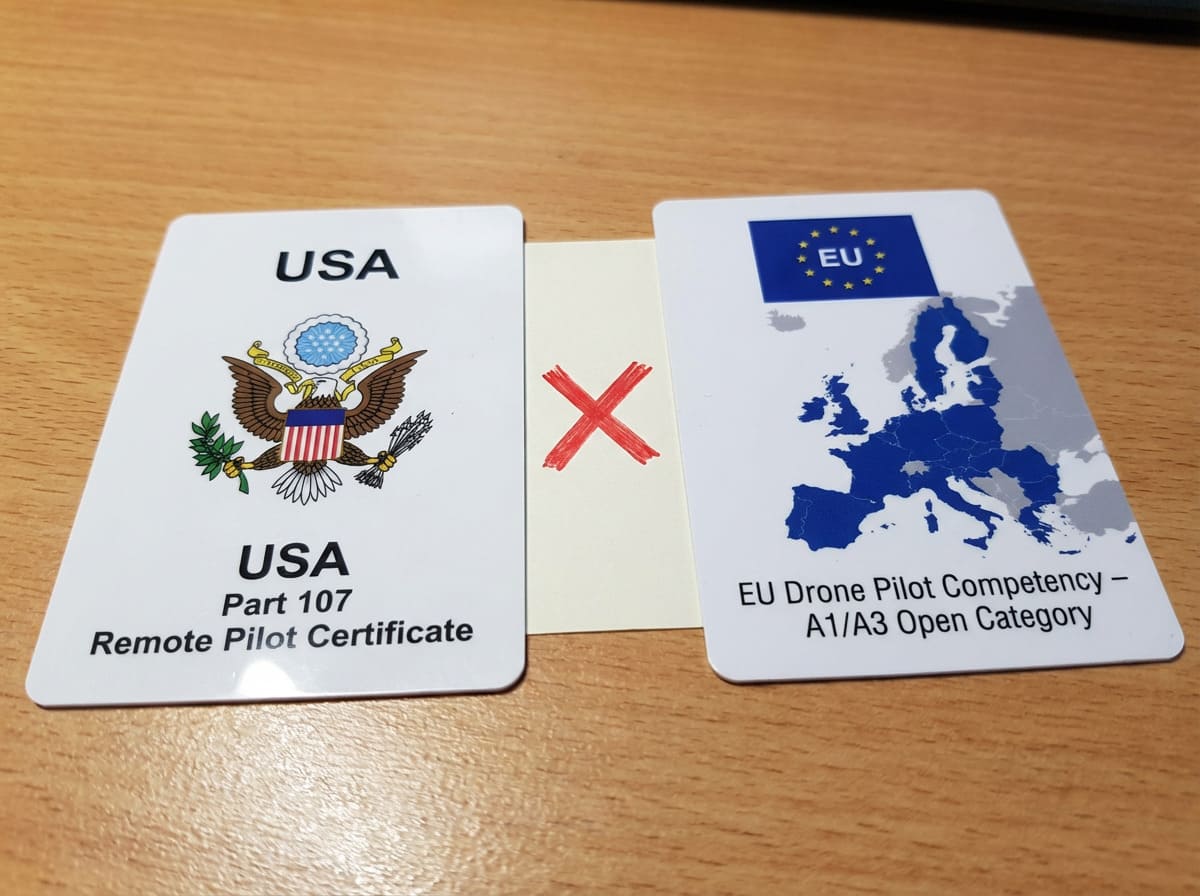
This is a critical point that catches many US-based pilots by surprise. The reason is simple: the FAA and EASA have fundamentally different regulatory systems. The FAA's Part 107 is a "one-size-fits-all" commercial license for the United States. EASA, on the other hand, created a unified system for all its member countries based on the risk of the operation. Because these philosophies don't align, the certifications are not interchangeable.
So, what does a Part 107 pilot need to do?
Steps for a US Pilot to Fly in the EU
As a "third-country" pilot, you must follow the rules of the EU country you intend to fly in first. This generally involves two main steps for flying in the 'Open' category:
- Register as an Operator: You must register yourself as a drone operator with the National Aviation Authority (NAA) of the first EU country where you plan to operate. You will receive a unique operator registration number that must be displayed on your drone(s).
- Complete Online Training and an Exam: You'll need to complete the required online training and pass the online theoretical knowledge exam for the A1/A3 subcategories2. This is done through the NAA where you registered. Upon passing, you receive a "Proof of Online Training" that is valid across all EASA member states.
This process is relatively straightforward for low-risk flights, but it highlights that your Part 107 knowledge, while valuable, doesn't replace the need for EASA-specific certification.
| Requirement | FAA (for US operation) | EASA (for US pilot in EU) |
|---|---|---|
| Primary Certificate | Part 107 Remote Pilot Certificate | EASA A1/A3 "Proof of Online Training" |
| Recognition | Only valid within the United States | Valid across all EASA member states |
| Registration | Register drone with FAA | Register as an operator in one EASA state |
| Process | Pass in-person aeronautical knowledge test | Complete online training and pass online test |
How Do EASA's C-Class Markings (C0 to C4) Affect Drone Flight Permissions in A1, A2, and A3 Subcategories?
The EASA system of letters and numbers like C1, A2, C3 seems incredibly confusing. It's hard to know which drone you can fly where, making it easy to accidentally break the law.
The C-class marking (C0-C4) is a label on the drone that defines its technical and safety features, primarily its weight. This C-class directly determines which operational subcategory (A1, A2, or A3) it can fly in, which dictates how close you can legally fly to people.
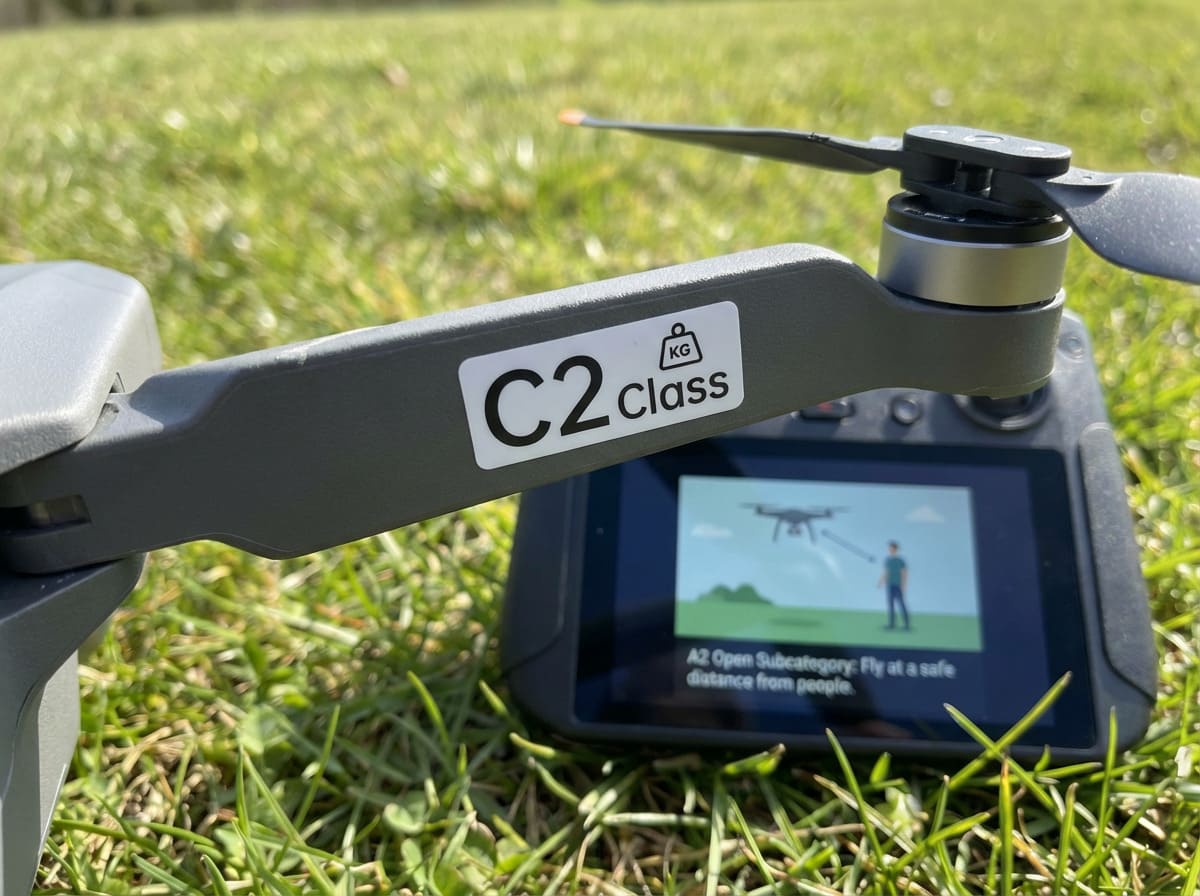
Think of it this way: the C-Class is about the drone itself, while the A-Subcategory is about where you can fly it. EASA's goal is to match the drone's potential risk to the operational area. Lighter, safer drones are allowed closer to people, while heavier drones must be kept far away. In my work at Litop, we often design custom batteries to help a client's drone fit into a more favorable, lighter C-class, as it opens up more operational possibilities.
Let's break down the relationship:
The Operational Subcategories (A1, A2, A3)
These categories are defined by the proximity to uninvolved people:
- A1: Fly Close. You can fly over uninvolved people (but never over assemblies of people). This is for the lowest-risk drones.
- A2: Fly Near. You must keep a safe horizontal distance from uninvolved people (typically 30 meters, or 5 meters in low-speed mode). This requires a slightly more capable drone and more pilot knowledge.
- A3: Fly Far Away. You must fly in areas where you can reasonably expect that no uninvolved people will be endangered. This means staying at least 150 meters away from residential, commercial, industrial, or recreational areas.
The Drone C-Class Markings (C0-C4)
This label, required on new drones sold in the EU, determines which 'A' subcategory you can use.
| C-Class | Weight (MTOM) | Key Feature Examples | Permitted Subcategory |
|---|---|---|---|
| C0 | < 250g | Toy-like, no major safety features required | A1 (can fly over people) |
| C1 | < 900g | Remote ID, Geo-awareness | A1 (cannot intentionally fly over people) |
| C2 | < 4kg | Remote ID, Geo-awareness, Low-speed mode | A2 (after passing A2 exam) or A3 |
| C3 | < 25kg | Remote ID, Geo-awareness | A3 |
| C4 | < 25kg | No automation, for model aircraft clubs | A3 |
As you can see, a lightweight C1 drone gives you A1 privileges to fly in more places. A heavier C2 drone can operate in the A2 "fly near" category, but only if the pilot passes an additional exam (the "A2 CofC"). And the heavier C3/C4 drones are restricted to the A3 category, far from everything. This system directly links the drone's manufactured specifications to its real-world flight permissions.
What Are the Practical Differences in Remote ID Enforcement Standards Between the US and EU by 2026?
Remote ID is mandatory, but the rules in the US and EU are different. This inconsistency creates a massive headache for manufacturers and pilots operating globally, risking non-compliance.
The key difference is in the approach. The US FAA requires all drones to broadcast Remote ID information, allowing retrofits with modules. The EU's EASA integrates Remote ID as a mandatory, built-in feature for drones sold under the C1, C2, and C3 classes.
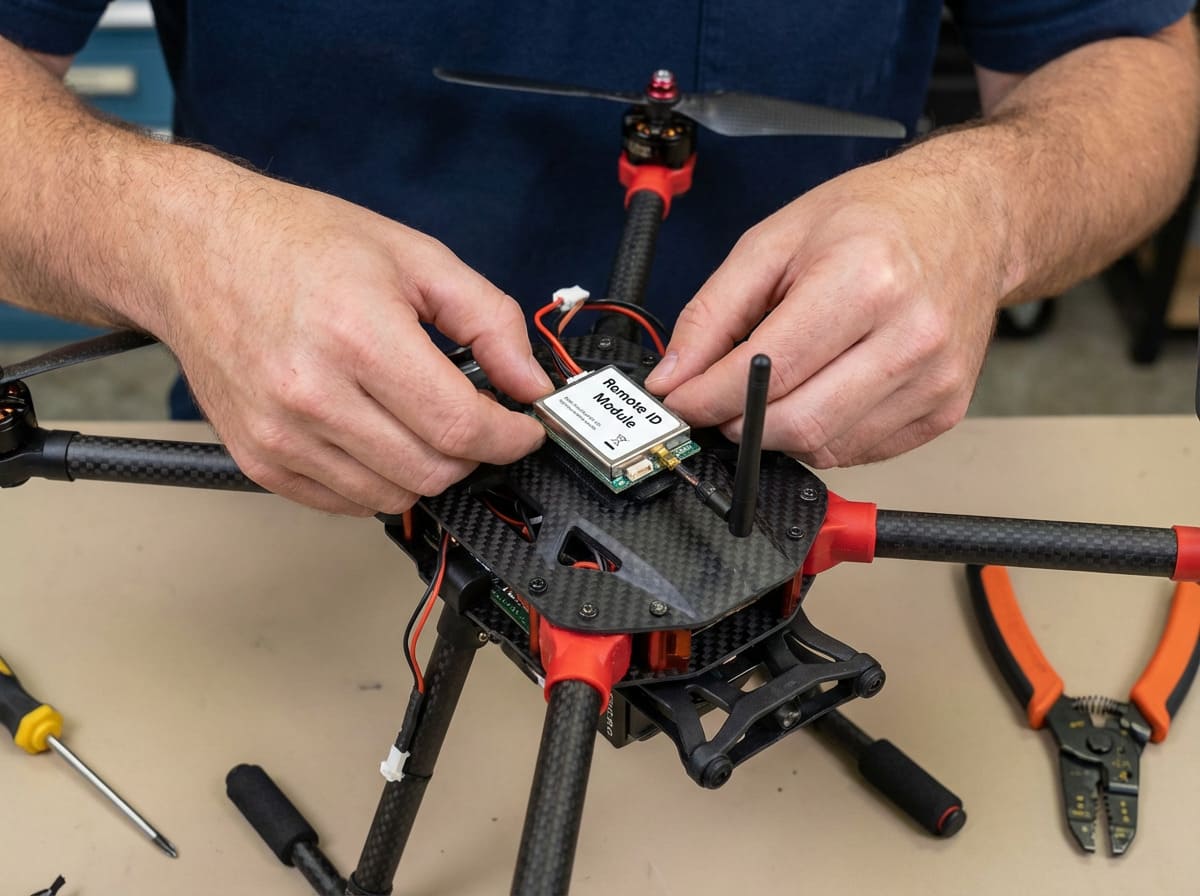
Remote ID, often called a "digital license plate" for drones, is a technology that broadcasts flight information like the drone's location, altitude, and operator's position. Both the US and EU agree on its importance for safety and security, but they've implemented it very differently. This directly impacts us as battery suppliers, as we must account for the power draw and physical space of either a bolt-on module or an integrated system.
FAA Remote ID (US)
The FAA's rule became fully effective for pilots in September 2023. It gives operators two primary ways to comply:
- Standard Remote ID Drone: A drone manufactured with Remote ID capabilities built-in from the factory.
- Broadcast Module: An add-on device that can be attached to a drone without built-in RID. This allows older drones to become compliant.
The broadcast must transmit the drone's serial number, location, altitude, velocity, and the operator's location. The only major exception is for flights conducted within FAA-Recognized Identification Areas (FRIAs), which are typically established flying fields.
EASA Remote ID (EU)
EASA ties Remote ID directly to its product-marking system. It is not an optional add-on for most new drones.
- Integrated by Design: Drones with a C1, C2, C3, C5, or C6 class marking must have a "Direct Remote Identification" system built-in to be sold in the EU. There is no widespread "module" option for these classes.
- Part of the Product Standard: It's a condition of the CE mark for that class. The system broadcasts the drone's unique operator registration number (not the operator's live location), along with the drone's position.
This table summarizes the core differences:
| Feature | FAA (US) | EASA (EU) |
|---|---|---|
| Implementation | Built-in (Standard) or Add-on (Module) | Built-in only for C1, C2, C3, C5, C6 |
| Applicability | Nearly all drones over 0.55 lbs (250g) | Only on drones with specific C-class markings |
| Operator Info | Broadcasts live location of control station | Broadcasts static operator registration number |
| Compliance Path | Retrofitting with modules is a key option | Compliance is a manufacturer's responsibility |
For pilots, the FAA's approach allows more flexibility with older equipment, while EASA's method simplifies compliance for new buyers—if the drone has the right C-class mark, it's ready to go.
What Are the Differences in Difficulty and Process for Applying for Beyond Visual Line of Sight (BVLOS) Flights Under FAA and EASA Frameworks?
Flying Beyond Visual Line of Sight (BVLOS) is the key to unlocking advanced drone operations, but getting approval feels like an impossible hurdle. The paths in the US and EU are vastly different and confusing.
The FAA treats BVLOS as an exception, requiring a difficult, case-by-case waiver from Part 107 rules. EASA has a more structured approach under its 'Specific' category, using a standardized risk assessment methodology (SORA) that offers a clearer, though still rigorous, path to approval.
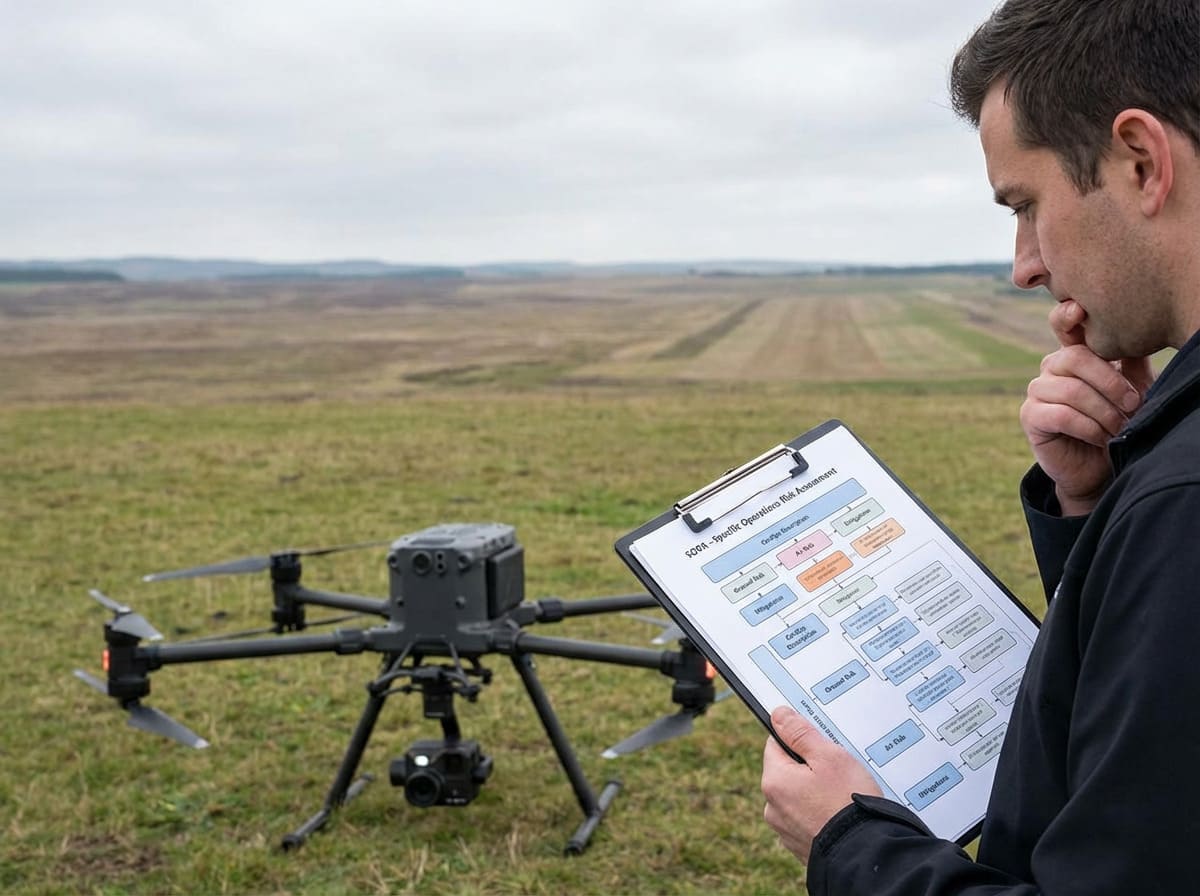
BVLOS is where the drone industry is heading, enabling everything from long-range inspections to package delivery. As a battery expert, I see huge demand for power solutions that can support these extended missions. However, the regulatory barrier is significant. The difference between the US and EU approach is a perfect example of their contrasting regulatory philosophies.
FAA BVLOS: The Waiver System
Under FAA regulations, flying beyond the pilot's line of sight is prohibited by default under Part 107. To do so, you must apply for a waiver from section 107.31.
- Case-by-Case Basis: There is no standard checklist. Each applicant must create a unique and detailed "safety case" to prove to the FAA that their proposed operation can be conducted safely without the pilot seeing the drone.
- High Burden of Proof: This often requires extensive documentation, flight testing data, and the use of expensive and complex Detect and Avoid (DAA) technologies.
- Unpredictable Outcome: Historically, getting a BVLOS waiver has been a long and difficult process with no guarantee of success. While the FAA is working on new pathways, the waiver system remains the primary, challenging route for most operators. It feels more like a negotiation than a standardized application.
EASA BVLOS: The 'Specific' Category and SORA
EASA anticipates that many operations like BVLOS will not fit into the low-risk 'Open' category. For this, they created the 'Specific' category.
- Structured Risk Assessment (SORA): The cornerstone of the 'Specific' category is the Specific Operations Risk Assessment (SORA). This is a globally recognized, 10-step methodology for analyzing the risk of a drone operation. It forces the operator to consider both air risk (collision with other aircraft) and ground risk (harm to people).
- Clearer Path to Approval: By completing the SORA, an operator can identify the exact mitigations and safety objectives they need to meet to get an operational authorization from their National Aviation Authority.
- Pre-Defined Risk Assessments (PDRAs): For common BVLOS scenarios, EASA has created PDRAs. These are ready-made risk assessments. If your operation fits a PDRA, the approval process is dramatically simplified.
While EASA's process is by no means easy, its structured and predictable nature is often seen as more transparent and scalable than the FAA's waiver-dependent model. It provides a clear roadmap for what's required to achieve BVLOS approval.
Conclusion
Ultimately, navigating US and EU drone laws means understanding two different mindsets. The FAA's Part 107 is centered on the pilot and a unified standard for commercial flight. EASA focuses on the drone's inherent risk, creating a tiered system. Success requires a specific compliance strategy for each region.