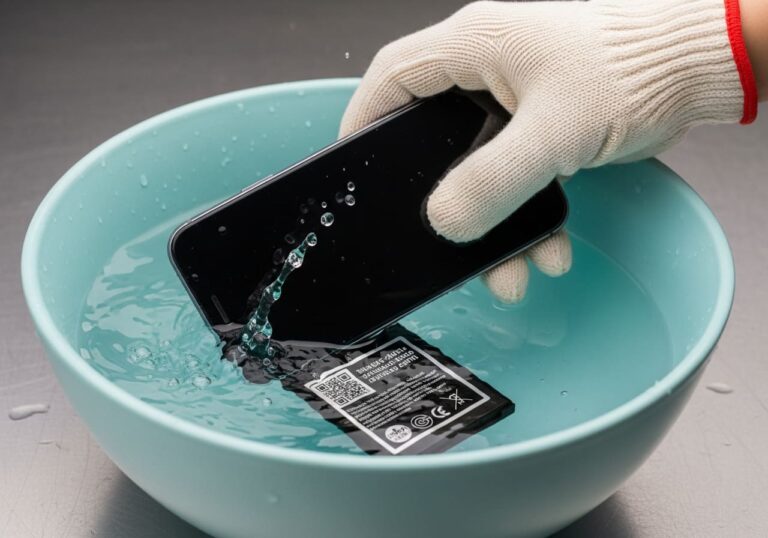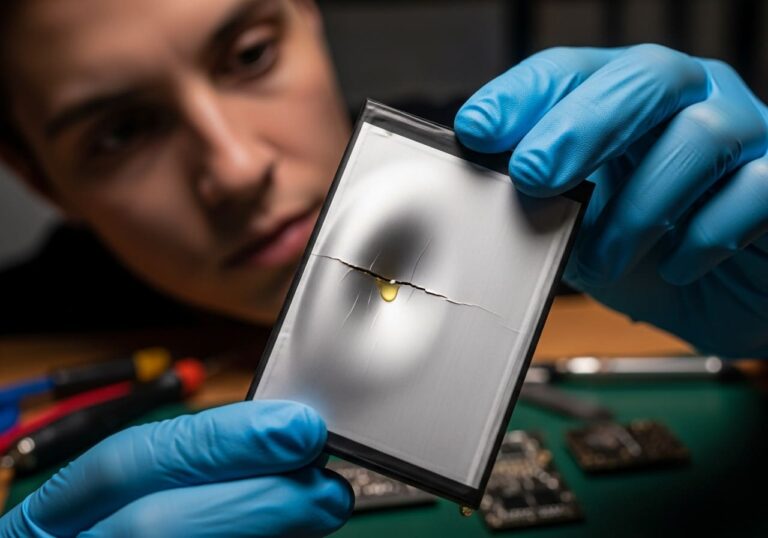
Are you worried that your charging habits are secretly damaging your expensive battery packs? This damage reduces their lifespan and performance, costing you more in the long run.
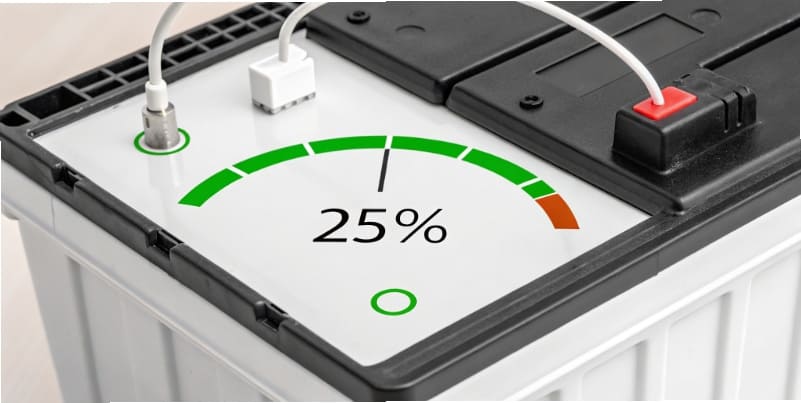
To get the most out of your high-capacity lithium-ion pack, use a Constant Current-Constant Voltage (CC-CV) charging method. Avoid charging to 100% or draining to 0%. Keeping the battery between a 25% and 75% state of charge at a moderate temperature is the best practice.
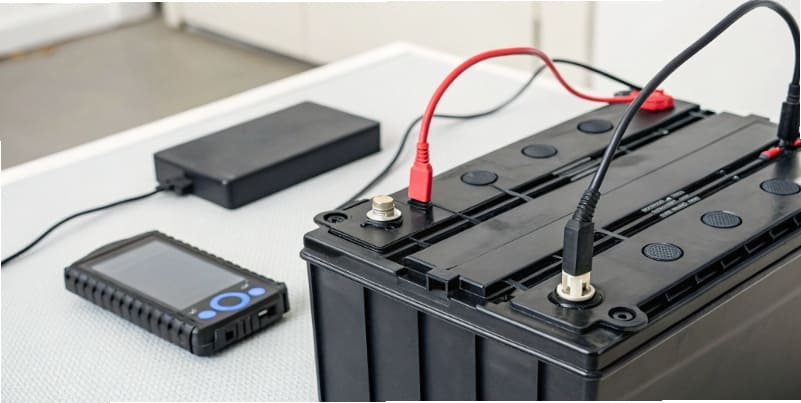
These basics are a great start, but many common practices can still harm your batteries without you realizing it. As a manufacturer at Litop, I've seen firsthand how small changes in charging routines can make a huge difference in battery health and longevity. Let’s dive into the details so you can protect your investment and ensure your devices run reliably for years to come.
Do Trickle Charging and Keeping a Full Battery Hurt High-Capacity Lithium Packs?
You might think keeping your device plugged in is convenient. But this constant charging can stress the battery, causing it to degrade faster than you would expect.
Yes. Both trickle charging and holding a battery at a 100% state of charge (SOC) create stress. This accelerates chemical aging, reduces capacity, and shortens its lifespan. For better long-term health, unplug the device once it reaches about 80% charge.
I often explain this to my clients using a simple analogy. Keeping a lithium-ion battery at 100% charge is like holding a rubber band fully stretched. It's under constant tension. This high-voltage state puts stress on the battery’s internal components, especially the cathode and electrolyte. It speeds up the unwanted chemical reactions that cause the battery to age. One of these reactions is the decomposition of the electrolyte, which forms a film on the anode called the Solid Electrolyte Interphase (SEI) layer.
A thin, stable SEI layer is essential for a battery to function. But when the battery stays at a high voltage, this layer grows thicker and thicker. A thick SEI layer increases internal resistance, which means the battery has to work harder and generates more heat. It also traps active lithium ions, which are then no longer available to store and release energy. This results in a permanent loss of capacity. Trickle charging, which constantly tops the battery off to keep it at 100%, ensures the battery remains in this high-stress state, accelerating this entire degradation process. I remember working with a medical device company whose batteries were failing prematurely. Their protocol was to keep the devices perpetually plugged in on charging docks. Once we advised them to switch to a cycle of charging to 80% and then using the device until it hit around 30%, they saw a dramatic improvement in battery longevity.
What Are the Optimal Cut-Off Voltage and Depth of Discharge to Maximize Cycle Life?
Charging your battery to 100% feels like you're getting the most out of it. But this, along with draining it completely, actually shortens its life significantly.
For maximum cycle life, avoid the extremes. Aim for a "shallow" cycle by keeping the battery's state of charge between 25% and 75%. Additionally, slightly lowering the charge cut-off voltage can multiply the battery's lifespan several times over.

At Litop, we design battery management systems (BMS) that can be programmed for specific charging goals. While charging to the maximum voltage gives you the most runtime for a single use, it’s not the best for the long run. Every lithium-ion chemistry has a nominal voltage and a maximum safe charging voltage. Pushing to that maximum consistently puts strain on the battery.
The Voltage Sweet Spot
A small reduction in the charge cut-off voltage can have a huge impact. For a standard lithium-ion battery (like an NMC or LiCoO2 cell) with a 4.2V maximum, charging only to 4.1V can potentially double its cycle life. This is because the battery is not being held in that high-stress state I mentioned earlier. Here’s a general guide we provide to our clients for longevity-focused applications:
| Battery Chemistry | Standard Cut-off Voltage | Longevity-Focused Cut-off |
|---|---|---|
| Li-ion (NMC/LiCoO2) | 4.2V | 4.1V (or ~80% SOC) |
| LiFePO4 (LFP) | 3.65V | 3.5V (or ~80% SOC) |
Depth of Discharge (DOD) Matters More
Even more important is the Depth of Discharge (DOD), which is how much of the battery’s capacity you use before recharging. A 100% DOD means you use all the power from 100% down to 0%. A 50% DOD could mean going from 75% down to 25%. By practicing "shallow charging," where you only use about 50% of the capacity before recharging, you can increase the cycle life by 3 to 4 times compared to full cycles. It might seem like more work, but for high-value industrial or medical devices where reliability is critical, this practice is a game-changer.
Does Fast Charging Significantly Shorten Battery Life, and How Do You Balance Speed and Health?
When you're in a hurry, fast charging seems like the perfect solution. But this convenience often comes at a hidden cost: premature battery aging and reduced capacity.
Yes, fast charging generates more heat and can cause a damaging effect called lithium plating, especially if not managed well. This shortens battery life. The key is to find a balance by using a smart charger and avoiding fast charging in extreme temperatures.
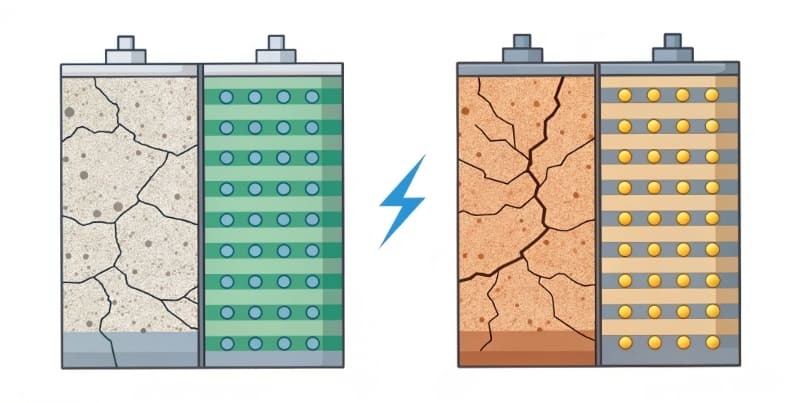
The speed of charging is measured by its C-rate. A 1C rate will charge a battery in about one hour. A 2C rate will do it in 30 minutes, and 0.5C in two hours. Most fast chargers operate at 1C or higher. While this is convenient, it puts a lot of physical stress on the battery.
When you force a high current into the battery, two negative things happen. First, it generates significant heat. As we’ve established, heat is the number one enemy of battery longevity, as it accelerates all the unwanted chemical degradation reactions. Second, the lithium ions might not have enough time to properly embed themselves into the anode structure. This is called intercalation. When the ions can't intercalate fast enough, they can start to build up on the surface of the anode as metallic lithium. This process, known as lithium plating, is irreversible. It permanently reduces the battery's capacity and can even create internal short circuits, which is a major safety risk.
So how do you find the right balance?
- Use a Smart Charger: A good BMS or smart charger will manage the current, often starting fast and then slowing down as the battery fills up.
- Avoid Fast Charging from Empty: The battery is most vulnerable to plating when it's at a very low state of charge. A slower charge from 0% to 20% is much safer.
- Don't Fast Charge in Extreme Temperatures: Never fast charge a cold or very hot battery.
- Settle for "Good Enough": If you don't need a full charge immediately, unplug the fast charger at 70% or 80%. The last 20% of charging is the most stressful part of the cycle.
At Litop, we design our custom packs to safely handle specific C-rates, but we always educate our clients on these trade-offs to help them make the best decision for their application.
How Should You Adjust Charging Practices in Different Temperatures to Protect the Battery Pack?
Charging your device in a hot car or a cold garage might seem harmless. But these extreme temperatures can cause permanent, severe damage to your battery during charging.
In cold weather (below 0°C/32°F), you must reduce the charge rate or stop charging to prevent lithium plating. In hot weather (above 35°C/95°F), ensure good ventilation and consider lowering the charge voltage to prevent accelerated aging.
Temperature is arguably the most critical factor influencing battery health during charging. Your charging strategy must adapt to the ambient temperature. Our BMS designs always include temperature sensors for this exact reason.
Charging in the Cold
Charging a lithium-ion battery below freezing is extremely dangerous for its health. At these temperatures, the chemical reactions inside the battery slow down. Specifically, the anode becomes much less receptive to accepting lithium ions. If you try to charge at a normal rate, the ions will "get stuck" on the anode's surface and form metallic lithium plating. This damage is irreversible and a serious safety hazard. Most of our BMS units will prevent charging altogether when the temperature drops below 0°C. If you absolutely must charge in a cold environment, it requires a specialized charger that uses a very low current, typically around 0.05C.
Charging in the Heat
Heat acts as a catalyst, speeding up the degradation of the battery's components. Charging already generates internal heat, so charging in an already hot environment is a recipe for rapid aging. High heat breaks down the electrolyte and causes the SEI layer to grow out of control. This can lead to battery swelling and, in worst-case scenarios, thermal runaway. For our clients with products used outdoors, like IoT sensors or GPS trackers, we recommend lowering the cut-off voltage to around 4.17V when operating in temperatures between 30-50°C. Always ensure the device has proper ventilation while charging.
Here's a simple table to guide your actions:
| Temperature Range | Recommended Charging Action | Risk if Ignored |
|---|---|---|
| Below 0°C (32°F) | Do not charge, or use a very low rate (0.05C) with a specialized charger. | Irreversible lithium plating, capacity loss, safety hazard. |
| 0°C - 35°C (32°F - 95°F) | Ideal range. Charge normally (0.5C-1C). | N/A |
| Above 35°C (95°F) | Charge in a cool, ventilated area. Lower charge voltage if possible. | Accelerated aging, electrolyte decomposition, swelling. |
Conclusion
To maximize the life of your high-capacity lithium-ion batteries, charge them smart, not hard. Avoid the extremes of temperature and charge level. Use a quality CC-CV charger, aim to keep the battery between 25-75% SOC, and store it at 50% charge. These simple habits ensure reliability.