Struggling to decode the specs of electric vehicles? You know battery weight impacts range and cost, but the technical jargon from brands like Tesla and BYD is confusing.
Looking ahead to 2026, BYD's batteries are projected to be lighter than Tesla's in comparable vehicle classes. This is primarily due to BYD's innovative Blade Battery and Cell-to-Body (CTB) integration, which reduces pack weight while maximizing space, giving them a slight edge in overall vehicle efficiency.
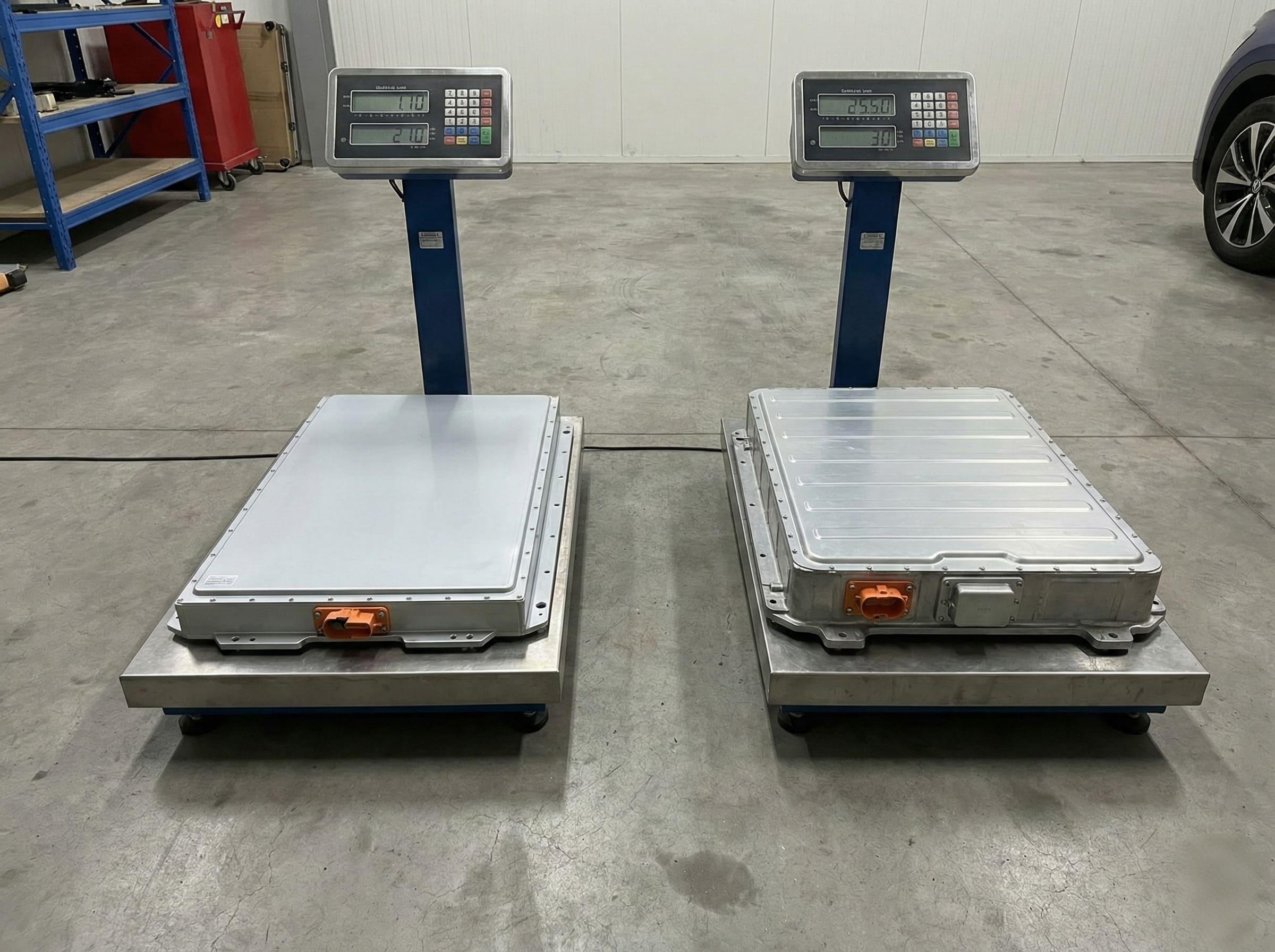
In my line of work, designing custom lithium batteries, weight is a constant battle. Every gram we shave off a battery pack for a wearable device or a medical scanner means better performance and user comfort. The same principle applies to electric cars, just on a much larger scale. A lighter car is a more efficient car. It accelerates faster, handles better, and, most importantly, travels farther on a single charge. Both Tesla and BYD are giants in the EV world, but they're taking different paths to solve this weight puzzle. Let's break down their strategies and see who is really winning the race to build the lightest, most efficient battery.
Tesla's 4680 structural battery vs. BYD's CTB technology, which is better for weight reduction?
You hear the terms "structural battery" and "Cell-to-Body" thrown around. It sounds impressive, but what does it actually mean for the car's weight and your wallet?
BYD's Cell-to-Body (CTB) technology currently offers more significant weight reduction. It fully eliminates battery modules by integrating the Blade Battery cells directly into the vehicle's structure. Tesla's 4680 structural pack is a step in the same direction but still retains some modular components.
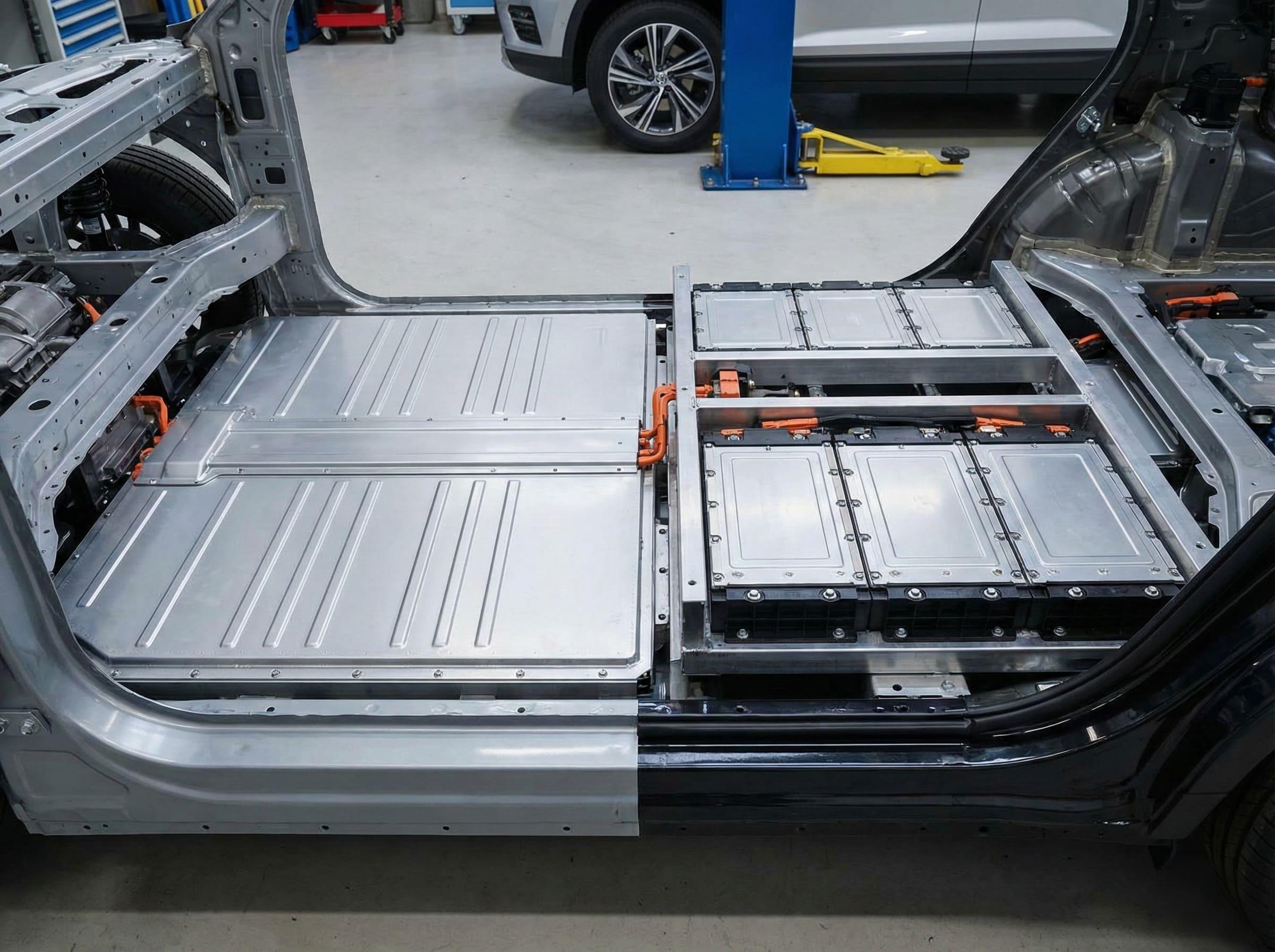
To understand which is better, you have to think about how a traditional EV battery is built. It's like a set of Russian dolls: small cells are bundled into modules, and those modules are placed inside a heavy protective case. That whole case is then bolted onto the car. There's a lot of redundant packaging and weight. Both Tesla and BYD know this is inefficient.
At my company, Litop, when a client needs a battery for a compact device, we can't afford wasted space. We design custom-shaped batteries that fit perfectly, eliminating bulky internal housings. Tesla and BYD are applying this same logic to cars.
How Their Approaches Differ
Tesla and BYD are both trying to get rid of the "Russian dolls" and make the battery itself part of the car's floor. This is the core idea of a "structural battery." However, their execution is different.
| Feature | Tesla 4680 Structural Pack | BYD CTB with Blade Battery |
|---|---|---|
| Basic Concept | The battery pack, filled with 4680 cells, acts as the floor of the car, connecting the front and rear body sections. | The top cover of the battery pack is the floor of the car. The long, thin Blade Cells add to the pack's strength. |
| Module Use | Reduces modules but doesn't completely eliminate them. The cells are still grouped together within the pack. | Module-Free. This is a true "Cell-to-Pack" (CTP) and "Cell-to-Body" (CTB) design. |
| Weight Savings | Significant. Eliminating some module casings and integrating the pack saves weight compared to older designs. | More Significant. By removing modules entirely, BYD achieves a higher level of integration and space utilization, leading to a lighter pack for a given capacity. |
| Current Winner? | A huge improvement, but still a work in progress. | The current leader in mass-market weight-reduction technology. |
Tesla’s 4680 structural pack is a fantastic piece of engineering, but it's like a semi-structural system. The pack is a rigid box that helps stiffen the car. BYD’s CTB technology takes it a step further. The cells themselves become a structural element of the pack, and the top of the pack becomes the vehicle floor. This removes an entire layer of material, saving weight and increasing interior space. For now, BYD's approach is more aggressive in its integration, giving it the edge in weight reduction.
Why does BYD's battery have lower energy density, but the Seal's range is similar to Tesla's?
It's a classic engineering puzzle. You see that BYD uses LFP batteries with lower energy density than Tesla's NMC cells, yet their cars achieve similar range. How is this possible?
BYD compensates for lower cell-level energy density with superior pack-level efficiency. Its Blade Battery and CTB design allow for more active battery material to be packed into the same space, closing the gap. Overall vehicle efficiency, including standard heat pumps, further boosts its real-world range.
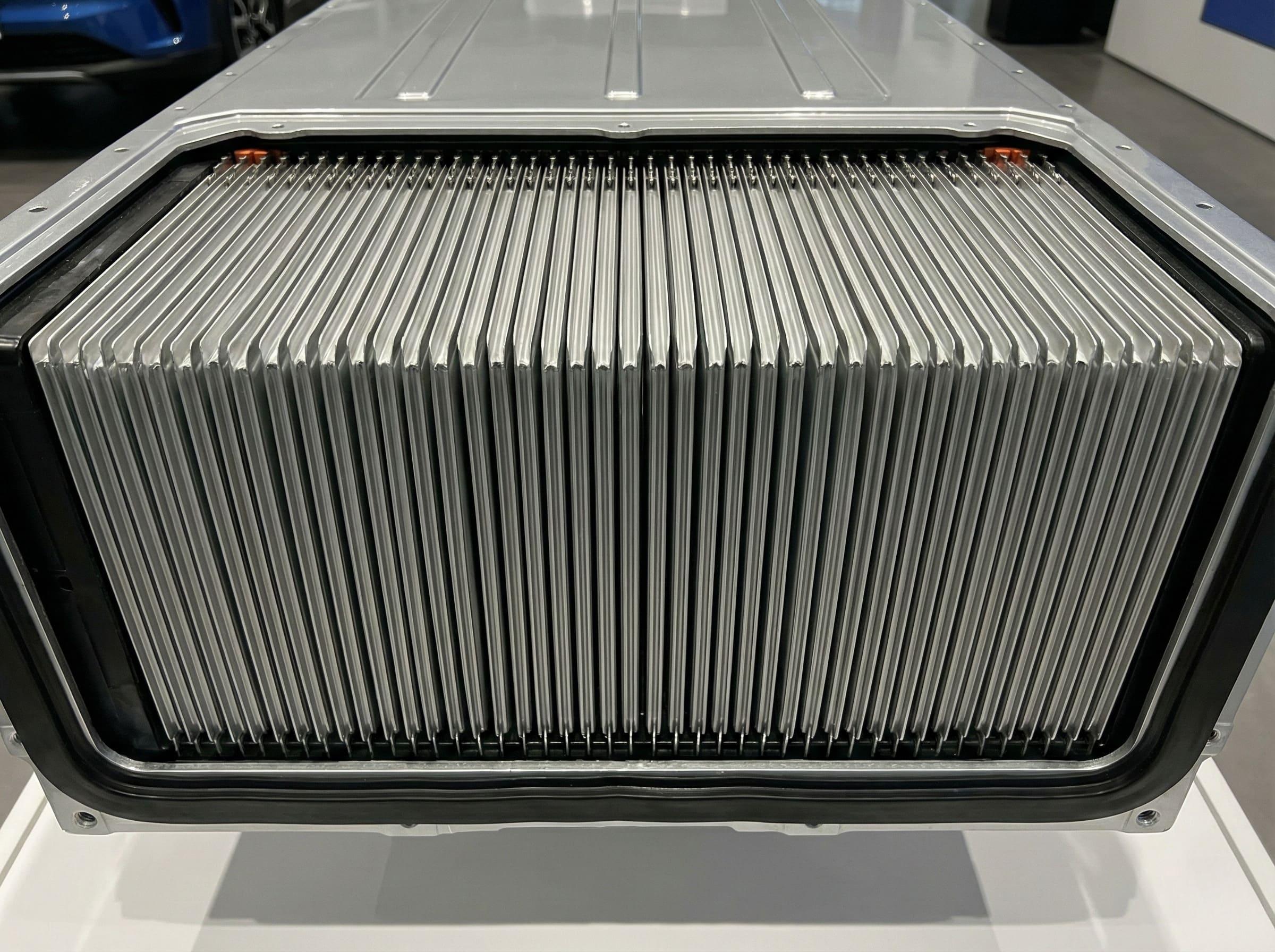
This question gets to the heart of what we do in the battery industry. A client might come to me asking for the cell with the absolute highest energy density. But that's not always the right answer. The final performance of their product depends on the entire system—the pack design, the electronics, and the software. A slightly less dense cell in a brilliantly designed pack can outperform a high-density cell in a clunky one.
It's Not Just About the Cell
Energy density is often measured at the single-cell level (Wh/kg). Here, Tesla's nickel-based chemistries in some 4680 cells have an advantage over BYD's iron-based LFP Blade Batteries. But you don't drive a single cell; you drive a complete battery pack.
Here’s a breakdown of what really matters:
- Pack-Level Efficiency: This is the key. Because BYD's Blade Batteries are long and thin, they can be packed together like a stack of papers with almost no wasted space. Tesla's 4680 cells are cylinders, and no matter how you arrange them, there will always be small gaps between them. BYD's superior packing efficiency means they can fit more battery capacity into the pack, making the pack-level energy density much more competitive.
- Thermal Management: LFP chemistry, which BYD uses, is more thermally stable than NMC. This means it requires a less complex and heavy cooling system, saving more weight.
- System-Wide Efficiency: BYD has become a master of vehicle integration. They equip many of their cars with a high-efficiency heat pump as standard. A heat pump is far more efficient at heating and cooling the cabin than a traditional resistive heater, especially in cold weather. This saves a significant amount of battery power that can be used for driving, directly improving range. Tesla also uses heat pumps, but BYD's widespread integration gives them a consistent edge.
So, while Tesla might start with a higher-performing individual cell, BYD's holistic approach to pack design and vehicle systems allows them to deliver a final product with a highly competitive range. It's a perfect example of how system-level engineering can triumph over a single specification.
Replacing a Tesla battery vs. a BYD Blade Battery: which is more expensive and difficult?
The thought of a battery replacement bill can give any EV owner nightmares. The complexity and cost of this repair are huge factors, so how do Tesla and BYD stack up?
Repairing a BYD Blade Battery is potentially cheaper and easier than a Tesla structural pack. The Blade Battery is designed for individual cell (blade) replacement. In contrast, Tesla's pack is often a sealed unit, making single-cell repair nearly impossible and often requiring a full pack swap.

In my experience providing batteries for medical devices, serviceability is a critical conversation. Hospitals can't afford to have a machine down for weeks waiting for a complex repair. They need a system that is modular and easy to fix. This same logic applies to cars. A car that is difficult to repair is a car that costs you more in the long run, both in money and in time.
The Structural Dilemma: Strength vs. Serviceability
The move to structural packs has a downside: it can make repairs much more difficult.
- Tesla's Approach: The 4680 structural pack is an integral part of the car's chassis. To make it rigid, Tesla fills the pack with a strong, pink polyurethane foam that encases the cells. This is great for strength and safety, but it makes getting to an individual faulty cell a nightmare. For most issues, service centers will simply replace the entire multi-thousand-dollar pack. It’s faster for them, but it’s the most expensive solution for the owner, especially out of warranty.
- BYD's Approach: The Blade Battery design is a game-changer for repairability. Each "blade" is a long, self-contained cell. While they are arranged to provide structural integrity to the pack, they are not permanently bonded in a way that prevents removal. A trained technician can, in theory, diagnose a single faulty blade, open the pack, and replace just that one unit. This is like replacing a single faulty stick of RAM in your computer instead of the entire motherboard.
| Aspect | Tesla Structural Pack | BYD Blade Battery Pack |
|---|---|---|
| Repair Philosophy | Replace the whole unit. | Repair at the cell level. |
| Individual Cell Access | Nearly impossible due to foam filling and structural integration. | Designed for individual "blade" replacement. |
| Potential Repair Cost | Very high (full pack replacement). | Potentially much lower (single blade + labor). |
| Difficulty | High. Requires specialized equipment to drop and replace the entire pack. | Moderate. Still a job for a professional, but less complex than a full pack swap. |
While the cost of a full pack replacement for both brands might be comparable today, BYD's fundamental design offers a path to much more affordable long-term ownership and a more sustainable repair model.
For LFP battery versions, who has a better efficiency ratio (km per kWh): Tesla Model 3 or BYD Seal?
You’re looking at two cars with the same battery chemistry, LFP. So, which one squeezes more kilometers out of every kilowatt-hour of electricity?
The BYD Seal often demonstrates slightly better real-world efficiency (km/kWh) than the LFP-equipped Tesla Model 3. This advantage comes from its lighter battery pack and highly integrated vehicle systems, even though the Model 3 has exceptionally efficient software and powertrain components.
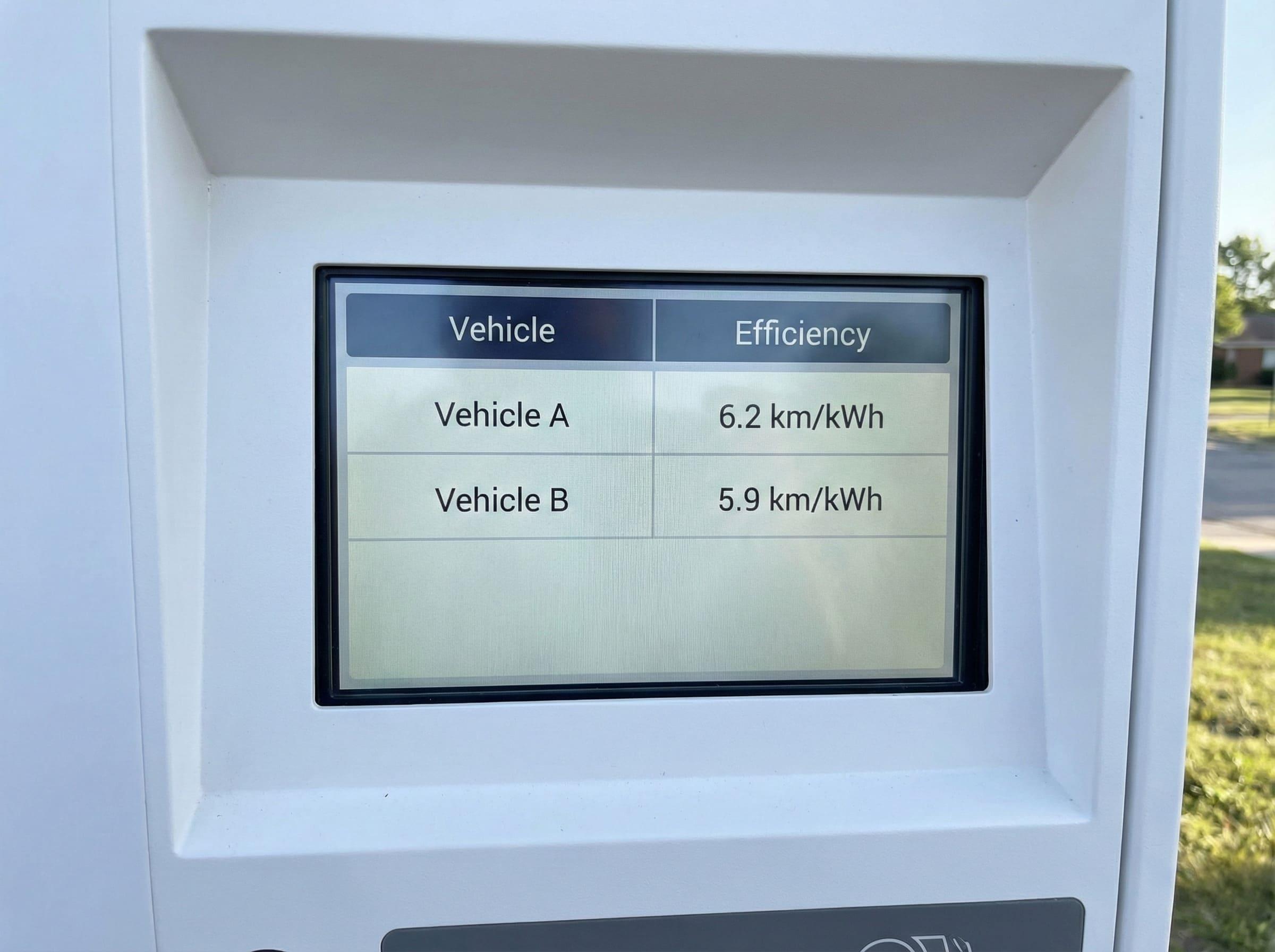
When our customers at Litop compare two of our battery solutions, they always look at the final efficiency. It's the ultimate measure of performance. It doesn't matter how great a battery is on paper; what matters is how it performs in the real world, inside the final product. The same is true for the Tesla Model 3 and the BYD Seal, two direct competitors in the electric sedan market.
A Head-to-Head Efficiency Battle
Both cars are incredibly efficient, but small differences in their engineering philosophies give one a slight edge. Let’s compare them. (Note: We are comparing the pure electric BYD Seal, not the hybrid Qin L, against the Model 3 for a true apples-to-apples EV comparison).
- Weight: As we've established, this is a key advantage for BYD. By using the CTB Blade Battery, the BYD Seal's battery pack is lighter than the Tesla Model 3's pack for a similar capacity. According to my insights, a comparable BYD pack can be over 10% lighter. Less weight means less energy is needed to move the car.
- Aerodynamics: Tesla has historically been the king of low-drag design. The Model 3 has an extremely low drag coefficient, which helps it slice through the air with minimal effort, especially at highway speeds. The BYD Seal is also very aerodynamic, but Tesla often maintains a slight edge here.
- Powertrain and Software: Tesla is famous for its highly efficient motors and brilliant software that optimizes energy use down to the last watt. This is a major strength. BYD's powertrain is also excellent, but Tesla's vertical integration of software and hardware is hard to beat.
- Vehicle Systems: This is where BYD claws back and overtakes. The standard inclusion of a highly efficient heat pump and other integrated systems gives the Seal a consistent advantage in real-world conditions, especially in mixed weather.
Based on my research, the weight savings and system integration in the BYD Seal are enough to overcome Tesla's advantages in aerodynamics and software, resulting in slightly better overall km/kWh efficiency. The difference might be small, perhaps 5-8%, but over the life of the car, those small efficiencies add up to real savings.
Conclusion
BYD has taken a lead in the race for lighter batteries, leveraging its module-free Blade Battery design to gain an edge in weight and efficiency. Tesla, however, is a relentless innovator. Its 4680 structural pack is constantly evolving, and the competition between these two giants will only accelerate progress for us all.