Choosing between 18650 and 26650 cells can be confusing. Picking the wrong one inflates your project costs and complicates manufacturing. Let’s break it down to save you money.
For most large-scale battery projects, the 26650 cell is more cost-effective. Its higher capacity means fewer cells are needed for the same energy output. This significantly reduces assembly labor, material costs, and simplifies the BMS, leading to substantial overall savings on your pack.
The initial answer seems simple, but true cost-effectiveness depends on many factors beyond just the cell price. I remember a client, Michael, from the United States who was developing a new portable medical device. He was leaning towards 18650s because his team was familiar with them. However, after we walked through the total cost of ownership for his project, the numbers told a very different story. The savings on assembly and materials by switching to 26650s were too significant to ignore. To truly understand which cell is right for you, we need to look closer at specific cost drivers. Let's dive into the details that will impact your bottom line.
When Calculating Price Per Watt-Hour ($/Wh), Which Is Cheaper: 18650, 26650, or 21700?
Just looking at the price per individual cell is a common mistake. This oversight can make your project more expensive than it needs to be. Let's calculate the price per watt-hour to find the real value.
The 21700 cell typically offers the lowest price per watt-hour ($/Wh), making it the cheapest for energy delivered. The 26650 is a close second. While an individual 18650 cell is cheap, its lower capacity often results in a higher cost for the same amount of energy.
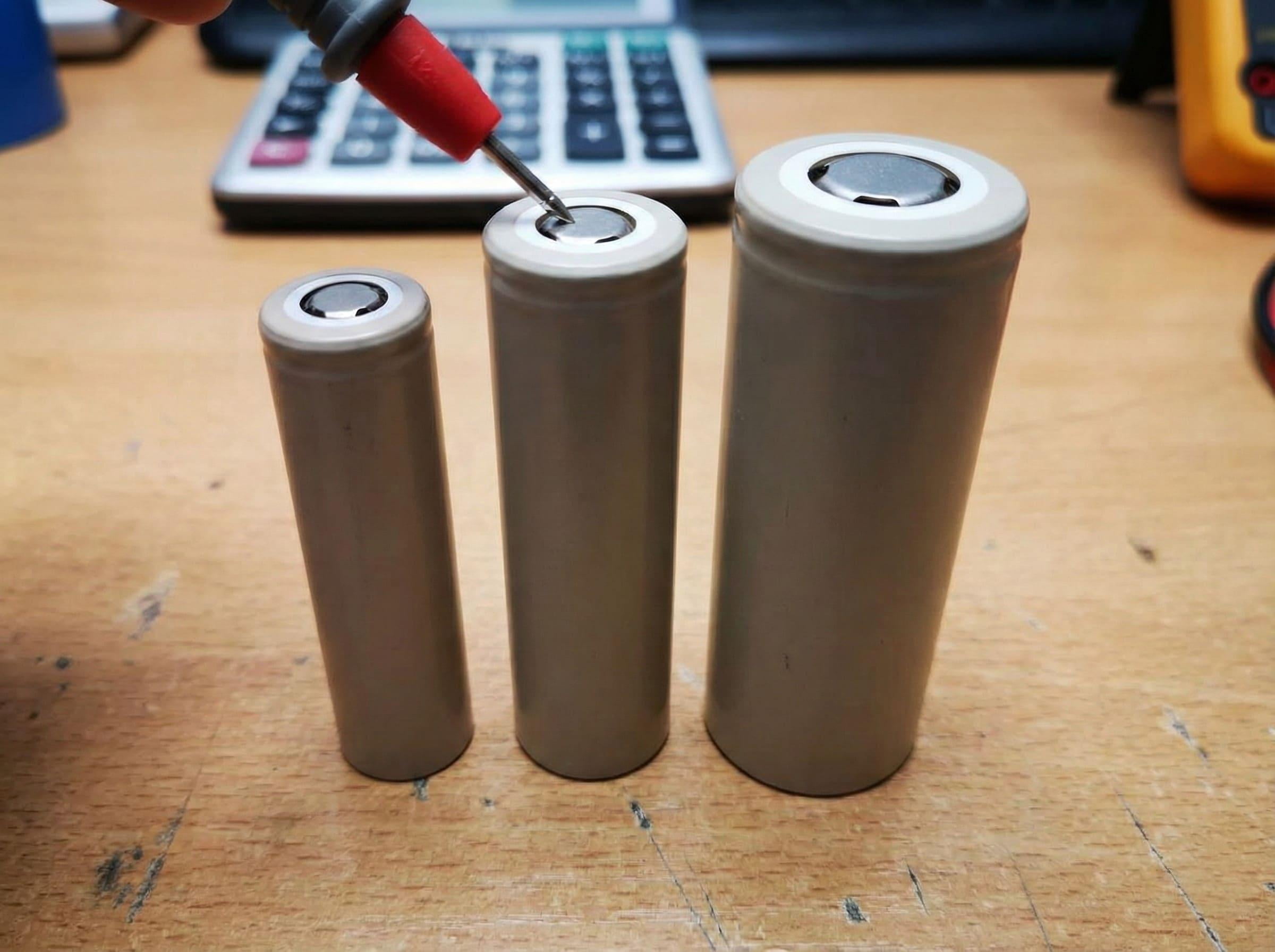
The most accurate way to compare cell cost is by looking at the price per watt-hour ($/Wh). This metric tells you how much you pay for a standard unit of energy. The calculation is simple: you divide the cell's price by its total energy in watt-hours (Nominal Voltage × Capacity in Amp-hours). When we do this, the bigger cells almost always win. I've found that many procurement managers focus only on the unit price, which can be misleading. A cheaper cell doesn't mean a cheaper battery pack.
Let's look at a typical cost breakdown. These numbers are just for illustration, as market prices change daily.
Comparing Cell Energy Costs
| Cell Type | Typical Capacity | Nominal Voltage | Energy (Wh) | Estimated Unit Price | Estimated $/Wh |
|---|---|---|---|---|---|
| 18650 | 3000 mAh (3.0 Ah) | 3.7V (NMC) | 11.1 Wh | $2.50 | $0.225 |
| 21700 | 4500 mAh (4.5 Ah) | 3.7V (NMC) | 16.65 Wh | $3.50 | $0.210 |
| 26650 | 5000 mAh (5.0 Ah) | 3.2V (LiFePO4) | 16.0 Wh | $3.20 | $0.200 |
As you can see, even though the 18650 cell has the lowest price per unit, it has the highest cost per watt-hour. The 26650, often using LiFePO4 chemistry, provides a very competitive energy cost. The 21700 benefits greatly from the massive scale of the electric vehicle industry, which has driven its cost down significantly. It’s like buying soda: the small can is cheap, but the cost per ounce is much higher than buying the large two-liter bottle. For projects that need a lot of energy, buying in "bulk" with larger format cells like the 26650 and 21700 simply makes more financial sense.
How Much Can You Save on Spot Welding and Materials with a 26650 Pack for a 48V System?
Building a large battery pack has many hidden costs. All the spot welding, brackets, and connections add up fast, especially with hundreds of small cells. Let's see how 26650s can simplify this.
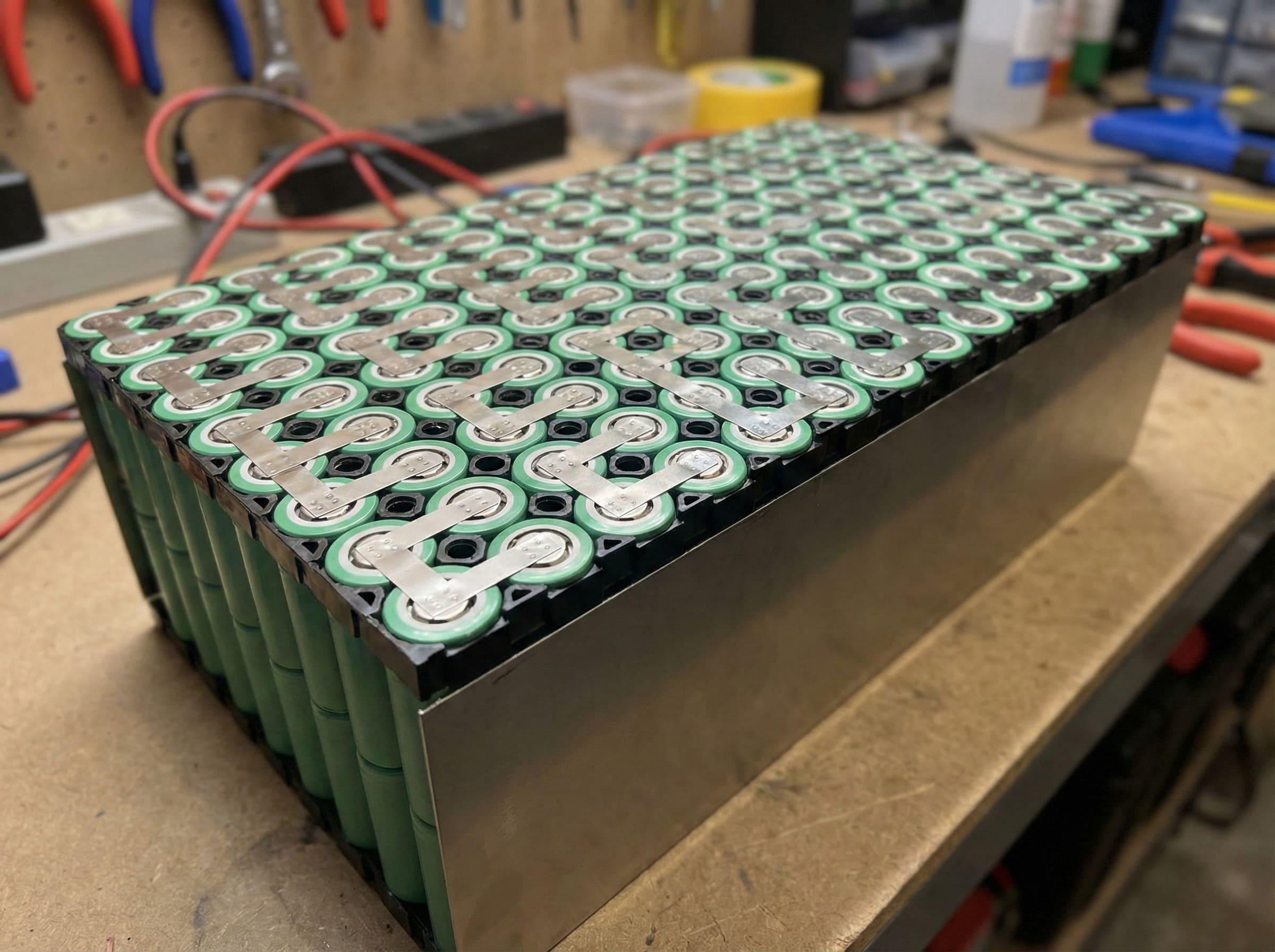
To build a 48V pack, using 26650 cells can reduce the total cell count by up to 50% compared to 18650s. This means half the spot welds, half the cell holders, and less nickel strip, significantly cutting down on both labor and material costs.
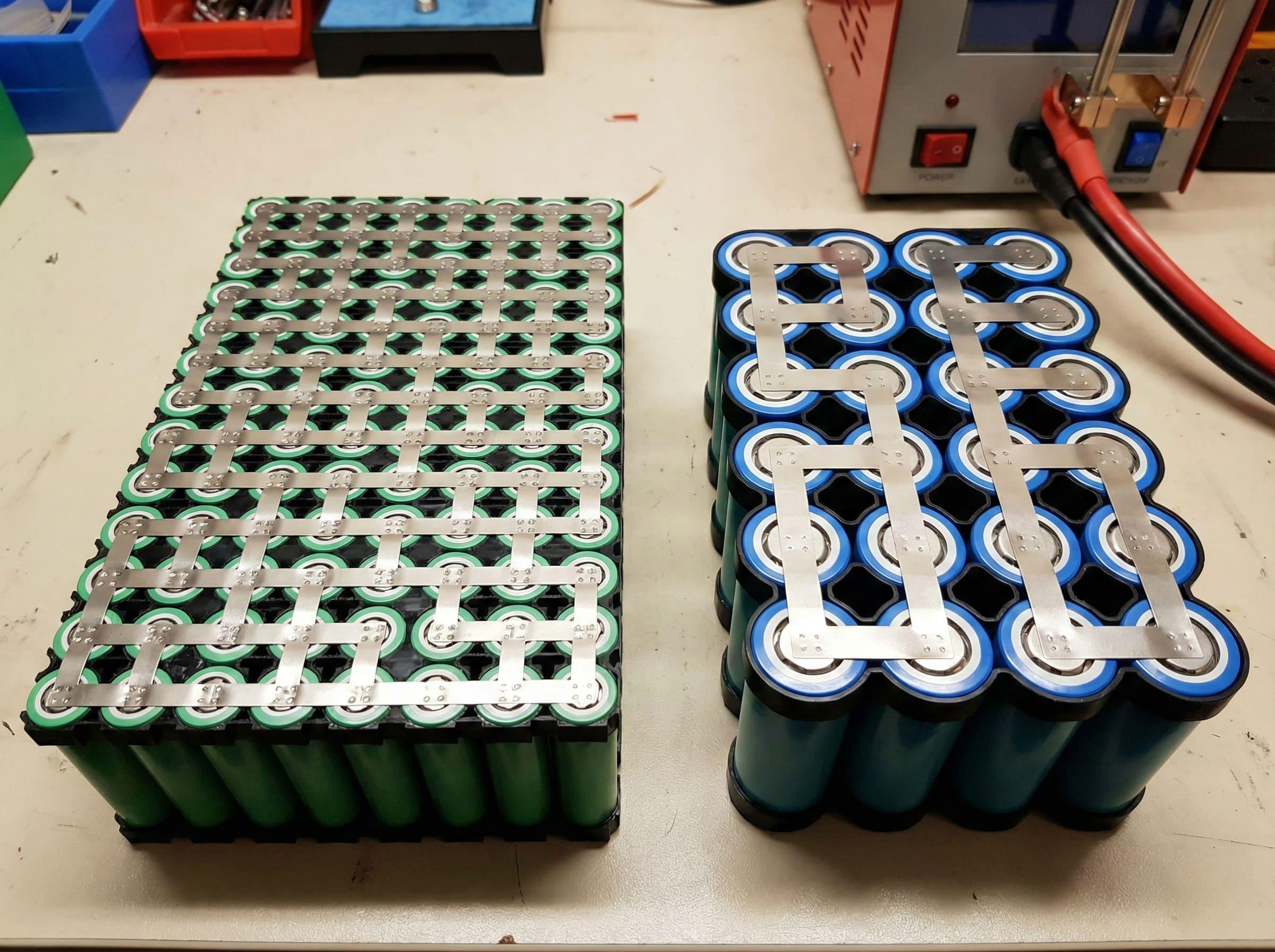
Let's do the math together for a common project we often see here at Litop: a 48V 20Ah battery pack. The difference in assembly complexity and cost is shocking.
Pack Assembly with 18650 Cells
To get 20Ah of capacity using 3000mAh (3.0Ah) 18650 cells, you need about 7 cells in parallel (20Ah / 3Ah ≈ 6.7, so 7P). To get 48V using 3.7V cells, you need 13 cells in series (48V / 3.7V ≈ 13, so 13S).
- Total Cells: 13S × 7P = 91 cells.
- Total Spot Welds: Each cell needs at least two welds (positive and negative). So, 91 cells × 2 welds = 182 welds minimum.
- Other Materials: You'll need cell holders for all 91 cells and a significant amount of nickel strip to connect them.
Pack Assembly with 26650 Cells
Now, let's use 5000mAh (5.0Ah) LiFePO4 26650 cells. To get 20Ah, you only need 4 cells in parallel (20Ah / 5Ah = 4P). To get 48V with 3.2V LiFePO4 cells, you need 15 cells in series (48V / 3.2V = 15S).
- Total Cells: 15S × 4P = 60 cells.
- Total Spot Welds: 60 cells × 2 welds = 120 welds.
The comparison is clear. The 26650 pack uses 31 fewer cells (a 34% reduction) and requires 62 fewer spot welds. That translates directly into lower labor costs and faster production times. You also save on materials like cell holders and connecting strips. Furthermore, managing a pack with fewer parallel groups is simpler for the Battery Management System (BMS), which can sometimes lead to a lower-cost BMS unit. Fewer connections also mean fewer potential points of failure, increasing the pack's overall reliability. This is a huge factor for industrial and medical devices where reliability is critical.
In the Long Run, Which Cell is Cheaper and Easier to Replace if One Fails?
A single dead cell can disable your expensive battery pack. Finding a perfect replacement can be impossible, forcing you to buy a whole new pack. Let's compare the long-term repair costs.
The 18650 cell is much easier and cheaper to replace. Due to its global standardization and huge supply, finding a closely matched cell is simple. Sourcing an identical 26650 from the same production batch years later is significantly harder, making repairs more complicated.
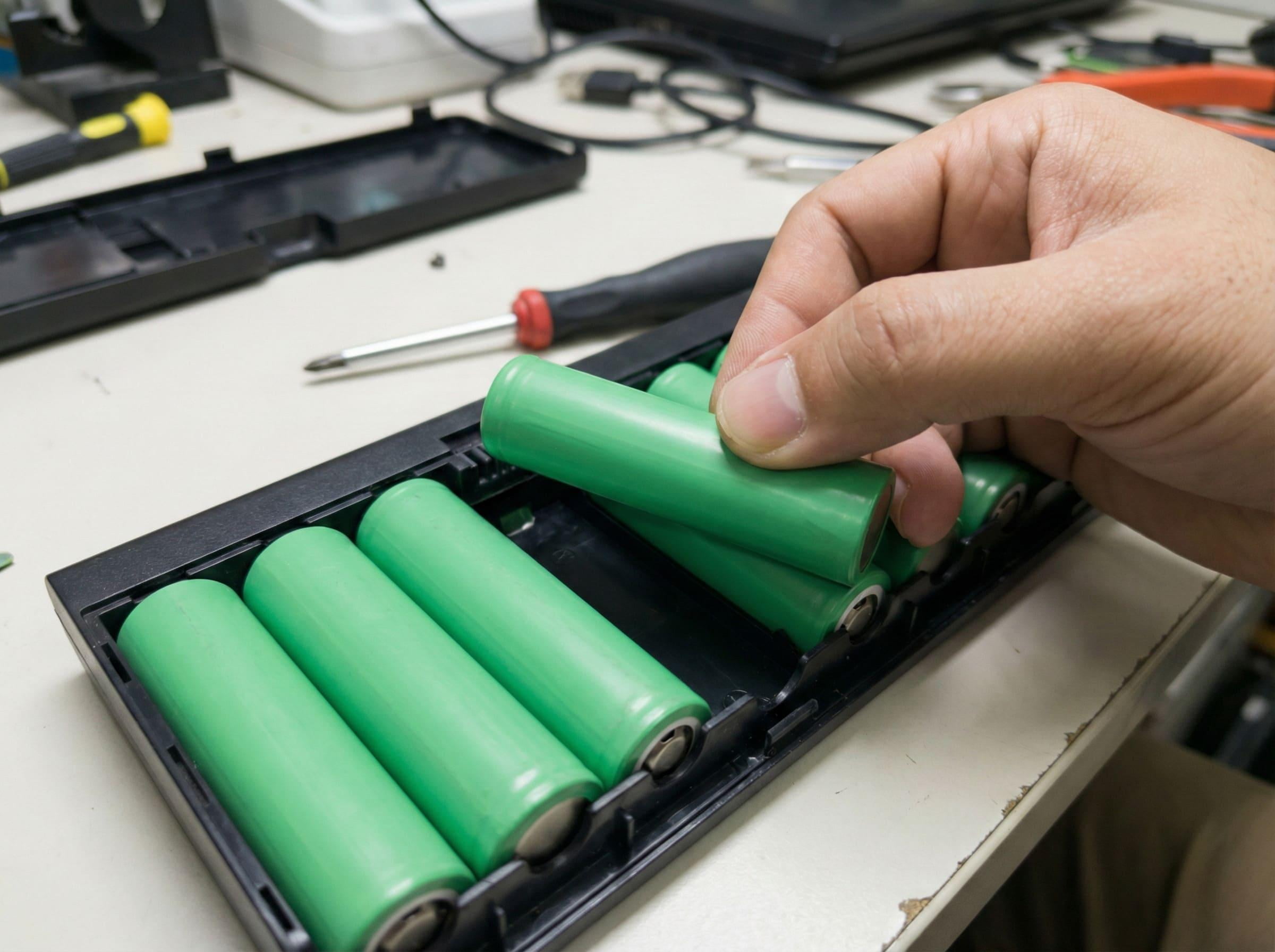
When a single cell in a battery pack fails, you can't just swap in any new cell. For the pack to remain balanced and safe, the replacement cell must have a very similar capacity and internal resistance to the others in its series group. This is where the long-term serviceability of 18650 and 26650 cells differs greatly.
The Ubiquity of the 18650
Think of the 18650 as the "AA battery" of the rechargeable world. It has been the industry standard for decades.
- Massive Supply: Dozens of reputable manufacturers like Panasonic, LG, and Samsung produce them. This creates a vast, competitive market.
- High Availability: Because they are so common, you can easily find and buy replacements years after your original pack was built. You can find a cell that is "close enough" in specification to perform a successful repair, especially for less critical applications.
The Challenge of the 26650
The 26650 is a more specialized cell. While it offers great performance, it's not as standardized.
- Less Interchangeability: There is more variation in performance and chemistry between different 26650 manufacturers.
- Batch Dependency: The characteristics of a cell can change slightly from one production batch to the next. Finding a cell from the same batch years down the road is nearly impossible. Mismatching a replacement cell in a pack can cause imbalance, stress the BMS, and shorten the life of the entire pack.
For our B2B clients who handle their own maintenance or want to offer repair services, the 18650 is often the better choice for long-term serviceability. However, for most of our customers in fields like medical devices, the product is often replaced entirely under warranty rather than repaired at the cell level. In these cases, the initial build cost savings of the 26650 are more important.
Which Battery Size Has a Higher Resale Value at Recycling Centers?
End-of-life batteries can be a disposal headache. Just throwing them away is wasteful and environmentally harmful, but their recycling value is a hidden financial factor. Let’s see which cell recyclers pay more for.
The 18650 cell generally commands a higher resale value on the second-hand and recycling markets. Its widespread use in laptops, power banks, and DIY projects creates a huge demand for used, tested cells. The market for used 26650 cells is much smaller.
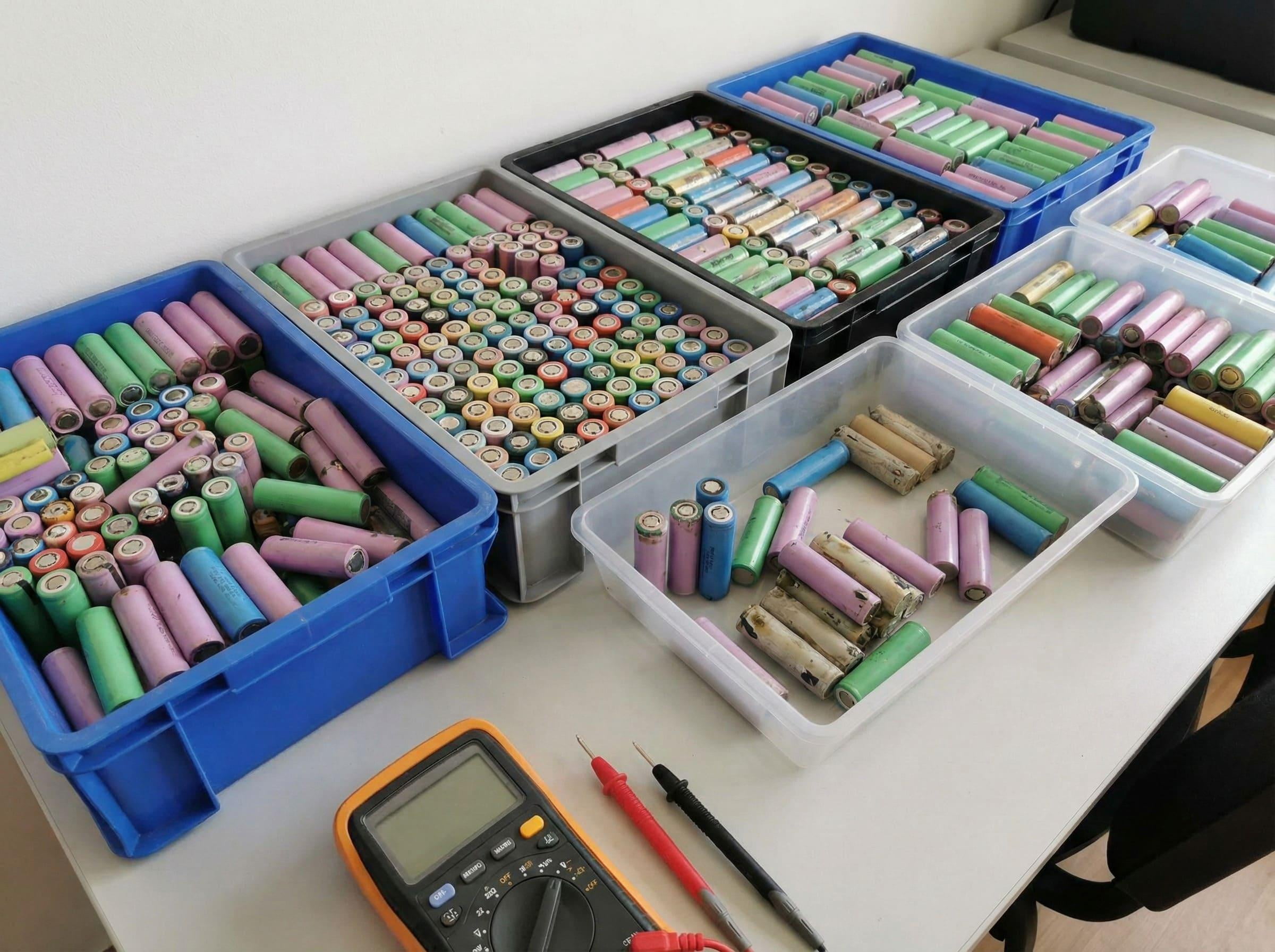
The end-of-life value of a battery is an often-overlooked part of its total cost of ownership. This value comes from the second-life market, where used cells are repurposed, and from material recycling. Here, the 18650 has a distinct advantage due to its incredible popularity.
The 18650 Aftermarket
There is a massive global ecosystem built around used 18650 cells.
- High Demand: Hobbyists and DIY enthusiasts constantly search for used 18650s to build their own e-bike batteries, home energy storage (powerwalls), and other custom projects.
- Established Process: Companies specialize in salvaging 18650s from old laptop battery packs, testing them, grading them, and reselling them. This creates a stable market with predictable pricing. Recyclers know they can sell a functional, tested 18650 for reuse, which is far more profitable than just extracting its raw materials.
The 26650 Aftermarket
The market for used 26650 cells is much smaller and more niche.
- Limited Demand: These cells are primarily used in specific high-power applications like powerful flashlights or some energy storage systems. There isn't a large DIY community creating demand for used 26650s.
- Value in Materials: Consequently, the end-of-life value of a 26650 is tied more closely to the fluctuating market price of its raw materials (lithium, iron, phosphate, copper). This value is almost always lower than the reuse value of a healthy 18650 cell.
While this may not seem critical for a company designing a new product, it is an important part of a product's sustainability plan and financial lifecycle. For large deployments, the ability to recover higher value from products at the end of their life can become a meaningful financial benefit.
Conclusion
In summary, the 26650 often offers lower initial manufacturing costs for large packs due to its high capacity. In contrast, the 18650 provides better long-term serviceability and higher resale value. The right choice depends on your project's priorities. For expert guidance, contact us at Litop.