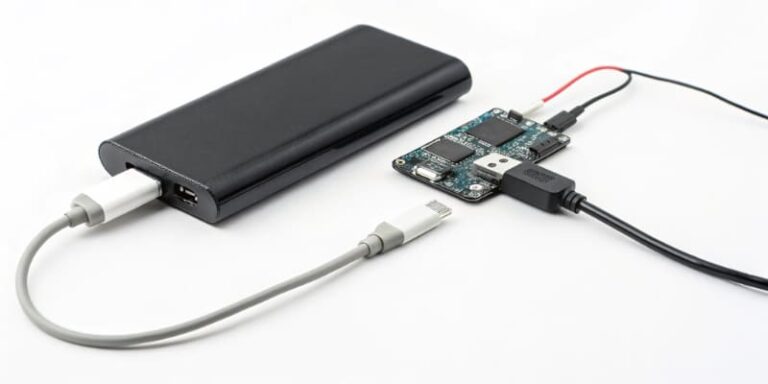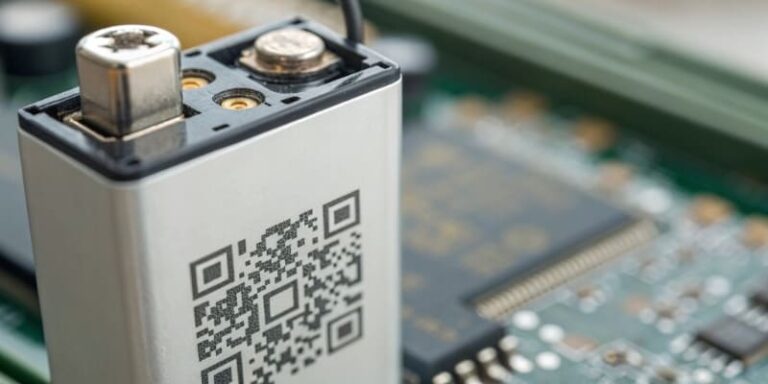
Picking the wrong marine battery can lead to catastrophic failure at sea. Imagine losing power miles from shore, facing serious safety risks. A certified, waterproof lithium battery is your key to safety.
To choose the right battery, prioritize an IP67 or higher waterproof rating and CCS type approval. LiFePO4 chemistry is best for its safety and long life. Also, ensure the design includes robust protection against salt spray, vibration, and extreme temperatures for true marine reliability.
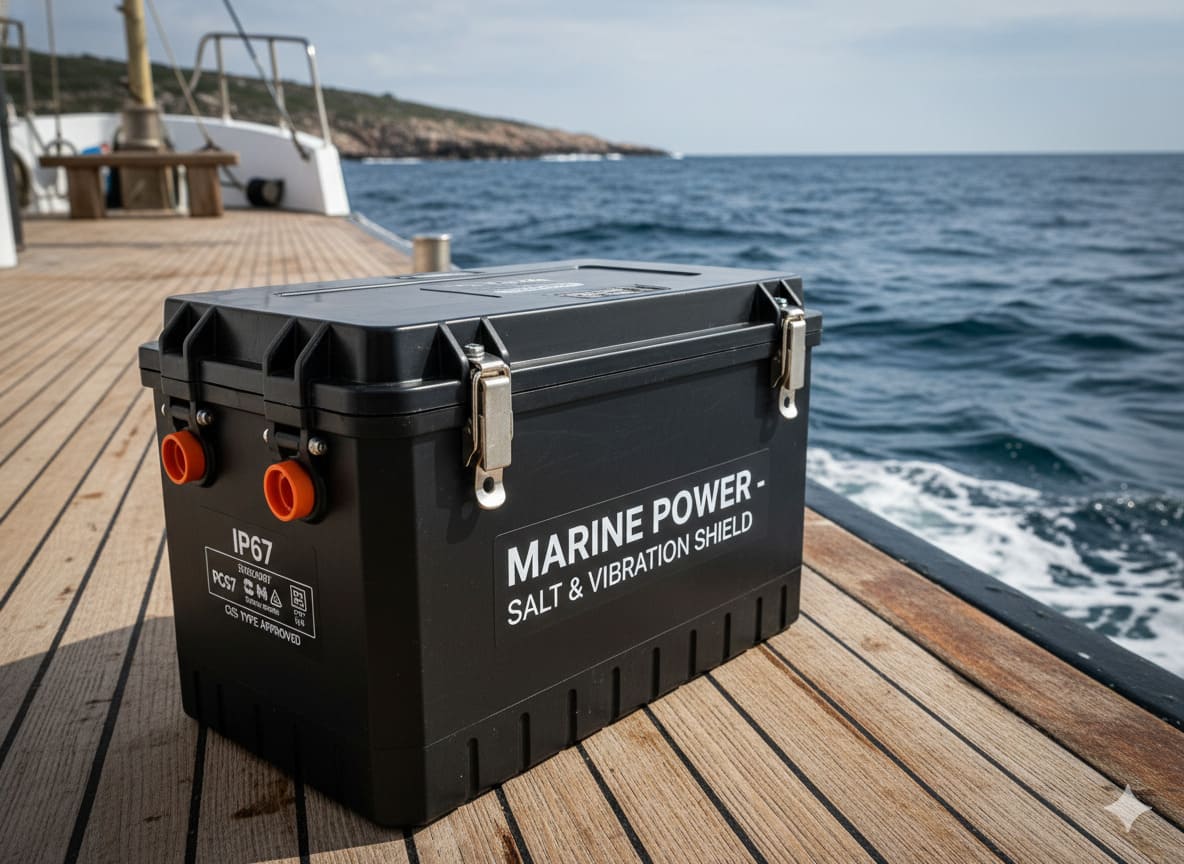
Choosing a battery isn't just about the specs on a data sheet. It's about ensuring reliability when you're surrounded by water. I've worked with many customers, like Michael Johnson, a demanding but fair business owner from the US who procures batteries for medical devices. He taught me that what happens after the purchase—the real-world performance—is what truly matters. His focus on quality and support has shaped how we approach every single battery design. The big picture is important, but the small details are what keep you safe. Let's dive into the specific questions that come up time and time again.
Does a Marine Lithium Battery in a Sealed Box Still Need Ventilation?
You’ve installed your battery in a sealed, waterproof box. But now it’s getting dangerously hot, risking damage and failure. Effective thermal management is crucial, even for sealed units.
Yes, ventilation or a heat dissipation system is essential. Lithium batteries generate heat when charging and discharging. Without a way for this heat to escape, high temperatures can reduce battery life, degrade performance, and even lead to dangerous thermal runaway. It's a critical safety feature.
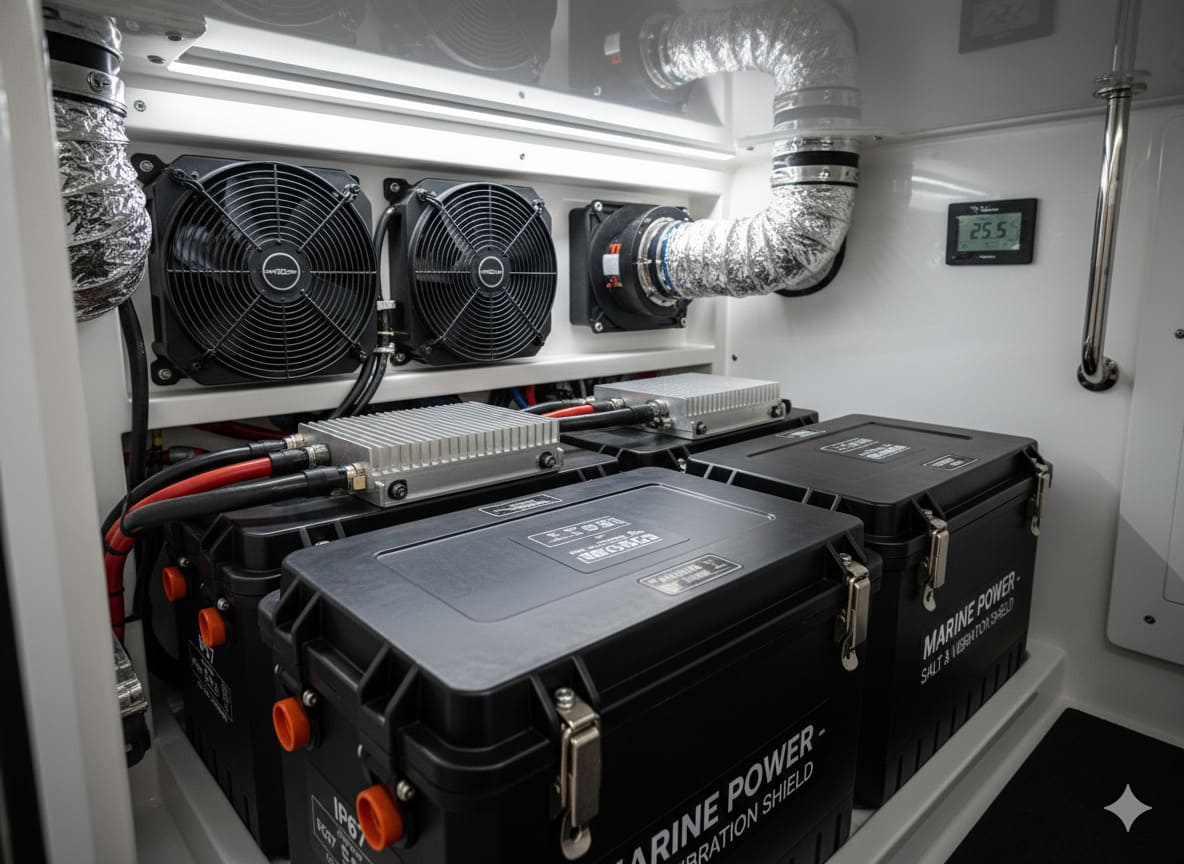
When we talk about marine batteries, especially high-capacity systems for vessels like harbor tugboats or ferries, we're talking about a lot of energy. Charging and discharging this energy creates heat. If you put that battery in a perfectly sealed box to make it waterproof, you also trap all that heat inside. This creates two major problems: performance degradation and safety hazards. High temperatures accelerate the chemical aging of battery cells, permanently reducing their capacity and shortening their service life. More importantly, excessive heat can lead to a dangerous condition called thermal runaway, where the cells enter an uncontrollable, self-heating state that can result in fire or explosion.
The Dangers of Trapped Heat
At Litop, our batteries are designed to meet strict certification standards like the China Classification Society (CCS) type approval. A core part of this is the thermal runaway test, which ensures our battery packs won't explode or catch fire even if a single cell fails. However, preventing that failure in the first place is always the best strategy. Constant operation at elevated temperatures, even below the runaway threshold, will still kill your battery investment prematurely.
Thermal Management Solutions
To solve this, we must have a thermal management strategy. The right approach depends on the battery's size and how it's used.
| Cooling Method | Description | Best For |
|---|---|---|
| Passive Cooling | Uses heat sinks, metal casings, or phase-change materials to naturally draw heat away from the cells and dissipate it into the environment. | Lower-power applications, or where simplicity is a priority. |
| Active Cooling | Uses fans (air cooling) or pumps (liquid cooling) to actively move heat away from the battery. This is controlled by the BMS. | High-power, high-capacity systems (e.g., 1.5-2.5 MWh packs). |
Our Battery Management System (BMS) is the brain of the operation. It constantly monitors cell temperatures and will activate fans or pumps as needed. For our B2B clients, we don't just sell a battery; we help design the entire system, including the housing and cooling, to ensure it operates safely and efficiently for years.
How Damaging Is Salt Spray Corrosion to Battery Terminals?
Your battery terminals are exposed to salty sea air. This seemingly minor issue can cause connection failure, power loss, and even dangerous electrical arcing. Proper protection is not optional.
Salt spray corrosion is extremely destructive. It creates high electrical resistance at the terminals, leading to voltage drops, inefficient charging, and potential connection failure. Long-term prevention involves using corrosion-resistant materials, applying protective coatings or grease, and ensuring all connections are properly sealed with gaskets or silicone.
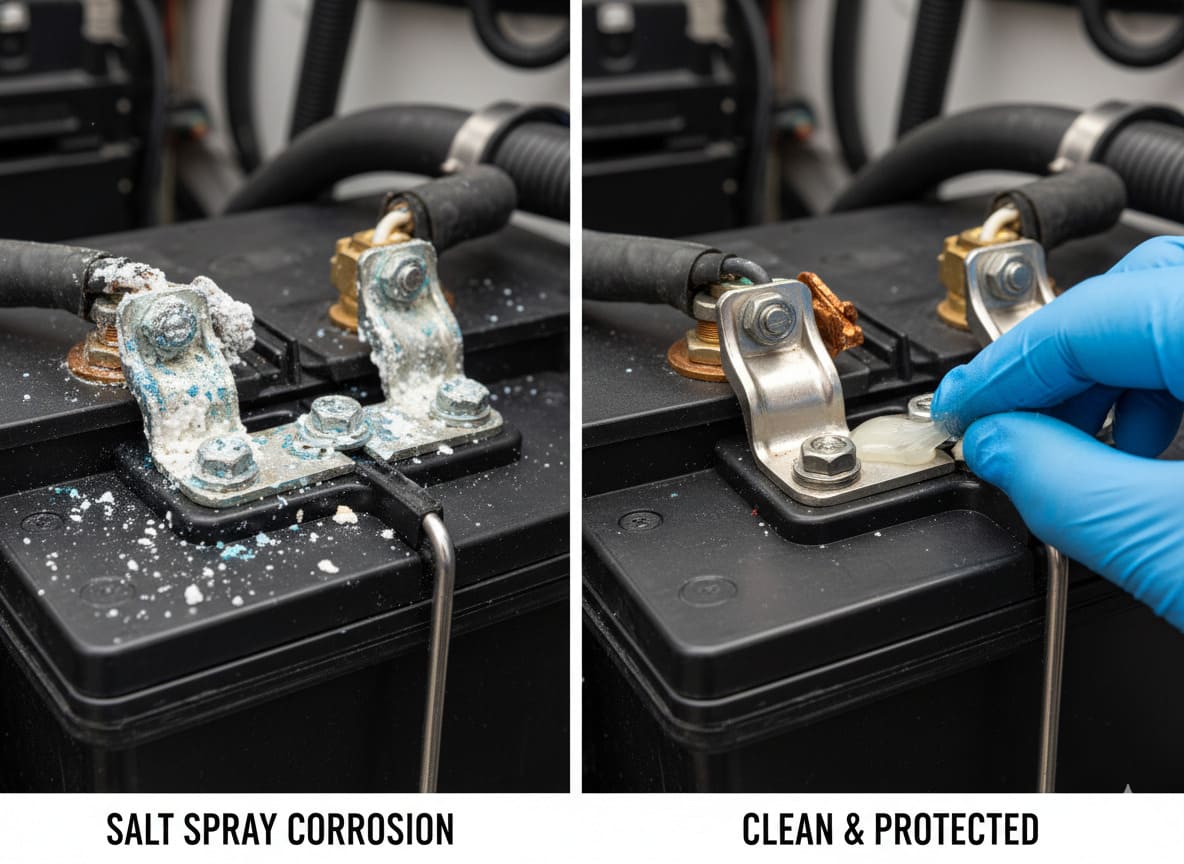
I remember a client who came to us after his previous supplier's batteries failed. His vessel's navigation system went dark mid-voyage because the battery terminals had completely corroded. It was a terrifying experience for him and a powerful lesson for me about how a "small detail" can have massive consequences. The marine environment is relentlessly harsh. The combination of moisture and salt in the air creates an electrolyte that aggressively attacks metal, especially electrical connection points like battery terminals. This corrosion isn't just ugly; it's a direct threat to the functionality and safety of your entire electrical system.
The Chain Reaction of Corrosion
When corrosion builds up on a terminal, it acts like an insulator, increasing the electrical resistance of the connection. This has several negative effects. First, it causes a voltage drop, meaning your devices don't get the full power they need. Second, it makes charging less efficient, as energy is lost as heat at the corroded terminal instead of being stored in the battery. This excess heat can melt wiring insulation and, in the worst-case scenario, become an ignition source for a fire. If the corrosion is severe enough, the connection can fail entirely, leading to a complete and sudden loss of power.
A Multi-Layered Defense Strategy
At Litop, preventing this is a core part of our design philosophy for marine batteries. A truly waterproof battery must also be corrosion-proof.
- Material Selection: We start by using the right materials. This means terminals made from stainless steel or copper with special plating that resists oxidation.
- Sealed Interfaces: This is the most critical step. Our battery packs are designed with high-grade silicone gaskets and seals around all connectors and cable entry points. This creates an airtight barrier that keeps the salt spray out, which is a key part of achieving an IP67 rating.
- Protective Coatings: For any connections made in the field, we always advise customers to use a dielectric grease or a specialized anti-corrosion spray. This adds an extra layer of protection, displacing moisture and sealing out air.
- Regular Inspection: No system is completely "install and forget." We provide our clients with a simple maintenance checklist to periodically inspect terminals for any early signs of corrosion, ensuring small issues can be addressed before they become big problems.
What Should You Do If Seawater Floods an IP67-Rated Battery Compartment?
Your IP67 battery compartment was flooded with seawater. The battery seems fine, but hidden salt residue is a ticking time bomb for future corrosion. Proper cleaning is essential now.
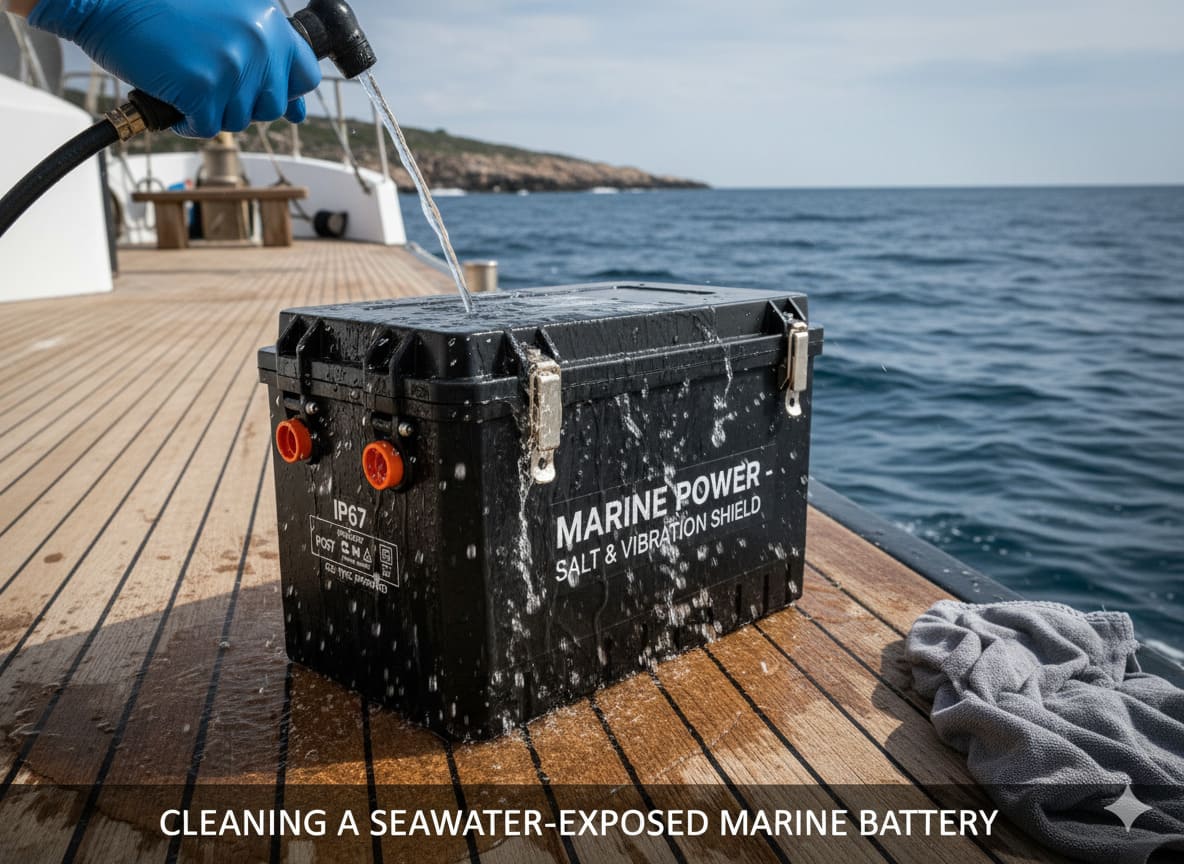
Even with an IP67 rating, you must act fast. First, disconnect all power to prevent short circuits. Thoroughly rinse the battery casing and surrounding area with fresh water to remove all salt. Dry everything completely, especially connectors and terminals, before reconnecting power and inspecting for damage.
An IP67 rating is a fantastic feature. It means the battery is tested to be dust-tight and can withstand being submerged in 1 meter of water for 30 minutes. This provides great peace of mind against splashes, heavy rain, or even a brief, accidental drop into the water. However, it's a resistance rating, not a license for the battery to live underwater. Seawater is much more aggressive than the fresh water used in testing. If your battery compartment floods, even if the battery itself survives, the salt left behind is a major problem for everything around it, including the battery's external connections.
Understanding the Limits of IP67
The IP67 rating protects the sensitive electronics and battery cells inside the sealed casing. It doesn't protect the external terminals, wiring, or connectors from the corrosive effects of salt. When seawater evaporates, it leaves behind a concentrated salt residue. This residue is conductive and can create small short circuits between terminals. It also aggressively corrodes any exposed metal, which can lead to connection failures weeks or even months later. You cannot assume everything is fine just because the battery still works immediately after being dried.
Post-Immersion Emergency Protocol
If you discover seawater has entered your battery compartment, you need to follow a clear procedure.
- Safety First: Disconnect Power. This is the most important step. Shut off all breakers and physically disconnect the battery terminals. This prevents any short circuits from the conductive saltwater and makes the area safe to work in.
- Freshwater Rinse. Once the power is off, thoroughly rinse the battery's exterior casing, all wiring, and the entire compartment with fresh, clean water. The goal is to dissolve and wash away all the salt residue. Use a low-pressure hose or spray bottle, not a high-pressure washer.
- Thorough Drying. Dry everything completely. Use clean cloths to wipe down all surfaces. Use compressed air (at a low pressure) to blow water out of connectors, terminals, and other hard-to-reach areas. Afterward, let everything air dry for several hours.
- Detailed Inspection. Before reconnecting power, carefully inspect all terminals and wiring for any signs of discoloration or early corrosion. If you see any, clean them with a wire brush and apply a protective coating.
- Professional Check. If you have any doubts, it's best to contact the manufacturer. Our advanced BMS often includes water detection sensors that can log an immersion event, which helps us diagnose potential long-term issues.
How Do LiFePO4 Batteries Handle Extreme Marine Temperatures?
Marine environments swing from freezing cold to scorching heat. A standard battery might lose power or fail completely in these conditions. You need a solution built for temperature extremes.
LiFePO4 (LFP) batteries are very stable and safe at high temperatures, resisting thermal runaway. However, performance drops in extreme cold. For low-temperature operation, our batteries include built-in heating elements and specialized BMS control to maintain optimal performance, ensuring reliability from -40°C to 85°C.
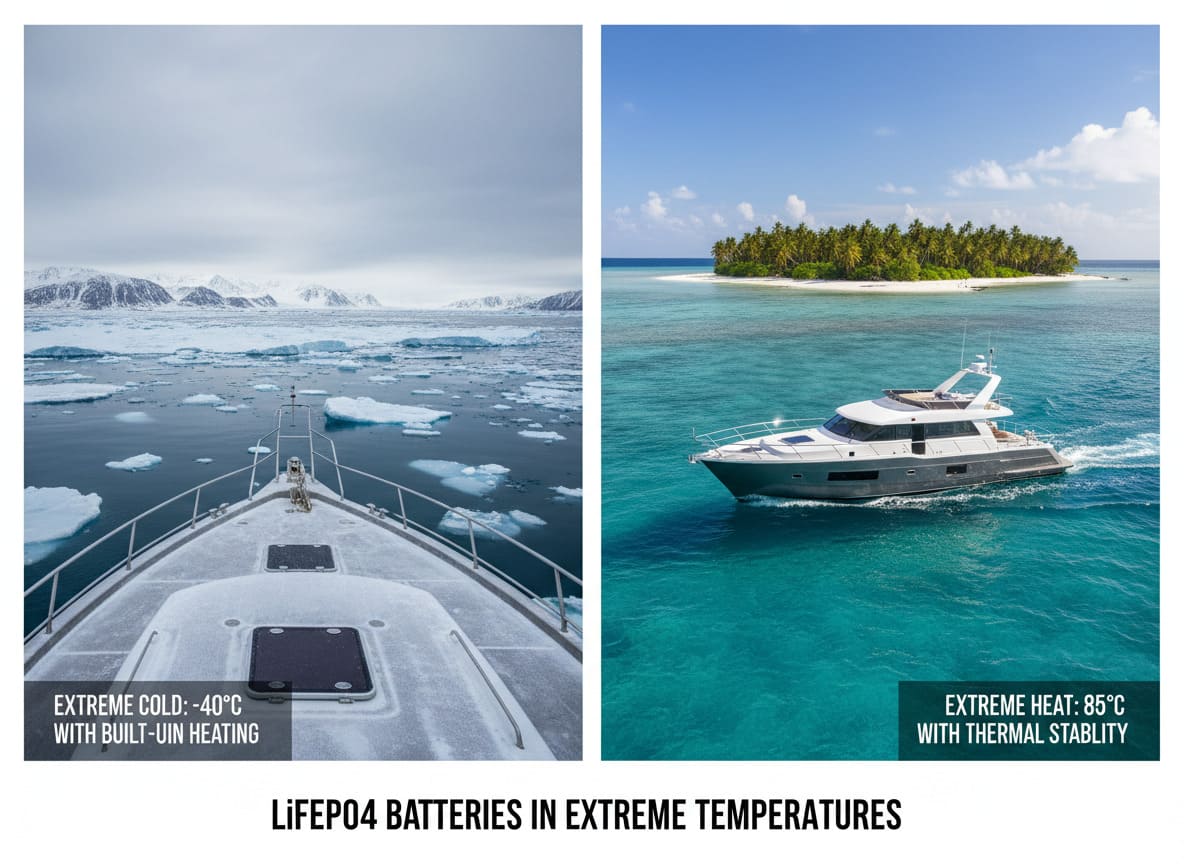
From the icy waters of the North Atlantic to the sweltering humidity of the Caribbean, a marine battery must be able to perform. Temperature is one of the biggest challenges for any battery chemistry. For marine applications, we overwhelmingly recommend Lithium Iron Phosphate (LiFePO4) because of its excellent thermal stability and safety, but it's important to understand how it behaves at both ends of the thermometer. As a company that exports to clients in Russia, Canada, and Brazil, we have deep experience in engineering batteries for these very different climates.
The High-Temperature Advantage
This is where LiFePO4 truly shines compared to other lithium chemistries like NMC (used in many electric cars). The chemical structure of LiFePO4 is inherently more stable. It has a much higher thermal runaway threshold, beginning to break down around 270°C, while NMC can become unstable at around 210°C. This provides a significantly larger safety margin in a hot engine room or under a baking sun. This inherent safety is a primary reason why LiFePO4 is the preferred choice for applications where safety is non-negotiable, and it’s why it can pass the demanding thermal tests required by marine certifications.
Overcoming Cold-Weather Challenges
The main weakness of standard lithium batteries is cold. Below 0°C (32°F), a couple of things happen. First, the battery's ability to deliver high power is reduced. Second, and more critically, charging a frozen lithium battery can cause permanent, irreversible damage called lithium plating, which reduces capacity and can create an internal short circuit. You absolutely cannot charge a standard LiFePO4 battery below freezing.
This is where custom engineering comes in. For our clients operating in cold climates, we don't just sell a standard battery. We provide a complete low-temperature solution.
- Low-Temperature Cells: We select specific cell formulations with electrolytes that perform better in cold conditions.
- Integrated Heating: We build ultra-thin heating films directly into the battery pack, right next to the cells.
- Smart BMS Control: The Battery Management System is programmed to handle the cold automatically. If the battery temperature is below, for example, 5°C, the BMS will block any incoming charge from going to the cells. Instead, it will use a small amount of the battery's own power to run the internal heater. Once the BMS senses the cells have warmed up to a safe temperature, it will automatically open the path for charging. This ensures both optimal performance and long-term health, enabling reliable operation in environments down to -40°C.
Conclusion
Choosing the right marine battery means prioritizing safety and reliability. Focus on an IP67 LiFePO4 battery with CCS approval. Don't overlook crucial details like thermal management, corrosion proofing, and extreme temperature performance. Making the right choice ensures your vessel stays powered and safe on every voyage.