Choosing the right drone battery feels like a puzzle. You need more power, less weight, and you must follow the rules. It gets complicated when these three things conflict.
To choose the right UAS battery, you must balance three key areas. First, calculate your power requirements based on flight time. Next, select a battery chemistry that offers the best energy density for your weight limit. Finally, ensure the battery has all the necessary compliance certifications.
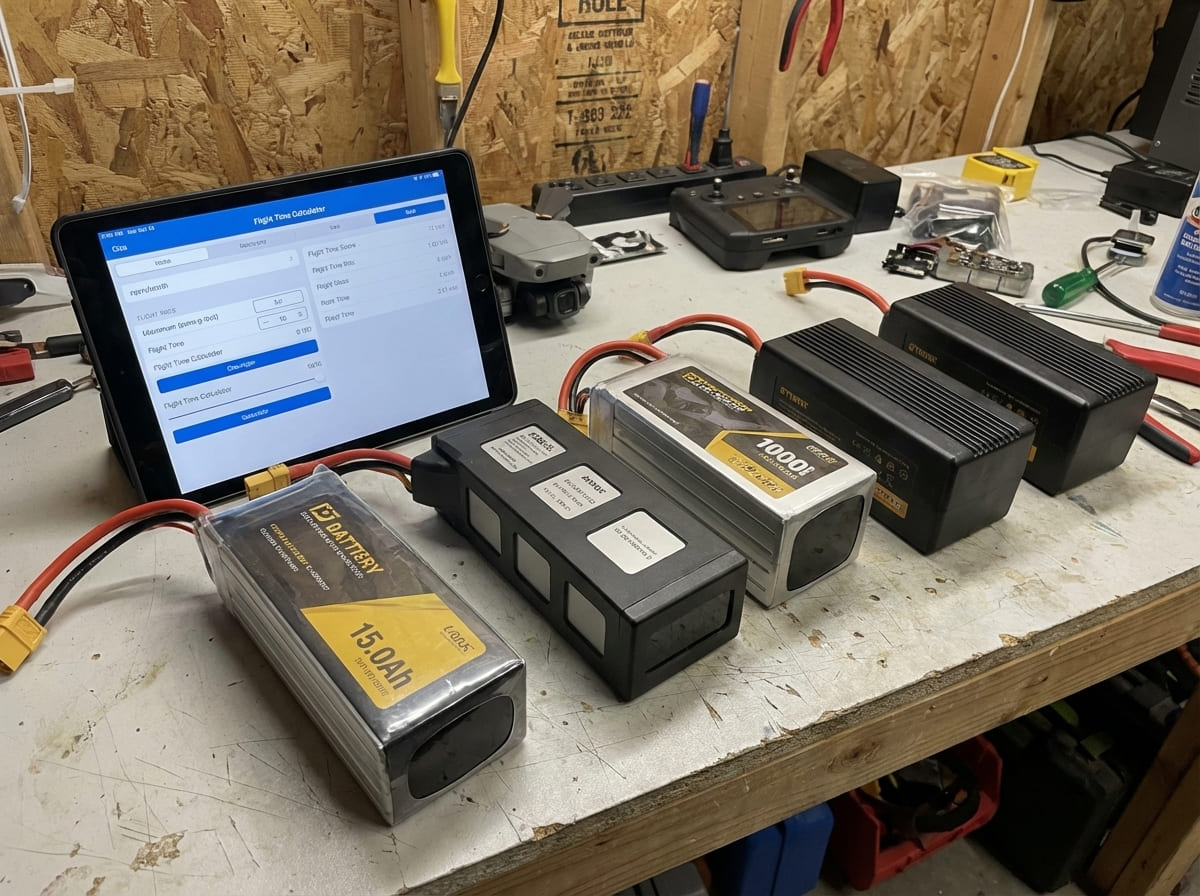
This process seems like a lot to handle at once, doesn't it? It can feel overwhelming when a single choice can affect performance, safety, and even your legal right to fly. But don't worry. I've been helping companies build custom battery solutions for years, and I can simplify it for you. In this guide, I will walk you through each critical decision, so you can choose the perfect battery with confidence.
How much better are the latest high-energy-density lithium batteries compared to traditional LiPo batteries1 for flight time in 2026?
Your drone’s flight time always feels too short. You spend more time swapping batteries than flying. This constant interruption limits your missions and makes professional work feel inefficient and frustrating.
By 2026, high-energy-density batteries like semi-solid-state will likely boost flight times by 30-50% over traditional LiPo batteries of the same weight. Emerging technologies like silicon anode batteries could push this increase even further, offering significantly more power without adding bulk to your drone.
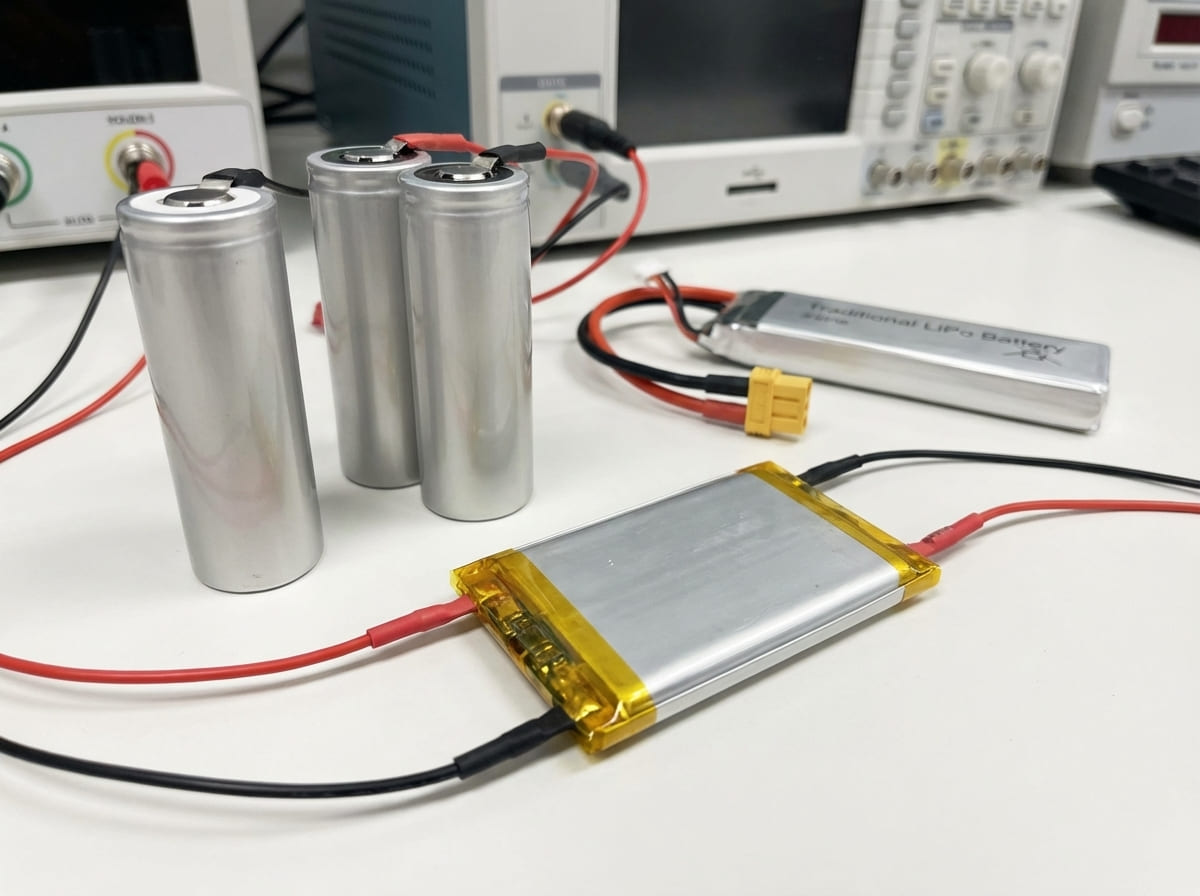
To really understand the impact, we need to talk about energy density. This is measured in watt-hours per kilogram (Wh/kg). A higher number means more power for the same weight, which is the key to longer flights. For years, we have relied on traditional Lithium Polymer (LiPo) batteries, but we are reaching the limits of what they can do.
Traditional LiPo Limitations
Standard LiPo batteries have been great, but they have their drawbacks. Their energy density typically sits between 180-250 Wh/kg. We haven't seen major improvements in this number for a while. They are also sensitive to high temperatures and can be physically fragile, which poses a safety risk if they are punctured or damaged during a hard landing. For demanding commercial applications, these limitations are becoming a real problem.
The Promise of New Chemistries
Luckily, new battery technologies are changing the game. At Litop, we are always working with the latest cell chemistries to build better packs for our clients.
- Semi-Solid-State: These batteries use a gel-like electrolyte instead of a liquid one. This makes them much safer and less likely to catch fire. More importantly, their energy density is already pushing 300-350 Wh/kg. For a drone operator, this translates directly into a much longer flight on a single charge.
- Silicon Anode: This is another exciting development. By replacing the graphite in a battery’s anode with silicon, we can store much more energy. Silicon can hold over ten times more lithium ions than graphite. This could lead to batteries with an energy density of over 400 Wh/kg. The main challenge has been managing the silicon's tendency to swell, but recent breakthroughs are solving this issue.
Here is a simple table to compare them:
| Battery Type | Estimated Energy Density (2026) | Flight Time Increase (vs. LiPo) | Key Advantage |
|---|---|---|---|
| Traditional LiPo | 180-250 Wh/kg | Baseline | Proven, affordable |
| Semi-Solid-State | 300-350 Wh/kg | ~30-50% | Enhanced safety, better density |
| Silicon Anode | >400 Wh/kg | ~50-80% | Highest potential energy density |
These new technologies will cost more at first. But for any serious commercial drone operation, the extra flight time means more efficient work, which will easily justify the investment.
What are the legal consequences of exceeding the 250g or 25kg MTOM by using a larger battery?
You want to add a bigger battery for much longer flights. On the surface, it seems like a simple upgrade. But that small weight increase could push your drone into a completely new legal category, leading to strict rules, training requirements, and even heavy fines if you get it wrong.
Exceeding the Maximum Takeoff Mass (MTOM) has serious legal consequences. A drone over 250g often requires registration and a pilot certification. Crossing the 25kg limit puts you in a high-risk category that demands special permits, complex operational plans, and large fines for non-compliance.
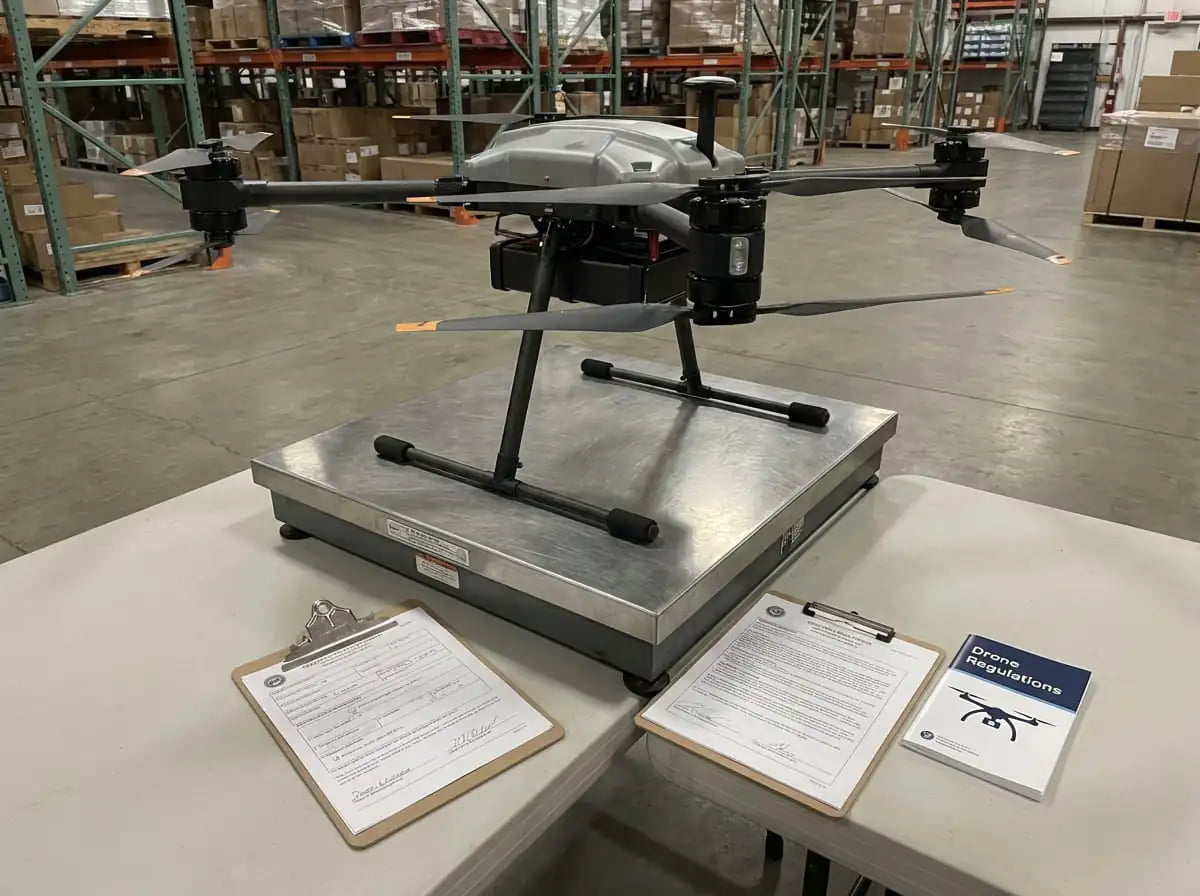
Before we dive deeper, it's important to know what MTOM means. It is not just the weight of the drone itself. It is the total weight of the drone plus the battery and any payload you have attached, like a camera or sensor. A slightly heavier battery can easily push you over a critical weight limit.
The Sub-250g "Micro" Category
In many countries, including the United States and across Europe, drones under 250g fall into the safest and least restrictive category. You often don't need to register them, and the rules for where you can fly are much more relaxed. Sometimes, you can even fly them over people. Adding a bigger battery that pushes your drone to 251g means you lose all these benefits instantly. You will then need to register the drone with the aviation authority (like the FAA in the US), pass a knowledge test, and follow much stricter operational rules.
The 250g to 25kg "Open" Category
This is where most consumer and professional drones operate. The rules in this category are already more complex and are often broken down into sub-categories based on risk. While a slightly heavier battery might not push you into a new sub-category, it still has an impact. Regulators care about safety, and an overweight drone is an unsafe drone. It might not handle well in wind and could be more dangerous if it fails.
The Over-25kg "Certified" Category
Crossing the 25kg line is a massive deal. This is not a mistake you want to make. Once your drone's MTOM is over 25kg, you are operating in the same regulatory space as large, commercial aircraft. You will need a specific operational authorization from your country's aviation authority. This involves submitting a detailed risk assessment, proving the airworthiness of your drone, and potentially obtaining a pilot license similar to that for manned aircraft. Flying a drone this heavy without the proper authorization is a serious offense that can lead to thousands of dollars in fines, the loss of any existing licenses, and even criminal charges.
How do I calculate the "power-to-weight ratio" balance point for my drone to avoid issues?
You just installed a huge battery for incredible flight time. But now, your drone feels heavy and sluggish. The motors are working overtime, getting hot, and that big new battery is draining much faster than you expected. You've actually made performance worse, not better.
To find your drone's balance point, first check the specs to find the maximum thrust per motor. A healthy power-to-weight ratio is at least 2:1. To check this, add your battery's weight to the drone's All-Up Weight (AUW). If your total thrust is less than twice this new AUW, your battery is too heavy.
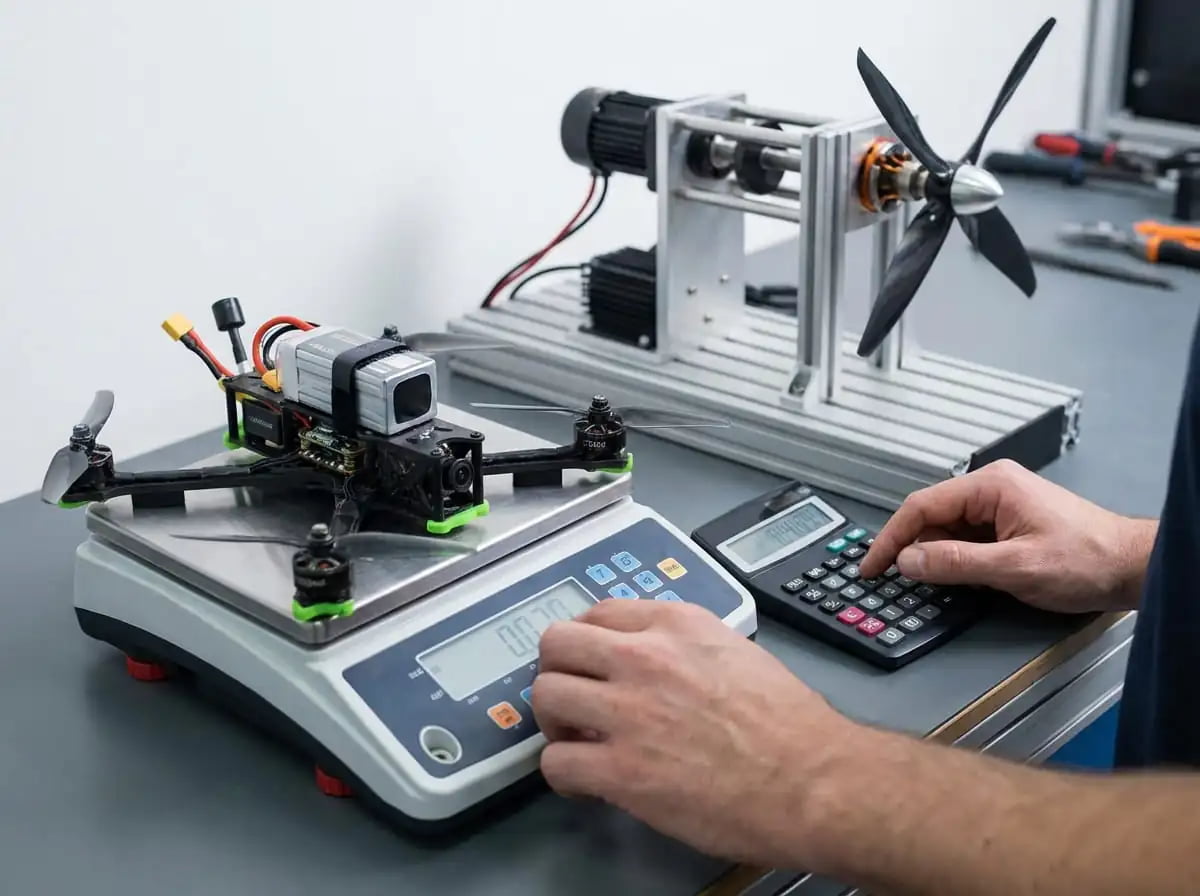
The power-to-weight ratio is a simple concept. It compares how much lifting power your motors have versus the total weight they need to lift. A high ratio gives you an agile and responsive drone. A low ratio means your drone will struggle just to stay in the air. Let me break down how to calculate it.
Step 1: Find Your Maximum Thrust
Your motor manufacturer should provide a data sheet. This document will show you how much thrust, usually in grams, a single motor can produce with a specific propeller at 100% throttle. All you have to do is multiply this number by the number of motors on your drone. For example, if one motor can produce 1200g of thrust, a quadcopter will have a total maximum thrust of 4800g (1200g x 4).
Step 2: Calculate Your All-Up Weight (AUW)
This is the total weight your drone needs to lift. Start by weighing your drone without the battery. Then, add the weight of the new battery you want to use. Finally, add the weight of any payload, like a camera or sensor. For example: Drone frame (1100g) + New Battery (900g) + Camera (300g) = 2300g AUW.
Step 3: Find the Ratio and The Sweet Spot
Now, just divide your total maximum thrust by your AUW. Using our example from above: 4800g / 2300g = 2.08. This gives you a power-to-weight ratio of about 2.1:1. This is a healthy ratio. The problems start when this number gets too low. An ideal drone should be able to hover at around 50% throttle. If your AUW is so high that you need 75% throttle or more just to hover, your battery is definitely too heavy. The motors will constantly run hot, lose efficiency, and wear out quickly. This is the point of diminishing returns, where a heavier battery actually gives you less flight time because the system is so inefficient.
- A simple rule of thumb:
- Greater than 2:1: Good. Your drone will be agile and have plenty of reserve power.
- Around 2:1: Acceptable. Good for stable flight, but it will feel less responsive.
- Less than 1.5:1: Dangerous. The drone will be unstable, struggle to climb, and will not handle wind well. You risk overheating and motor failure.
In 2026, will third-party batteries interfere with a drone's smart BMS and Remote ID?
You found a third-party battery for your drone online. It has a higher capacity and costs less than the official one. It seems like a great deal. But when you plug it in, your drone might refuse to start, give you constant error messages, or even get you in trouble for not complying with regulations.
Yes, a third-party battery can interfere with a drone’s systems. Smart Battery Management Systems (BMS)2 often use proprietary communication protocols to report cell health and status. A non-OEM battery may fail this "handshake," causing errors, incorrect battery readings, or even grounding the drone for safety reasons.
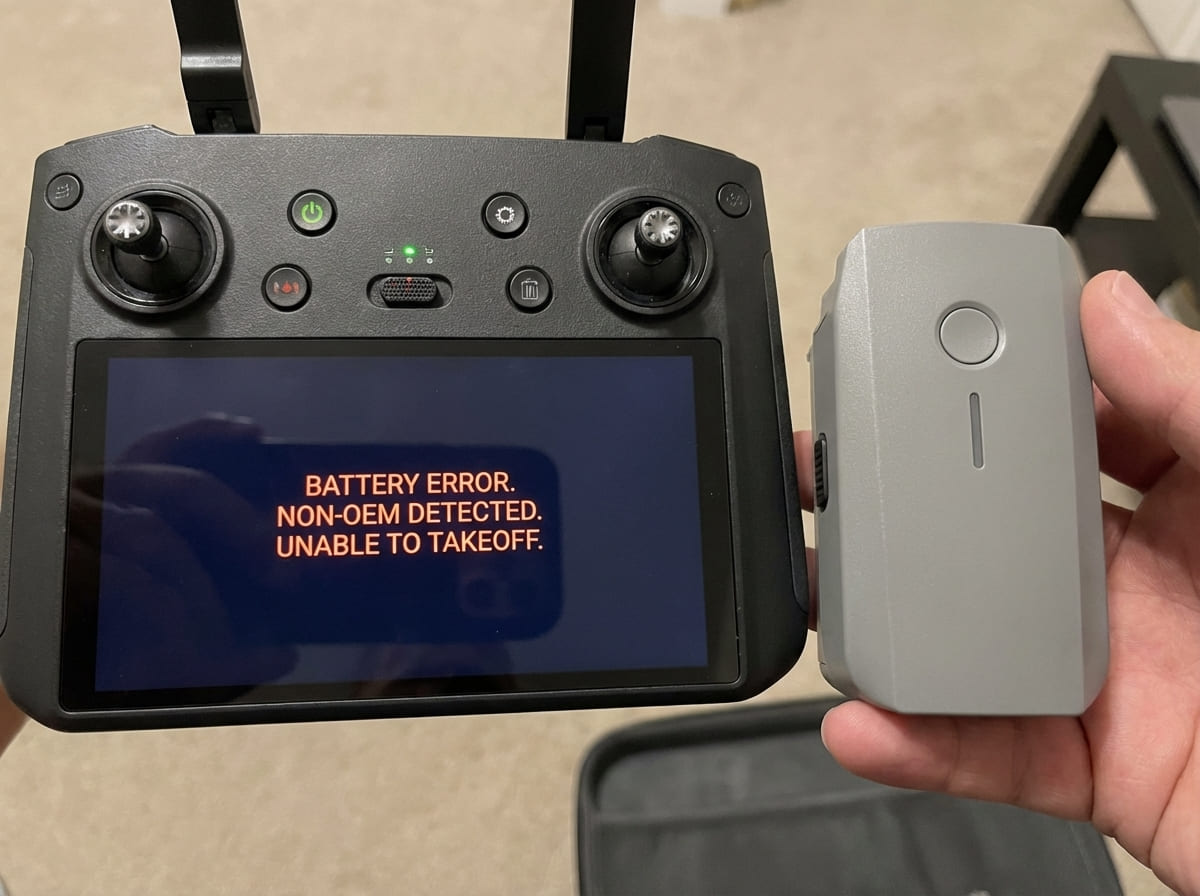
A modern drone battery is more than just a power source; it's a small computer. Its smart BMS constantly communicates with the drone's flight controller. This is where problems with third-party batteries often start.
The OEM "Handshake"
Major drone manufacturers like DJI have created closed ecosystems. Their drones and batteries are designed to work only with each other. They do this through a digital "handshake." The drone's flight controller sends a request to the battery's BMS over a communication line. It asks for specific data, such as individual cell voltages, battery temperature, and the total number of charge cycles. If the third-party battery doesn't have the correct chip and firmware to provide the exact right answer, the drone's software may assume the battery is fake or faulty. As a safety measure, it might refuse to arm the motors, leaving you grounded.
Impact on Remote ID
Remote ID is a feature now required in many countries. It acts like a digital license plate, broadcasting your drone's identification and location. This system is powered by the main battery and controlled by the flight controller. If the flight controller is getting bad or incomplete data from a third-party BMS, it can cause system-wide instability. This could interfere with the Remote ID broadcast or, even worse, cause the flight controller to trigger a low-battery failsafe prematurely because it can't get an accurate reading of the remaining power.
The Future for Third-Party Options
As we look toward 2026, I expect two things to happen. First, drone manufacturers will likely make their communication protocols even more secure and difficult to copy. Second, reputable third-party battery makers will get better at engineering solutions that work. My advice is to be very careful. Only buy from a supplier who can explicitly guarantee full compatibility with your drone model. At my company, Litop, we solve this by working directly with device manufacturers. We design custom BMS solutions that integrate perfectly with their systems, so these communication errors never happen in the first place.
Conclusion
Choosing the right UAS battery is a careful balancing act. It's a three-step process: calculate your power needs, pick the right battery chemistry for your weight class, and always verify legal compliance. New tech offers longer flights, but always respect weight limits and ensure smart system compatibility.