Drones failing mid-flight destroys projects and ruins reputations. Heavy batteries kill agility, but small ones limit flight time. Finding the perfect balance protects your equipment and maximizes efficiency.
The key to balancing capacity and weight is maximizing energy density (Wh/kg). You must identify the point of diminishing returns where added battery weight consumes more power than the extra capacity provides. For most applications, High-Voltage LiPo or custom Li-ion packs offer the best power-to-weight ratio.
Many people think bigger is always better. I used to think that way too until I saw a heavy drone struggle to lift off. Let me explain why simply adding more power is not the right answer.
What Specific Impact Does Increasing Battery Capacity Have on Flight Time, Payload, and Maneuverability?
Adding weight changes everything about how a drone flies. Your drone feels sluggish, and flight times might not increase as much as you expect. It is a tricky trade-off.
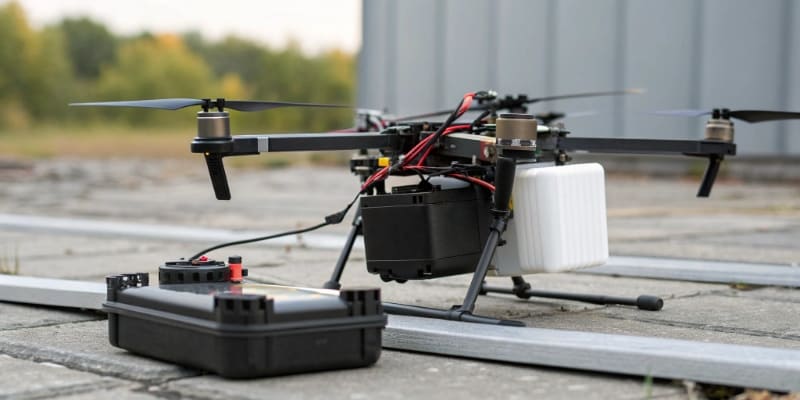
Adding capacity increases flight time only up to a specific tipping point. Beyond this, the motor works harder to lift the extra weight, drawing more current and reducing overall efficiency. Excessive weight also severely reduces payload capacity and makes the drone slow to react.

When we look at drone performance, we have to look at the physics. Every gram you add requires more thrust to lift. At Litop, we see this problem often. Customers ask for the biggest battery possible. But they forget about the "law of diminishing returns."
Here is what happens when you keep adding capacity:
- The first stage: You add a slightly larger battery. The flight time goes up significantly. The motors can handle the weight easily.
- The middle stage: You add even more capacity. Flight time increases, but only by a small amount. The drone feels heavier. It takes longer to stop after moving fast.
- The final stage: You add a huge battery. The flight time actually decreases. The motors are working at maximum power just to hover. The battery drains faster because of the heat and stress.
This balance depends heavily on your drone type. If you fly a consumer drone for photography, you need portability. A battery between 2000mAh and 3800mAh is usually the limit. If you go heavier, the drone becomes hard to carry.
For racing drones, weight is the enemy. We recommend 1000mAh to 1800mAh batteries. These drones need to turn fast. A heavy battery creates too much inertia. The drone will drift wide in turns and crash.
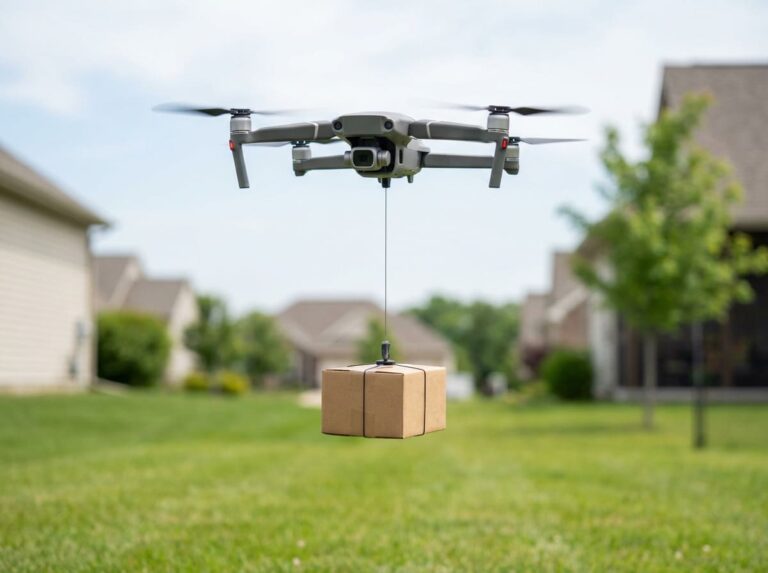
For heavy-lift industrial drones, we use a different strategy. We use high-voltage setups, like 12S combinations. These can handle weights of 4800g to 8500g. We can push capacity to 22000mAh. But the motors must be huge to support this. You must calculate the total "All-Up Weight" (AUW). If the battery takes up 70% of your weight limit, you have no room for cameras or sensors.
Apart from Battery Capacity and Weight, What Are the Most Critical Factors Affecting Drone Endurance?
Batteries are just one part of the puzzle. Ignoring the rest of the system leads to poor performance, no matter how good your power source is.
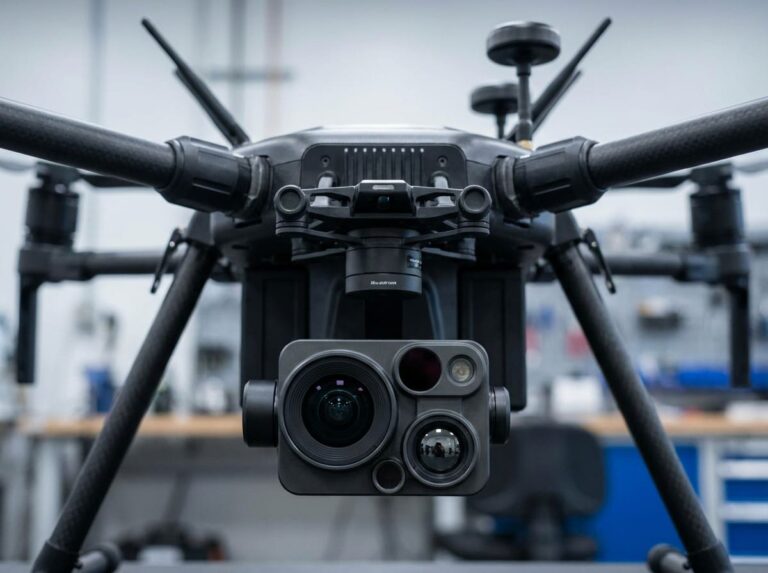
Aerodynamics, motor efficiency, and propeller pitch are vital. A streamlined frame reduces drag, while high-quality motors convert electrical energy into thrust more effectively. Even environmental factors like wind resistance and temperature play a massive role in how long your drone stays in the air.
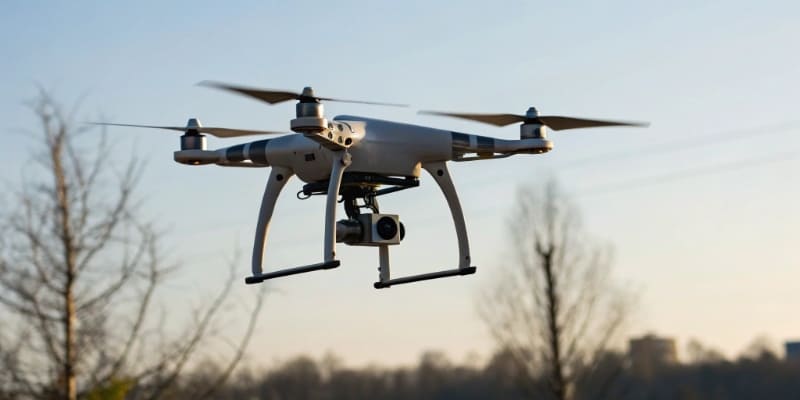
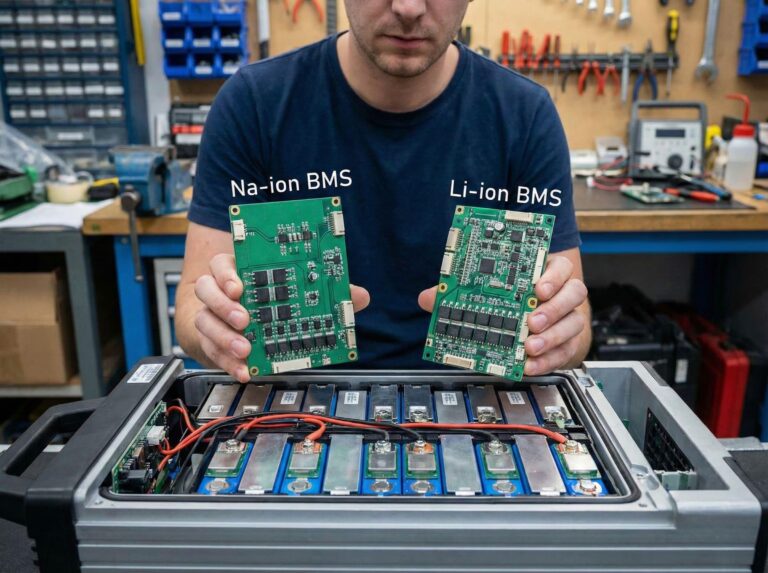
You can have the best battery in the world, but a bad drone design will waste all that energy. I tell my clients to look at the whole system. We design the Battery Management System (BMS)1 at Litop to be efficient, but the drone frame matters just as much.
Motor Efficiency is the first thing to check. Motors have a "KV" rating. Low KV motors spin slower but have more torque. They are better for big propellers and heavy batteries. High KV motors are for speed but drain batteries fast. If you match a heavy battery with a high KV motor, the motor will overheat. It wastes energy as heat instead of lift.
Propeller Choice is next. Larger propellers are generally more efficient. They move more air with less RPM. If your frame allows it, use larger props. But you must check the "pitch" of the blade. High pitch is for speed. Low pitch is for stability and lifting. For long flight times, a large, low-pitch propeller is best.
The Environment changes your results. I have seen batteries perform perfectly in the lab but fail in the field.
- Temperature: Lithium batteries hate the cold. In freezing weather, capacity drops. You might need our Low-Temperature Lithium Battery Packs.
- Wind: Fighting wind uses a lot of power. A streamlined drone cuts through the air. A bulky drone fights the air.
- Altitude: The air is thinner higher up. The propellers must spin faster to get the same lift. This drains the battery quicker.
Finally, the BMS plays a silent role. A cheap BMS wastes power through heat or poor balancing. A high-quality BMS ensures every bit of energy goes to the motors. It also protects the cells from over-discharge, which ruins the battery life.
Are There Recommended Specific High-Energy Density Battery Chemistries That Offer the Best Ratio?
Not all lithium batteries are created equal. Choosing the wrong chemistry means carrying unnecessary weight. You need the right chemical mix for the job.
Lithium Polymer (LiPo) batteries2 are generally the standard for drones due to their high discharge rates and form factor flexibility. However, for long-endurance mapping where weight is critical, high-density Lithium-ion (Li-ion) packs with NCA or NMC chemistry often provide superior energy density.
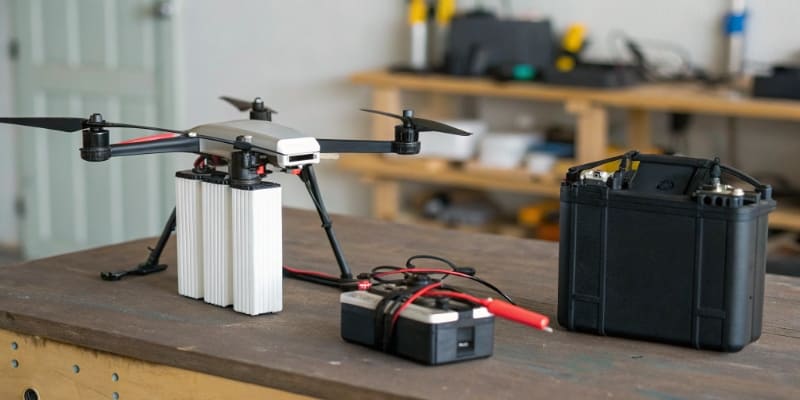
We offer many different chemistries at Litop. Understanding the difference saves you weight. The most important metric is "Gravimetric Energy Density." This measures how much energy (Watt-hours) is in one kilogram of battery.
Lithium Polymer (LiPo) This is the most common choice.
- Pros: It can release energy very fast (High C-rate). This is needed for takeoff and quick maneuvers. We can make them in custom shapes, like curved or ultra-thin, to fit inside sleek drone bodies.
- Cons: The energy density is good, but not the highest. They are slightly heavier for the same capacity compared to Li-ion.
- Best Use: Racing, photography, and general-purpose drones.
Lithium-Ion (Li-ion) Cylindrical Cells (18650 / 21700) These are becoming very popular for fixed-wing drones or long-range quadcopters.
- Pros: Very high energy density. An NMC (Nickel Manganese Cobalt) pack can hold more energy than a LiPo of the same weight.
- Cons: They cannot release energy as fast. If you throttle up quickly, the voltage sags. They are usually cylindrical, so they don't fit in tight, flat spaces.
- Best Use: Mapping, surveillance, and agriculture drones that fly steady and slow.
Solid-State and Semi-Solid Batteries This is the future. We are working on high-voltage semi-solid batteries. These have even higher density. They are safer and lighter. They are expensive right now but offer the best performance.
| Feature | Standard LiPo | High-Voltage LiPo (LiHV) | Li-ion (NMC) |
|---|---|---|---|
| Voltage per Cell | 3.7V (4.2V Max) | 3.8V (4.35V Max) | 3.6V (4.2V Max) |
| Discharge Rate | Very High (50C+) | High (30C+) | Low to Medium (10C) |
| Energy Density | Medium | High | Very High |
| Weight | Average | Lighter | Lightest |
For most of my clients, I suggest High-Voltage LiPo3 (LiHV). It gives a higher starting voltage. This means more power for the same weight. It is a good middle ground.
How Do You Calculate or Predict the Optimal Flight Efficiency and Maximum Flight Time for a Given Configuration?
Guessing leads to crashes or lost money. You need a reliable method to predict performance before you buy components. Math saves you time.
You can estimate flight time using the formula: Flight Time = (Battery Capacity × Discharge Limit) / Average Amp Draw. To find the "sweet spot," plot flight time against battery weight. You want the point just before the curve flattens out.
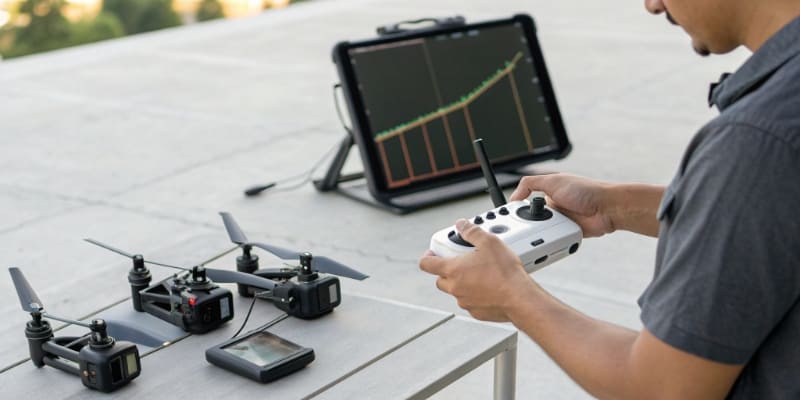
You do not need to be a scientist to do this. But you do need accurate numbers. I help customers with this calculation every day.
Step 1: Determine Your Power Consumption You need to know how many Amps your drone pulls to hover.
- Look at your motor data sheet. It will say "Hover Amps" for a specific propeller and weight.
- Multiply this by the number of motors (usually 4).
- Add 10% for the flight controller, video transmitter, and other electronics.
- Example: A motor pulls 5 Amps to hover. 4 motors = 20 Amps. Add 2 Amps for electronics. Total Draw = 22 Amps.
Step 2: Apply the Formula
The basic formula is:
Time (Hours) = Battery Capacity (Ah) / Current Draw (A)
But you cannot drain a battery to 0%. You should leave 20% for safety. So use 80% of the capacity.
Time = (Capacity × 0.8) / Current Draw
- Example: You have a 5000mAh battery (5Ah).
Time = (5 × 0.8) / 22 = 0.18 Hours0.18 × 60 minutes = 10.9 minutes
Step 3: The Weight Penalty Calculation This is where it gets real. When you pick a bigger battery, the "Current Draw" goes up. If you switch to a 10000mAh battery, you double the capacity. You might think you get 22 minutes. You won't. The heavier battery makes the drone weigh more. Now the motors need 7 Amps to hover, not 5.
- Total Draw = 30 Amps.
Time = (10 × 0.8) / 30 = 0.26 Hours0.26 × 60 = 16 minutes
You doubled the battery size (and cost), but you only got 50% more flight time.
Step 4: Finding the Balance We create a spreadsheet.
- List different battery sizes (Litop 2000mAh, 5000mAh, 10000mAh).
- List the weight of each battery.
- Calculate the new total drone weight.
- Estimate the new hover Amps for that weight.
- Calculate the flight time.
You will see a curve. At first, time goes up fast. Then it slows down. Eventually, it stops going up. You want to pick the battery that sits right at the "knee" of that curve. This gives you the maximum time without overloading your motors.
Conclusion
Balancing capacity and weight requires looking at the whole system. You must prioritize energy density and calculate the point of diminishing returns. Do not just buy the biggest battery. Match the battery chemistry and size to your specific drone mission for the best results.
A good BMS ensures efficient energy use and prolongs battery life, crucial for drone performance. ↩
LiPo batteries are popular for their high discharge rates; learn why they might be the best choice for your drone. ↩
High-Voltage LiPo batteries offer a superior power-to-weight ratio, crucial for drone performance. ↩