Your devices need more power, but you're stuck with standard battery sizes. This forces compromises, but what if you could break free from these limits? It's now possible.
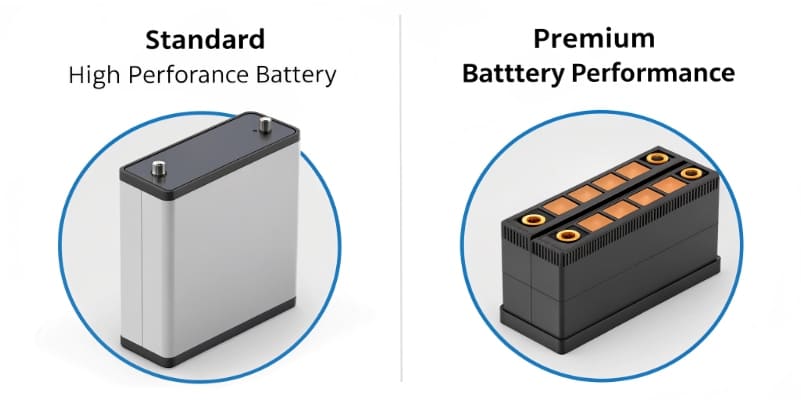
Achieving over 4000mAh in a standard 18650 cell is done by combining advanced materials with precision manufacturing. Key innovations include using high-capacity silicon-based anodes instead of traditional graphite, pairing them with high-nickel cathodes, and optimizing the entire assembly process for maximum energy density and reliability.
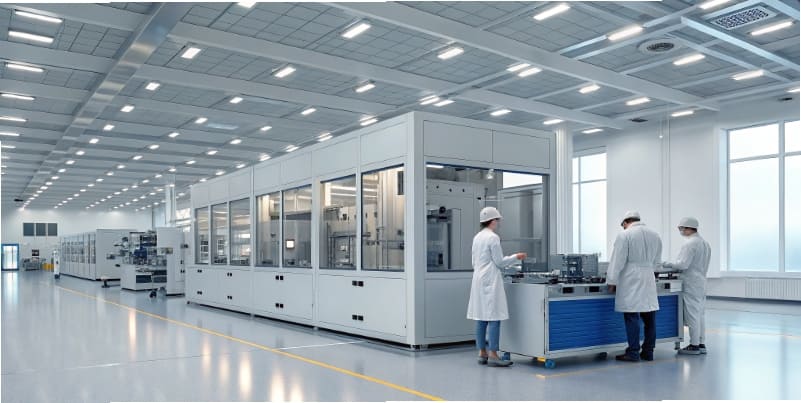
Pushing the boundaries of battery capacity is a constant conversation I have with clients. Everyone wants longer runtimes and more power without making their products bigger. The jump to 4000mAh in a cell size that has been around for decades is a huge deal. It’s not just one single trick; it's a combination of incredible material science and manufacturing discipline. It opens up new possibilities for product design, but it also brings new challenges. Let’s dive into how we got here and what it means for your next project.
What are the main challenges and safety concerns of using silicon anodes for higher capacity?
You've heard silicon anodes can dramatically boost battery capacity. But their reputation for instability and safety risks might make you cautious about adopting this cutting-edge technology.
The main challenge with silicon anodes is their massive volume expansion, which can be over 300% during charging. This expansion can physically break down the anode, reduce the battery’s lifespan, and create internal damage that poses a serious safety risk, including potential thermal runaway.
In my experience, the promise of silicon is impossible to ignore. Theoretically, it can hold ten times more lithium ions than the graphite used in standard Li-ion batteries. This is the secret to unlocking capacities like 4000mAh. However, that massive capacity comes with a huge physical change. Imagine something swelling to three times its original size and then shrinking back, over and over. This is what happens to silicon inside the battery.
This repeated expansion and contraction causes several problems:
- Anode Pulverization: The silicon particles can crack and crumble into dust. These fragmented particles lose electrical contact with the rest of the electrode, meaning they can no longer store energy. This directly leads to rapid capacity fade.
- SEI Layer Instability: As new silicon surfaces are exposed by the cracking, they react with the electrolyte to form a Solid Electrolyte Interphase (SEI) layer. This process consumes lithium ions and electrolyte, permanently reducing the battery’s capacity and cycle life.
- Safety Risks: The breakdown of the anode structure can increase the risk of internal short circuits. Combined with the instability of the SEI layer, this elevates the potential for thermal runaway, where the battery heats up uncontrollably.
To solve this, we don't use pure silicon. We use silicon-carbon (Si-C) composite materials or silicon-oxide (SiOₓ) formulations. The carbon or oxide structure acts as a flexible buffer, giving the silicon space to expand and contract without falling apart. We also use advanced polymer binders that hold the anode together more effectively and special electrolyte additives that create a more stable, flexible SEI layer. It's a complex balancing act between maximizing capacity and ensuring long-term safety and reliability.
| Feature | Graphite Anode | Silicon-based Anode |
|---|---|---|
| Theoretical Capacity | ~372 mAh/g | ~4200 mAh/g |
| Volume Expansion | ~10% | >300% |
| Key Challenge | Limited energy density | Structural instability |
| Primary Solution | Well-established, stable | Composite materials, binders |
Besides silicon, what other new materials or chemistries are being developed to further increase the energy density of lithium-ion batteries?
Relying only on silicon has its limits and risks. You need to know what other options are on the horizon to keep your products competitive and innovative.
Beyond silicon, researchers are actively developing lithium-metal anodes, which offer the ultimate energy density. Other promising systems include lithium-sulfur (Li-S) and all-solid-state batteries (SSBs). SSBs are particularly exciting because they replace the flammable liquid electrolyte with a solid, boosting both safety and performance.
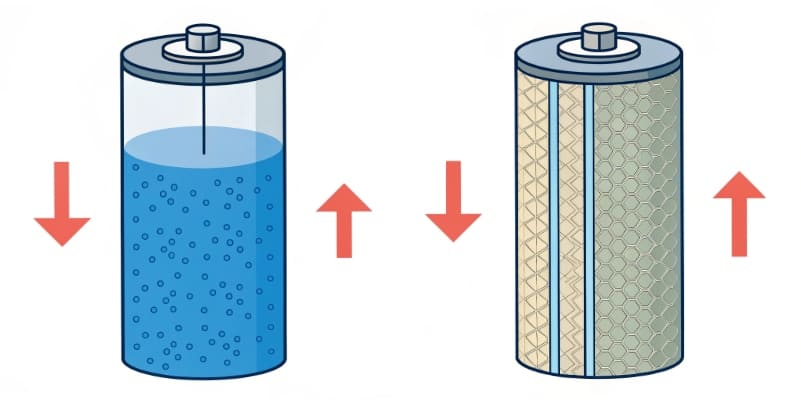
While silicon anodes are a major focus for us right now, the industry is always looking toward the next big leap. It's not just about the anode; innovation is happening across the entire cell. On the cathode side, we're moving toward high-nickel chemistries like NCM (Nickel Cobalt Manganese) and NCA (Nickel Cobalt Aluminum Oxide). By increasing the nickel content, we can pack more energy into the cathode. However, more nickel can mean less stability, so this requires very precise chemical engineering and coatings to ensure safety and a good lifespan.
Looking at completely different systems, there are a few exciting paths forward:
- Lithium-Metal Anodes: This is often called the "holy grail" of battery technology. Using pure lithium metal as the anode provides the highest possible theoretical energy density. The biggest challenge here is controlling the growth of "dendrites," which are needle-like structures of lithium that can grow during charging. These dendrites can pierce the separator, cause a short circuit, and lead to battery failure or fire.
- Lithium-Sulfur (Li-S) Batteries: This chemistry is attractive because sulfur is cheap, abundant, and has a very high theoretical energy capacity. However, Li-S batteries struggle with poor cycle life due to the "polysulfide shuttle" effect, where sulfur compounds dissolve into the electrolyte and migrate, causing rapid capacity loss.
- All-Solid-State Batteries (SSBs): This is one of the most promising long-term solutions. By replacing the liquid electrolyte with a solid material (like a ceramic or polymer), SSBs can eliminate the risk of flammable electrolyte leakage. This increased safety profile allows for the use of high-energy materials like lithium metal for the anode, unlocking a huge jump in energy density. The main hurdles are still manufacturing cost, scalability, and ensuring perfect contact between the solid components.
For our clients in demanding fields like medical and wearable devices, we are closely monitoring the progress of SSBs. Their potential for creating safer, smaller, and even more powerful batteries is exactly what the market is asking for.
Are the cycle life and C-rate performance of these ultra-high capacity batteries sacrificed for the new technology?
A 4000mAh battery sounds incredible for your product. But if it dies after only 100 cycles or can't deliver power quickly, it's a hidden flaw that could frustrate your customers.
Yes, there is an inherent trade-off. Pushing for maximum energy density often comes at the expense of cycle life and high-rate capability (C-rate). Materials like silicon degrade faster, and thicker electrodes slow down ion movement. However, manufacturers use advanced engineering to minimize these sacrifices.
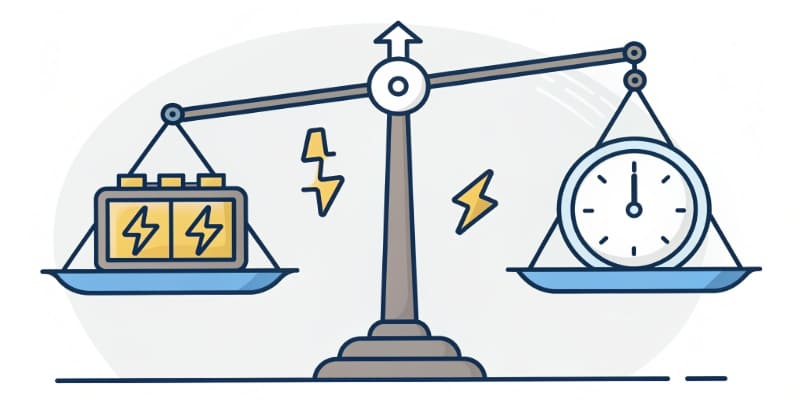
In battery design, there’s a constant balancing act between three key factors: energy density (capacity), power density (C-rate), and cycle life (longevity). You can't maximize all three at once. When we create a 4000mAh+ 18650 cell, we are pushing energy density to its absolute limit, and this has consequences. The silicon anode, as we discussed, is prone to physical degradation, which inherently shortens its cycle life compared to a stable graphite anode.
Similarly, to pack more active material into the same 18650 can, we have to make the electrodes thicker. Thicker electrodes mean the lithium ions have a longer distance to travel between the anode and cathode. This increased travel time slows down the charging and discharging process, which is why ultra-high capacity cells often have a lower C-rate than standard cells. They are designed for long-lasting, low-power applications, not for high-drain devices like power tools.
But we don't just accept these drawbacks. We actively work to mitigate them. My team focuses on several key areas:
- Precision Manufacturing: We use laser cutting for electrodes to create cleaner edges and reduce the risk of microscopic short circuits. We also precisely control the tension during the winding process to ensure the layers are perfectly uniform.
- Advanced Separators: We utilize nano-coated separators. These are extremely thin to save space for more active material, but the ceramic coating provides excellent protection against heat and internal shorts, improving both safety and performance under load.
- Internal Resistance Control: Through these manufacturing techniques and optimized material choices, we can keep the internal resistance incredibly low. For example, we've achieved a full-charge internal resistance of just 15.66mΩ. This is crucial because low resistance minimizes heat generation and voltage sag during discharge, allowing a 4000mAh+ cell to still deliver a practical output of 3954mAh even at a 1C discharge rate.
So, while there is a trade-off, smart engineering ensures the battery remains highly effective for its intended application.
Do these engineering innovations significantly increase the cost, making 4000mAh+ batteries less commercially attractive than standard capacity ones?
Advanced technology always sounds expensive. You might worry that the high cost of a 4000mAh+ cell will price your product out of the market.
Yes, these innovations significantly increase the cost. Advanced raw materials and complex, high-precision manufacturing processes are more expensive. This makes 4000mAh+ cells less suitable for budget-conscious products but extremely valuable for premium applications where performance and size are critical selling points.
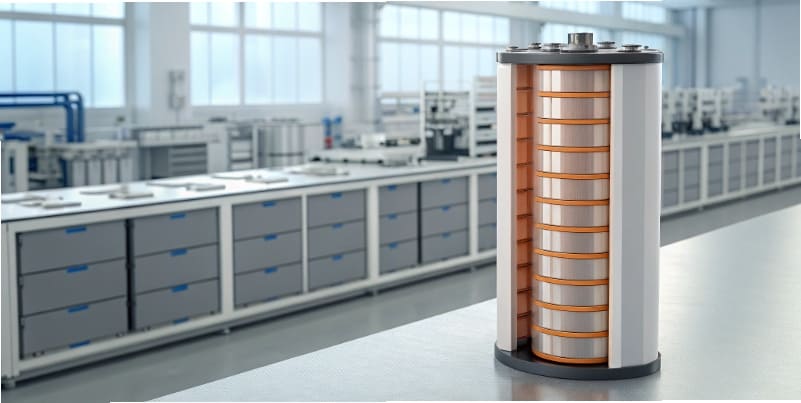
Let's be direct: a 4000mAh+ 18650 battery costs more to produce than a standard 3000mAh cell. There's no way around it. The cost increase comes from several areas. First, the raw materials are more expensive. High-purity, nano-engineered silicon-carbon composites cost significantly more than standard graphite. The same goes for high-nickel cathode materials. Second, the manufacturing process is far more demanding. The level of precision needed for laser cutting, tension control, and applying nano-coatings requires investing in state-of-the-art machinery and implementing much stricter quality control. This R&D and capital equipment investment is factored into the final price.
So, does this make them commercially unattractive? Not at all. It just changes the target market. For a low-cost electronic toy, a standard battery is a perfect fit. But for a client like Michael, who develops high-end medical monitoring devices, the value proposition is completely different. For him, a battery that offers 25% more runtime can be a game-changing feature. It can allow for a smaller, lighter device or provide a critical advantage in user convenience and reliability. In markets like premium consumer electronics, medical devices, and specialized IoT sensors, customers are willing to pay a premium for superior performance.
| Factor | Standard 18650 (~3000mAh) | High-Capacity 18650 (4000mAh+) |
|---|---|---|
| Capacity | Good | Excellent |
| Unit Cost | Lower | Higher |
| Cycle Life | Generally Higher | Generally Lower (but optimized) |
| C-rate | Moderate to High | Moderate to Low |
| Target Application | General consumer electronics, power banks | Premium devices, medical, wearables |
The decision comes down to the total value for your product. A higher-cost battery that enables a killer feature, enhances your brand's reputation, and commands a higher retail price is often the smartest business decision. It's not just a component; it's an investment in your product's competitive advantage.
Conclusion
Achieving 4000mAh+ in an 18650 cell is a major engineering success, driven by silicon anodes and precision manufacturing. While it involves trade-offs in cost and cycle life, these batteries unlock new levels of performance for premium devices where runtime and compact size are critical.