Stuck at the airport? Worried your power bank will be confiscated? Calculating its Wh rating is the key to a smooth and stress-free journey through security.
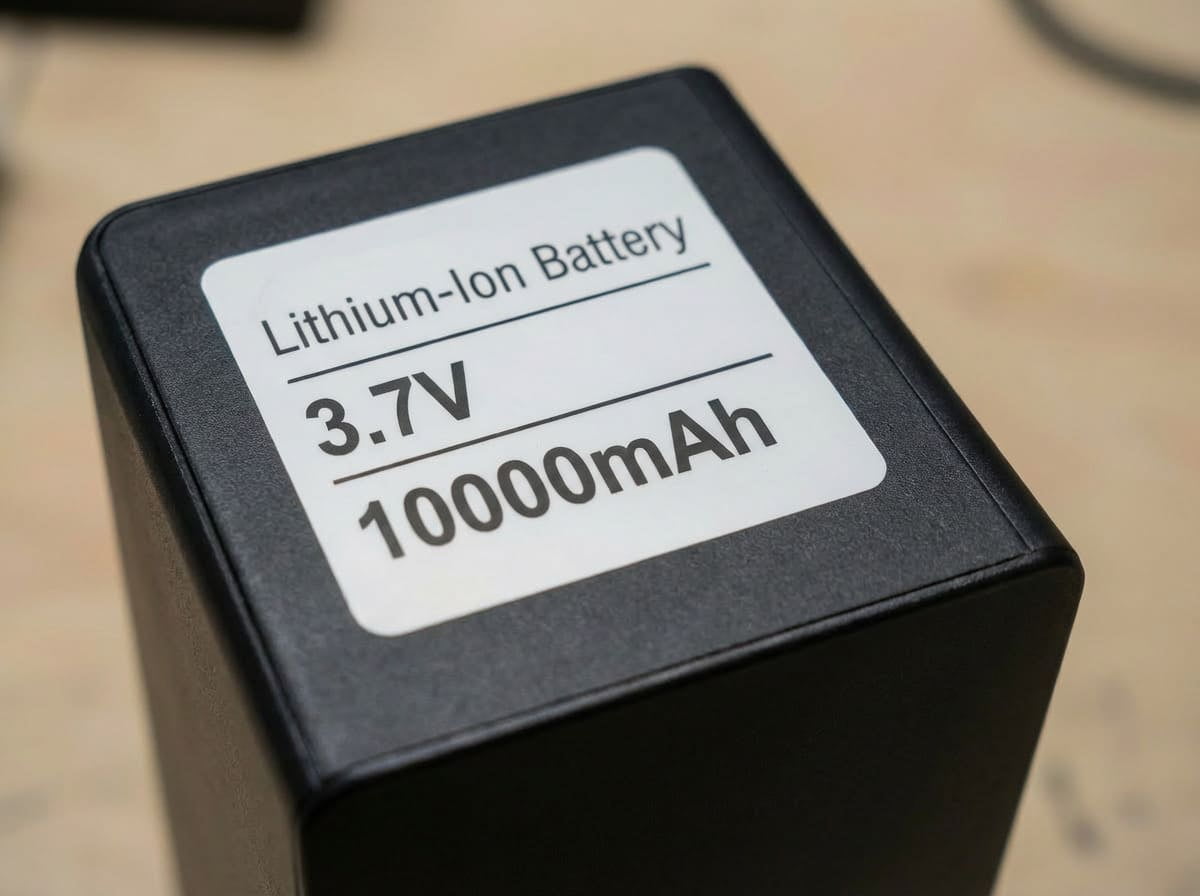
To calculate your battery's Watt-hour (Wh) rating, find its voltage (V) and capacity in Amp-hours (Ah). If capacity is in milliamp-hours (mAh), divide by 1000. Then multiply the two values: Wh = V × Ah. A 10,000mAh, 3.7V battery is 37Wh (3.7V × 10Ah).
Understanding this simple formula is your ticket to avoiding trouble at the security checkpoint. I've been in the battery business for years, and I've heard countless stories from clients about having their power banks or spare batteries taken away simply because they didn't know the rules. It's a frustrating and preventable situation. In this article, I'll walk you through everything you need to know, from reading the labels on your devices to understanding the specific rules for different types of batteries. Let's make sure your devices travel safely with you.
My power bank shows 'Rated Capacity' and 'Battery Capacity', which one does security check?
Confused by two different capacity numbers on your power bank? Airport security looks for a specific one, and getting it wrong can cause unnecessary delays and confusion.
Airport security always checks the 'Rated Capacity'. This figure represents the actual, usable power the device can deliver after accounting for internal energy loss. The 'Battery Capacity' refers to the raw capacity of the cells inside, not the final output.
This is a very common point of confusion, and it's one I often clarify for my customers. The two numbers represent different things, and it's all about how a power bank works. The internal lithium-ion cells typically have a voltage of 3.7V. This is where the 'Battery Capacity' (e.g., 20,000mAh) is measured. However, to charge your phone or tablet, the power bank must convert that 3.7V up to the 5V standard of a USB port. This conversion process is not 100% efficient; some energy is always lost as heat.
Understanding the Difference
The 'Rated Capacity' is the manufacturer's honest declaration of how much charge the power bank can actually deliver to your device at 5V, after accounting for this energy loss. It's the true measure of its usable energy. Airport security regulations are concerned with the total potential energy you are carrying, which is accurately reflected by the Rated Capacity when calculating the Wh rating.
Here is a simple breakdown:
| Term | What It Means | Why It Matters |
|---|---|---|
| Battery Capacity | The total theoretical capacity of the internal battery cells, usually measured at 3.7V. | This is a marketing number; it's bigger but doesn't reflect real-world performance. |
| Rated Capacity | The actual, usable capacity delivered at the output (e.g., 5V USB port) after efficiency losses. | This is the number security uses for Wh calculations because it reflects the true energy carried. |
So, when you are doing your pre-flight calculations, always look for the 'Rated Capacity' on the label. Use that number to ensure you stay within the airline's limits.
I have two power banks that add up to over 160Wh. Is that a violation?
Packing multiple power banks for a long trip? You might worry that the total Wh rating exceeds the limit, even if each one is individually compliant. This can be a real concern.
The Wh limits for air travel apply on a per-battery basis, not as a cumulative total. You can carry multiple batteries, as long as each one is under the 100Wh limit. However, airlines can enforce a "reasonable quantity" rule for personal use.
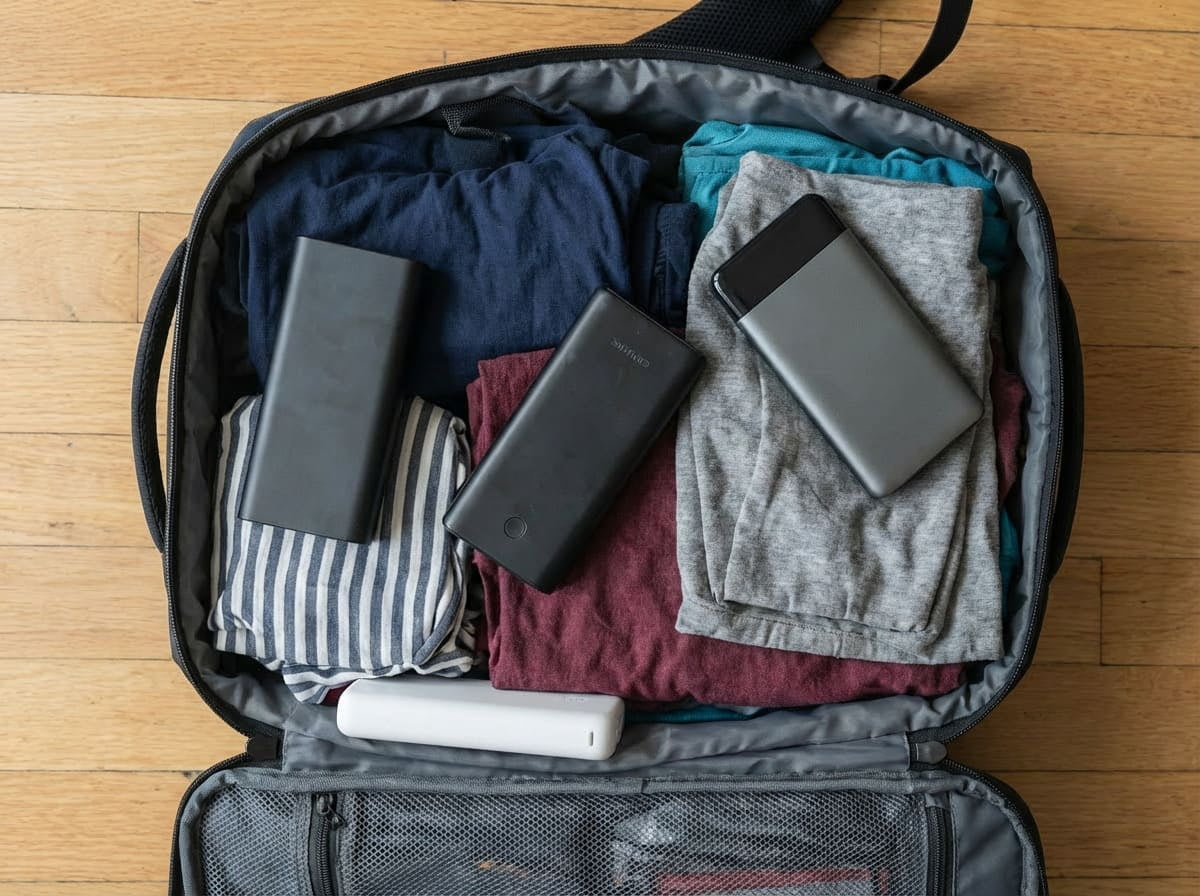
This is a great question because the rules can feel a bit vague. The International Air Transport Association (IATA)1 sets the guidelines that most airlines follow. These guidelines are focused on the safety risk of individual batteries. A single, large 170Wh battery poses a greater risk than two separate 85Wh batteries. If one of the smaller batteries fails, the incident is contained and less severe.
How the Per-Battery Rule Works
Let's look at a few examples to make it clear. Assume you have airline approval for any battery between 100Wh and 160Wh.
| Scenario | Battery 1 | Battery 2 | Total Wh | Status |
|---|---|---|---|---|
| Good to Go | 95Wh | 95Wh | 190Wh | Allowed. Each battery is under 100Wh. |
| Needs Approval | 120Wh | 50Wh | 170Wh | Allowed. One battery needs approval, the other is fine. |
| Not Allowed | 170Wh | - | 170Wh | Not Allowed. A single battery exceeds the 160Wh limit. |
The key is that no single battery pack can be over the 160Wh absolute limit. You can carry several packs under 100Wh without needing any special permission.
A client of mine, a professional photographer, often travels with five or six camera batteries, each around 60Wh. He has never had an issue because each battery is individually compliant and he packs them safely in his carry-on, with the terminals protected. The main thing to remember is the concept of "reasonable quantity." Bringing five power banks for a week-long trip is reasonable. Bringing twenty might look like you're transporting them for commercial resale, which has different rules. Always check your specific airline's policy if you plan to carry more than a few.
What is the usual Wh rating for a laptop battery, and does it need to be declared separately?
Worried your powerful laptop battery might be over the flight limit? It's a valid concern, but you need to know the facts before you get to the airport.
Most laptop batteries are designed to be between 40Wh and 99.9Wh, specifically to stay under the 100Wh airline limit. If the battery is installed in the laptop, it does not need to be declared separately and can be in checked or carry-on luggage.
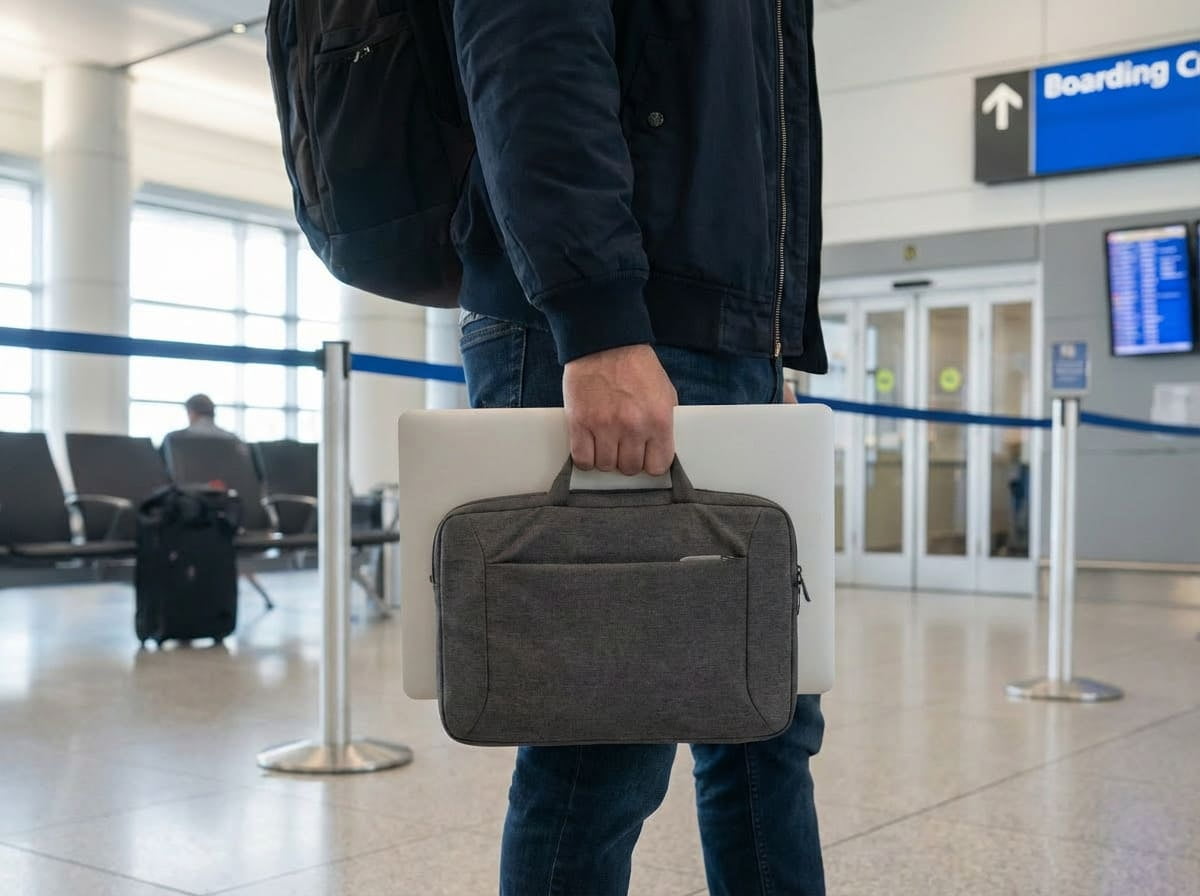
As a battery manufacturer, I can tell you that device designers are very aware of these travel regulations. It's a major design consideration for them. No laptop brand wants to create a product that their target customers—business travelers, students, and digital nomads—can't fly with. For this reason, nearly all commercial laptops, even the most powerful ones, have batteries that max out at 99.9Wh. This is the largest possible capacity that doesn't require special airline approval.
Installed vs. Spare Batteries
The rules are different for batteries installed in a device versus spare batteries.
- Installed Batteries: A battery inside your laptop is considered secure. It can be in your carry-on or your checked luggage (though I always recommend keeping electronics with you in the cabin).
- Spare Batteries: Any spare laptop battery you carry is subject to stricter rules. It must be in your carry-on luggage. It cannot be in your checked bag. You also need to protect it from short-circuiting. You can do this by keeping it in its original retail packaging, putting it in a separate plastic bag, or taping over its metal contacts.
Here's a quick guide to typical laptop battery sizes:
| Laptop Type | Common Battery Size (Wh) | Travel Status (Installed) |
|---|---|---|
| Ultraportable (13-inch) | 40Wh - 60Wh | OK for Carry-on & Checked |
| Standard (15-inch) | 60Wh - 85Wh | OK for Carry-on & Checked |
| Gaming / Workstation (16-inch) | 85Wh - 99.9Wh | OK for Carry-on & Checked |
If you have a spare battery that is between 100Wh and 160Wh, you absolutely must get approval from your airline before flying. But for 99% of travelers, the battery inside your laptop is perfectly fine and requires no extra steps.
Is the calculation method the same for drone batteries (LiPo), and are they more dangerous?
Drone batteries are powerful and essential for any aerial photographer or hobbyist. But their reputation for being volatile can make flying with them stressful. Let's clear up the rules and the risks.
Yes, the calculation method (Wh = V × Ah) is exactly the same for LiPo drone batteries2. They are considered more of a risk because their high-energy chemistry and often soft-shell design make them more sensitive to damage, which is why airline rules are enforced so strictly.
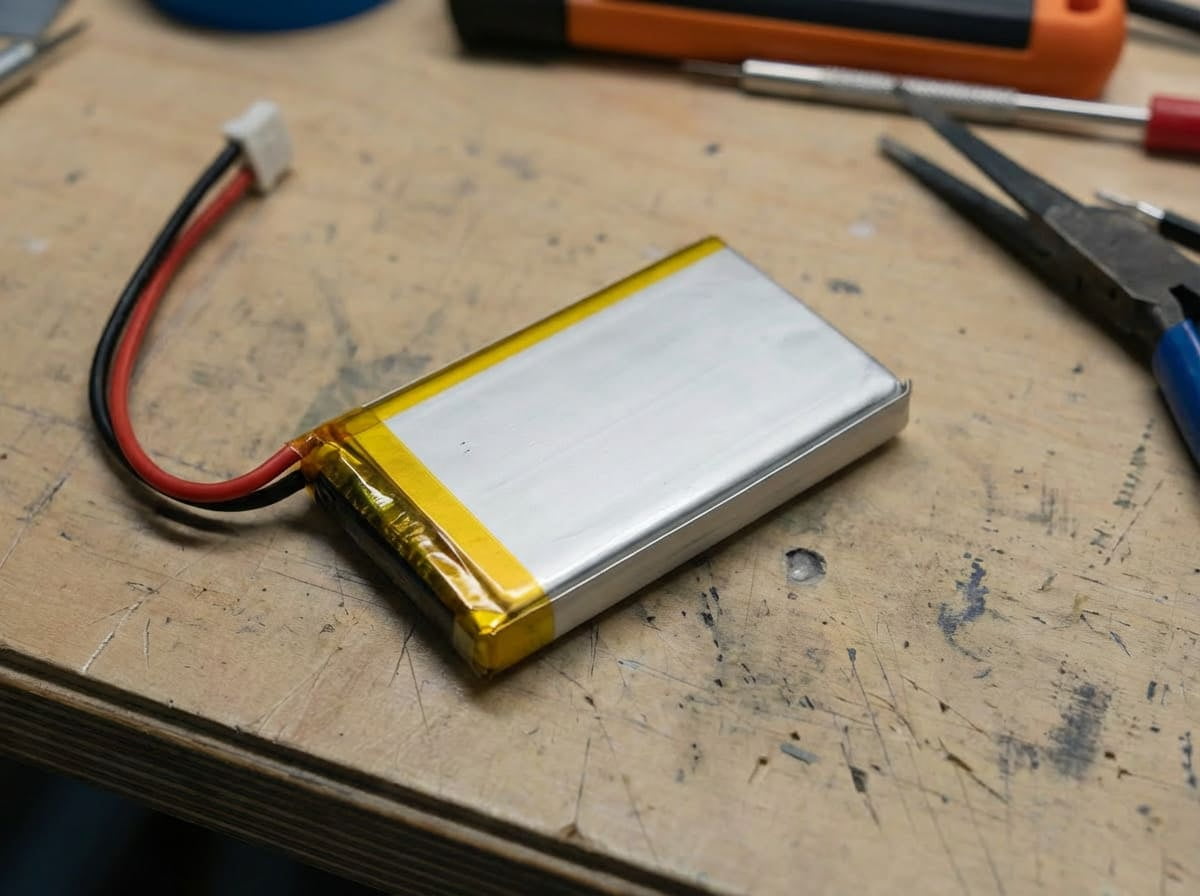
The physics behind calculating Watt-hours doesn't change with battery chemistry. Whether it's a Li-ion power bank or a LiPo drone battery, the formula remains your best friend. What does change is the risk profile. LiPo (Lithium Polymer) batteries have an incredible energy density, meaning they pack a lot of power into a small, lightweight package—perfect for drones. However, this high energy density, combined with their flexible pouch-like casing, means they are more vulnerable to punctures or impacts. A damaged LiPo battery can result in a dangerous thermal runaway event, which is essentially a fire that is very difficult to put out.
Safe Travel Practices for LiPo Batteries
Because of this heightened risk, you must take extra precautions when flying with drone batteries. These aren't just suggestions; they are requirements.
- Carry-On Only: Under no circumstances can spare LiPo batteries be placed in checked luggage. They must be in the cabin with you.
- Protect Terminals: The metal contacts must be protected from short-circuiting. The best way is to place each battery in its own plastic bag or, even better, a dedicated fire-resistant LiPo-safe bag.
- Check Charge Level: Many airlines require LiPo batteries to be discharged to a storage level, typically around 30% state of charge. A fully charged battery contains more energy and thus poses a greater risk.
- Follow the Wh Limits: The same 100Wh/160Wh rules apply. Calculate the Wh for each battery and be prepared to show your calculations to security staff if asked. Most common drone batteries (like those for DJI drones) are designed to be under 100Wh.
I once worked with a client who specialized in aerial surveying. He travels with a dozen drone batteries. His system is flawless: each battery is at 30% charge, in its own small bag, and all of them are stored in a larger LiPo-safe case in his carry-on. He has never had a problem because he demonstrates that he understands the risks and respects the rules.
Conclusion
Calculating your battery's Wh rating is a simple but vital step for smooth air travel. By understanding the formula Wh = V × Ah and knowing the 100Wh and 160Wh limits, you can pack with confidence. Remember to check your specific airline's rules and always pack spare batteries safely.