Running a high-power device? Choosing the wrong battery can lead to overheating, poor performance, or even failure. I’ll show you what to look for when comparing popular battery types.
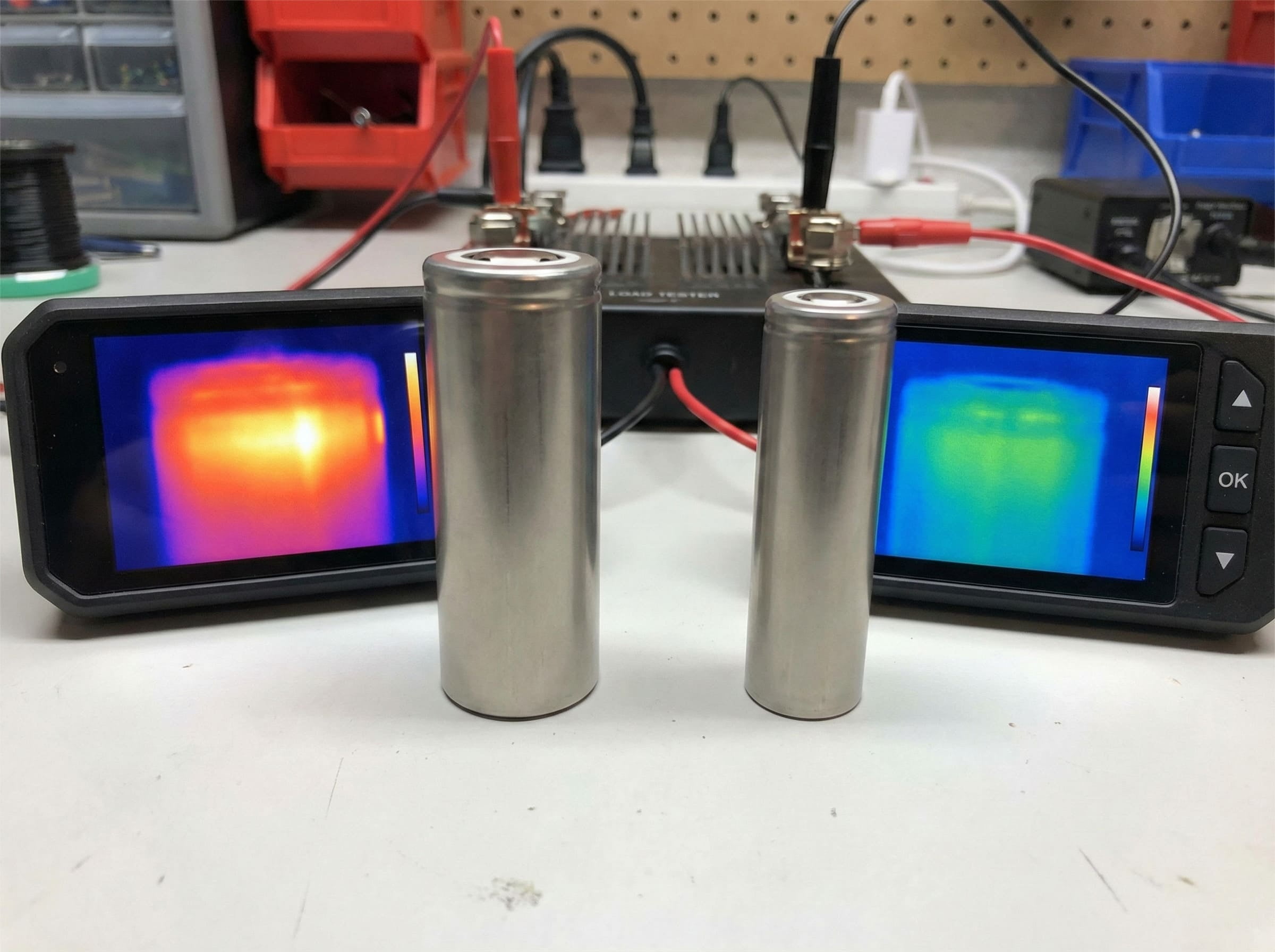
Generally, 18650 batteries offer more stable high-rate performance. In contrast, 26650 batteries provide higher capacity but generate significant heat at high discharge rates like 20A (about 4C). Proper cooling is often necessary for 26650s in demanding applications. Your choice depends on your project's power and heat management needs.
The specifications on a datasheet tell one part of the story, but real-world performance is often very different. I remember working with a client, Michael, who was developing a new portable medical instrument. He needed consistent, reliable power, but was struggling to decide between the higher capacity of a 26650 and the proven high-rate performance of an 18650. The data he had was confusing. Let’s break down what he learned, piece by piece, so you can make the right choice for your project without the guesswork.
Why do high-drain batteries often have lower capacity (mAh) than standard batteries?
You want a battery that lasts a long time and delivers a lot of power. But you notice high-drain cells always have a lower mAh rating. I'll explain this trade-off.
High-drain batteries are built for low internal resistance, which allows them to release energy quickly without overheating. This design requires thicker internal components, like electrodes and separators. This leaves less physical space for the active materials that actually store energy, resulting in a lower overall capacity (mAh).
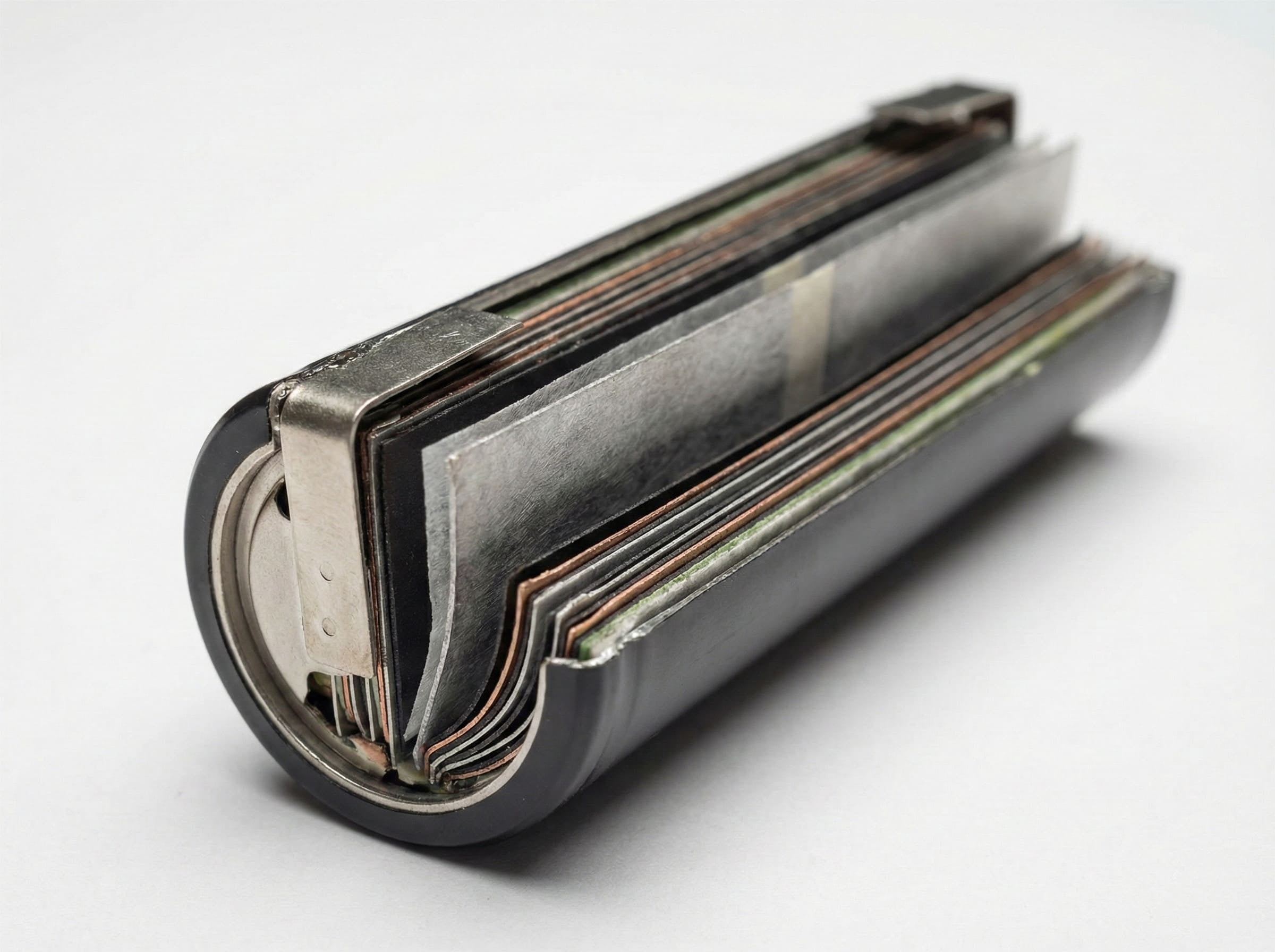
When we design a battery, we have to balance different performance goals. Think of it like building a car. You can build a car with a huge fuel tank for maximum range, or you can build a race car with a powerful engine that burns fuel quickly. You usually can't have both in the same vehicle. Batteries are similar.
The Internal Trade-Off: Safety vs. Energy Density
A battery's ability to discharge at a high rate depends on how quickly ions can move inside it. To make this happen faster, we have to change the internal structure. We use thicker current collectors (the "highways" for electricity) and more porous separators to reduce internal resistance. This construction is more robust and handles heat better, which is critical for safety during high-current discharge. However, these beefier components take up valuable space inside the cell. This space would otherwise be filled with the energy-storing active materials (like lithium cobalt oxide or NMC). It's a direct trade-off: to increase power output (high-drain), you must reduce the amount of "fuel" (capacity).
Material and Structural Differences
I once helped a customer who was building a high-performance industrial scanner. They initially chose a high-capacity 18650 cell to maximize operating time. But during testing, the scanner would shut down when performing a high-speed scan. The battery simply couldn't provide the burst of current needed. We switched them to a custom pack using high-drain 18650 cells from Litop. The operating time was about 15% shorter, but the device worked perfectly every time. The lower internal resistance of the high-drain cells made all the difference.
| Feature | High-Capacity Cell | High-Drain Cell |
|---|---|---|
| Primary Goal | Maximize runtime (energy density) | Maximize power output (power density) |
| Internal Resistance | Higher | Lower |
| Electrodes | Thinner, more densely packed | Thicker, more porous |
| Heat Generation | Higher under load | Lower under load |
| Typical Use Case | Flashlights, power banks | Power tools, medical devices, drones |
How much does continuous full-load discharge shorten battery cycle life?
Pushing your batteries to their absolute limit gives you maximum power. But this constant stress can dramatically reduce their lifespan, costing you more in the long run. Let's look at the numbers.
Continuously discharging a battery near its Continuous Discharge Rating (CDR) can reduce its cycle life by 50% or even more. The high current generates intense heat, which accelerates chemical degradation inside the cell. For best longevity, a good rule of thumb is to operate at 50-70% of the CDR.
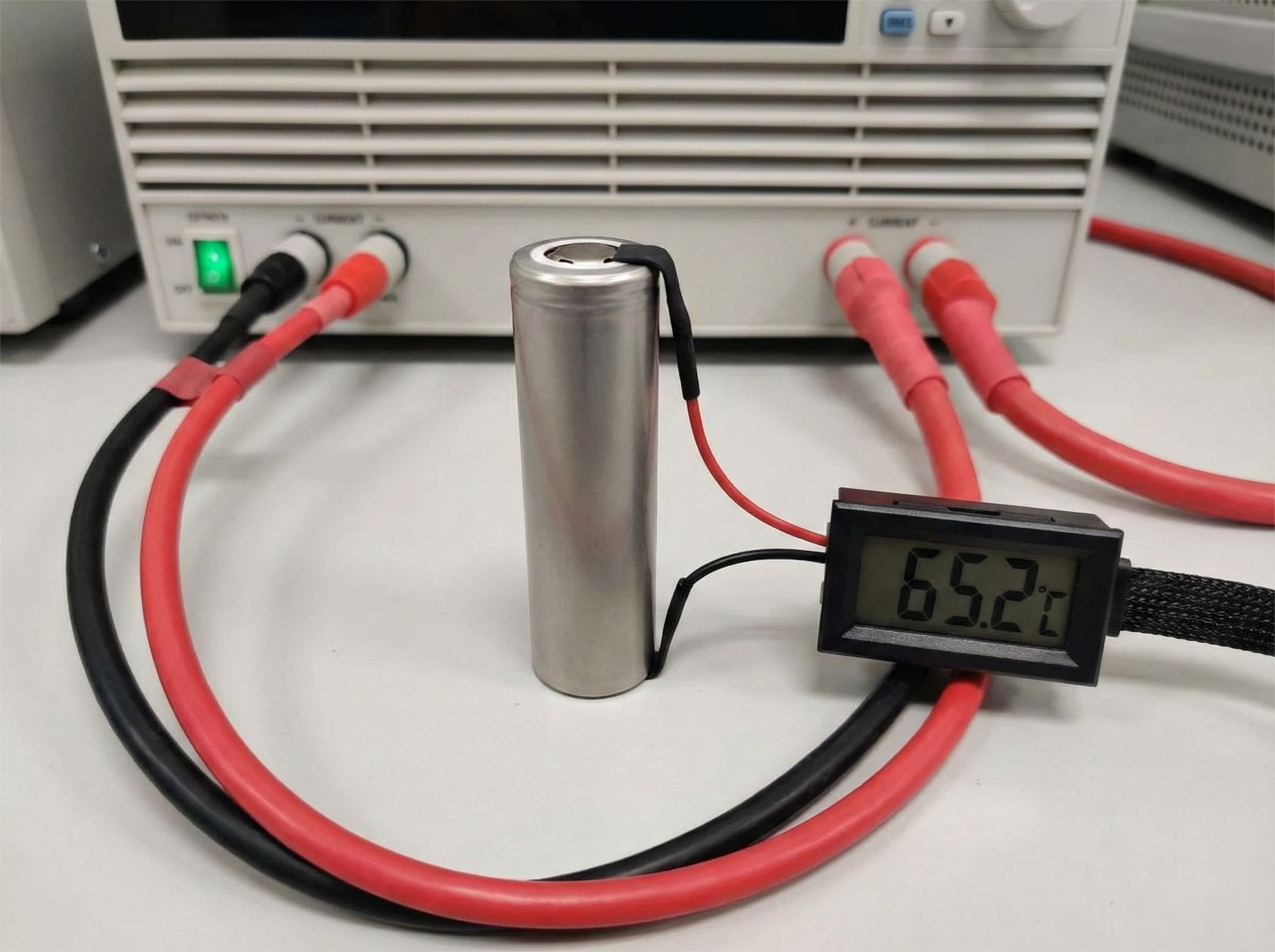
Every battery has a finite lifespan, measured in "cycles." One cycle is one full charge and discharge. A battery is typically considered at the end of its life when its capacity drops to 80% of its original rating. The biggest factor that accelerates this aging process is heat.
Heat: The Silent Killer of Batteries
When you draw a lot of current from a battery, its internal resistance causes it to heat up. This heat is the primary enemy of a lithium-ion cell. It speeds up unwanted chemical reactions, causing the internal materials to break down faster. One of the most critical parts, the Solid Electrolyte Interphase (SEI) layer, can be damaged by excessive heat. This leads to a permanent loss of capacity and an increase in internal resistance, which creates even more heat on future discharges. It’s a vicious cycle that quickly kills the battery. This is why our Litop battery packs for high-power medical and wearable devices always include a robust Battery Management System (BMS) with over-temperature protection. It's not just a feature; it's essential for safety and longevity.
Estimating the Impact on Cycle Life
The impact on cycle life is not linear. Running a battery at 100% of its CDR is far more damaging than running it at 50%. While every battery chemistry is different, you can see a general trend.
| Discharge Rate (vs. CDR) | Estimated Cycle Life (Cycles) | Internal Temperature |
|---|---|---|
| 30% of CDR | 800 - 1200 | Low |
| 70% of CDR | 400 - 600 | Moderate |
| 100% of CDR | 200 - 350 | High / Extreme |
| Above CDR (Pulsed) | <100 | Very High (Risk of damage) |
Based on our lab tests at Litop, a 26650 NMC cell rated for 20A might last 500 cycles when discharged at 10A. But if you consistently discharge it at 20A without any cooling, the cycle life might drop to under 250 cycles. That's why we advised Michael to use his device's high-power mode sparingly or integrate a small fan if it was needed continuously.
Is there a simple conversion formula between internal resistance (mΩ) and discharge capability?
You see internal resistance (mΩ) on battery datasheets. But it can be hard to know how that number translates to real-world power and performance. I’ll explain the connection simply.
No, there isn't a simple, universal formula to convert internal resistance directly into discharge amps. However, the relationship is direct and crucial: lower internal resistance (mΩ) always means higher discharge capability. It is the single best indicator of a cell's ability to deliver high current efficiently.
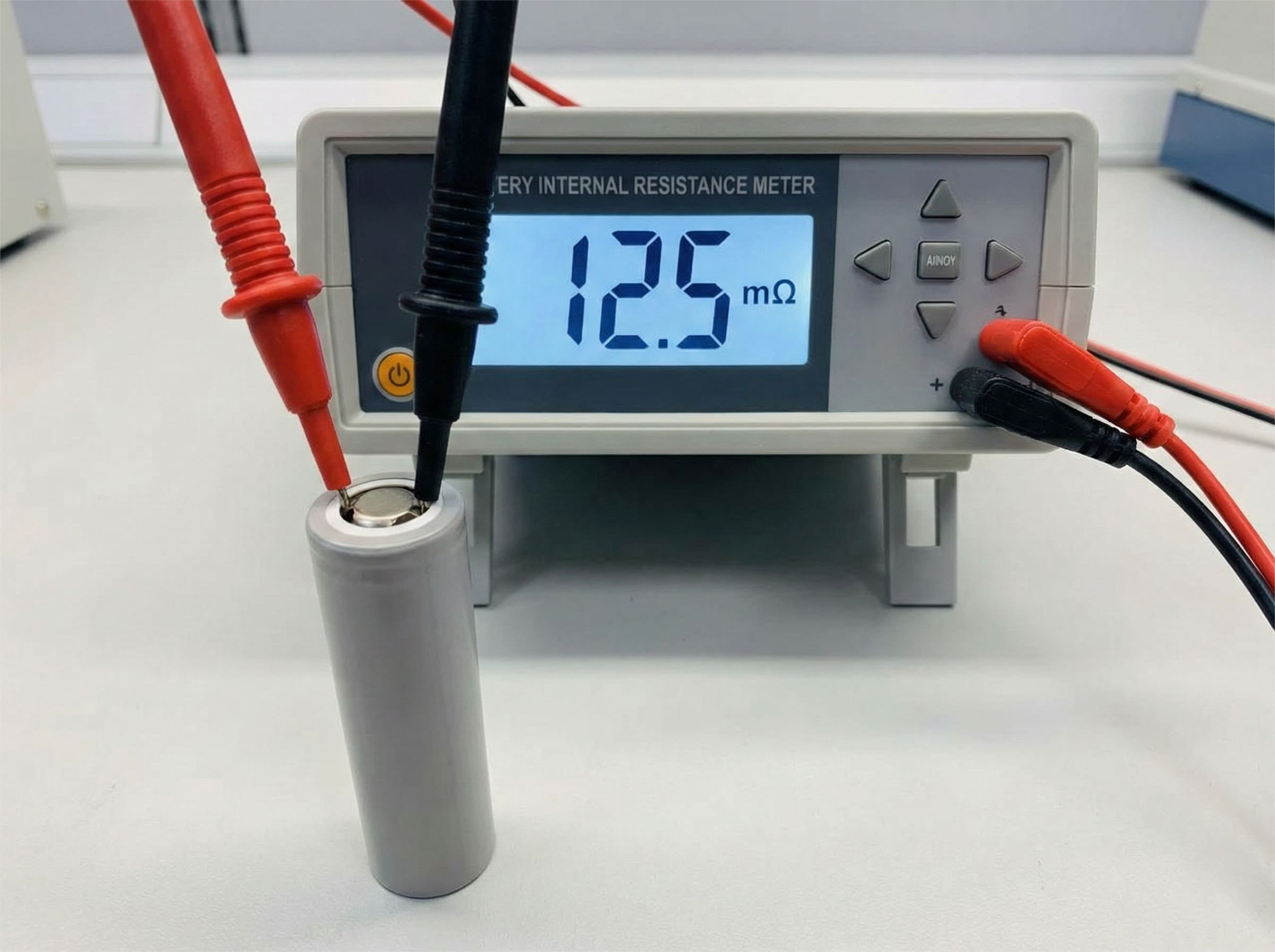
While we can't use a simple math equation, we can use the concept to make very smart purchasing decisions. Internal resistance is like friction inside the battery. The less friction there is, the more efficiently power can get out.
Understanding the Role of Internal Resistance
The main effect of internal resistance is heat generation and voltage drop when the battery is under load. This is described by a basic physics principle (Ohm's Law). In simple terms: the heat generated is proportional to the resistance, and the voltage drop is also proportional to the resistance. So, a cell with low internal resistance will run cooler and maintain a higher voltage when you draw power from it. This is exactly what you want in a high-performance device. For example, a quality 18650 high-drain cell might have an internal resistance of 10-15 mΩ. A high-capacity cell designed for low-power use might have a resistance of 30-50 mΩ. That difference is huge in performance terms.
Why a Simple Formula Doesn't Exist
The reason a simple formula isn't practical is that internal resistance is not a static number. It changes based on several factors:
- State of Charge (SoC): A full battery has lower resistance than an empty one.
- Temperature: A warm battery (to a point) has lower resistance than a cold one.
- Age: As a battery ages, its internal resistance increases permanently.
- Measurement Method: Different testing equipment (AC vs. DC) will give slightly different readings.
Because of these variables, you should use the internal resistance value on a datasheet as a comparative tool. When choosing between two cells, the one with the lower mΩ value will almost always perform better under a heavy load. We once had a potential supplier send us sample cells for a critical project. The capacity was great, but our testing showed the internal resistance was 20% higher than promised. We knew immediately that these cells would cause voltage sag and overheating in our client's device. That single measurement saved us, and our client, a lot of problems.
What is 'Voltage Sag'? How does it affect the actual power of high-power devices?
Your device's battery indicator says it's 50% full, but it suddenly shuts down during a high-power task. This is frustrating and likely caused by voltage sag. I'll explain what's happening.
Voltage sag is the temporary drop in a battery's output voltage when a high-current load is applied. It is caused by the battery's internal resistance. This voltage drop can cause devices with a low-voltage cutoff protection to shut down prematurely, even if the battery still has significant charge left.
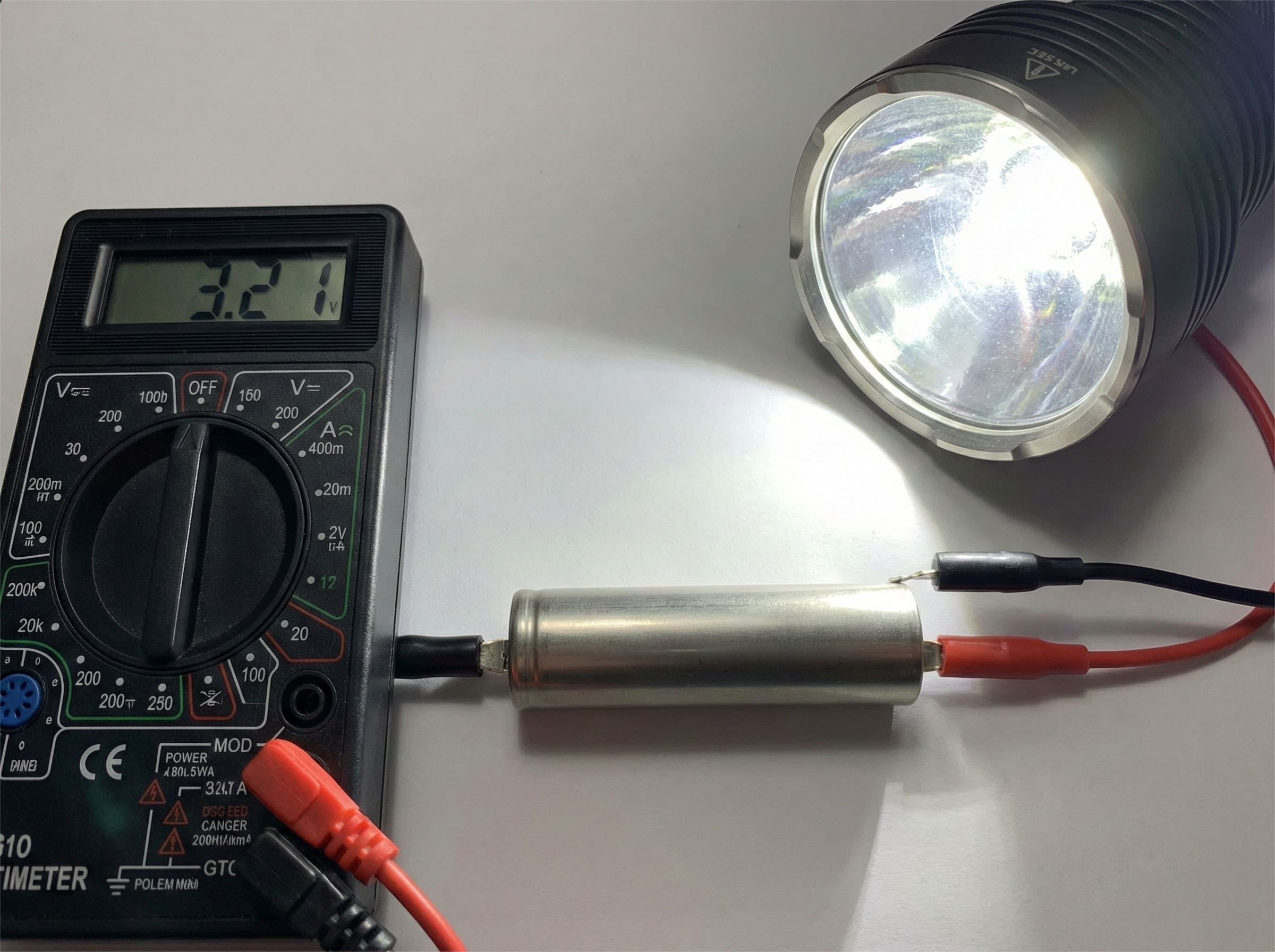
Imagine you are trying to drink a thick milkshake through a very thin straw. No matter how hard you try, you can only get a small amount out at a time. The thin straw is creating resistance. A battery's internal resistance does the same thing to electricity.
The Science Behind Voltage Sag
When you demand a lot of current from a battery, it has to work hard to push that energy out. The battery's internal resistance "fights" against this flow of current, causing a drop in the voltage that your device actually sees. The formula for this is simple: Voltage Drop = Current (Amps) x Internal Resistance (Ohms). This means the higher the current you draw, or the higher the battery's internal resistance, the bigger the voltage sag will be. Since power is calculated as Power (Watts) = Voltage x Current, a drop in voltage directly reduces the actual power your device receives.
Real-World Consequences for Your Device
This was the core problem my client Michael faced. His medical device had a safety circuit that would shut the device off if the input voltage dropped below 3.2V.
- With a high-resistance battery: His battery might read 3.7V when idle. But when he activated the device's main function, it would draw 10A of current. The battery's high internal resistance (e.g., 30 mΩ) caused a voltage drop of 0.3V (10A * 0.03Ω). The device would see only 3.4V, which was fine. But as the battery discharged to 3.5V, the same load would cause the voltage to sag to 3.2V, triggering the shutdown. The battery was still half full, but the device couldn't use that energy.
- With a low-resistance battery: We provided him with a custom pack using cells with just 12 mΩ of resistance. The voltage drop under the same 10A load was only 0.12V (10A * 0.012Ω). When his battery was at 3.5V, the device still saw a healthy 3.38V, allowing it to continue operating until the battery was almost completely drained.
This stability is non-negotiable in fields like medical devices, robotics, and professional tools. Minimizing voltage sag by choosing low-resistance cells is a key part of our design philosophy at Litop.
Conclusion
Choosing between 18650 and 26650 cells depends on your priority. For stable high-rate power, 18650s are often better. For higher capacity, 26650s are great, but require heat management. Always remember that low internal resistance is the key to true high performance and minimizing voltage sag.