Your expensive portable power station is a lifeline outdoors. But what happens if it starts to rain? A little water could ruin your investment, leaving you without power.
Protecting your power station from water is a three-step process. You need to choose a model with a proper IP rating, use waterproof covers in wet conditions, and know the right emergency steps if it gets wet. This includes immediately disconnecting power and letting it dry completely.
As a battery manufacturer, I've seen firsthand what water can do to sensitive electronics. A client once brought us a device that failed in the field. The issue wasn't our battery but a poorly sealed casing that allowed moisture to seep in during a surprise rainstorm. It was a costly lesson for them. Understanding how to protect your equipment isn't just a good idea; it's essential for anyone who relies on portable power. Let's break down exactly what you need to know to keep your power station safe and running, no matter the weather.
What do IP ratings like IP65 actually mean for portable power stations?
You see "IP65" or other ratings on electronics, but it's confusing. What does it really mean for your power station? Choosing the wrong one based on a misunderstanding can be costly.
An IP rating tells you how well a device is protected from solids and liquids. For IP65, the first number (6) means it is completely dust-tight. The second number (5) means it can resist low-pressure water jets, like rain, from any direction.
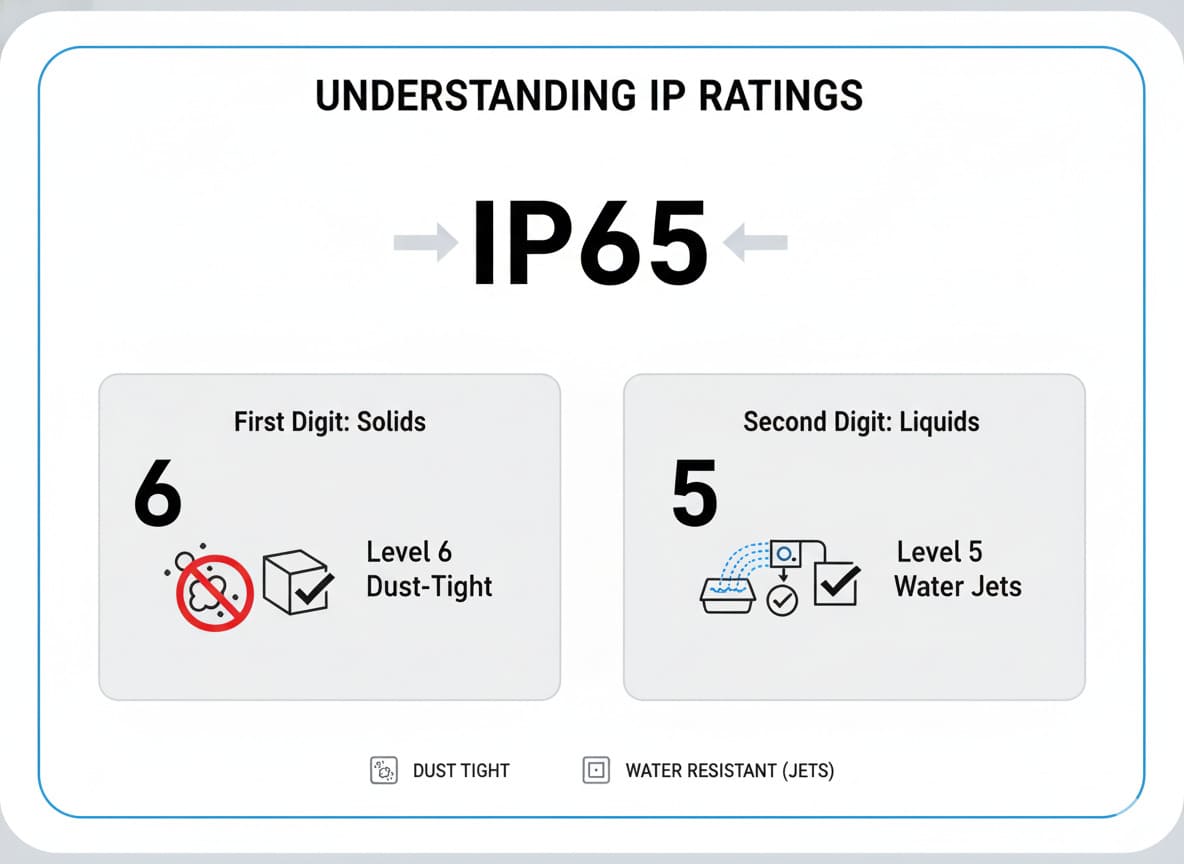
Let’s dive a little deeper into this. The "IP" stands for Ingress Protection. It’s a standard used to classify how sealed an electrical enclosure is. The rating is always followed by two numbers.
The first number is for protection against solids, like dust and dirt. It goes from 0 (no protection) to 6 (completely dust-tight). For a portable power station used outdoors, you want a rating of at least 5, which means it’s dust-protected. A 6 is even better.
The second number is for protection against liquids, like water. This is often the more critical number for outdoor gear. It ranges from 0 (no protection) to 9 (protected against high-pressure, high-temperature water jets).
Here is a simple table to help you understand:
| IP Rating | Second Digit Meaning | Practical Example |
|---|---|---|
| IPX4 | Protected against splashing water | Can handle light rain from any direction. |
| IPX5 | Protected against low-pressure water jets | Can handle steady rain or being rinsed with a hose. |
| IPX6 | Protected against high-pressure water jets | Can handle heavy seas or powerful jets. |
| IPX7 | Can be submerged in 1 meter of water for 30 mins | Can survive being dropped in a puddle or shallow lake. |
When we design custom battery packs at Litop, the end-product's required IP rating is a huge factor. A customer like Michael, who makes medical devices, needs equipment that can be wiped down and sanitized. This requires a high level of sealing. So, we design the battery enclosure and connectors to meet that standard, ensuring no liquid can get inside and compromise the power source. It’s all about matching the protection to the real-world use.
How can you safely charge a portable power station in wet or rainy weather (for example, with solar panels)?
You need power, but it's raining. Charging your station feels risky. One wrong move could cause a short circuit, damage your gear, or create a serious safety hazard.
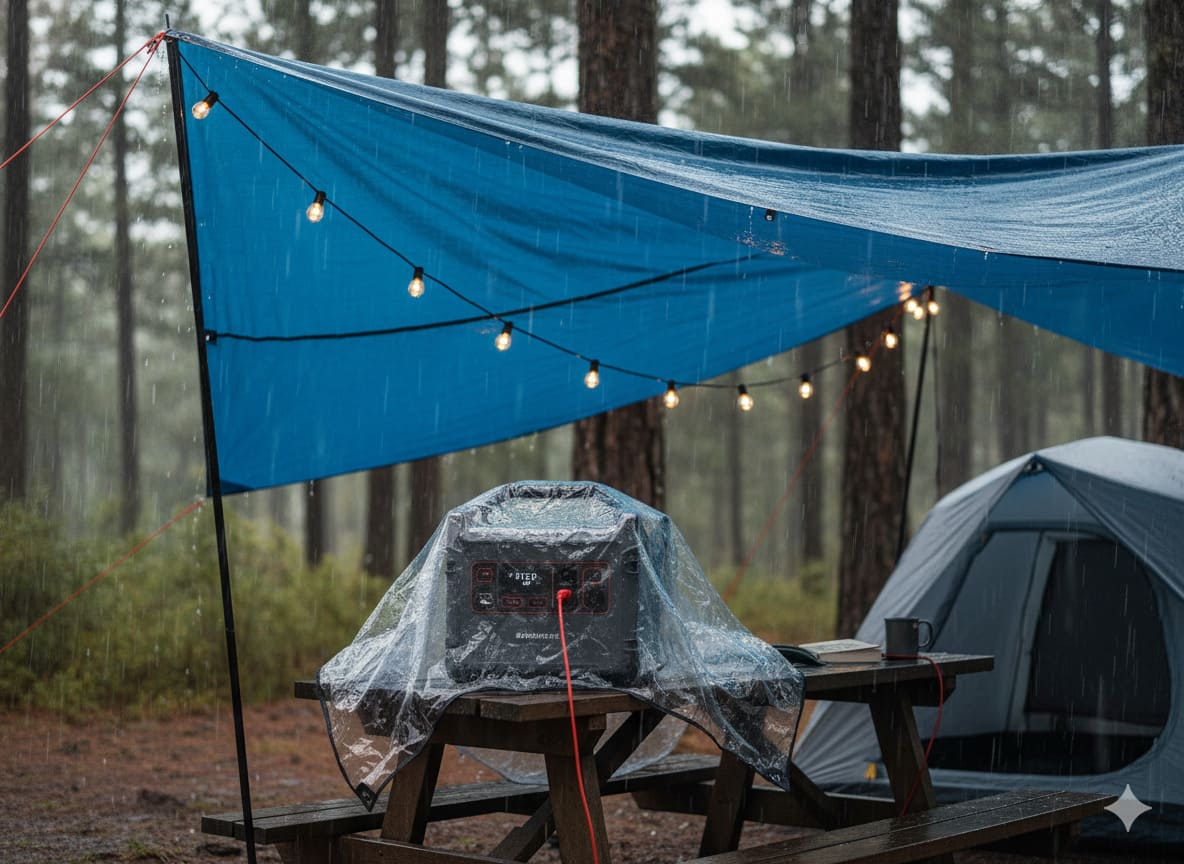
Never charge your power station with its ports exposed to rain. Always place the unit under a shelter, like a tarp or inside a tent. Use weather-resistant solar panels and make sure all cable connections are completely dry and secure before you plug them in.
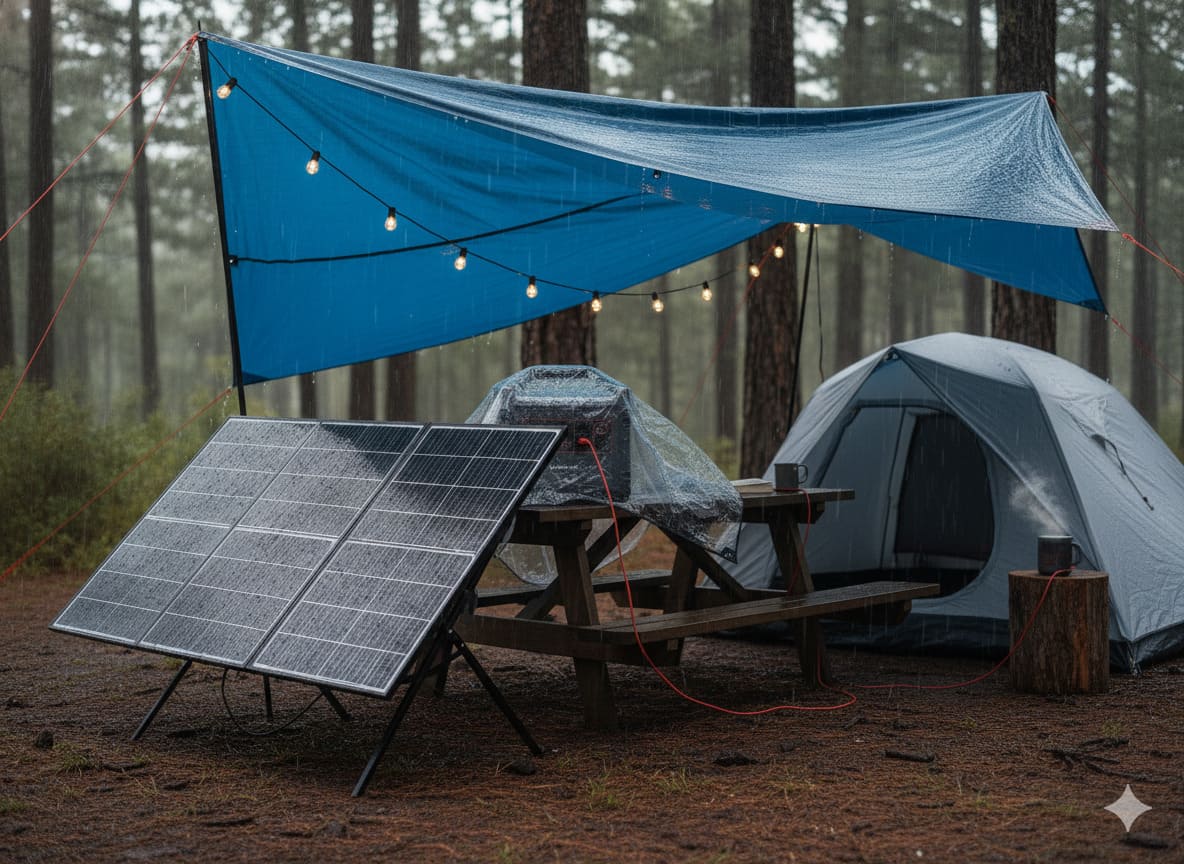
Electricity and water are a dangerous combination, so you have to be smart about it. There is no shortcut to safety. The number one rule is to keep the power station itself, especially the input and output ports, completely dry. Even models with high IP ratings are most vulnerable when their ports are open for charging.
Here are the key steps to follow:
- Find or Create Shelter: This is non-negotiable. Put the power station under a waterproof tarp, in the vestibule of your tent, or inside your vehicle. It cannot be in the rain.
- Elevate Your Gear: Don't let the power station sit on the wet ground or in a puddle. Place it on a dry box, a camp chair, or a thick, dry mat to keep it away from ground moisture.
- Use Weather-Resistant Accessories: Most high-quality solar panels are designed to be weather-resistant and can handle rain. The panels can be out in the wet, but the cable connecting to your power station must be dry at the connection point. If you use an extension cord, make sure it is rated for outdoor use and the connection points are sheltered and dry.
- Dry Everything Before Connecting: Before you plug the solar panel cable into the power station, wipe the connector with a dry cloth. Make sure there is zero moisture on it. A single drop of water in the wrong place can cause a short circuit.
At Litop, our Battery Management Systems (BMS) have built-in protections against short circuits. But these are emergency safety features. You should never rely on them to protect you from careless use. We always tell our clients that proper user protocols are just as important as the technology inside the battery.
What are the correct emergency steps if a portable power station gets wet by accident?
It happened. Your power station got soaked. Panic is a natural reaction. But acting fast with the wrong steps can turn a fixable problem into a permanent one.
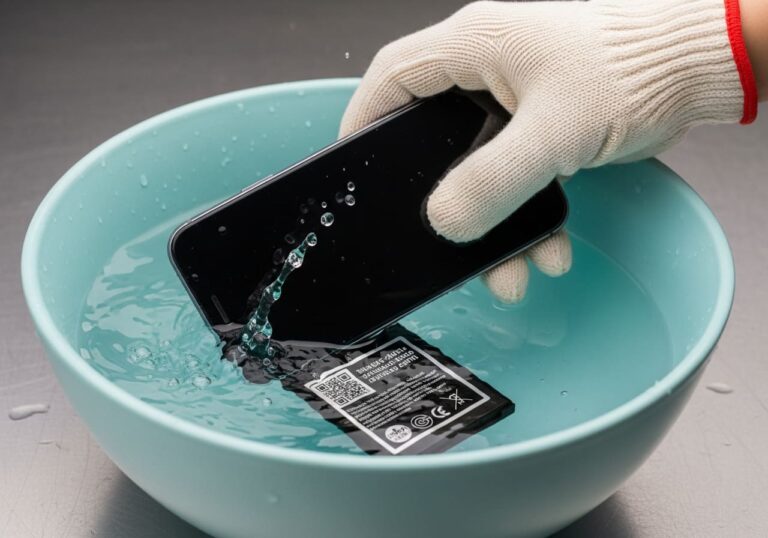
Immediately disconnect everything from the power station. Do not press the power button. Move it to a dry place, wipe it down with a towel, and let it air dry in a well-ventilated area for at least 48 to 72 hours. Never use heat.
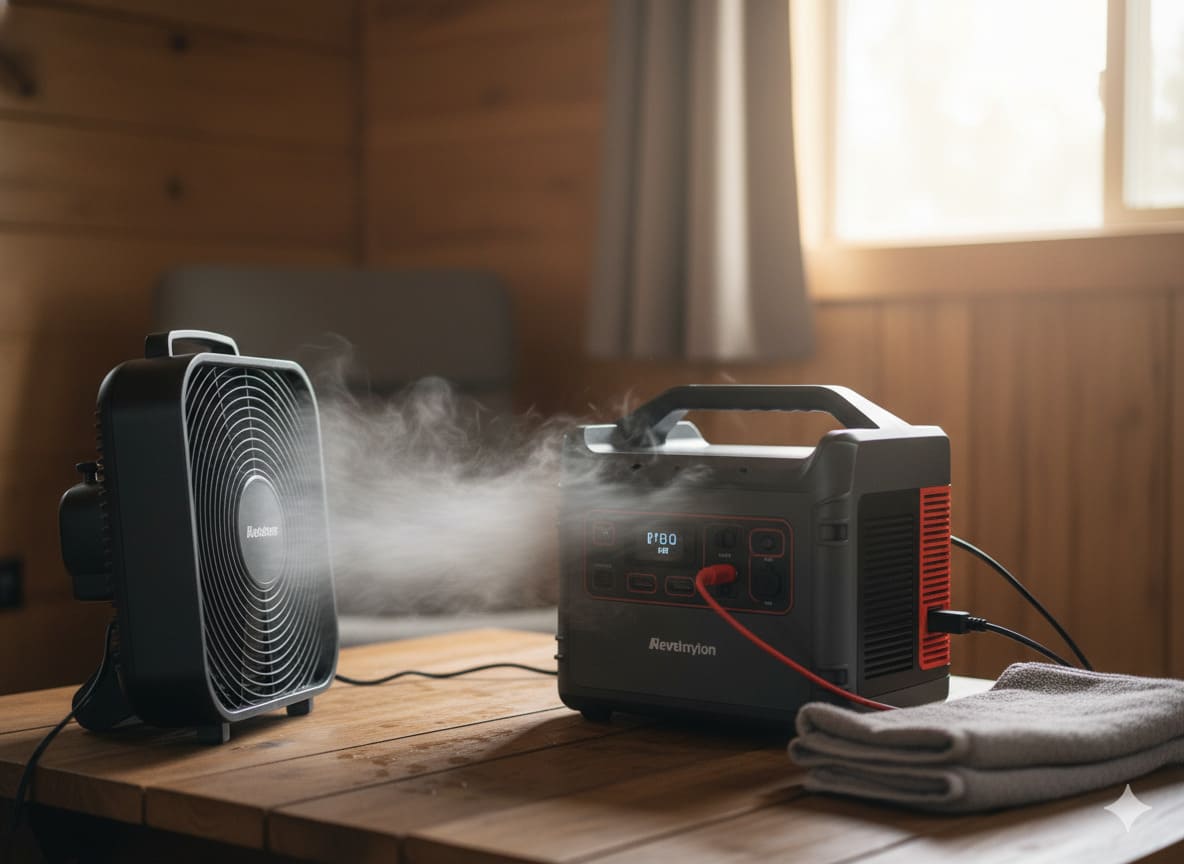
If your power station gets wet, you have to assume water got inside, even if it has a good IP rating. Your goal is to prevent a short circuit, which can permanently damage the battery cells and the control board. Follow these steps exactly.
- Safety First: Disconnect Power. If it's plugged into the wall or a solar panel, unplug it. If any devices are plugged into it, unplug them. This is the most important step.
- Get it Out of the Water. Move the unit to a completely dry, sheltered spot.
- Dry the Outside. Use a dry, absorbent cloth (like microfiber) to wipe down the entire exterior. Pay special attention to the seams, vents, and around the ports. If you can, use a can of compressed air to gently blow water out of these areas.
- Let It Air Dry. This step requires patience. Place the unit in a dry, warm, well-ventilated room. A fan can help circulate air around it. Do not place it in direct sunlight, on a heater, or use a hairdryer. Excessive heat can damage the lithium-ion cells inside.
- Wait. Then Wait Some More. You must wait at least 48 hours. 72 hours is even better. Water can be trapped in small crevices, and it needs time to evaporate completely.
- Inspect and Test Cautiously. After waiting, look for any signs of corrosion on the ports or bulging in the case. If everything looks normal, try turning it on. If it works, test its charging and discharging functions. If it makes strange noises, gets hot, or acts erratically, turn it off immediately. It is no longer safe to use.
Are there "waterproof" portable power stations specifically designed for bad weather or marine environments1?
You need reliable power on a boat, a construction site, or a rainy expedition. Can any standard power station really handle that kind of abuse without failing?
Yes, some specialized power stations are built for harsh environments. They are not truly "waterproof" but are highly water-resistant, with ratings like IP67. They have fully sealed casings, protected ports, and rugged designs for use in wet and demanding conditions.
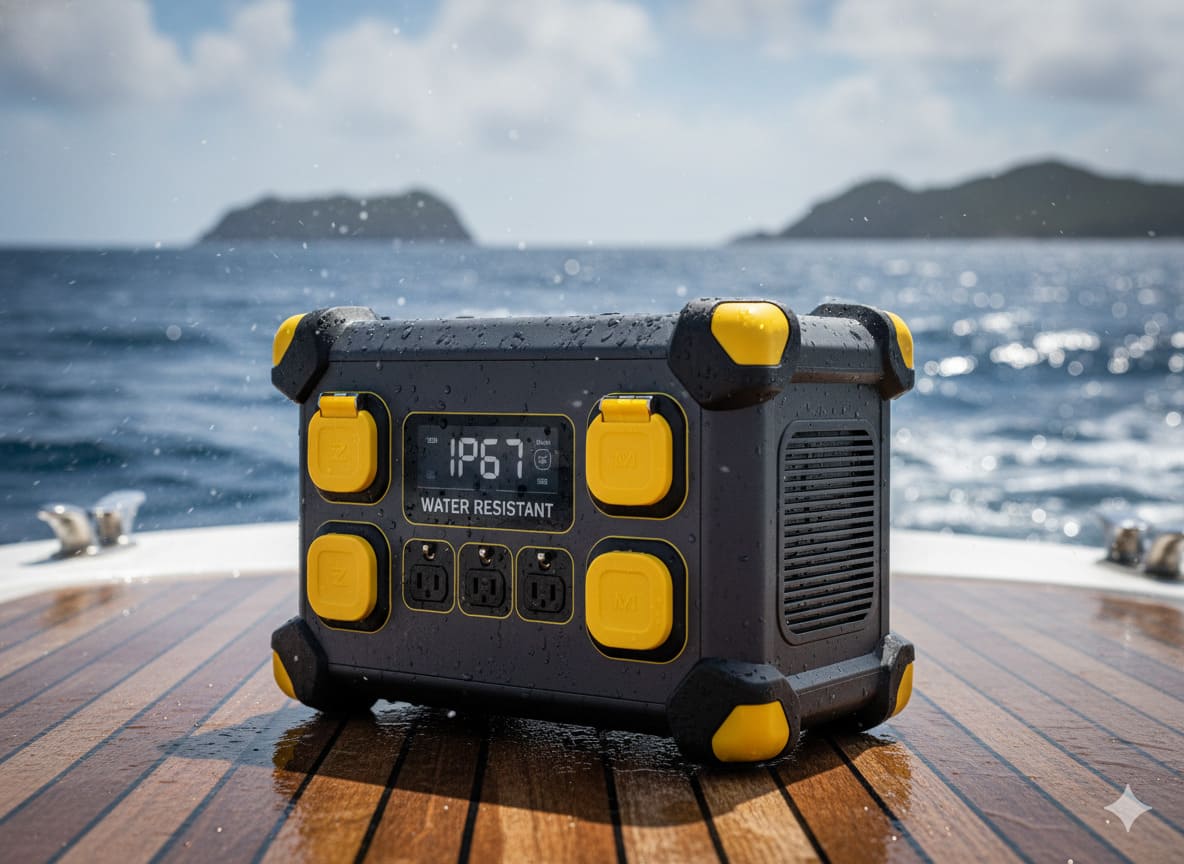
It's important to understand the difference between "water-resistant" and "waterproof." No complex electronic device is truly waterproof forever. Instead, they are designed to resist water ingress to a certain depth and for a specific time, as defined by their IP rating. For really tough conditions, you need a unit with a rating of IP67. This means it’s completely dust-tight and can survive being submerged in up to 1 meter of water for 30 minutes.
These rugged power stations have special design features:
- Sealed Enclosures: They use rubber gaskets and tight-fitting seams to create a seal against water. All vents are either removed or designed to prevent water entry.
- Waterproof Connectors: The ports are often covered with tight, screw-on caps or are inherently waterproof connectors, the kind used in marine electronics.
- Durable Materials: The casing is made from high-impact, thick plastic or metal that can handle being dropped and exposed to the elements.
- Internal Protection: Sometimes, the internal circuit boards are coated in a special resin. We call this "potting." It provides an extra layer of defense against moisture and vibration.
Of course, these features come at a price. These units are typically heavier, larger, and more expensive than standard models. But if you work in a marine environment or need guaranteed power for critical outdoor missions, the investment is worth it. At Litop, we frequently get requests to build custom battery packs2 for these kinds of applications. It requires a deep understanding of materials science and robust engineering to ensure the power source is as tough as the device it's in.
Conclusion
To keep your portable power station safe from water, you need to be proactive. Choose a model with an IP rating that matches your needs, always be careful when using it in wet weather, and know the right emergency procedures. For the toughest jobs, a specialized, highly water-resistant unit is the best choice.