Struggling with rising costs and unpredictable yields in traditional farming? You're not alone. The old ways are becoming less sustainable, squeezing profits and wasting precious resources like water and chemicals.
UAS (Unmanned Aircraft Systems) are revolutionizing agriculture by enabling precision operations. They use advanced sensors and spraying technology to reduce waste, monitor crop health with incredible accuracy, and automate tasks. This data-driven approach boosts efficiency, increases yields, and significantly improves farm profitability.
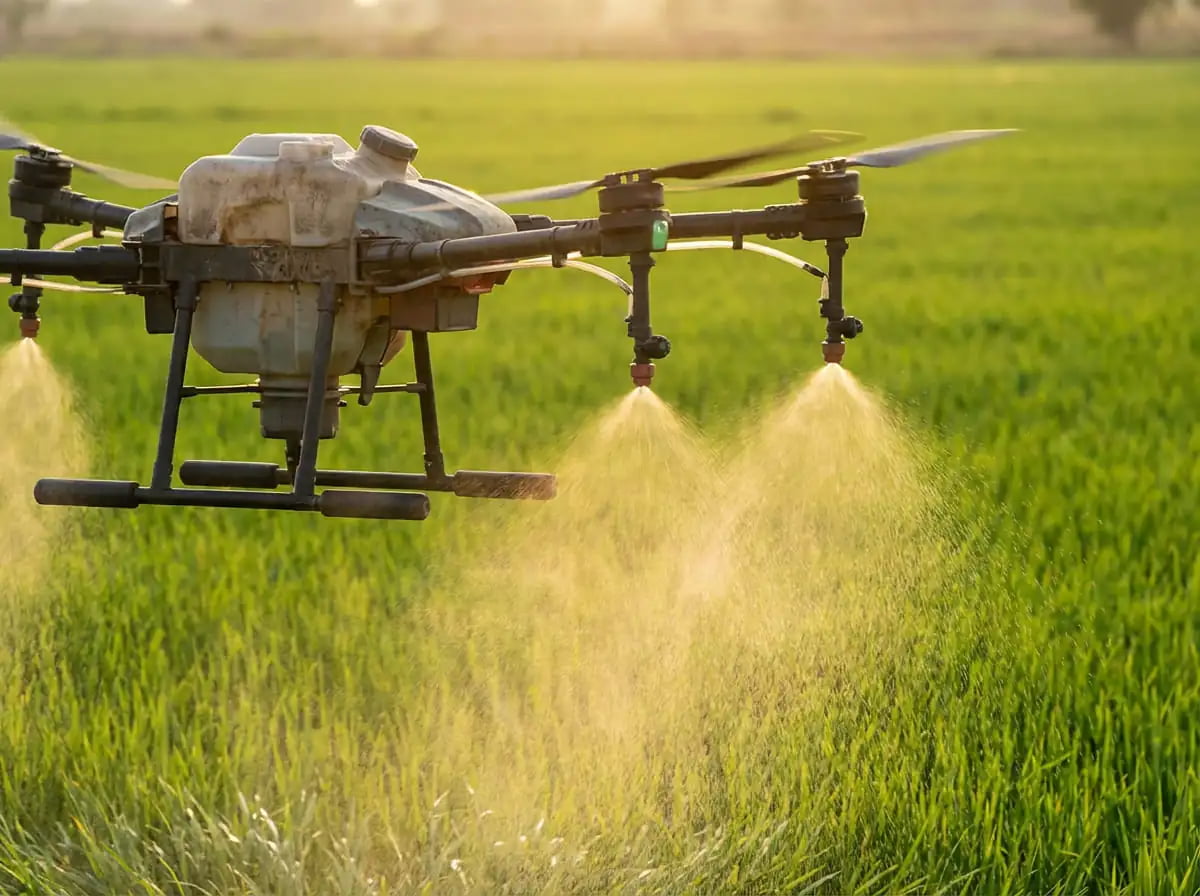
This shift from experience-based farming to data-driven agriculture is more than just a new tool; it's a complete change in how we can manage our land. I've seen firsthand, through my work at Litop, how critical components like reliable batteries power this transformation. The data collected from the sky gives farmers a new level of control over what happens on the ground. But many of our partners and clients, especially those in the tech and manufacturing sectors, often have very practical questions about how this all works. Let's dive into the specifics and answer the most common questions I hear.
What Is the Typical ROI for Agricultural Drones, and How Long Is the Payback Period?
Investing in new technology feels risky. You see the high upfront cost of a drone system and wonder if it will ever actually pay for itself or just become an expensive toy.
The payback period for an agricultural drone is typically 1 to 2 years. This rapid return on investment (ROI) is achieved through major cost savings on labor, pesticides, and water, combined with significant increases in crop yield and quality. The exact ROI depends on farm size and usage frequency.
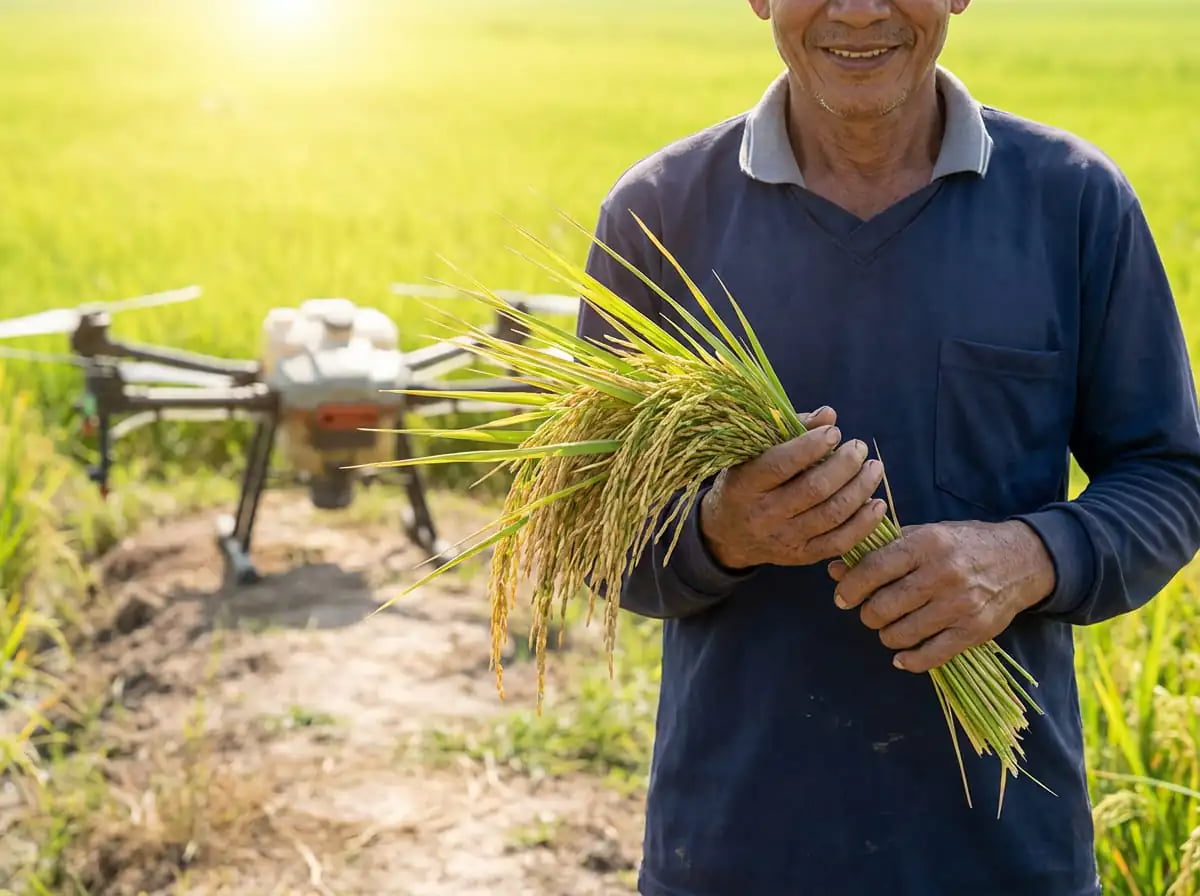
Let's break down the return on investment further. When you buy an agricultural drone, you're not just buying a flying machine. You're investing in an efficiency multiplier. In my conversations with clients who build these systems, the numbers are compelling. For example, drone spraying can be over 30 times more efficient than manual labor. A task that once took three months for a team in a Hubei wheat field was completed in just 20 days with drones. This drastic reduction in labor costs is often the biggest and fastest contributor to ROI. Then there are the material savings. Drones with advanced atomizing sprayers create a fine mist that coats plants more effectively. This can increase pesticide utilization by 30% and cut water consumption by a staggering 70%. You're using less to achieve more. Finally, a key part of ROI is increased revenue. Precision monitoring allows for early pest detection. In one Yunnan tea garden, drones identified a pest infestation a week before it was visible to the human eye, preventing its spread and saving the crop. This level of management directly leads to higher yields and better quality produce, which fetches a higher price.
| Cost Component | Traditional Farming | Drone Farming | Savings/Gains |
|---|---|---|---|
| Labor Costs | High | Low (1 pilot) | Significant Reduction |
| Pesticide/Fertilizer | High (Broadcast) | Lower (Targeted) | 15-30% Reduction |
| Water Usage | High | Very Low | ~70% Reduction |
| Crop Yield | Baseline | Higher (up to 10%+) | Increased Revenue |
| Payback Period | - | 1-2 Years | Positive ROI |
Of course, to achieve this, the drone must be operational when you need it. This is where high-quality components become critical. Downtime due to battery failure can erase your efficiency gains. That's why we at Litop focus on developing high-cycle-life, reliable battery packs that can withstand the demanding environment of a farm, ensuring the drone is always ready to fly and your ROI is realized as quickly as possible.
How Do Drones Achieve Centimeter-Level Positioning Without Network Signals?
Many farms are in remote areas with poor or no cell service. This makes you wonder how a drone can fly precise, automated patterns. Without a stable network, how does it avoid errors?
Drones use RTK (Real-Time Kinematic) technology for precision. A portable base station placed on the ground acts as a fixed reference point, sending real-time correction data to the drone via radio link, achieving centimeter-level accuracy without needing any cellular or internet connection.
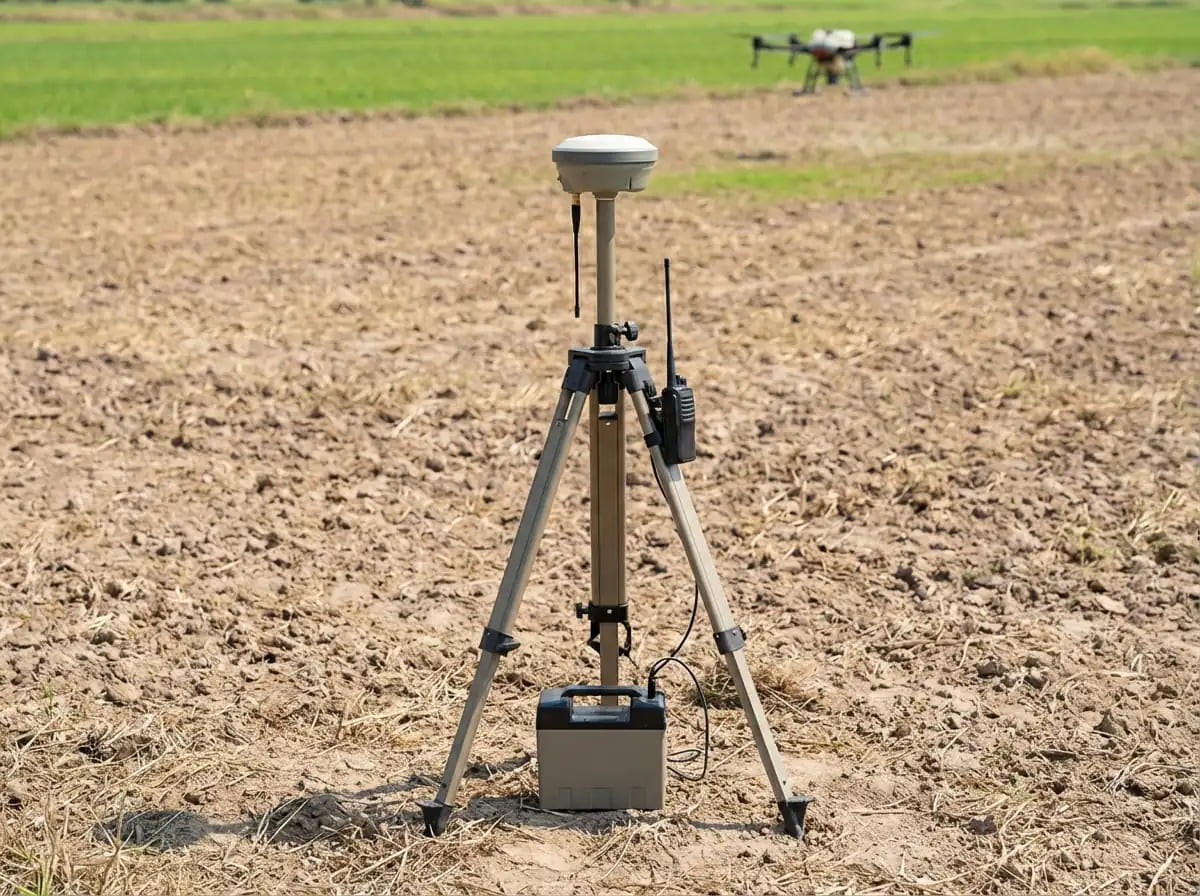
This technology is a game-changer for agriculture in rural areas. Think of the RTK base station as a temporary, ultra-precise GPS tower that you set up right at the edge of your field. Standard GPS can have an error margin of several meters, which is useless for tasks like spraying specific rows of crops. The RTK system solves this. The base station stays in one spot and constantly communicates with GPS satellites. Because its position is fixed, it can calculate the errors and atmospheric delays in the GPS signal it's receiving. It then broadcasts this error correction data to the drone flying nearby. The drone's receiver uses this data to adjust its own position calculation in real time. The result is a navigation accuracy of just 1-2 centimeters. This allows the drone to follow pre-planned flight paths perfectly, ensuring that every drop of pesticide or ounce of seed goes exactly where it's intended. This is crucial for variable-rate applications and avoiding overspray on sensitive areas. It also enables fully autonomous missions from takeoff to landing, freeing the operator to manage other tasks. For this entire system to work off-grid, reliable power is non-negotiable. Both the drone and the portable RTK base station need durable, long-lasting batteries that can perform for hours in the field. This is an area we have deep expertise in, providing custom power solutions that ensure these critical systems never fail when you're miles from the nearest power outlet.
How Are Multispectral Images Converted into a "Variable Rate Application Map"?
A drone can capture colorful, complex images of your fields. But these images are just pretty pictures unless you can turn them into actionable instructions for your farm machinery. How does that happen?
Specialized agricultural software processes the multispectral images to calculate a vegetation index, like NDVI. This index reveals crop health, creating a "prescription map" that is then exported in a format compatible with tractors, telling them where to apply more or less product.
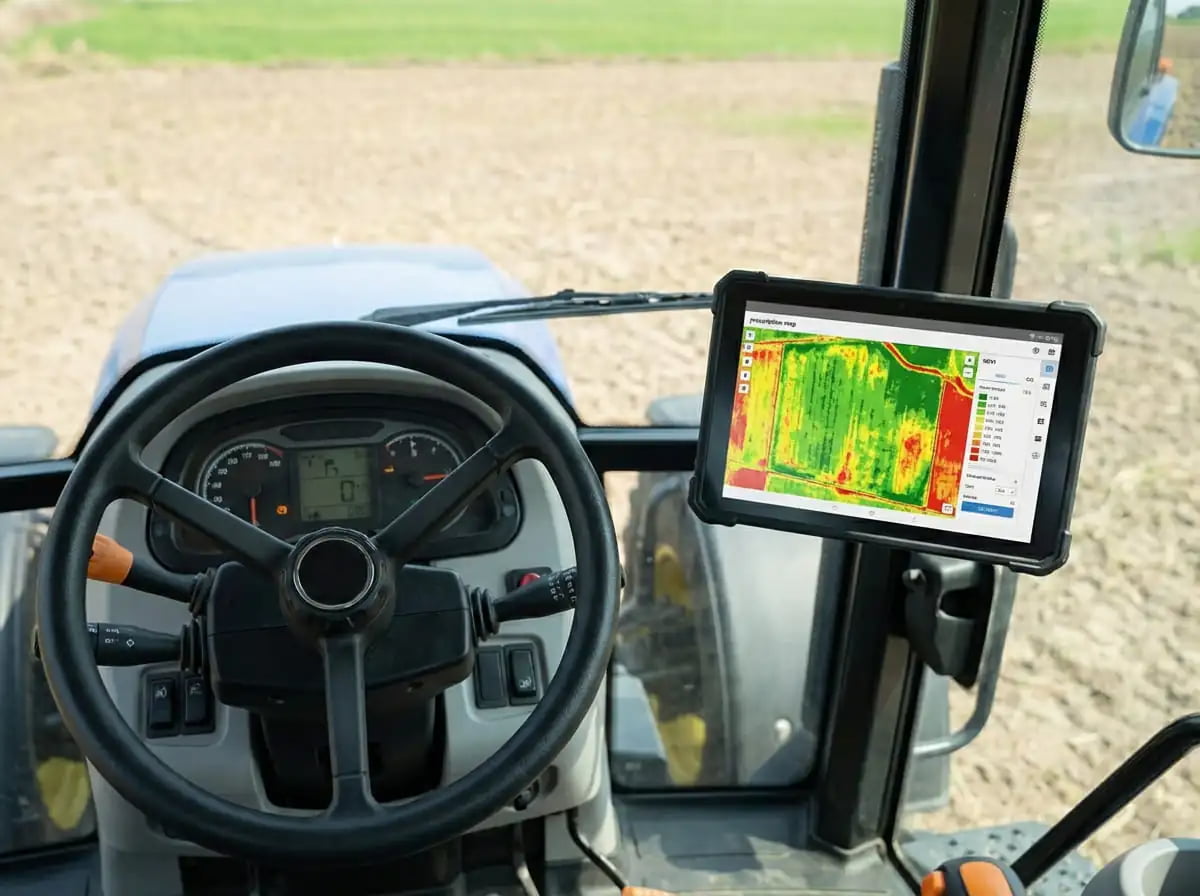
This process is what connects aerial intelligence to ground-level action. It happens in a few clear steps.
Step 1: Data Capture
First, a drone equipped with a multispectral camera flies a pre-programmed grid pattern over the field. This camera captures light beyond what the human eye can see, specifically in the near-infrared (NIR) spectrum.
Step 2: Calculating the Vegetation Index
Next, the images are stitched together and analyzed by software. The software uses a formula called the Normalized Difference Vegetation Index (NDVI). In simple terms, healthy, dense vegetation reflects a lot of NIR light and absorbs red light. Stressed or sparse vegetation does the opposite. The NDVI formula uses the difference between these two light bands to assign a value to every part of the field, creating a clear, color-coded map of crop health. Bright green might mean healthy, while yellow or red indicates a problem.
Step 3: Creating the Prescription Map
This is where data turns into a decision. Based on the NDVI map, an agronomist or an AI-powered agricultural engine decides the "prescription." For example, areas with low NDVI values (unhealthy plants) might be prescribed a higher dose of nitrogen fertilizer, while healthy areas get a standard dose or none at all. This creates a digital variable rate application (VRA) map. This map is essentially a set of instructions for your equipment.
Step 4: Action on the Ground
Finally, the VRA map is loaded into the controller of a modern, GPS-equipped tractor or sprayer. As the tractor drives through the field, its controller reads the map and automatically adjusts the output of the nozzles or spreader in real-time. More fertilizer here, less pesticide there, all done automatically. This data-driven approach ensures resources are only used where needed, increasing yield and protecting the environment.
What Are the Rules for "Swarm Control" and "BVLOS" Drone Operations?
Using one pilot to control multiple drones (swarming) or flying beyond your line of sight (BVLOS) sounds incredibly efficient. But it also raises safety concerns. What are the current regulations?
Regulations are developing. In China, swarm control by a single certified pilot is often allowed in designated agricultural areas. BVLOS operations typically require special permits, advanced obstacle-avoidance technology, and a thorough safety assessment to be approved by aviation authorities.
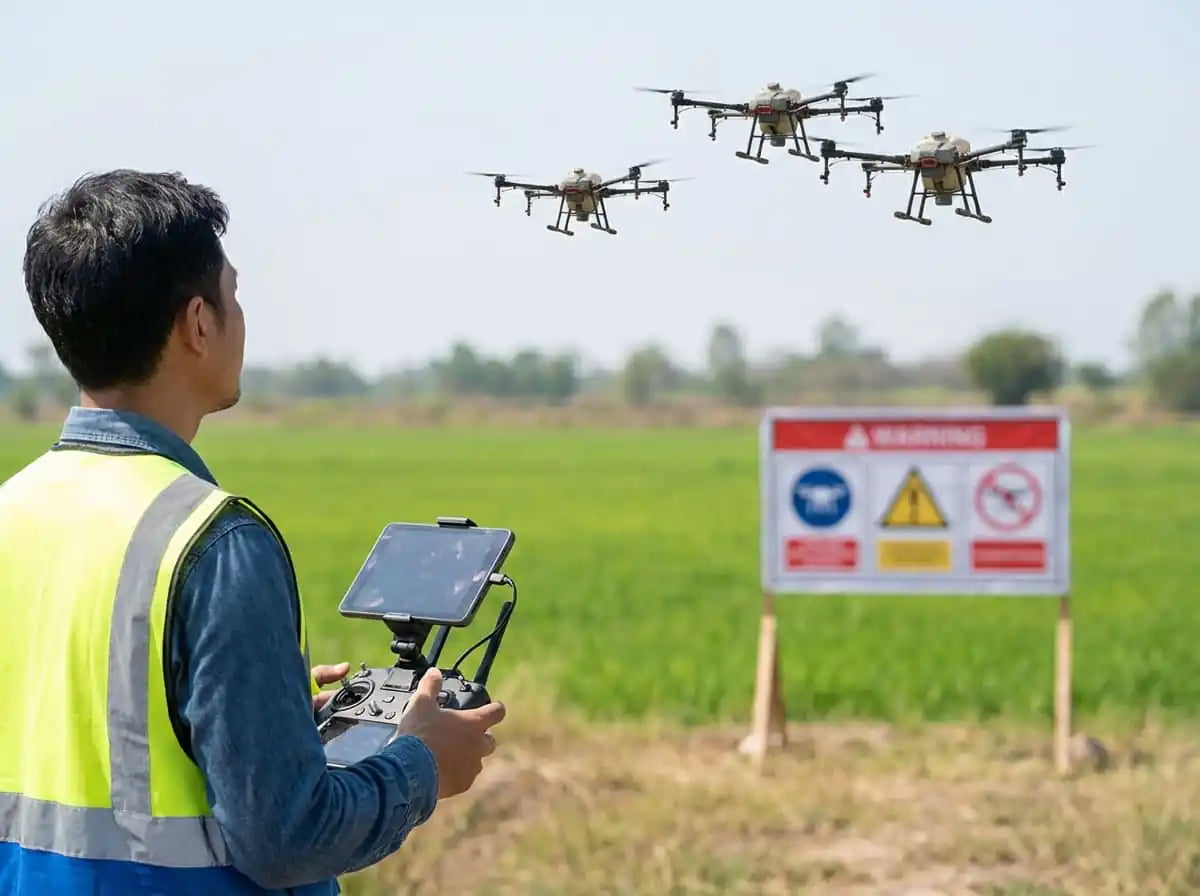
These advanced operations represent the future of agricultural efficiency, but regulators are moving cautiously to ensure safety. Let's look at each one.
Swarm Control
The idea of having one pilot operate a fleet of five or ten drones simultaneously is very appealing for large-scale farms. From a regulatory standpoint, this is becoming more common but is tightly controlled.
- Certification is Key: The pilot must be specially trained and certified for multi-drone operations.
- System Reliability: The control system must be robust, with clear protocols for managing all drones, including handling emergencies like a lost link or low battery.
- Designated Areas: These operations are usually restricted to specific, pre-approved agricultural zones away from populated areas, airports, and other sensitive airspace. This is where battery consistency is paramount. In a swarm, if one drone's battery underperforms and forces an early landing, it disrupts the entire operation. That's why we at Litop work with manufacturers to ensure our batteries provide predictable, reliable flight times, which is essential for safe and efficient swarm missions.
Beyond Visual Line of Sight (BVLOS)
BVLOS is the holy grail for covering vast areas, but it carries more risk because the pilot cannot see the drone.
- Technology Mandates: BVLOS approval is heavily dependent on technology. The drone must be equipped with advanced systems like millimeter-wave radar for terrain-following and forward-looking sensors for detecting and avoiding obstacles like trees or power lines.
- Special Permits: Gaining a BVLOS permit is not automatic. It requires a detailed application that includes a risk assessment, flight plan, and proof that the technology is reliable.
- Operational Limits: Even with a permit, there are often restrictions, such as avoiding flight in winds stronger than a certain level (e.g., Level 4 wind) and having a robust emergency plan.
As these regulations mature, they will unlock even greater levels of automation and efficiency in farming, but always with safety as the primary focus.
Conclusion
UAS technology is not just an incremental improvement; it is a fundamental shift in agriculture. By integrating precision hardware, intelligent data analysis, and a clear operational framework, drones are making farming more efficient, profitable, and sustainable. This is the future of how we will feed the world.