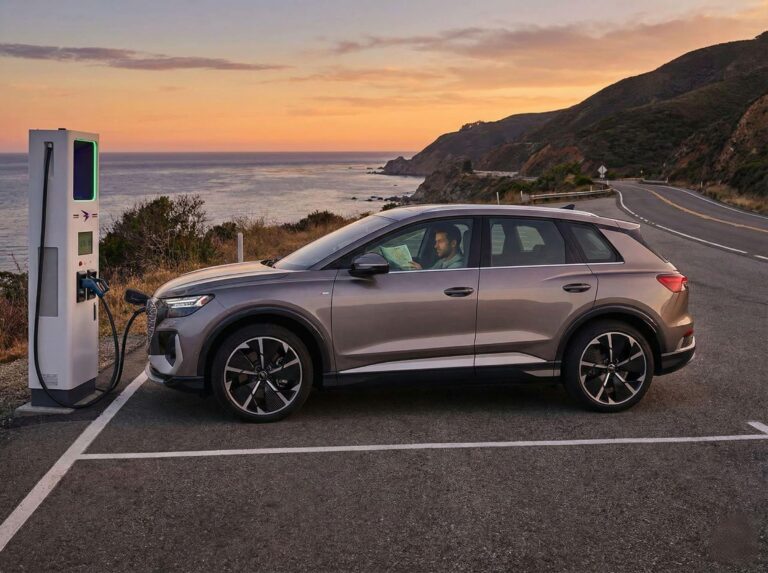
Struggling with a high-capacity battery that takes forever to charge? You feel chained to the outlet, waiting. But is this slow speed an unavoidable price for longer runtime?
Not necessarily. A high-capacity battery's charging speed depends on its design, the charger's power (in watts), and its internal chemistry. Thanks to modern fast-charging technologies, many large batteries can now power up just as quickly as their smaller counterparts, offering the best of both worlds.

This might sound counterintuitive. For years, we've been told that bigger means slower. But the technology inside these batteries has evolved dramatically. Let's break down exactly what determines charging speed and bust some common myths. It's a fascinating look into the balance of power, capacity, and smart engineering. I think you'll be surprised by what's possible now.
Does increasing capacity mean you need a higher-power charger or more time to fill up?
You've got a massive battery, but now charging feels like a marathon. Is a slow charge the only option, or is there a way to speed things up?
In simple terms, yes. At the same charging power, a larger battery will take longer to fill. The relationship is straightforward: charging time is roughly the battery's capacity divided by the charging current. But this doesn't mean you're stuck with slow charging.
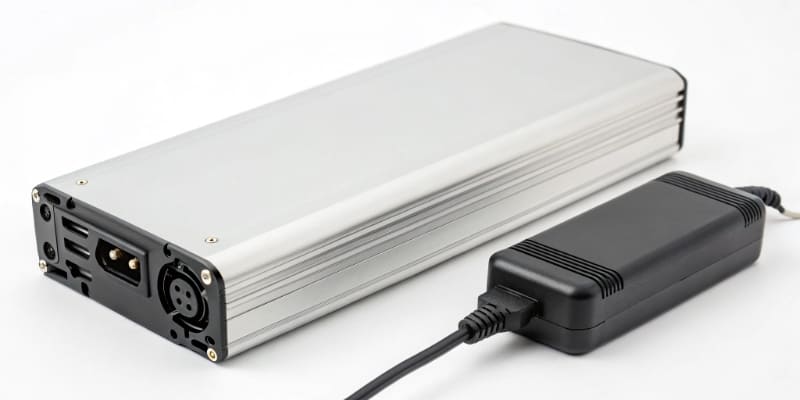
I'll explain this with a simple formula: Charging Time ≈ Battery Capacity / Charging Current. Think of it like filling two buckets with the same garden hose. A 6,000mAh battery is a bigger bucket than a 4,500mAh one. If the water flow (charging power) is identical, the bigger bucket will naturally take longer to fill. This is the fundamental physics at play. However, the key variable that has changed is the "hose." We're not using the same old charger for every battery anymore.
The Power and Capacity Trade-Off
In the past, there was a direct trade-off. To avoid overheating and damaging the battery, manufacturers often paired high-capacity cells with lower-power chargers. The heat generated during high-power charging was a major concern for battery longevity. For example, you might see a phone with an industry-leading fast charge have a smaller battery (under 5000mAh), while a phone boasting a 6000mAh battery might use a more conservative charging speed. This created the perception that high capacity inherently means slow charging.
Breaking the Mold with Modern Tech
Today, that "balancing game" has new rules. Advances in Battery Management Systems (BMS)1 and cell chemistry allow high-capacity batteries to handle much higher charging power safely. So, while a 6,000mAh battery would take longer to charge than a 4,500mAh one with an old 10W charger, it doesn't have to. When paired with a modern 100W or 120W charger, that 6,000mAh battery can reach a full charge faster than the 4,500mAh battery on a standard 30W charger. The bottleneck isn't the capacity itself, but the entire charging system's ability to deliver power safely and efficiently. As a custom battery manufacturer, we at Litop focus on designing these integrated systems to meet specific performance targets.
Is charging speed mainly about battery capacity or the charger's specs (wattage/amps)?
Confused about what makes a battery charge fast? You see numbers like mAh, Watts, and Amps thrown around. It's frustrating trying to figure out what actually matters for speed.
Charging speed is primarily determined by the charger's power, measured in watts (W). While capacity (mAh) dictates how much energy the battery holds, wattage defines how quickly that energy can be delivered. A high-wattage charger will fill any battery faster, regardless of its capacity.
It's a common point of confusion, but the answer is crystal clear when you understand the roles. Think of battery capacity (mAh) as the size of your car's gas tank and the charger's power (watts) as the flow rate of the fuel pump. A bigger tank will hold more gas, but a high-flow pump will fill any tank—big or small—much faster than a standard one.
The Decisive Role of Power (Watts)
Power, measured in watts, is the product of voltage (V) and current (A). This is the single most important metric for charging speed. A 10W charger (5V/2A) delivers energy far slower than a 100W charger. Let's look at a practical comparison to make this clear:
| Battery Capacity | Charger Power | Estimated Charging Time (0-100%) |
|---|---|---|
| 5,000 mAh | 10W (5V/2A) | ~5+ hours |
| 5,000 mAh | 65W | ~50 minutes |
| 6,000 mAh | 120W | ~30 minutes |
As the table shows, a 6,000mAh battery with a 120W charger is significantly faster than a smaller 5,000mAh battery with a 65W charger. This is why, when you're evaluating a device or a custom battery solution2, you should look at the supported charging wattage first. It's the true indicator of charging speed. When a client like Michael asks for a fast-charging solution for a medical device, my team at Litop focuses on engineering a battery and BMS that can safely accept the required wattage. The capacity is about runtime; the wattage is about downtime.
Does fast-charging technology shorten the charging time of high-capacity batteries at the cost of battery life?
You love how fast your new device charges, but a nagging worry persists. Is this incredible speed secretly damaging your battery, leading to a shorter lifespan and costly replacement?
Not necessarily, thanks to modern safeguards. While high heat from fast charging can degrade a battery, manufacturers implement sophisticated Battery Management Systems (BMS)1. These systems monitor temperature and adjust charging speed, especially after 80%, to protect the battery's health.
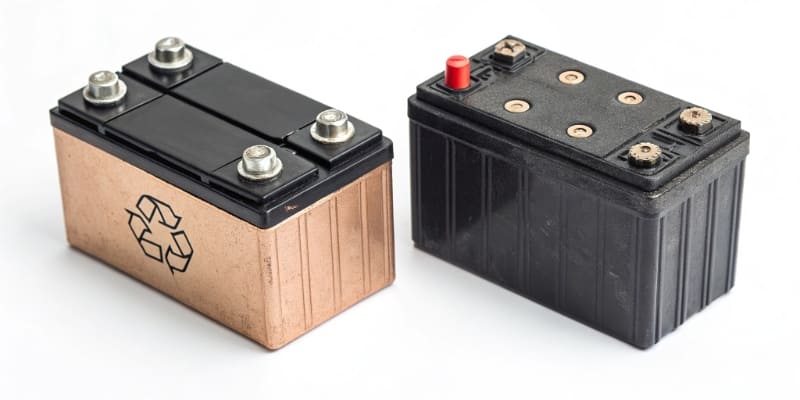
This is the million-dollar question and a major focus of our R&D at Litop. Historically, the concern was valid. Pumping a lot of power into a lithium battery generates heat, and heat is the enemy of battery longevity. It accelerates the chemical reactions that cause a battery to lose its ability to hold a charge. However, the industry has developed several clever strategies to mitigate this risk, especially for high-capacity cells.
The Role of the Battery Management System (BMS)
The hero of this story is the BMS. It's the battery's brain. A smart BMS constantly monitors the battery's temperature, voltage, and current. When you first plug in a device, it might charge at its maximum speed (e.g., 120W). The BMS allows this because the battery is in a state where it can safely absorb energy quickly. But as the battery fills up, usually around the 80% mark, the BMS intelligently throttles the charging speed. This "trickle charge" phase is crucial. It prevents overcharging and excessive heat buildup, protecting the battery's long-term health. On a high-capacity battery, this final 20% might feel slow, but it's a deliberate safety feature, not a flaw.
Material and Structural Innovations
Beyond the BMS, we're seeing improvements in the battery cells themselves.
- Efficient Chemistries: New electrolyte formulas and electrode materials are more stable at higher temperatures.
- Dual-Cell Designs: Many fast-charging devices use two smaller battery cells wired together. This allows the total charging power to be split between them, so each cell is charged at a more manageable rate, reducing heat on any single cell.
So, while there's a theoretical trade-off, modern engineering has largely solved it. A well-designed system with a high-capacity battery can offer both lightning-fast charging and a long, reliable service life.
Do certain lithium-ion chemistries maintain faster charging speeds at high capacities?
You know not all batteries are the same. But does the specific chemical makeup inside, like LFP or NCM, affect how quickly a large-capacity battery can be charged safely?
Yes, chemistry plays a significant role. Lithium Iron Phosphate (LiFePO4 or LFP) batteries3 are known for their exceptional thermal stability and long cycle life, allowing them to handle high-power charging more safely than some other chemistries. NCM (Nickel Cobalt Manganese) offers higher energy density.
Absolutely. The choice of battery chemistry is a critical decision we make when designing custom solutions. It impacts energy density, safety, cost, and, importantly, charging speed. Two of the most common chemistries in our field are Lithium Iron Phosphate (LFP) and Nickel Cobalt Manganese (NCM)4.
LiFePO4 (LFP): The Safe and Speedy Workhorse
LFP batteries are rock stars when it comes to safety and fast charging. Their chemical structure is incredibly stable, meaning they are much less prone to overheating or thermal runaway, even when subjected to high charging currents. This inherent safety allows us to design systems that charge at very high rates without complex and costly cooling systems. This makes LFP an excellent choice for applications where safety and rapid recharging are paramount, even if its energy density is slightly lower than NCM. For industrial tools or medical equipment that needs to be back in service quickly, LFP is often our go-to recommendation.
NCM and Others: The Density Kings
NCM and similar chemistries like NCA (Nickel Cobalt Aluminum) are champions of energy density. They can pack more power into a smaller, lighter package. This is why they are so popular in consumer electronics like smartphones and wearables, where space is at a premium. While they are very effective, managing their thermal performance during fast charging is more challenging than with LFP. It requires a more sophisticated BMS and sometimes advanced materials like silicon-based anodes, which further boost capacity but can have their own sensitivities to fast charging. Our engineering team at Litop works to overcome these challenges by optimizing electrode structures and electrolyte formulas, allowing us to build high-capacity, high-density NCM batteries that can still charge impressively fast.
Conclusion
In conclusion, a high-capacity battery does not have to be a slow-charging one. The key is to look beyond capacity and consider the charging power (watts) and the underlying technology. With the right design, you can enjoy both long runtime and quick, convenient recharging.
Discover how BMS technology safeguards your battery's health and longevity during fast charging. ↩
Custom batteries can be tailored for specific needs—learn when they offer the best value and performance. ↩
LFP batteries offer unique advantages for safety and rapid charging—learn why they might be right for you. ↩
NCM batteries are popular for high energy density—find out how this affects charging and usage. ↩