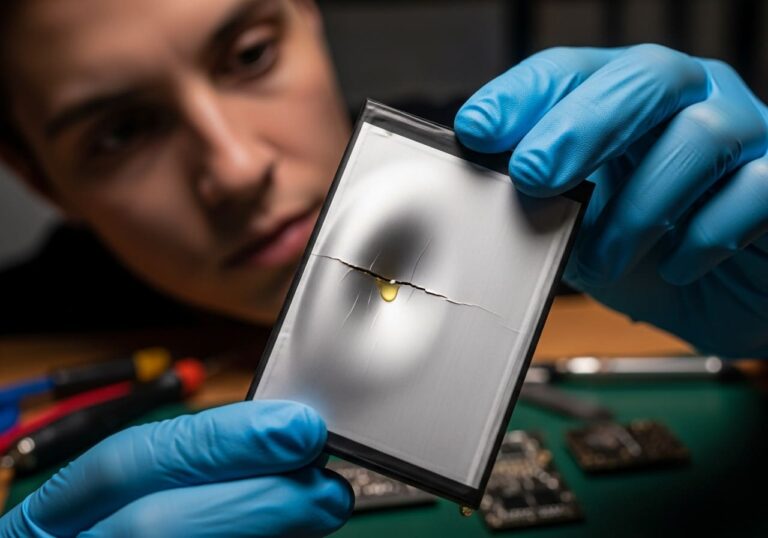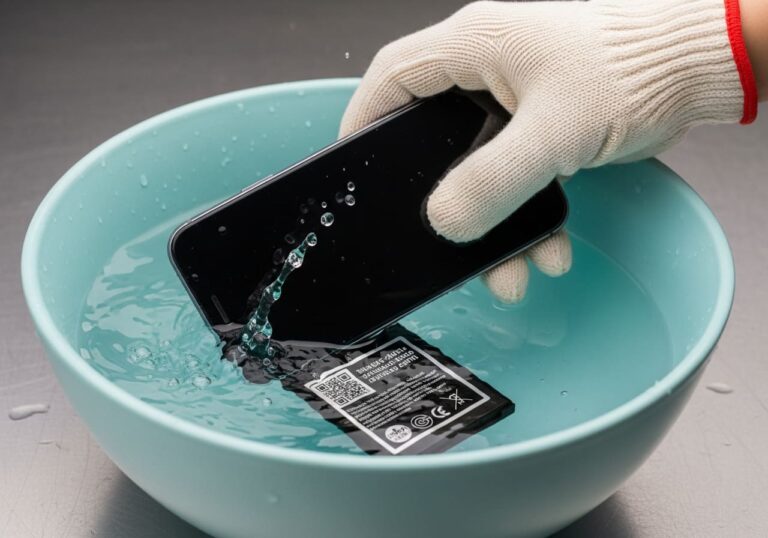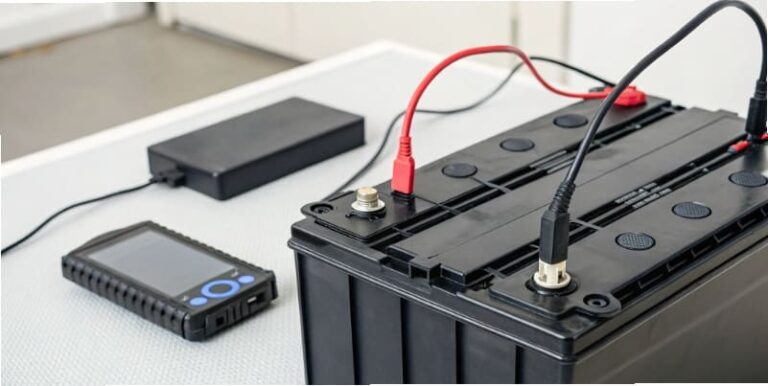
Accidentally got your lithium battery wet? You're right to be worried. Charging it could cause serious damage or even a fire, but knowing the right steps can prevent disaster.
It depends. If the battery port has an IP67 rating and was only briefly wet, it's often safe after drying. However, if the battery was submerged or water entered the casing, do not charge it. This can cause a short circuit and a dangerous fire.
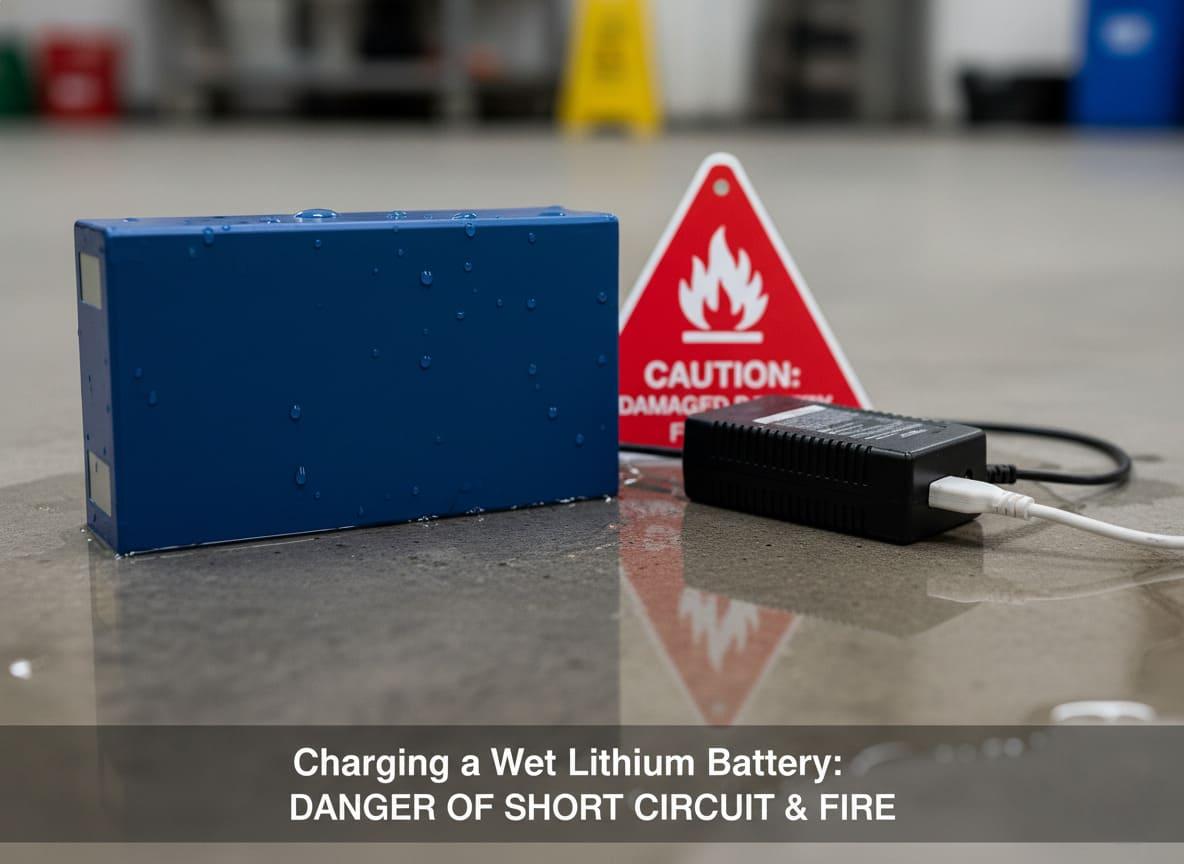
I remember a client, Michael, a sharp procurement officer from the US, calling me once in a panic. An entire batch of his new medical devices got soaked during a warehouse flood. He asked me the same question you're asking now. The answer isn't a simple yes or no. It depends on many factors, from the type of water to the condition of the battery. Let's break down exactly what you need to do to stay safe.
What Should I Do to Safely Handle and Dispose of a Lithium Battery That Fell in Water?
A battery dropped in water is a serious problem. Handling it incorrectly can be dangerous, leading to shorts or even fire. But following clear, safe steps will protect you and your device.
First, do not use or charge it. Remove it from the device if possible. Place it in a fireproof container, like a metal can with sand, away from flammable materials. Then, contact a local e-waste or hazardous waste facility for proper disposal instructions. Never throw it in regular trash.
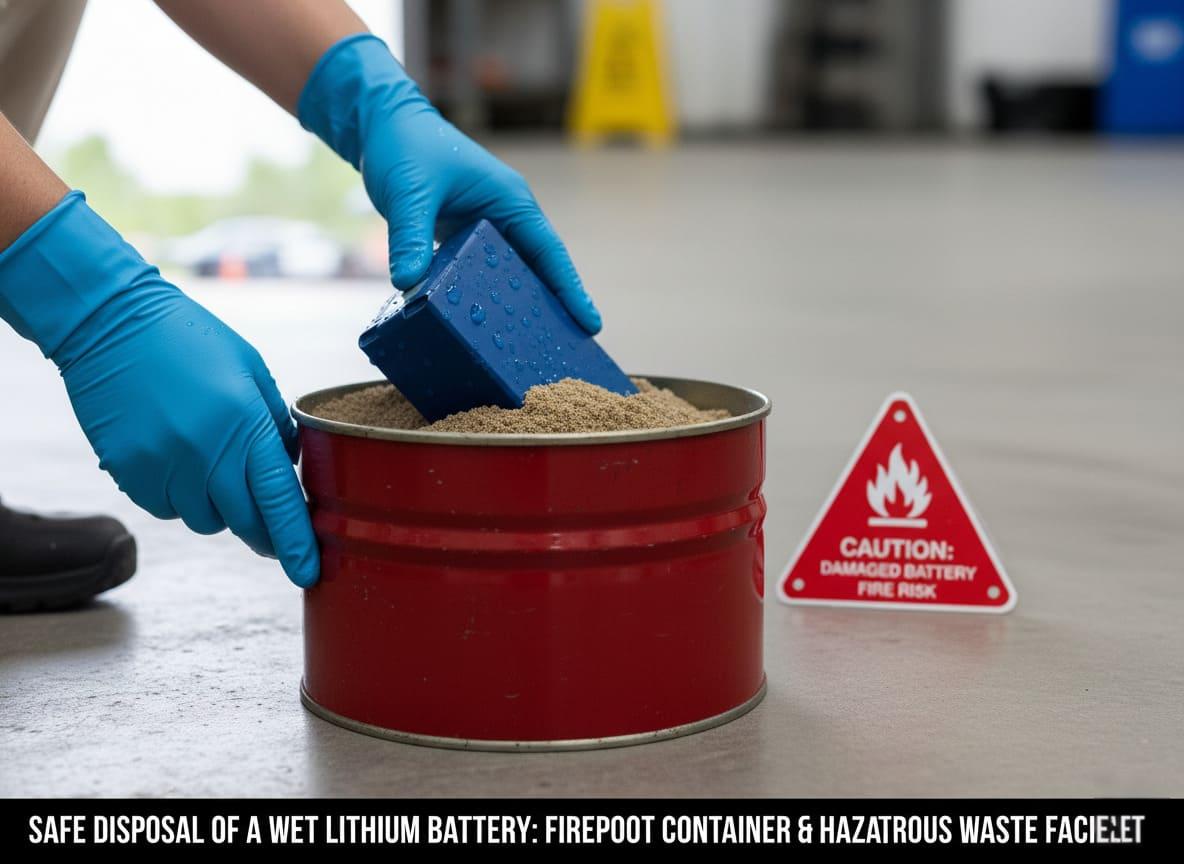
Your immediate actions after a battery gets wet are the most critical for safety. Over my years in the battery industry, I've seen that hesitation or incorrect handling is what leads to bigger problems. The first rule is simple: treat any submerged battery as potentially dangerous. Do not try to "save" it by connecting it to a charger or a device.
Step 1: Immediate Safety Precautions
The moment you retrieve the battery, your priority is to isolate it. If the battery is hissing, smoking, or feels hot, do not touch it with your bare hands. Use tongs or wear thick, insulated gloves. Move it immediately to a safe, open space away from anything flammable. A concrete patio or driveway is a good spot. It’s always wise to have a suitable fire extinguisher nearby. A standard ABC extinguisher can work, but a Class D extinguisher is specifically designed for combustible metal fires, which can occur with lithium batteries.
Step 2: Isolation and Observation
Once you have the battery in a safe location, place it in a fire-resistant container. A bucket filled with dry sand is an excellent choice because it can smother a potential fire and absorb any leaking electrolyte. Do not seal the container completely, as pressure could build up if the battery does enter thermal runaway. You must observe the battery for at least 48 hours. A delayed reaction is possible. Look for any signs of trouble like swelling, heat, or smoke.
Step 3: Proper Disposal
After the observation period, if the battery has remained stable, it must be disposed of correctly. You cannot throw it in your household trash. It's considered hazardous waste. A damaged lithium battery can get crushed in a garbage truck, causing a fire. You need to contact your local hazardous waste disposal facility or an e-waste recycling center. They have the right procedures to handle and recycle these batteries safely.
| Do's and Don'ts for a Wet Battery | |
|---|---|
| Do | Don't |
| Wear insulated gloves. | Don't try to charge or use it. |
| Place it in a fireproof container (like a bucket of sand). | Don't throw it in the regular trash. |
| Observe it for 48 hours in a safe, ventilated area. | Don't seal it in an airtight container. |
| Contact a hazardous waste facility for disposal. | Don't assume it's safe just because it looks dry. |
What Is the Difference in Danger Between Freshwater and Saltwater for a Lithium Battery?
A battery falls in water, but does it matter if it was a puddle or the ocean? One type is significantly more corrosive and dangerous, increasing the risk of a short circuit.
Saltwater is much more dangerous than freshwater. Saltwater is highly conductive and corrosive. It rapidly accelerates short circuits between the battery terminals and can quickly eat away at internal components, leading to a much higher and more immediate risk of fire or thermal runaway.
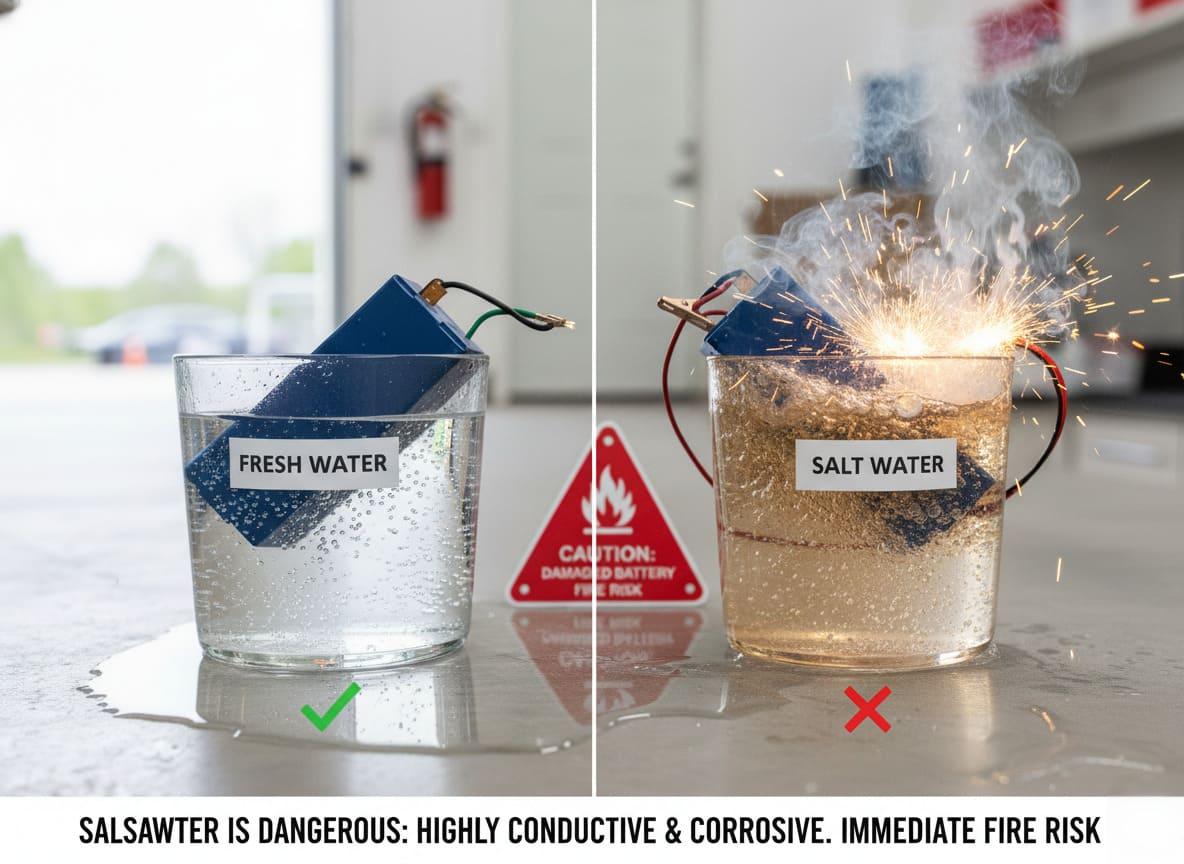
I often have to explain to my clients, especially those developing marine or outdoor equipment, that not all water is the same. The chemical makeup of the water a battery is exposed to drastically changes the risk profile. Thinking that "water is just water" is a dangerous mistake.
The Problem with Freshwater
Freshwater, like from your tap, a lake, or rain, is not pure H₂O. It contains dissolved minerals and impurities that allow it to conduct electricity, but not very well. When a battery is exposed to freshwater, the risk of a short circuit is present but often slower to develop. The primary concern is that water could seep past seals and cause a gradual short inside the casing or lead to slow-forming corrosion on the contacts. If the exposure was extremely brief, like a quick splash on a battery with good seals, it might survive after thorough drying. However, the risk of hidden, internal corrosion remains, which could cause a failure later on.
The Extreme Danger of Saltwater
Saltwater is a completely different story. It is a powerful electrolyte, meaning it's excellent at conducting electricity. The salt (sodium chloride) dissolves into free-floating positive and negative ions. These ions create a superhighway for electricity to flow. If saltwater gets on the battery terminals, it creates an immediate and powerful external short circuit. This rapid discharge of energy generates a lot of heat very quickly, which is a primary trigger for thermal runaway. Furthermore, the chloride ions in salt are extremely corrosive to the metals used in battery contacts and internal structures. This corrosion happens much faster and is more destructive than the rust from freshwater. Any battery that has touched saltwater should be considered permanently and dangerously damaged.
| Factor | Freshwater Exposure | Saltwater Exposure |
|---|---|---|
| Conductivity | Low to Moderate | Very High |
| Corrosion Speed | Slow, gradual | Rapid, aggressive |
| Short Circuit Risk | Moderate, often delayed | High, immediate |
| Likelihood of Recovery | Very low, but not impossible for minor splashes | Essentially zero |
| Primary Danger | Gradual corrosion, potential for a delayed short | Immediate short circuit, rapid heat generation, fire |
How Can I Tell if a Wet Battery Is Completely Damaged or if It Can Be Safely Dried and Reused?
Your battery looks dry and normal after getting wet. But how can you be sure? Using a compromised battery is a gamble that could lead to failure when you least expect it.
Look for physical signs: bulging, leaking, discoloration, or corrosion on the contacts. If the water indicator (a small sticker on many batteries) has changed color, it's damaged. If it was fully submerged, especially in saltwater, assume it's permanently damaged. When in doubt, always replace it.

This is a very common question, and my answer is always guided by a principle of absolute safety. For product developers and end-users alike, the cost of a new battery is tiny compared to the cost of a damaged device or a potential fire. While you can perform a visual check, the safest assumption is that a wet battery is a bad battery.
Visual Inspection Checklist
Before you even think about reusing a battery, you need to inspect it carefully.
- Casing: Look for any swelling, bulging, or cracks. A swollen battery indicates an internal chemical reaction is producing gas. This battery is a time bomb and must be handled with extreme care and disposed of immediately.
- Contacts: Check the metal terminals for any signs of corrosion. This might look like green, white, or black residue. Corrosion compromises the electrical connection and is a clear sign of water damage.
- Water Damage Indicator: Many of our custom batteries at Litop, and many others on the market, include a Liquid Contact Indicator (LCI). This is a small white sticker that turns pink or red when it touches water. If this indicator has changed color, the warranty is void, and the battery is considered damaged. It’s a simple, foolproof sign.
When to Assume It's Unsalvageable
There are situations where you shouldn't even bother with an inspection. The risk is just too high.
- If it was fully submerged: Even for a few seconds, full submersion can force water past seals that are only designed to be water-resistant.
- If it was exposed to saltwater: As we discussed, saltwater is a death sentence for a battery. The corrosive and conductive effects are too severe.
- If it shows any physical signs of damage: Any bulging, leaking, or corrosion means it's done.
My advice to clients like Michael is always the same: if there is any doubt, there is no doubt. Replace the battery.
| Inspection Point | Sign of Damage | Action to Take |
|---|---|---|
| Casing | Swelling, cracks, deformities | Dispose of immediately and safely. |
| Metal Contacts | Green, white, or black corrosion | Dispose of safely. |
| Water Indicator (LCI) | Sticker is pink or red instead of white | Dispose of safely. |
| Performance | Fails to charge, gets hot, short runtime | Dispose of safely. |
Under What Conditions Is a Lithium Battery Most Likely to Experience Thermal Runaway or Catch Fire?
The fear of a lithium battery fire is real. This catastrophic failure, called thermal runaway, can happen suddenly. Knowing the specific triggers is the first step to ensuring complete safety.
Thermal runaway is most likely caused by a short circuit (often from water damage or physical puncture), overcharging (using the wrong charger), exposure to extreme heat, or a manufacturing defect. These conditions cause an uncontrollable, self-sustaining chemical reaction that generates immense heat and fire.
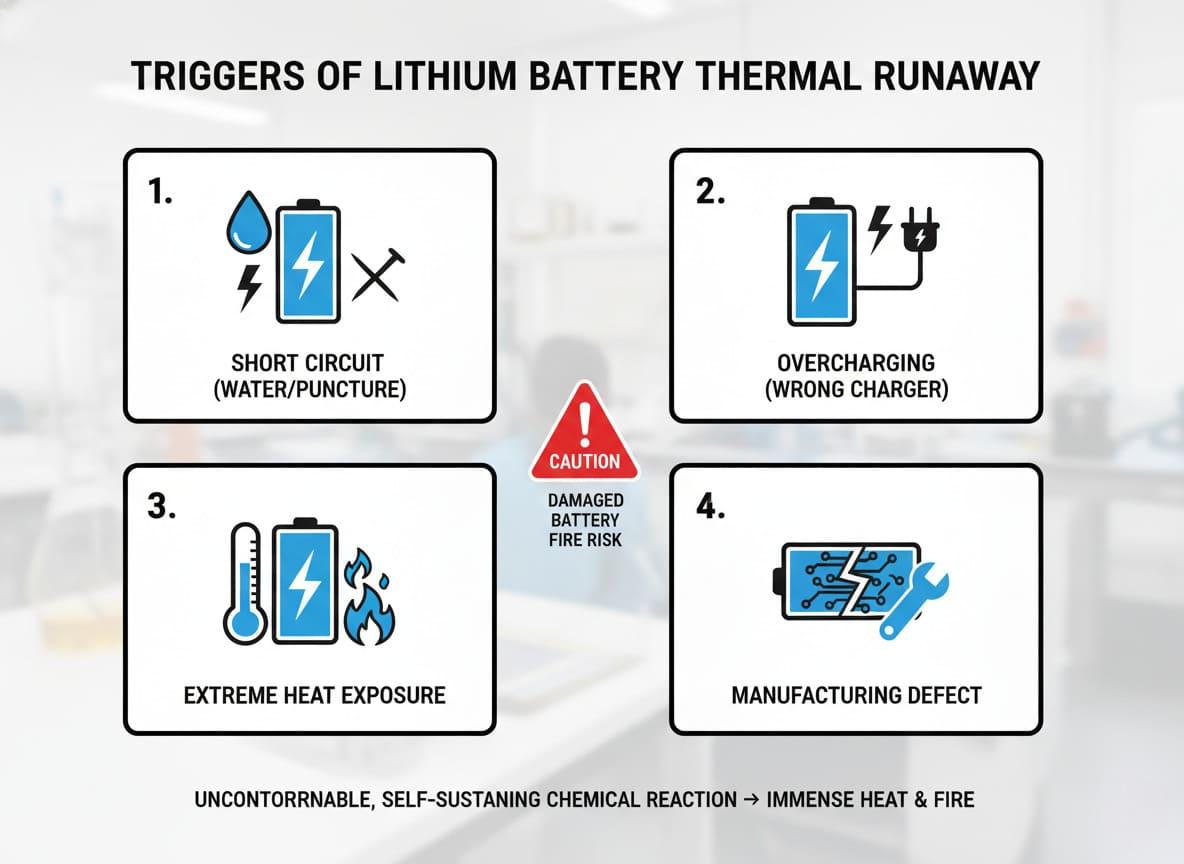
As a manufacturer, preventing thermal runaway is our obsession. It guides every decision we make, from the raw materials we select to the design of the Battery Management System (BMS). A well-made battery is engineered with multiple layers of safety. However, severe abuse or damage can override these protections. Understanding the triggers is key to using lithium batteries safely.
The Main Culprit: Short Circuits
A short circuit is the most common trigger for thermal runaway. It happens when electricity finds an unintended, low-resistance path. This causes a massive and rapid discharge of energy, which manifests as intense heat.
- External Short: This is the primary risk with a wet battery. Water, especially saltwater, creates a conductive bridge between the positive and negative terminals on the outside of the battery. The battery rapidly dumps its energy, heats up, and can catch fire.
- Internal Short: This happens when the separator, a very thin plastic sheet inside the battery that keeps the positive and negative layers apart, is damaged. This can be caused by a manufacturing flaw or, more commonly, by physical damage like puncturing or crushing the battery.
Other Critical Triggers
While short circuits are a major cause, other conditions can also lead to thermal runaway.
- Overcharging: Every lithium battery has a maximum safe voltage. Forcing more energy into it beyond this point by using a faulty or incorrect charger can cause the internal chemistry to become unstable, generate heat and gas, and eventually fail catastrophically. A quality BMS is designed to prevent this, but it's the first line of defense, not an invincible shield.
- High Temperatures: Storing or using a battery in an extremely hot environment, like inside a car on a sunny day, can raise the battery's internal temperature to a critical point where the chemical reactions start to run out of control on their own.
| Trigger for Thermal Runaway | Description | Prevention Method |
|---|---|---|
| Short Circuit (e.g., Water) | Electricity flows uncontrolled between terminals, causing rapid heating. | Keep battery dry. Handle carefully. Do not use if damaged. |
| Overcharging | Forcing too much voltage into a full battery, causing instability. | Always use the correct, high-quality charger for your device. |
| Physical Damage | Puncturing or crushing the battery damages internal separators. | Protect devices from drops and impacts. Do not use a dented battery. |
| External Heat | Exposing the battery to high ambient temperatures (e.g., direct sun). | Store devices and batteries in a cool, dry place. |
Conclusion
Never charge a lithium battery that has been wet, especially if submerged or exposed to saltwater. Prioritize safety by inspecting for damage and signs of corrosion. When in doubt, assume it is unsafe and contact a hazardous waste facility for proper disposal. Your safety is worth more than a battery.