
Are you excited about your new smart luggage but worried it might be confiscated at the airport? The rules can be confusing, but a simple check can ensure a smooth trip.
Yes, you can fly with smart luggage, but the lithium-ion battery must be removable. Before your flight, you need to take the battery out. You must carry the battery with you in the cabin and can check the empty bag. Luggage with non-removable batteries is strictly forbidden.
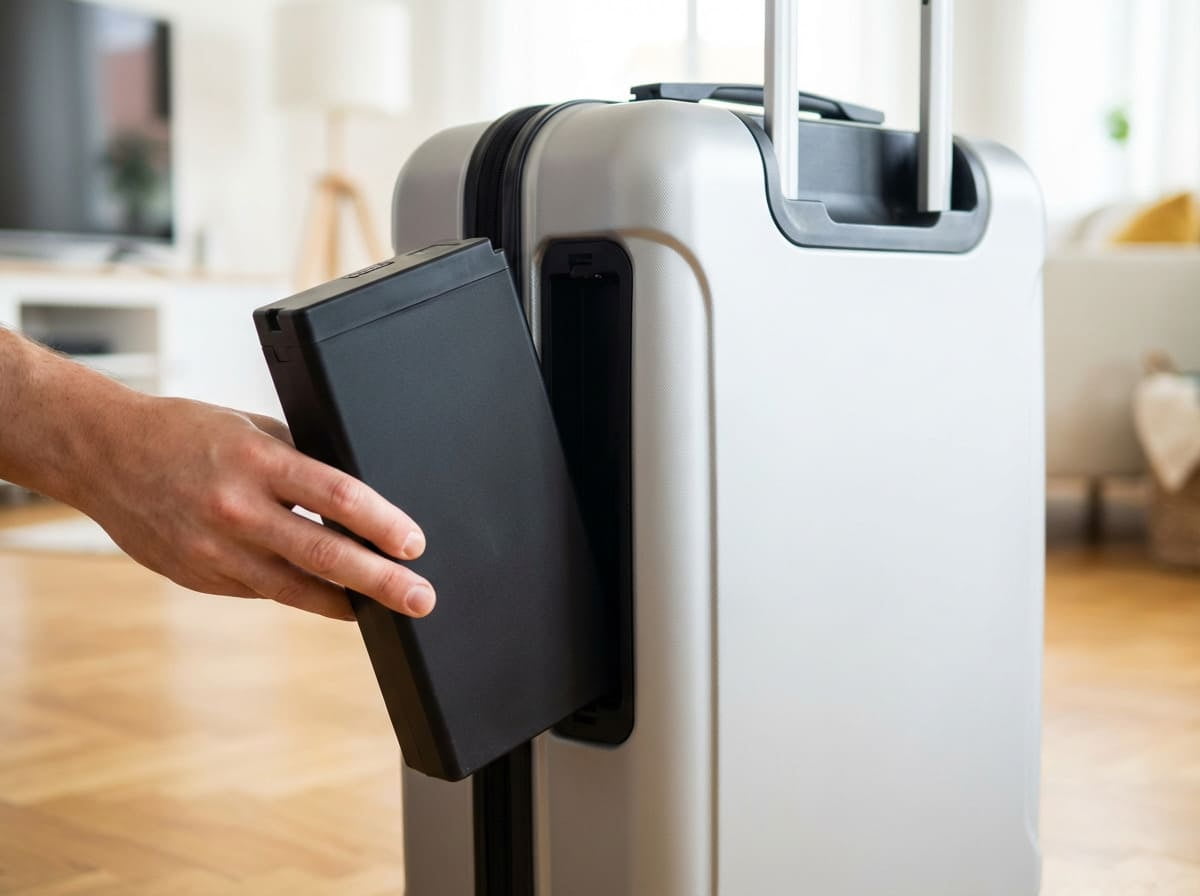
The rules around smart luggage seem simple, but many travelers get caught off guard. I’ve heard too many stories of people having to abandon their expensive new bags at the check-in counter. It’s a frustrating and costly mistake that can ruin the start of a trip.
To avoid this, you need to understand the details behind the rules. Let's break down the common questions and scenarios you might face. Knowing what to expect will help you travel with confidence and keep your smart luggage safe.
Will I be denied boarding if my smart luggage has a non-removable battery?
You've packed your high-tech suitcase and are ready for your trip. Imagine the shock of being told at check-in that you can't bring it. This happens often with non-removable batteries.
Yes, you will almost certainly be denied boarding if your smart luggage has a non-removable lithium-ion battery. Major aviation authorities, including the FAA and IATA, classify these items as forbidden for both carry-on and checked baggage due to significant fire safety risks.
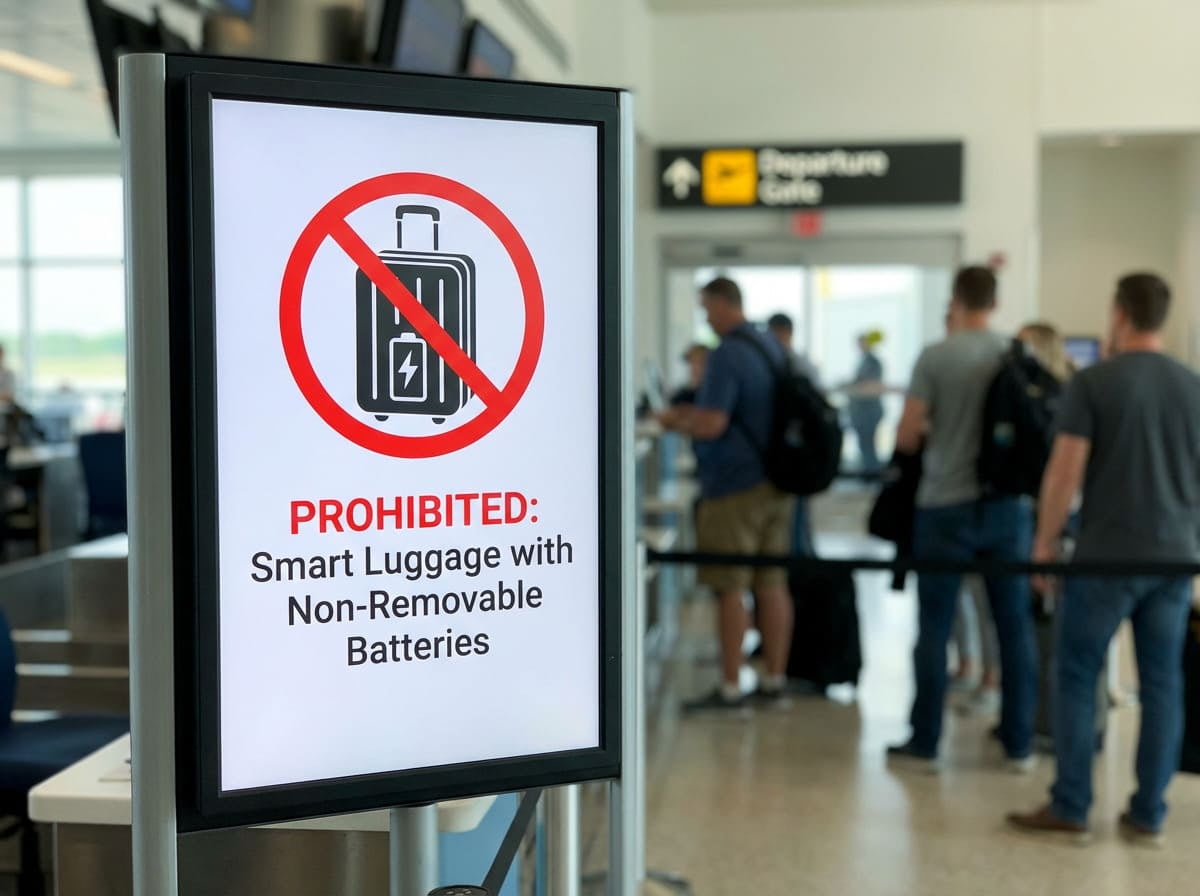
The reason for this strict rule is safety. Lithium-ion batteries, like the ones that power smart luggage features, contain a lot of energy. If they are damaged, they can overheat and catch fire in a process called "thermal runaway." A fire in the aircraft's cargo hold is extremely dangerous because it is difficult to detect and extinguish quickly. When the battery is removable, you can carry it with you into the cabin. There, the flight crew is trained and equipped to handle a battery fire if one should occur.
I once spoke with a client, Michael from the US, who saw this happen firsthand. A traveler next to him in line was given a difficult choice by the airline: miss the flight or abandon a brand-new, expensive suitcase with a built-in battery. He had to leave it behind. This is a situation we at Litop always want our clients to avoid. That’s why, when we design custom battery solutions for travel products, we always emphasize designs that allow for easy removal.
Here is a simple breakdown of the rules:
| Battery Type | Allowed in Checked Bag? | Allowed in Carry-On? | Why? |
|---|---|---|---|
| Removable | No (Battery must be removed) | Yes (Battery must be carried on) | You can monitor the battery in the cabin. |
| Non-Removable | No | No | The fire risk in cargo is too high. |
Before you buy any smart luggage, always check if the battery is user-removable. This single feature makes the difference between a helpful travel gadget and an expensive problem at the airport.
Are popular electric rideable suitcases considered smart luggage or a vehicle?
Riding your suitcase through a large airport sounds fun and saves time. But you might wonder how airlines see it. Is it a cool gadget or a personal vehicle with different rules?
Airlines treat electric rideable suitcases just like other smart luggage. The classification as a "vehicle" doesn't matter. The only thing they care about is the lithium battery. The battery must be removable, and its energy capacity must meet airline limits, which is typically under 160Wh.
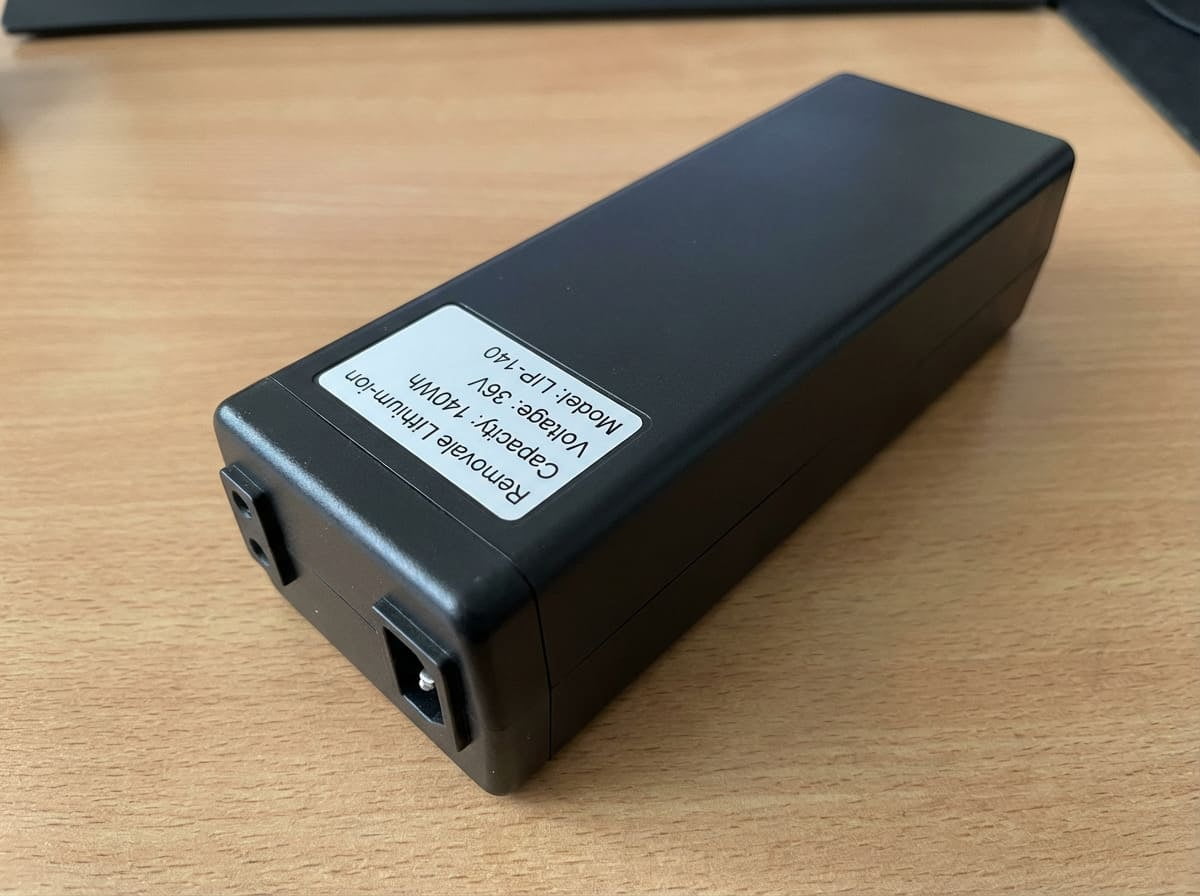
The main focus for any electronic device on a plane is its battery. Rideable suitcases need powerful batteries to run their motors, so their specifications are very important. The key metric is Watt-hours (Wh), which measures the battery's total energy capacity. Most airlines follow these guidelines:
- Up to 100Wh: You can carry these batteries on without special permission.
- 100Wh to 160Wh: You need to get approval from the airline before you fly. Most airlines allow this, but you must ask first.
- Over 160Wh: These batteries are forbidden on passenger aircraft.
You can usually find the Wh rating printed directly on the battery. If not, you can calculate it yourself if you know the milliamp-hours (mAh) and voltage (V): (mAh / 1000) x V = Wh. For example, a 20,000mAh battery at 5V is exactly 100Wh. As a battery manufacturer, we at Litop ensure all our products have clear, accurate labels so our customers never have to guess. An unclear label can lead to airport security rejecting your battery, even if it is compliant.
Here’s a quick reference table:
| Battery Capacity | Carry-On Rule | Check-In Rule (Empty Suitcase) | Airline Approval Needed? |
|---|---|---|---|
| ≤ 100Wh | Allowed | Allowed | No |
| 100Wh - 160Wh | Allowed | Allowed | Yes, contact the airline |
| > 160Wh | Forbidden | Forbidden | Not possible |
Always check your rideable suitcase's battery specs and contact your airline if it falls in the 100-160Wh range. It's a simple step that ensures you can bring your fun and convenient luggage with you.
I've removed the battery, so what should I know before checking my empty smart suitcase?
You followed the rules and removed the battery from your smart luggage. It seems like you're all set. However, there are a few extra steps to ensure your bag and battery travel safely.
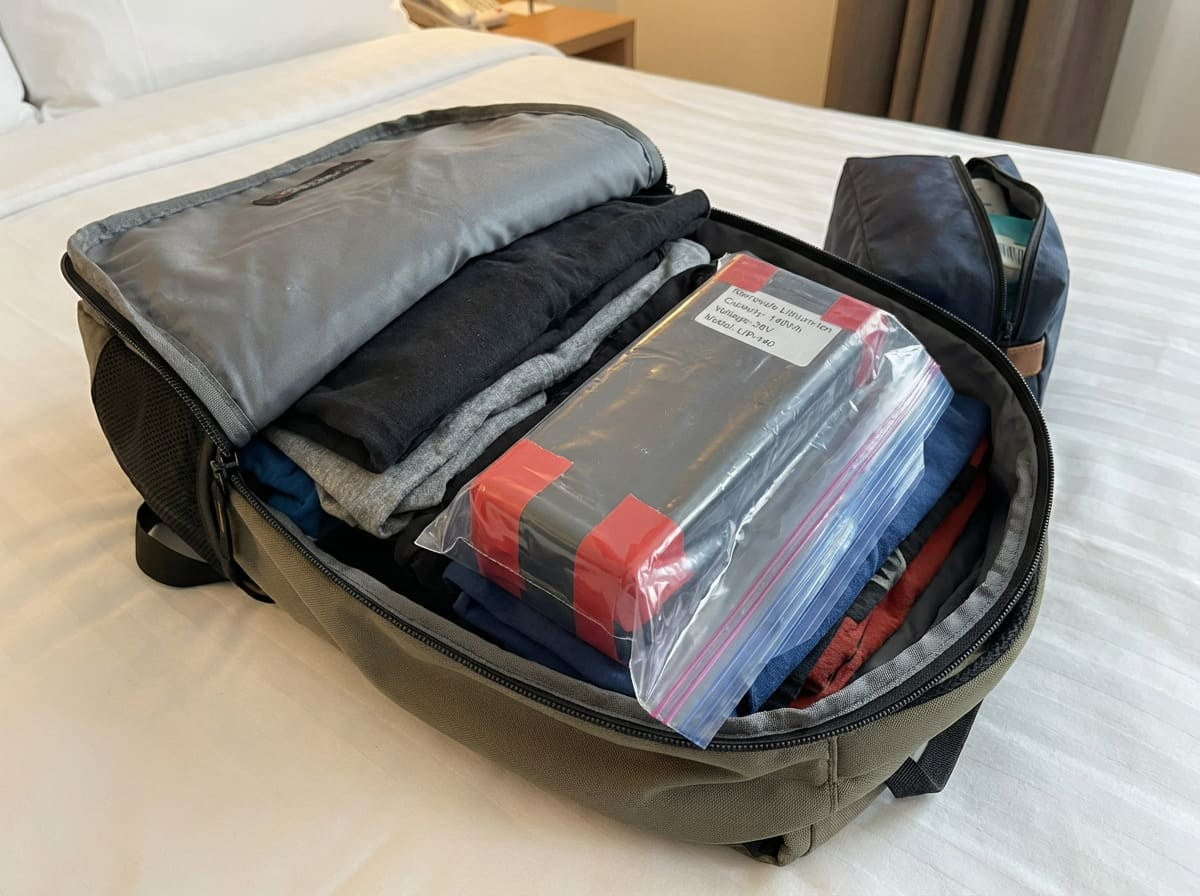
After removing the battery, make sure your empty suitcase can be opened by security using a TSA-approved lock1. The battery must be protected from short circuits in your carry-on bag by covering its terminals with tape or putting it in a protective pouch or its original packaging.
First, let's talk about the empty suitcase. Even without its power source, the internal wiring might look unusual on an X-ray scanner. Security agents might need to perform a manual inspection. If you use a non-TSA-approved lock, they may have to break it to open your bag. It’s also a good idea to secure the cover of the empty battery compartment to protect the connectors from damage during handling.
Now for the most important part: protecting the battery you are carrying with you. Lithium-ion batteries can be dangerous if their metal connectors (terminals) touch other metal items like keys, coins, or zippers. This can create a short circuit, which can lead to overheating and a fire. This is not just a suggestion; it's a critical safety requirement.
Here are the proper ways to carry your removed battery:
- Keep it in its original retail packaging.
- Place it in a dedicated battery case or a plastic bag.
- Put tape over the battery's metal terminals to insulate them.
I work with many clients in the medical device industry2, like Michael, who are extremely precise about safety. He once told me, "In our field, preventing electrical shorts is a matter of life and death. The same principle applies to carrying batteries." He is absolutely right. Taking a moment to properly secure your battery protects you, your fellow passengers, and the crew.
Do I need to remove the battery from my AirTag before flying?
You want to use a tracker like an Apple AirTag for peace of mind. It helps you keep track of your luggage. But you might worry if this tiny device also has battery rules.
No, you do not need to remove the battery from small trackers like an AirTag or Tile. These devices use small lithium metal coin cell batteries. They are permitted in both checked and carry-on luggage because their amount of lithium is very low and they are considered safe.
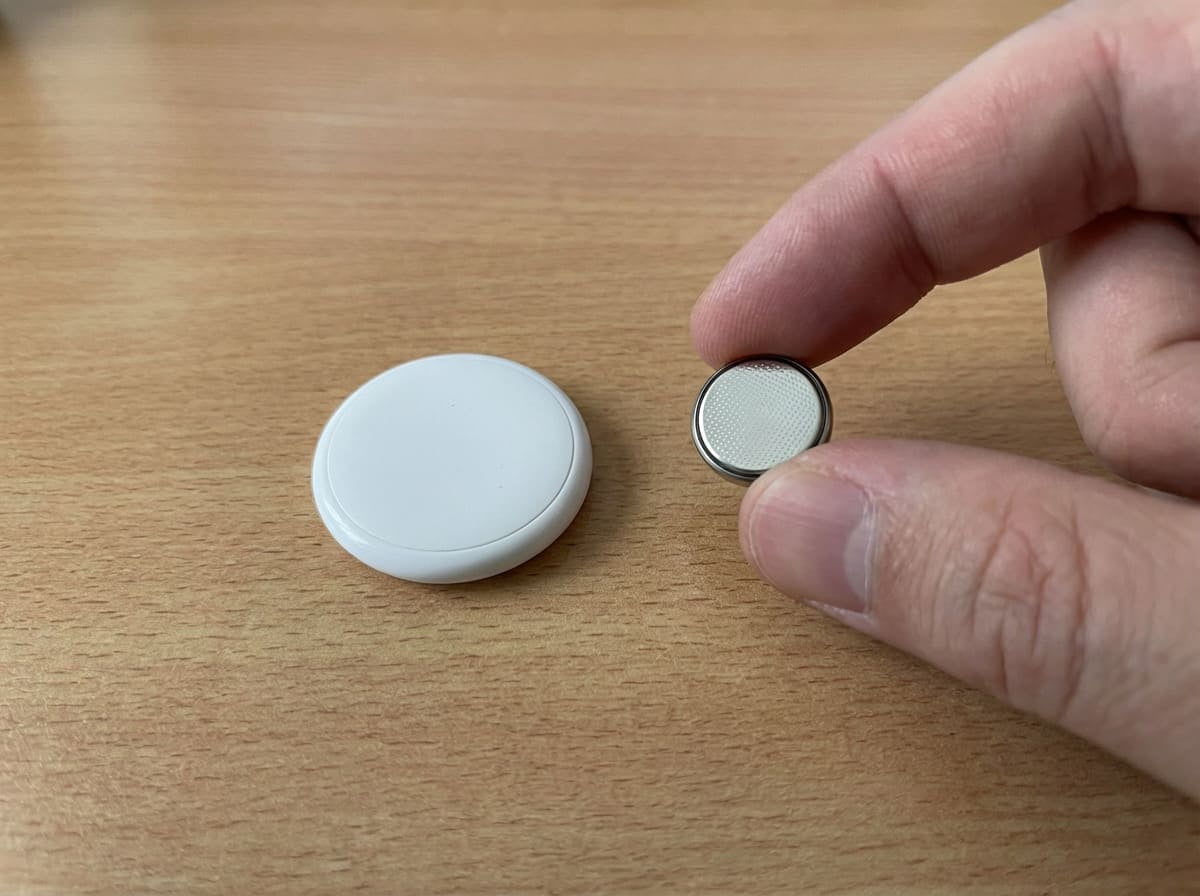
The reason these trackers are allowed is because they use a different type of battery than your smart luggage. It’s important to understand the distinction, as it’s something we deal with every day at Litop when designing battery solutions.
There are two main types of lithium batteries:
- Lithium-ion (rechargeable): These are found in your phone, laptop, and the main power pack of your smart luggage. They store a lot of energy and are the primary focus of airline regulations due to their higher fire risk.
- Lithium metal (non-rechargeable): These are single-use batteries found in watches, key fobs, and trackers like the AirTag. They contain a very small amount of lithium metal and are far less volatile.
Airlines have specific limits for lithium metal batteries, but they are based on the amount of lithium content. The limit is typically 2 grams of lithium per battery. The common CR2032 coin cell battery used in an AirTag contains only about 0.1 grams of lithium. This is well below the safety limit, making it perfectly fine to leave in your checked luggage.
Here is a simple comparison:
| Feature | Lithium-ion Battery | Lithium Metal Battery |
|---|---|---|
| Type | Rechargeable | Non-rechargeable |
| Used In | Smart luggage, phones, laptops | AirTags, watches, key fobs |
| Airline Risk | High | Very Low |
| Airline Rule | Heavily restricted; must be in cabin | Permitted in checked bags |
So, you can track your luggage with an AirTag without any worry. The airline rules are designed to manage the risk from large, powerful, rechargeable batteries, not the small, stable ones in your personal trackers.
Conclusion
Flying with smart luggage is simple when you know the rules. The most important thing is that the battery must be removable. Always carry the removed battery with you in the cabin, and make sure it is protected. Knowing your battery's capacity and understanding airline limits is key.