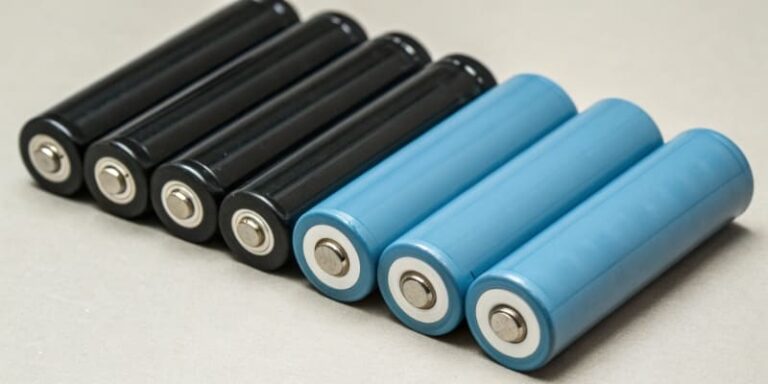
Your device needs ultimate protection, but standard batteries fail. A splash could mean total failure. Military-grade tech is the answer, but is it accessible for your products?
Yes, some military-derived waterproof battery technologies are available for consumer use, especially in ruggedized electronics. However, core military-spec batteries are rare in the consumer market due to extreme standards and high costs. Most products use adaptations of military tech rather than the real thing.

You have probably seen "military-grade1" on phone cases and watches. It sounds impressive, but what does it actually mean for a battery? The difference between marketing hype and true military standards is huge. In my years of custom battery design, I have seen clients ask for this level of durability. Let's break down what these terms really mean and what you can realistically expect for your device.
What Do "Military-Grade" and "MIL-STD-810G" Certifications Really Mean? Is It More Durable Than an IP67/IP68 Rating?
Confused by terms like "MIL-STD" and "IP68"? Choosing the wrong one can lead to product failure. Let's clarify what these ratings mean for your battery's real-world durability.
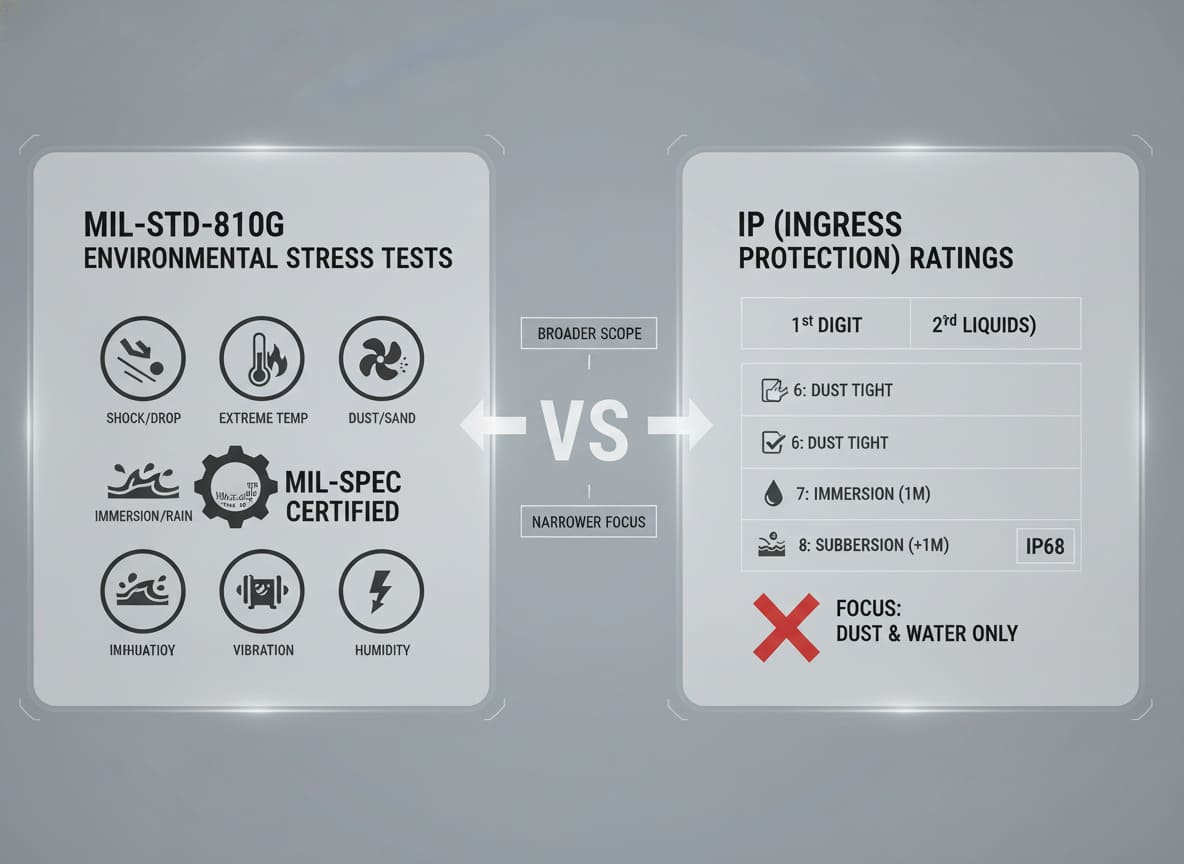
"Military-grade" and MIL-STD-810G refer to a series of environmental stress tests, not just waterproofing. While IP ratings (like IP68) specifically measure dust and water ingress, MIL-STD tests a much broader range of hazards, including shock and extreme temperatures, making it fundamentally different.

When clients ask me for a "military-grade waterproof" battery, the first thing I do is separate these two ideas. They are not the same thing, and understanding the difference is key to getting the right battery for your product.
Understanding IP Ratings
IP ratings, like IP67 or IP68, are very specific. The "IP" stands for Ingress Protection. The first number (6) means it is completely dust-tight. The second number tells you about water protection. IP67 means the device can be submerged in 1 meter of water for 30 minutes. IP68 is for deeper, longer submersion, but the exact conditions are set by the manufacturer. It is a clear, focused standard that only deals with dust and water getting inside.
Deconstructing MIL-STD-810G
MIL-STD-810G is completely different. It is a huge US military document with dozens of tests for different environmental stresses. These tests simulate conditions a device might face in the field, from desert heat to arctic cold and from high-altitude pressure drops to intense vibrations. A product is not "MIL-STD-810G certified" as a whole. Instead, it is tested against specific methods within the standard. For example, a battery might pass the test for shock but not the test for salt fog.
Direct Comparison
| Feature | IP Rating (e.g., IP68) | MIL-STD-810G |
|---|---|---|
| Primary Focus | Dust and water ingress | Overall environmental durability |
| Scope | Narrow and specific | Broad (shock, temp, vibration, etc.) |
| Meaning | A clear pass/fail for water/dust | Passed specific, selected tests |
| Common Use | Consumer electronics (phones, watches) | Ruggedized devices, military gear |
So, is a MIL-STD battery more durable? It depends. For simple water protection, an IP68 rating is a more direct guarantee. But a battery that has passed MIL-STD-810G tests for shock and vibration is likely much tougher physically. As a manufacturer, I always ask clients like Michael what specific hazards their device will face. That tells us which standard is truly important.
Where Can You Find Commercial Battery Brands or Suppliers That Meet Military Standards?
Finding truly rugged batteries is hard. Many suppliers make false claims. You need a reliable source to avoid costly product failures and ensure your device performs under pressure.
True military-spec batteries are typically sold by specialized defense contractors and are not on the open market. However, you can find commercial suppliers, like us at Litop, who design ruggedized batteries with military-derived technologies for industrial, medical, and high-end consumer applications.
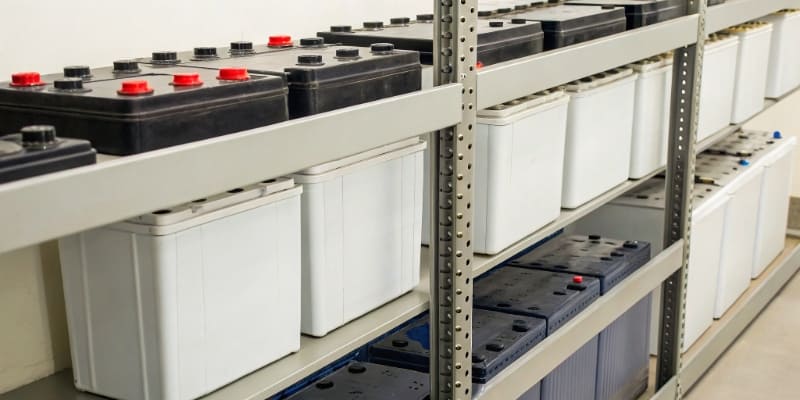
There is a big difference between suppliers who serve the military directly and those who serve the commercial market. You need to know where to look.
The Niche World of Defense Contractors
Companies that supply directly to the military operate in a different world. They deal with strict government contracts, security clearances, and extensive documentation. For a typical commercial project, like a new medical device or a piece of industrial equipment, trying to source from these suppliers is impractical and often impossible. Their products are built to extreme standards and come with a very high price tag. They are not selling on Alibaba or exhibiting at standard electronics trade shows.
Finding Rugged Commercial Suppliers
For most businesses, the best approach is to find a specialized commercial battery manufacturer. These companies understand the principles of rugged design and can apply them to your specific needs. They create custom batteries that are tough and reliable without the full cost of a true military-spec product. Here is what to look for when you search on Google or attend a trade show:
- Ask for Test Reports: Do not just accept the "military-grade" label. Ask the supplier which specific MIL-STD-810G tests the battery passed. A good supplier will provide detailed test reports2 from a certified lab.
- Look for Customization Expertise: A one-size-fits-all rugged battery rarely works. You need a partner who can engineer a solution for your device's unique shape, size, and operational hazards. This is our specialty at Litop, where we design custom-shaped and waterproof batteries.
- In-House Engineering and Quality Control: A strong R&D team and strict quality control (IQC, IPQC, OQC) are non-negotiable. They ensure the battery is not just tough on paper but performs reliably in the field.
Does Military-Grade Technology Significantly Increase Battery Cost? How Does the Value Compare to Standard Batteries?
You want maximum durability, but your budget is tight. The high cost of rugged tech can seem prohibitive. Is the extra investment in a tougher battery actually worth it?
Yes, military-grade technology significantly increases battery cost due to specialized materials, advanced engineering, and rigorous testing. The value comes from enhanced reliability, longer product lifespan, and reduced warranty claims, making it a worthwhile investment for high-value devices where failure is not an option.
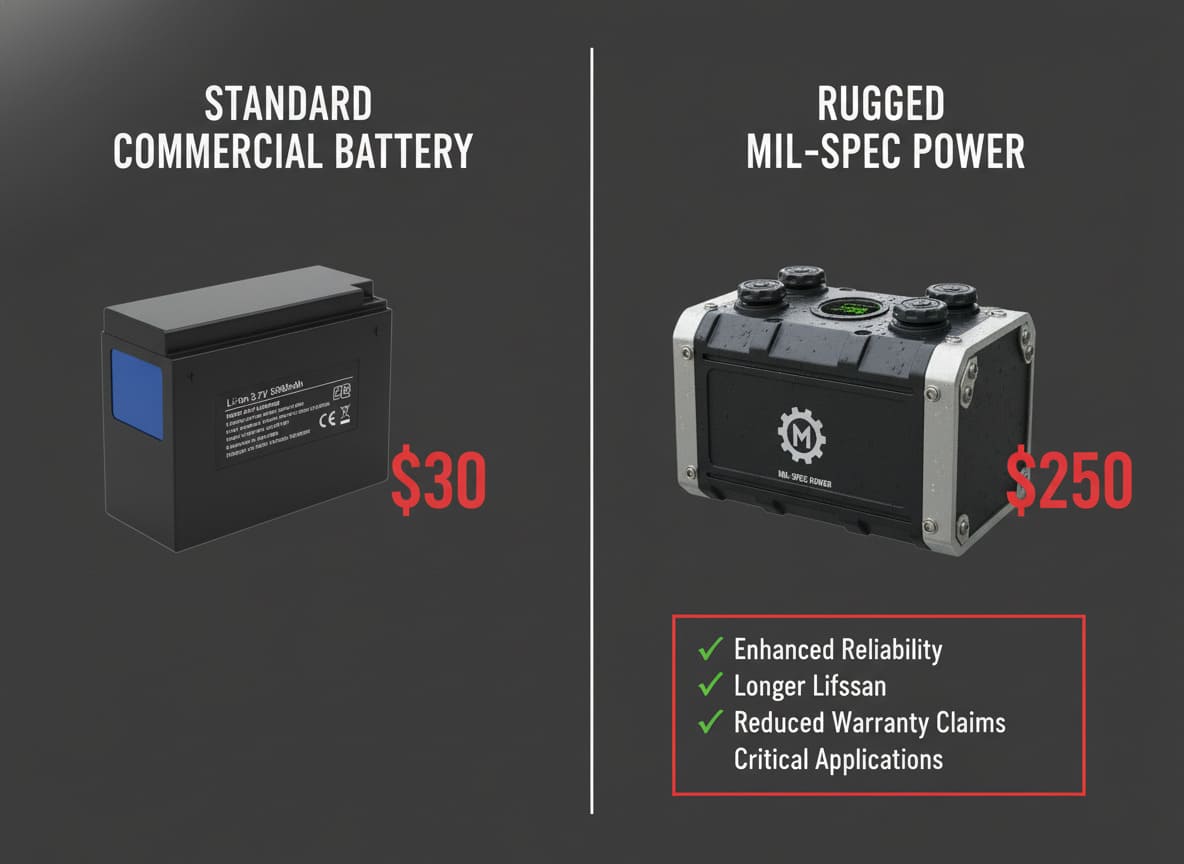
The price difference between a standard battery and a rugged one is significant, and I am always transparent about this with my clients. It is important to understand where that extra cost comes from and how to justify it.
Why Rugged Batteries Cost More
The price difference is not arbitrary. It comes from real engineering and manufacturing choices. We have to use more expensive materials, like thicker casings, specialized sealants, and shock-absorbing polymers. The internal design is also more complex. It often requires reinforced cell holders and more robust connections to withstand vibration and impact. Finally, there is the cost of testing. Certifying a battery against MIL-STD protocols is an expensive and time-consuming process. Each of these steps adds to the final unit cost.
Cost vs. Value Breakdown
| Cost Factor | Standard Commercial Battery | Rugged / Military-Derived Battery |
|---|---|---|
| Materials | Standard plastics, simple seals | High-impact polymers, gaskets, potting compounds |
| Engineering | Optimized for cost and capacity | Optimized for durability and reliability |
| Assembly | Standard automated processes | More manual steps, specialized sealing |
| Testing | Basic QC, UN38.3 | Extensive environmental stress testing |
Calculating the Return on Investment
For a client like Michael in the medical device field, the value is clear. If a standard battery fails because it was dropped or got wet, the entire device might need to be replaced. This leads to high warranty costs and damages the brand's reputation. A rugged battery might add 20-50% to the component cost. But if it prevents even a small percentage of field failures, the return on investment is huge. It is about calculating the total cost of ownership, not just the initial purchase price.
Besides Water and Shock Resistance, What Other Advantages from Military Tech Can You Benefit From?
You think "military-grade" just means tough. But you are missing out on other key performance benefits. This limited view could mean you are not getting the best possible battery.
Military technology also brings advantages in operational temperature range, long-term storage stability, and consistent power delivery under stress. These batteries are engineered for extreme reliability, ensuring they work from freezing cold to desert heat and hold a charge for years.
The demands of military applications have pushed battery technology in several directions, not just toughness. When we incorporate these principles into commercial batteries, our clients get benefits that go far beyond just being waterproof or shock-resistant.
Extreme Temperature Performance
One of the biggest challenges for standard lithium batteries is temperature. They lose performance in the cold and can be dangerous in high heat. Military standards, like the Chinese GJB3916B-2023, demand performance across a massive temperature range, often from -40°C to +70°C. At Litop, we apply these principles to create custom low-temperature and high-temperature batteries. This means your device can function reliably whether it is used outdoors in a Canadian winter or inside a hot vehicle in Arizona.
Long-Term Reliability and Shelf Life
Military equipment can sit in storage for years and must work perfectly when needed. This has driven innovation in battery chemistry and design to minimize self-discharge and degradation. For a consumer product, this translates to a longer shelf life and a more reliable device for the end-user. This is very important for emergency medical devices or backup power systems that need to be ready at a moment's notice.
Stable Performance Under Duress
Beyond just surviving a shock, a military-derived battery is designed to keep delivering stable power during that shock or vibration. The internal connections are more secure, and the cells are better protected. This prevents power interruptions that could cause a device to reboot or fail at a critical moment. This level of stability is a direct result of designing for the harsh, unpredictable environments of military operations.
Conclusion
While true military-spec batteries are rare in consumer products, their influence is strong. You can access military-derived ruggedness, wide temperature performance, and reliability by partnering with a specialized custom manufacturer. The key is to define your needs and find a supplier who can deliver proven performance.