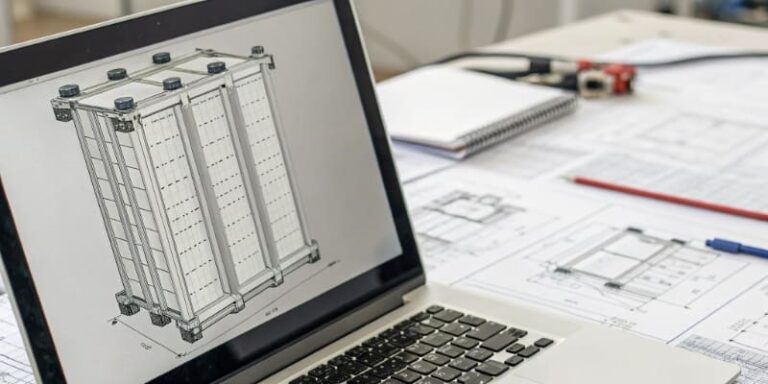
Worried about battery safety on your boat? A failure at sea is a boater's worst nightmare. Certified lithium batteries offer a powerful and much safer alternative for peace of mind.
Yes, lithium batteries are safe for marine applications when they meet strict standards like JT/T 1543-2025 and IMO regulations. Proper installation, a quality Battery Management System (BMS), and sourcing from a reputable manufacturer like Litop are crucial for ensuring safety on the water.
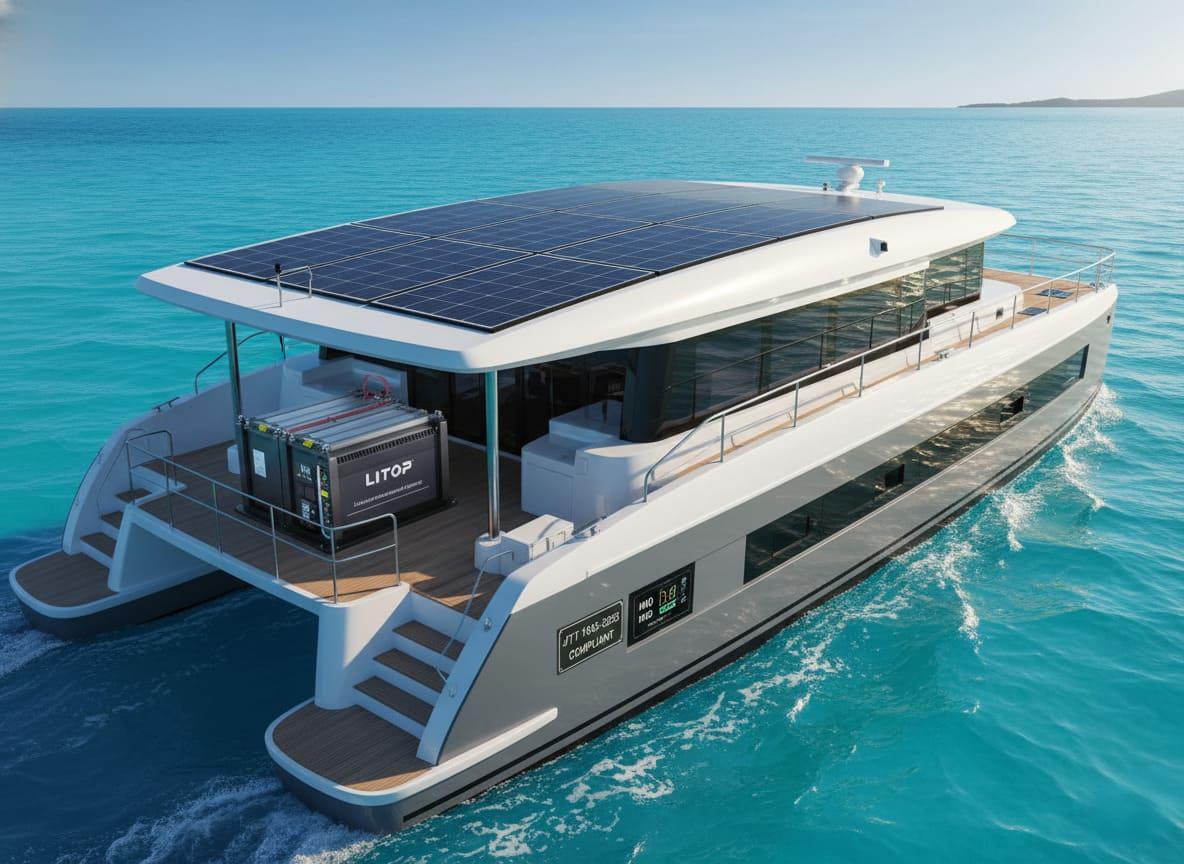
So, we've established that safety is achievable, but it's not just about the battery itself. The entire ecosystem, from charging to installation, plays a vital role. You probably have more specific questions about making the switch. I get these all the time from clients like Michael, who want to upgrade their fleet but need to be sure about every detail. Let's break down the common concerns one by one to give you the clarity you need.
Is my existing marine charging system (like chargers, alternators) compatible with lithium batteries?
Upgrading to lithium but unsure about your existing chargers? The wrong equipment can damage your new batteries or create a safety risk. Let's ensure your system is compatible.
Not always. Lithium batteries, especially LiFePO41, require a specific charging profile (CC/CV). While some modern chargers are compatible, older lead-acid chargers can overcharge and damage them. It's best to check your equipment's specifications or upgrade to a lithium-compatible charger for safety and longevity.
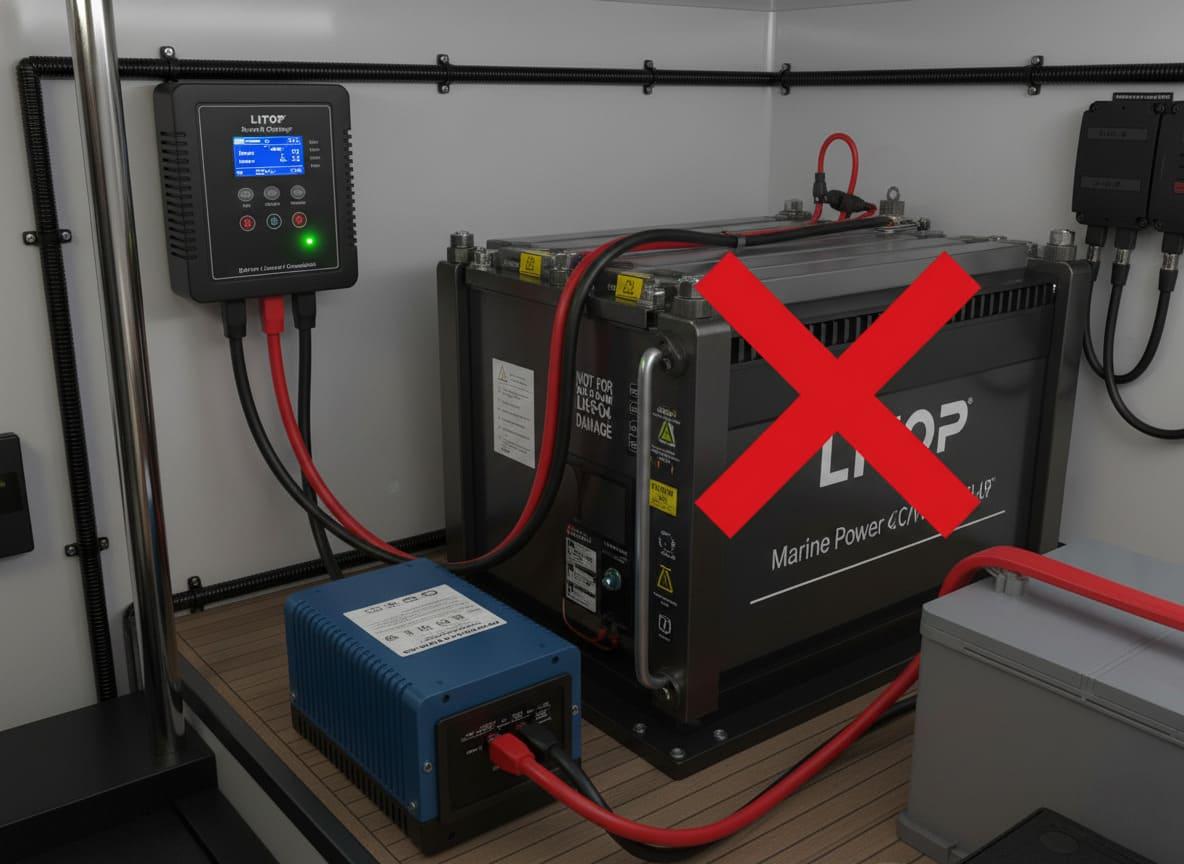
When I talk to boat owners, this is one of the first questions they ask. It's a great question because it shows they're thinking about the whole system, not just the battery. A battery is only as good as the system that supports it. Simply swapping a lead-acid battery for a lithium one without checking your charging equipment is a common mistake that can lead to poor performance and even shorten the battery's life. The technology behind charging these two types of batteries is fundamentally different, and understanding this is key to a successful upgrade.
The Difference in Charging Profiles
Lead-acid batteries use a multi-stage charging process, typically involving bulk, absorption, and float stages. The "float" stage is a continuous, low-voltage charge designed to keep a lead-acid battery topped off. This same float charge is harmful to a lithium battery. Lithium batteries, specifically Lithium Iron Phosphate (LiFePO4) which are the safest for marine use, prefer a simple Constant Current/Constant Voltage (CC/CV) profile. Once the battery reaches the target voltage, the charger should shut off completely. A continuous float charge can stress the cells and reduce their lifespan.
Alternators and Regulators
Your boat's engine alternator is another critical component. Most standard alternators are designed to charge lead-acid batteries and have an internal regulator set for their voltage needs. When connected to a depleted lithium battery, which has very low internal resistance, the battery can draw an extremely high current. This can cause the alternator to overheat and fail prematurely. To prevent this, you should use an external, smart regulator that can be programmed for a lithium profile or install a DC-to-DC charger between the alternator and the lithium battery bank. The DC-to-DC charger protects the alternator by limiting the current draw and provides the correct charging profile for the batteries.
| Feature | Lead-Acid Charging | Lithium (LiFePO4) Charging |
|---|---|---|
| Charging Profile | Multi-stage (Bulk, Absorption, Float) | Two-stage (Constant Current, Constant Voltage) |
| Float Charge | Required to stay full | Not recommended; can cause damage |
| Equalization | Periodically required | Not required and is harmful |
| BMS Role | Not typically used | Essential for safety and cell balancing |
The initial cost of lithium batteries is high, is it really worth it in the long run?
See the high price tag on lithium batteries2 and pause? It's a big investment, making you wonder about the real return. Let's break down the long-term value.
Absolutely. While the initial cost is higher, lithium batteries offer a lower total cost of ownership. They last 5-10 times longer, are lighter, provide more usable capacity, and are maintenance-free. Over their lifespan, they are significantly more cost-effective than replacing multiple lead-acid sets.
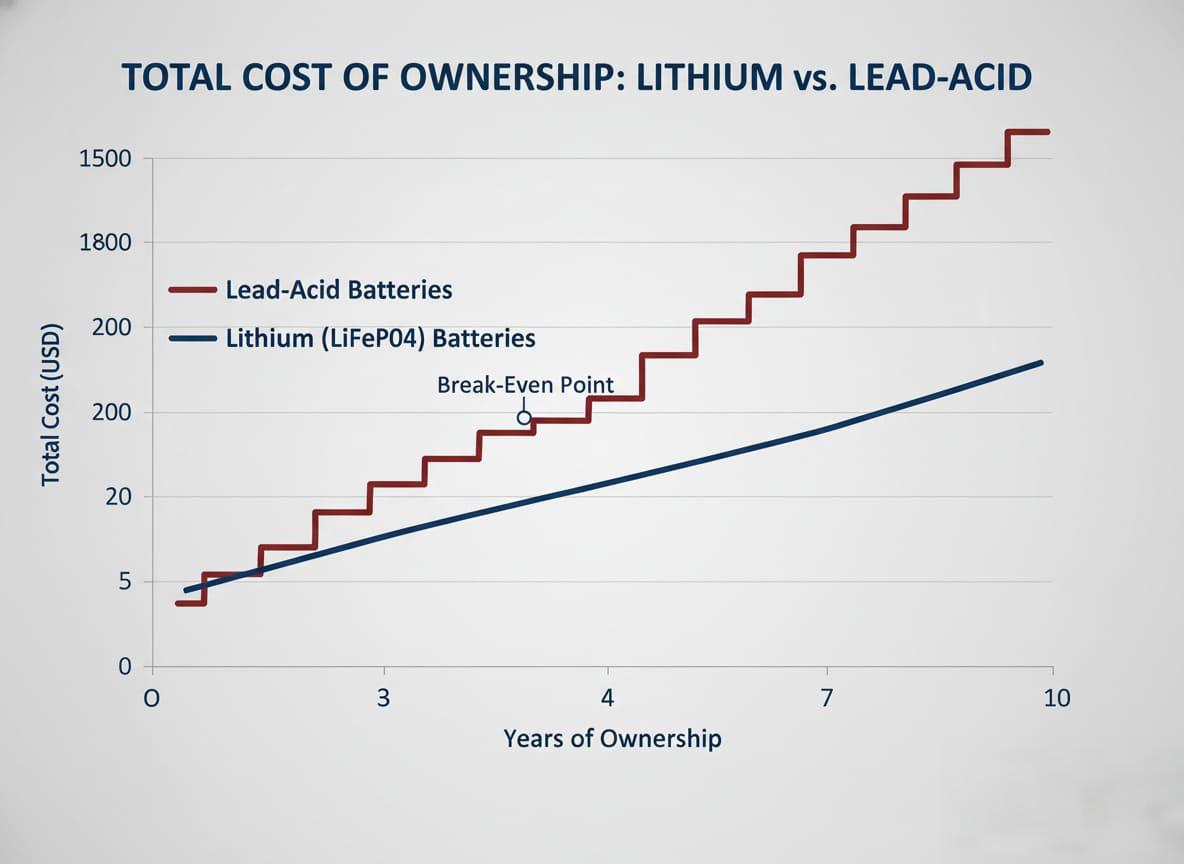
I had a client in the commercial fishing industry who was replacing his heavy lead-acid battery banks every two years. He was frustrated with the constant maintenance, the weight, and the lost time. The upfront cost of a LiFePO4 system seemed huge to him. We sat down and calculated the Total Cost of Ownership (TCO) over a ten-year period. When he saw the numbers, including the cost of buying four or five sets of lead-acid batteries versus one set of lithium, plus the fuel savings from the reduced weight, his decision became very easy. The initial price is just one part of the story; the real value is in performance and longevity.
Cycle Life and Longevity
This is the most significant factor. A good quality deep-cycle lead-acid (AGM) battery might give you 500-1000 cycles if you are careful not to discharge it too deeply. A LiFePO4 battery from a quality manufacturer like Litop will provide 3,000 to 7,000 cycles. This means a single lithium battery can outlast multiple sets of lead-acid batteries. If your lead-acid batteries last three years, a lithium replacement could easily last over a decade under the same usage. This eliminates the cost and hassle of frequent replacements.
Usable Capacity and Efficiency
With a lead-acid battery, you are advised to only use 50% of its rated capacity to maximize its lifespan. So, a 200Ah lead-acid bank effectively gives you 100Ah of usable power. In contrast, you can safely use 80-90% of a LiFePO4 battery's capacity. This means a 125Ah lithium battery provides the same usable energy as a 200Ah lead-acid battery. You get the same power from a battery that is smaller and weighs about half as much. This weight saving can also lead to better fuel efficiency on your boat. Furthermore, lithium batteries have a much higher round-trip efficiency (around 95%) compared to lead-acid (around 80-85%). This means less energy is wasted during the charging process, saving you time and fuel if you're running a generator.
| Factor | Lead-Acid (AGM) Example | LiFePO4 Example |
|---|---|---|
| Initial Cost | $400 for 200Ah | $1,000 for 125Ah |
| Cycle Life | ~600 cycles | ~4000 cycles |
| Usable Capacity | 100 Ah (at 50% DoD) | 100 Ah (at 80% DoD) |
| Replacements (10 Yrs) | 3-4 times | 0 times |
| Total Cost (10 Yrs) | $1600 - $2000 | $1,000 |
Can I directly replace my existing lead-acid batteries with lithium batteries (i.e., a "drop-in" upgrade)?
Hoping for a simple "drop-in" lithium upgrade? It seems easy, but hidden issues can cause problems. Let’s cover the quick checks needed for a successful switch.
While many LiFePO4 batteries are marketed as "drop-in," it's not always plug-and-play. You must ensure your charging system (alternator, converter) is compatible. A proper Battery Management System (BMS)3 is also essential for safety and performance, which is built into quality marine lithium batteries.
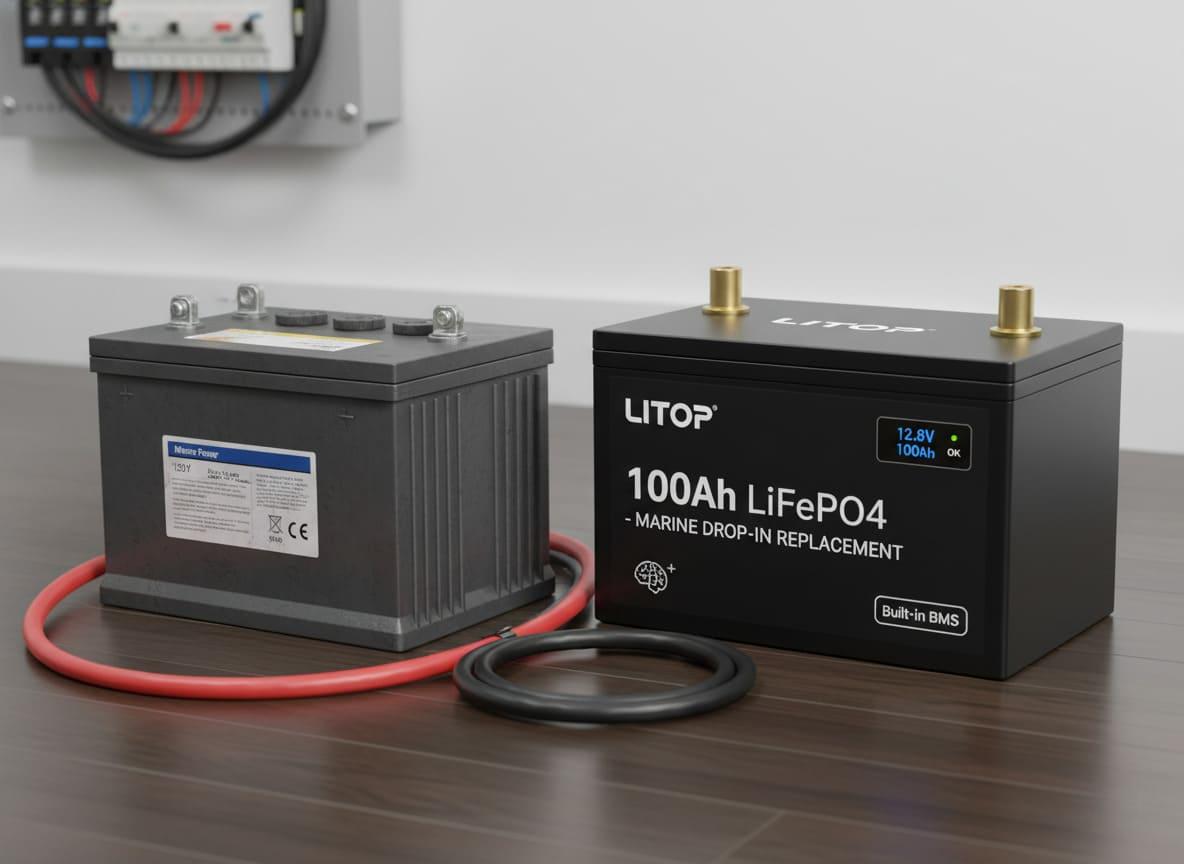
The term "drop-in replacement" can be a bit misleading. While many lithium batteries are now made in standard lead-acid case sizes to make the physical swap easier, the electrical system they are "dropping into" must be prepared for the change. I always advise my customers to think of it less as a "drop-in" and more as a "system upgrade." It's straightforward, but you can't skip the checks. A few simple verifications will ensure your new, expensive batteries perform correctly and safely for years to come. Ignoring these can lead to frustration and potential damage to your boat's systems.
Why It's Not Always "Plug-and-Play"
As we discussed earlier, the charging system is the primary concern. Your existing chargers must have a lithium-compatible setting, or they need to be replaced. Beyond that, consider your wiring. Lithium batteries can deliver much higher currents than lead-acid, especially when under heavy load. You must verify that your battery cables and circuit protection (fuses or breakers) are appropriately sized for the potential output of your new battery bank. Also, think about how the battery is secured. Lithium batteries are much lighter, so the existing battery box or straps might not hold them securely in rough seas. Proper mounting is a critical safety requirement, as outlined in marine standards like JT/T 1543-2025.
The Critical Role of the BMS
Any reputable "drop-in" lithium battery will have an internal Battery Management System (BMS). This is the battery's brain. The BMS is non-negotiable for safety; it protects the cells from over-charging, over-discharging, over-current, short circuits, and extreme temperatures. It also keeps the cells balanced, ensuring the pack ages evenly and delivers maximum performance. This is a key area where quality matters. At Litop, we engineer our BMS specifically for the battery's intended application, building in multiple layers of protection. A cheap battery with a poor-quality BMS is a significant risk you don't want to take on the water.
| Component | Check | Action if Incompatible |
|---|---|---|
| Charger/Converter | Does it have a LiFePO4/Lithium setting? | Replace with a lithium-compatible charger. |
| Alternator | Is it protected from high current draw? | Install a DC-to-DC charger or external regulator. |
| Wiring & Fuses | Are they rated for the battery's max output? | Upgrade cables and fuses to the correct size. |
| Battery Hold-Downs | Is the lighter battery secured firmly? | Adjust or replace straps/box to ensure no movement. |
How much capacity (Amp-hours, Ah) of lithium battery do I need for my boat's size and power requirements?
Confused about how much battery capacity you need? Guessing wrong means no power when you need it, or wasting money. A simple energy audit is the answer.
To size your battery bank, calculate your daily energy consumption in Amp-hours (Ah). List all DC loads, their amperage, and daily run time. Sum these up to get your total daily Ah usage. For lithium, size the bank to be slightly larger than this number.
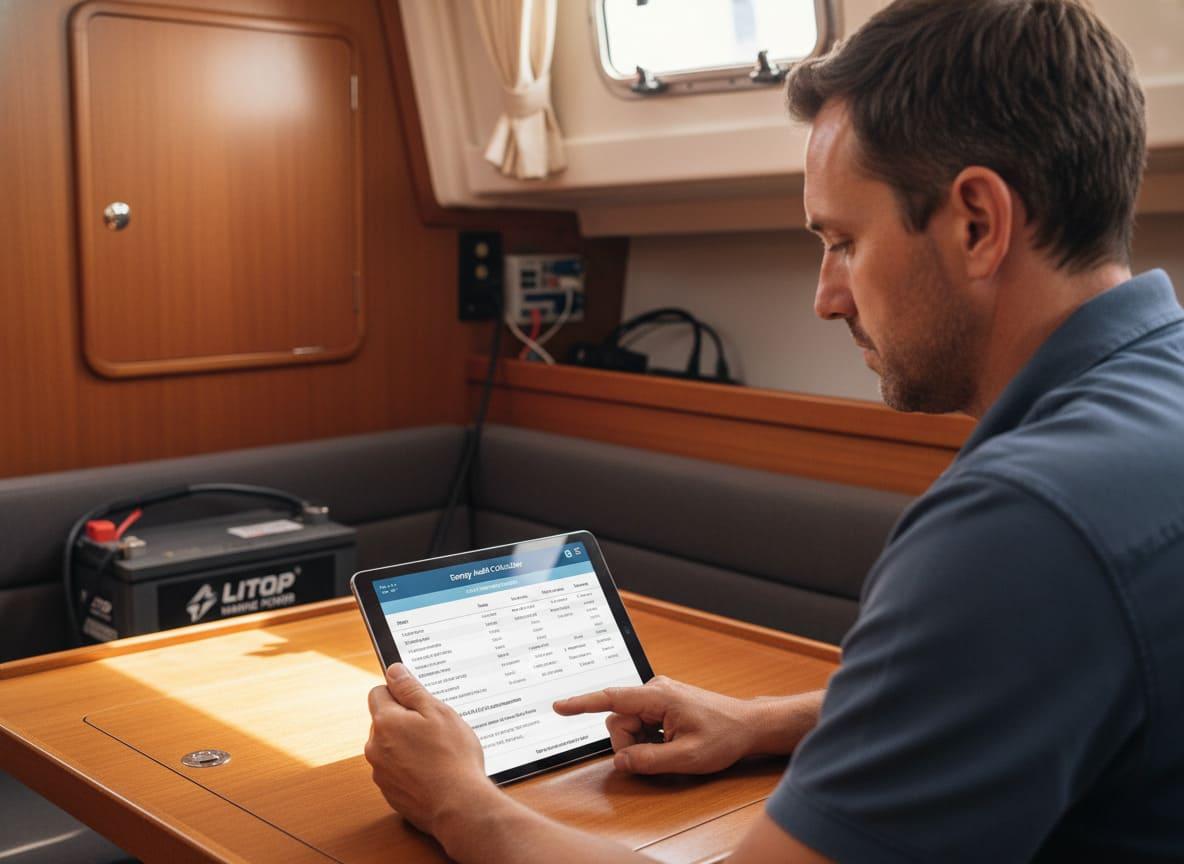
Sizing a battery bank feels like a dark art to many people, but it's actually just simple math. I often walk my clients through a quick energy audit. One customer, who owned a mid-size sailboat for weekend trips, was convinced he needed a massive 600Ah battery bank. After we listed out his actual power needs—some lights, a small fridge, navigation gear, and a stereo—we found his daily usage was closer to 80Ah. A small 100Ah lithium battery was more than enough for his needs. Taking 30 minutes to do this audit saved him thousands of dollars and a lot of unnecessary weight on his boat.
Conducting a Basic Energy Audit
This process is the foundation for a properly designed power system. Follow these simple steps:
- List Devices: Make a list of every DC-powered device on your boat. This includes lights, pumps, refrigeration, navigation instruments, stereo, fans, etc.
- Find Amperage: Look for the power draw in Amps (A) for each device. This is usually on a label or in the user manual.
- Estimate Usage: Think about a typical 24-hour period on your boat. Estimate how many hours each device will run.
- Calculate Ah: For each device, multiply its Amp draw by the hours it runs per day. This gives you the Amp-hours (Ah) it consumes daily.
- Sum It Up: Add the daily Ah consumption of all devices together. This final number is your total daily energy requirement.
Sizing for Lithium vs. Lead-Acid
Here is where the benefits of lithium's usable capacity shine. Let's say your energy audit shows you need 100Ah per day.
- Lead-Acid: To avoid damaging the batteries, you should only discharge them to 50%. So, to get 100Ah of usable power, you need a bank of at least 200Ah (100Ah / 0.5 DoD = 200Ah).
- Lithium (LiFePO4): You can safely use 80% of the battery's capacity. To get 100Ah of usable power, you only need a bank of 125Ah (100Ah / 0.8 DoD = 125Ah).
As you can see, you can meet the same energy needs with a much smaller and lighter lithium battery bank.
| Device | Amps (A) | Hours/Day (h) | Amp-hours (Ah) |
|---|---|---|---|
| LED Cabin Lights | 1.5 A | 4 h | 6.0 Ah |
| Refrigerator | 5.0 A | 8 h (33% duty) | 40.0 Ah |
| Water Pump | 6.0 A | 0.5 h | 3.0 Ah |
| Chartplotter | 2.0 A | 8 h | 16.0 Ah |
| VHF Radio (standby) | 0.5 A | 24 h | 12.0 Ah |
| Total Daily Need | 77.0 Ah |
Conclusion
Switching to marine lithium is a safe and smart investment with the right approach. Prioritize certified batteries, check system compatibility, and size your bank correctly for long-term reliability. For expert guidance on a custom solution, my team at Litop is here to help you.
Explore the advantages of LiFePO4 batteries, especially for marine use, and their safety features. ↩
Explore this link to understand the safety standards and regulations for lithium batteries in marine settings. ↩
Learn about the critical role of BMS in ensuring the safety and longevity of lithium batteries. ↩