
Choosing the right battery can be tricky. A high-capacity cell1 promises longer runtime, but using it in a high-power device can be a dangerous gamble. How do you ensure safety?
The safety of a high-capacity battery in a high-drain application depends entirely on its design and technology. While there's an inherent conflict between capacity and power output, modern solutions like all-tab cell construction can safely balance both. Matching the battery to the device is critical.
It's a common dilemma I discuss with clients. They need batteries for demanding devices, maybe a portable medical scanner or a high-performance wearable. They want the longest possible runtime, which means high capacity. But safety is always the number one priority. The truth is, you can't just look at the capacity number (mAh) and make a decision. There's more to it, and understanding these details is key to preventing catastrophic failures. Let's dig into what really matters for safety and performance.
What are a battery's "C-rate2" and "Continuous Discharge Rating (CDR)"?
Confused by battery specifications? Terms like C-rate and CDR sound very technical. But ignoring them can lead to poor performance, damaged devices, or even a fire.
The C-rate measures how quickly a battery is discharged relative to its total capacity. The Continuous Discharge Rating (CDR)3, given in amps, is the most important safety spec. It's the maximum current the battery can supply continuously without overheating or failing.
When my team and I design a custom battery pack4, these two ratings are at the center of our conversation. They define the battery's performance limits and are crucial for safety. It's important not to confuse them, as they tell you different things.
Breaking Down the Specs
-
C-rate: Think of the C-rate as a speed limit relative to the battery's size. A 1C rate means the battery can discharge its entire capacity in one hour. For a 3000mAh battery, 1C is 3000mA, or 3 amps. A 2C rate would be 6 amps, discharging the battery in 30 minutes. A 0.5C rate would be 1.5 amps, discharging it in two hours. It's a useful way to talk about discharge speed, but it's not a direct safety rating.
-
Continuous Discharge Rating (CDR): This is the number that matters most for high-drain applications. It's a fixed value in amps (A) that the manufacturer guarantees the battery can handle without getting too hot. This rating is determined through extensive testing. Pushing a battery beyond its CDR is the primary cause of overheating and failure.
Here is a simple way to see the difference:
| Specification | What It Measures | Unit | Main Purpose |
|---|---|---|---|
| C-rate | Discharge speed relative to capacity | C | Performance and runtime estimation |
| CDR | Maximum safe continuous current | Amps (A) | Safety and preventing overheating |
For any high-drain device, from a power tool to a medical defibrillator, the CDR is the critical number you must respect. A battery might have a very high capacity, but if its CDR is low, it is completely unsuitable for a device that needs a lot of power quickly.
How do I determine my device's current draw and choose a battery with the right CDR?
Picking the wrong battery is a costly mistake. Your device might not turn on, or it could fail when you need it most. So, how do you find the perfect battery match?
First, find your device's maximum power in watts (W). You can usually find this on the device or in its manual. Then, divide the watts by the battery's voltage (V) to get the required current in amps (A). Always choose a battery with a CDR higher than this number.

I walk clients through this calculation all the time. It’s a simple but essential step to ensure the battery we build is not just a power source, but a safe and reliable component of their product. Let's use a real-world example. Imagine you are developing a portable medical device.
A Practical Calculation
- Find the Power (Watts): Look at the device's specifications. Let's say it requires a maximum of 30 watts to operate its motor and screen.
- Find the Voltage (Volts): You plan to use a single-cell lithium-ion battery, which has a nominal voltage of 3.7V.
- Calculate the Current (Amps): The formula is Current (A) = Power (W) / Voltage (V).
- 30W / 3.7V = 8.1A
This means your device will draw a maximum of 8.1 amps from the battery.
Choosing the Right CDR
Now that you know your device needs 8.1A, you can choose a battery. You must select a battery with a CDR that is comfortably above this number. You should not pick a battery with an 8.5A CDR. That's too close to the limit. A good rule of thumb is to add a 20-25% safety margin.
- 8.1A * 1.25 = 10.1A
So, you should look for a battery with a CDR of at least 10A, or even 12A. This safety margin accounts for factors like high ambient temperatures, battery aging (which can reduce performance), and unexpected power spikes. Choosing a battery with an adequate CDR ensures it runs cool, lasts longer, and operates safely.
What happens if I use a high-capacity battery with a low C-rate in a high-drain device?
It's tempting to put the battery with the biggest capacity into your device. But if that battery isn't built for high power output, you are setting it up for a dangerous failure.
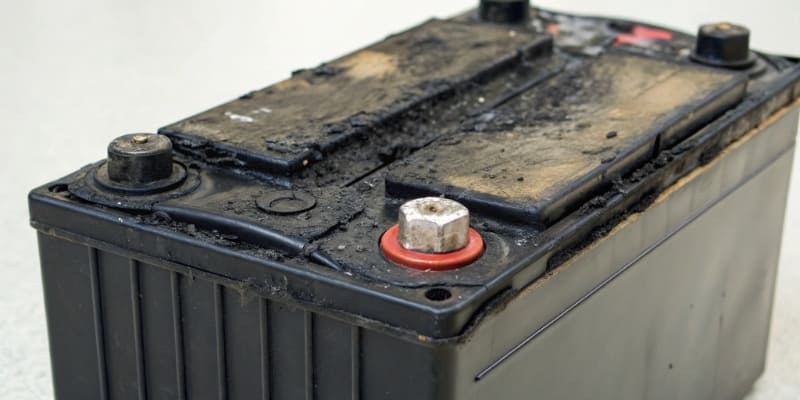
Using a low-rate battery in a high-drain device will cause it to overheat rapidly. This is because its high internal resistance generates excessive heat. This leads to a sharp voltage drop, permanent damage to the cell, and potentially a dangerous event called thermal runaway, which can cause fire.
The physics behind this is straightforward. To achieve high capacity, manufacturers must pack the battery's active materials very densely. This creates longer and more difficult paths for the lithium ions to travel through. Think of it as a narrow, congested road. When you try to force a lot of current (traffic) through it quickly, you get a massive jam.
This "traffic jam" is known as internal resistance (IR). The energy that can't get through is converted into heat. The amount of heat generated is described by the formula Heat = Current² x Resistance. As you can see, the heat increases exponentially with the current. If you double the current you're drawing, you quadruple the heat.
This heat is the enemy of the battery. It starts to break down a critical internal safety component called the Solid Electrolyte Interphase (SEI) layer. Once the SEI layer is damaged, it can trigger an unstoppable chain reaction inside the cell. This is "thermal runaway." The cell gets hotter and hotter, releasing flammable gases and eventually leading to fire or an explosion. This is why we never repurpose standard-rate batteries for high-power applications. It’s a risk that is never worth taking.
Is there technology that balances high capacity and high discharge rates?
For a long time, product designers had to make a hard choice: long runtime or high power. But what if you need both? Fortunately, battery technology has advanced significantly.
Yes, modern cell construction like the "all-tab" design makes it possible to have both high capacity and a high discharge rate. This technology dramatically lowers internal resistance, which allows the battery to deliver high current without overheating. Certain chemistries, like NMC, are also good at balancing these two features.
One of the most exciting innovations I've seen in recent years is the all-tab, or multi-tab, battery cell. This is a game-changer for high-drain applications, and it's a technology we frequently use in our custom designs at Litop.
In a traditional battery cell, all the electricity has to flow out through a single small metal tab welded to the electrode. This creates a bottleneck, which is a major source of internal resistance and heat.
The all-tab design is much smarter. Instead of one small tab, the entire edge of the electrode is used as the electrical contact. It's like replacing a narrow country lane with a massive multi-lane highway. The electrical current has a much shorter and easier path to travel. This brilliant design can reduce the cell's internal resistance by as much as 80%.
What does this mean for performance?
- Less Heat: Because the resistance is so low, the battery generates far less heat, even when you draw a high current.
- Higher CDR: With less heat to worry about, the battery can be safely rated for a much higher continuous discharge.
- Longer Life: The battery operates under less stress, which means it lasts for more charge and discharge cycles.
This technology allows us to build battery packs that offer the high capacity our clients need for long runtimes, while also providing the high power needed for demanding tasks. It's the key to making high-capacity batteries safe for high-drain applications.
Conclusion
The safety of a high-capacity battery in a high-drain device is not a given. It depends on choosing a cell with the right Continuous Discharge Rating and advanced internal construction, like all-tab technology. Always match the battery's capabilities to your device's needs for safe, reliable performance.
Learn how high-capacity cells impact runtime and why their characteristics matter for demanding devices. ↩
Understanding C-rate helps you estimate battery discharge speed and choose the right battery for your needs. ↩
CDR is the key safety spec for high-drain applications—learn how to interpret and use it. ↩
Custom battery packs can be tailored for safety, performance, and unique device requirements. ↩